
Compare the equipment
Specifications for your rental planning
These published examples describe named company units. The supplied equipment, configuration and availability are confirmed for your project address.
BXRT20–1Refrigerated trailer
- Nominal length
- 20ft
- Listed electrical supply
- 220V · single-phase · 40–60A
- Inventory temperature label
- 32°F
MT1Refrigerated trailer
- Nominal length
- 20ft
- Listed electrical supply
- 220V · single-phase · 40–60A
- Inventory temperature label
- 15°F
LT2Refrigerated trailer
- Nominal length
- 20ft
- Listed electrical supply
- 220V · single-phase · 40–60A
- Inventory temperature label
- -5°F
Listed refrigeration trailer equipment: condensing unit, amps panel, lighting.
Other cold-storage model details
- 12FT Refrigerated TrailerBXRT12–1 and BXRT12–2 list 220V · single-phase · 40–60A and a 32°F inventory label. Both are named as 12ft models, but their records also mention 20ft, so your quote confirms the length.
- 20FT Refrigerated ContainerYour quote confirms this container’s power, temperature and storage space for your project.
- 40FT Refrigerated ContainerYour quote confirms this container’s power, temperature and storage space for your project.
Equipment records reviewed October 19, 2026. Temperature labels are inventory labels, not verified operating ranges. Nominal length is a model label, not a measure of usable space or site footprint.
Keep existing stock separate from the next delivery decision
A refrigeration interruption can affect food already on site while another supplier load is still coming. Keep the existing stock decision with the responsible food operator, and reconcile the incoming order with the supplier's acknowledged instructions. The temporary refrigeration requirement is the greatest confirmed overlap of those loads. A reduced internal order list does not by itself mean that a supplier has changed the goods arriving at the receiving point.
Emergency walk-in cooler and freezer rental in Atlanta: rent or lease
An onsite refrigeration container lease in Atlanta can bridge an emergency breakdown, a kitchen renovation or a seasonal peak without moving a restaurant kitchen to another location. A rental that begins as an emergency fix can become a longer lease if the repair or replacement takes more time than expected. Refrigerated storage is the usual request, but a mobile kitchen trailer can be rented or leased alongside it when cooking is also affected.
Trailers for rent and trailer leasing cover emergency, short-term and long-term needs, from portable walk-in coolers to outdoor walk-in refrigeration for commercial sites. Setup, delivery and the rental period are reviewed for each address rather than assumed. Whatever the hour, a person answers rental inquiries, so a failed commercial freezer in Atlanta does not have to wait for business hours to be reported.
Compare chilled holding with a separate container proposal
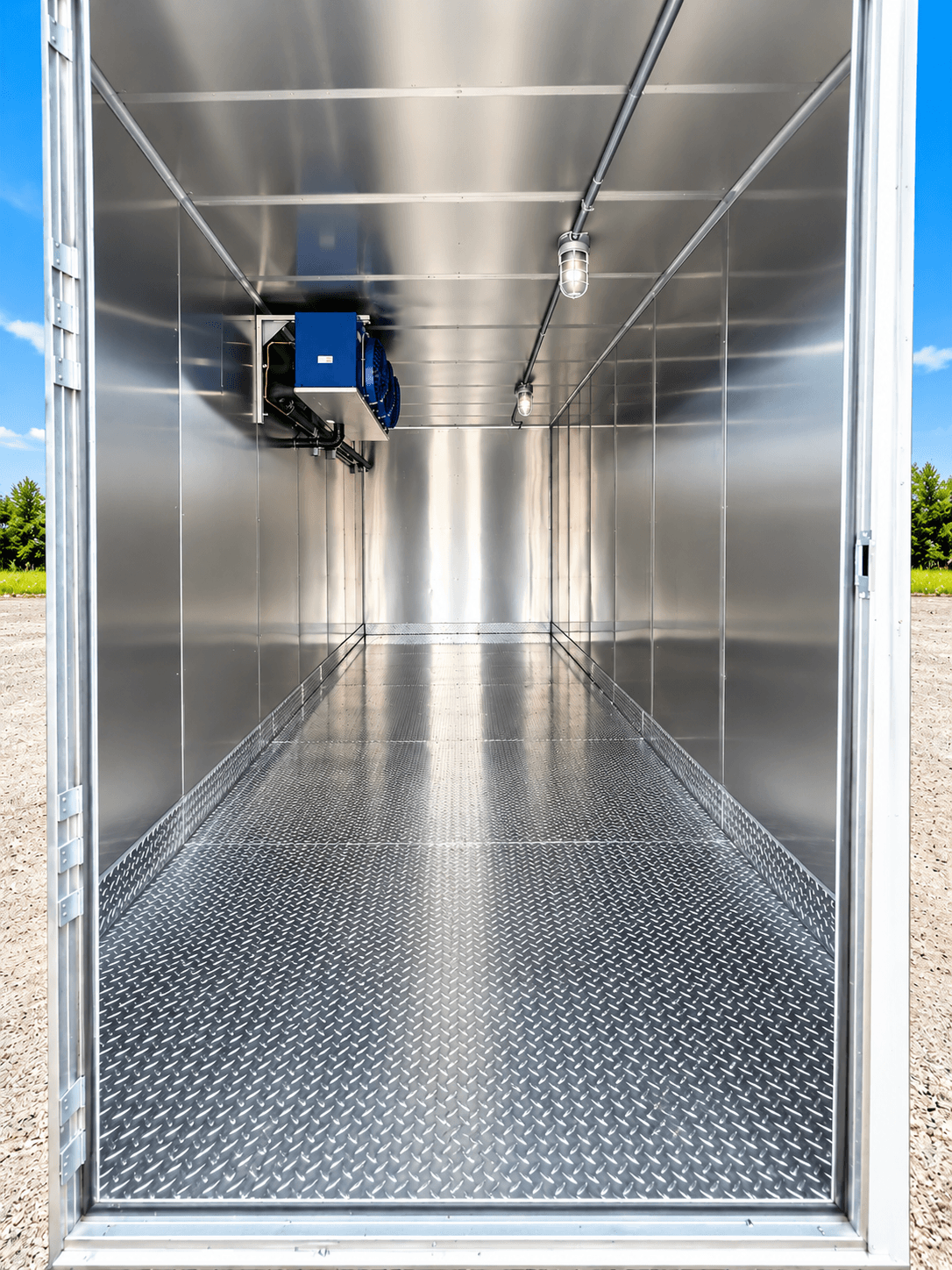
The BXRT20–1 example in the 20FT Refrigerated Trailer guide lists a condensing unit, amps panel and lighting, with a 32°F inventory label. Its complete operating range and the load it can accommodate remain matters for the offered unit.
Nominal 20ft and 40ft containers have length labels, while usable capacity, power and temperature capabilities need confirmation. Match the refrigerated container or refrigeration trailer to the actual packages and receiving pattern, including supplies that arrive already conditioned.
Keep healthcare meal service in the rental plan
For healthcare dining inquiries covering Atlanta and a separate Alaska facility, equipment placement needs review alongside staff routes and receiving arrangements. Explain the planned transfer back to permanent rooms and identify who can confirm when ordinary food receiving is ready to resume.
Distinguish holding from other temperature tasks
Explain what the equipment is expected to do with the goods after they enter. Holding already chilled stock is a different request from asking whether a particular load can be cooled from another starting condition. Describe the arrival condition and intended use, then ask which requirements should be considered in the equipment review. Include frozen goods separately where relevant. The operation's product owner should supply the handling requirements and decide what checks are needed. Request the relevant specifications for the equipment being considered, then compare them with the actual task before approving a rental arrangement.

Make room for the working load
An inventory count should include packaging, the way products are stacked, and the space staff need to handle them. Describe the storage carriers you actually use, including crates, trays, carts or pallets, and provide dimensions for the larger packages. Identify goods that must remain easy to find and any stock that cannot be moved repeatedly during the project. If the inventory changes by shift, provide that pattern too. Discuss the layout with the equipment contact and the person responsible for operations. Confirm the proposed interior layout and loading arrangement for the equipment being discussed with your team.
Separate the prep kitchen from machine dishwashing
The P2 example in the 26FT Bulk Kitchen Trailer Rental guide lists a prep table, sinks and reach-in refrigerator/freezer, without a documented cooking line. That prep-only kitchen has a different role from the temporary reserve store.
If washing also moves, the D4 example in the 24FT Dishwashing Trailer Rental guide lists a low-temperature push-through dishwasher, soil tray, scraping table and sinks. This facility handles returned ware; its nominal length does not establish racks per hour or whether its workflow matches the operation's returns.
Review the full route for stock movement
Look beyond the final storage footprint and describe the complete movement of goods. Staff may need to pass through doors, use carts, cross a delivery area or work around construction activity before reaching the temporary refrigerator. Give the relevant site contact a chance to assess that route and identify restrictions. Ask for the entry details of the equipment being considered, including any loading aids that would need a separate discussion. Measurements should relate to the real carriers and products your team uses. Confirm how the arrangement will work during normal activity and during the busiest replenishment periods before committing to a position.
Review the load for each proposed connection
BXRT20–1 lists 220V single-phase at 40–60A. P2 lists 220V single-phase at 200A, and D4 lists 220V single-phase at 150A. These values apply to the named examples rather than every facility of the same length. The responsible site professional needs the selected equipment's electrical requirements and exact connectors before preparing the supply and connection route.
Make the return to permanent storage explicit
A rental inquiry should explain what must happen before temporary refrigeration is no longer needed. The permanent store may require a separate handover, equipment review or stock-transfer decision by your own team. Identify who makes that decision and how it will be communicated to the rental contact. Ask about collection notice and any term that applies if the program changes. Keep incoming orders and stock movement in the same schedule so the final working day fits the operation’s return to permanent storage. Confirm the final rental and collection arrangements when the operation can give a reliable update on its requirements.
Confirm the scope after reconciling incoming orders
Use the confirmed stock overlap to review the equipment offered, then check the rental period, delivery, collection and separate preparation work. Ask for current availability and a complete quote, including the rental billing basis and transport charges for the actual address.
Contact Worldwide Refrigerated Container Rental Facilities at +1 877-804-5153. Share your stock, site and dates, then ask about current equipment availability, rental or lease terms, delivery arrangements and a quote.
Reconcile the order before the receiving team acts
In the distribution example, an incoming order may already have been picked when the storage interruption is discovered. Ask the supervisor to distinguish an order amendment requested by the business from an amendment the supplier has actually accepted. Keep the original order reference alongside the latest instruction so staff do not mistake a revised internal spreadsheet for confirmation that the arriving load has changed.
Use the receiving handover to show what is expected, what remains uncertain and who can resolve a discrepancy. For instance, a driver arriving with the original quantity should trigger a call to the designated supervisor rather than an assumption that the earlier plan still applies. Feed the confirmed incoming load back into the temporary refrigeration inquiry when that changes the storage requirement.
Discuss your cold storage rental.
Confirm the equipment, delivery location, and rental period that fit your project.
Request availability