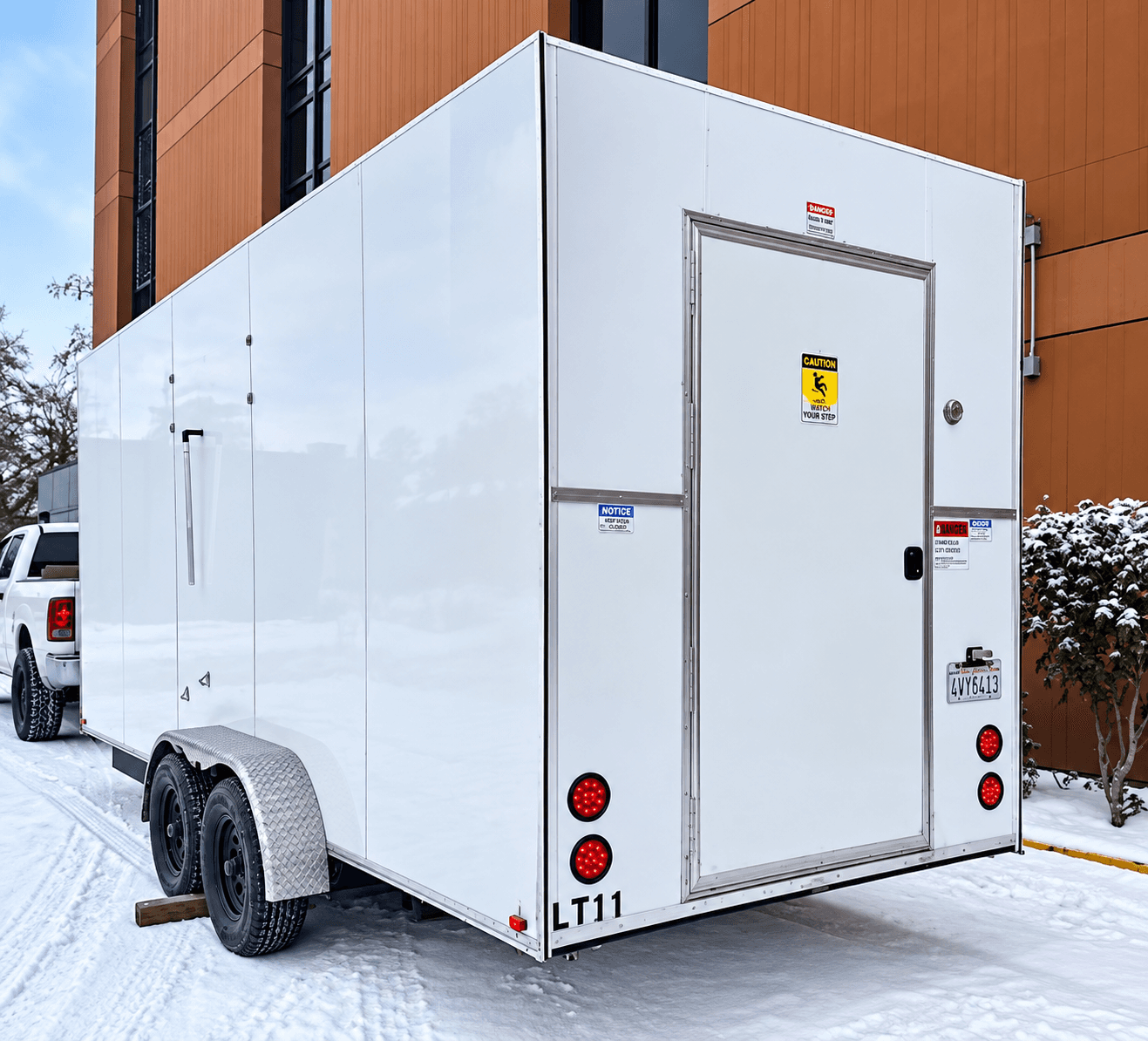
Compare the actual details
Rental equipment specifications
Compare the named unit examples below, including their listed power and equipment. Each model page also displays its specifications and complete published equipment list.
| Rental model | Named unit specifications | Equipment highlights |
|---|---|---|
| 12FT Refrigerated Trailer |
|
|
| 20FT Refrigerated Trailer |
|
|
Details come from named units in our equipment records (reviewed October 19, 2026). Your rental proposal confirms the unit and configuration supplied. Nominal length is a model label, not the interior space.
Temperatures shown are inventory labels, not verified operating ranges. Your quote confirms the plug type, usable space and settings for the unit assigned to your project.
Describe how the trailer will be used
A trailer request should explain the work taking place around the stored products. A catering team may need frequent access between preparation and service, while a restaurant responding to a breakdown may need a temporary home for existing stock. Record the busiest loading and unloading periods so the proposed equipment can be discussed in that context.
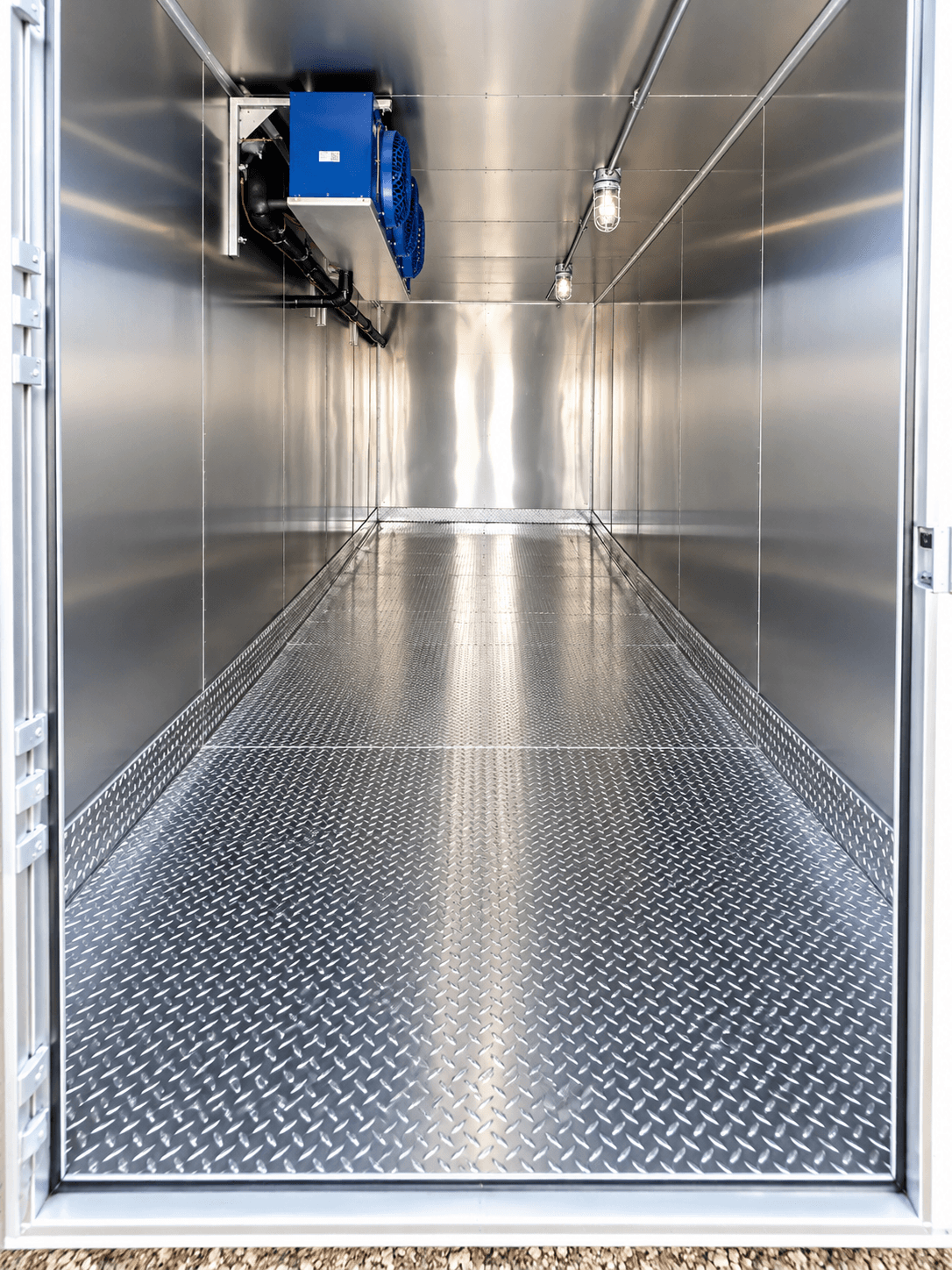
Consider packaging, the quantity of products and how staff expect to organize the interior. Ask about usable space and entrance details for the actual trailer being proposed. A nominal size or an exterior photograph cannot confirm that the arrangement suits your stock movements. Explain any particular access requirements before relying on a choice.
Separate chilled and frozen storage requirements
Say whether the request concerns chilled products, frozen products or different storage needs that must be assessed separately. Give the conditions your operation requires and ask which proposed equipment can meet them. Avoid using cooler and freezer as interchangeable descriptions when the products depend on a particular storage environment.
Clarify which equipment details and operating information will be provided with the proposal. Your staff should continue to use the product handling procedures appropriate to their operation. If a failed walk-in has already affected stock, the rental inquiry does not decide whether that stock remains suitable for use; keep that decision with the responsible team.
Plan your rental around hospitality service
A hospitality team preparing a hotel function in Idaho or Montana can distinguish reserved ingredients from supplies needed for ordinary dining on the same day. Set out the expected stock movements from arrival through return to permanent rooms, including the person responsible for each service handover.
Choose a position that supports the working route
Think about where products will move before choosing the trailer position. Explain the route from receiving or preparation areas, any shared loading activity and the spaces that need to stay open. A venue or occupied commercial site may have restrictions that are not obvious from the street address. Include them in the inquiry.
Discuss the approach for delivery and collection as well as access during use. Confirm who is responsible for transport and any positioning arrangements in the offered rental. Do not assume a trailer can be towed, repositioned or moved by site staff without agreement. Ask for instructions specific to the proposed equipment and location.
Check connections and site preparation early
The electrical requirements of the proposed trailer need to be checked against the supply at the intended position. Describe the service available and ask for the actual equipment requirements before making arrangements. If another contractor must prepare a connection, explain that dependency and allow for its place in the schedule.
Ask which preparation tasks belong to the customer and which, if any, are included in the proposal. Include access arrangements and the receiving contact in the same discussion. A rental quote should be reviewed alongside site readiness; selecting equipment does not by itself confirm that the property is ready for its arrival or operation.
Build an event schedule around preparation and clear-out
Event refrigeration often begins before guests arrive. Products may need storage during preparation, deliveries may be restricted to certain periods and the final collection may take place after the event team has finished packing. Set out those stages instead of describing only the public event date. Explain who controls the receiving area at each stage.
For catering work, consider the pattern of stock movement during service and the access staff will need. Share known venue rules and electrical information when requesting a proposal. Ask whether the equipment and transport arrangements can accommodate the full schedule. Confirm availability and terms before including a particular trailer in the event plan.
Coordinate breakdowns and temporary kitchen interruptions
When existing refrigeration fails, explain the immediate storage requirement and what is known about repairs. If the end date is uncertain, say so. Ask what equipment availability and delivery arrangements can be offered for the request. Keep a named person available to answer practical questions about the site.
For a planned kitchen interruption, identify when permanent storage goes out of use and when it is expected to return. Include product transfers and any commissioning period. Changes to the building works can affect a trailer position or the expected rental term, so ask how revisions should be communicated and agreed.
Understand the proposed rental period and charges
Request a current quote for the equipment and the complete arrangement you need. Ask how the rental period is measured, which transport charges apply and what responsibilities remain with your team. Explain whether the request is a short rental for an event or a longer lease discussion tied to a commercial project.
Confirm any minimum period, extension process and collection notice in the proposal. If comparing options, use the same dates, address, storage requirement and transport scope so differences in the quotations are clear. Ask for clarification where one offer includes a task that another leaves to your team. That creates a more useful comparison than the equipment charge alone.
Keep the receiving and collection teams informed
The person arranging the rental may not be the person present when equipment arrives. Share the agreed equipment description, access instructions, connection responsibilities and receiving contact with the team on site. Confirm how questions at handover should be raised. A clear record is especially useful when an event venue, caterer and transport contact are separate parties.
Plan the final stock transfer and the point at which the area will be ready for collection. Ask what notice is required and how a change in timing would be handled. Contact the team with your project brief to discuss a refrigerated trailer proposal and request confirmation of availability and current pricing.
Walk through the busiest part of event service
Imagine an illustrative catered event where suppliers arrive during preparation and staff return for ingredients throughout service. A useful trailer plan follows that entire pattern. Identify where incoming products are checked, where they wait for storage and how the kitchen team reaches them later. The nearest empty parking space may create an awkward working route if it shares a receiving area with other deliveries.
Ask the venue contact to describe any changes between setup and active service. Gates may be managed by different people, a loading area may have several users, or collection access may need a separate arrangement. Add those details to the request so the proposed trailer position can be assessed for everyday use as well as arrival. This example explains a planning method; it does not describe a completed event or confirm a trailer configuration.
Separate trailer rental from a request to move equipment
Say clearly whether equipment is expected to remain in one position for the whole rental. If the event or project plan includes a later move, identify the reason and the proposed destination during the inquiry. Ask whether that arrangement can be considered and who would be responsible for it.
A trailer label does not establish that the customer may tow or reposition it. Keep the proposed movement, access review and connection arrangements together so a change of position is discussed as a change to the project. Request revised confirmation before planning staff activity around a different location.
Discuss your cold storage rental.
Confirm the equipment, delivery location, and rental period that fit your project.
Request availability