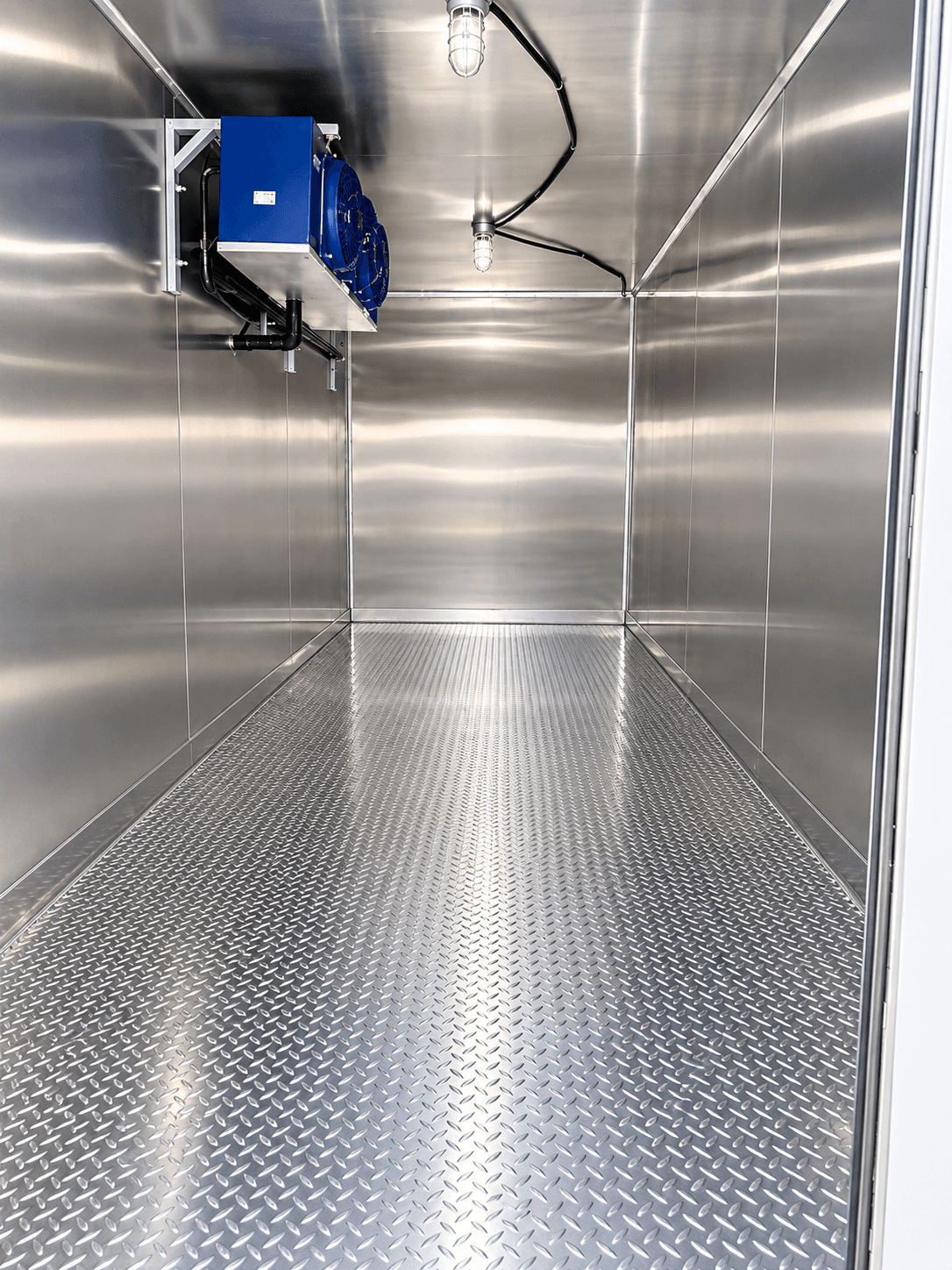
Compare the equipment
Specifications for your rental planning
These published examples describe named company units. The supplied equipment, configuration and availability are confirmed for your project address.
BXRT20–1Refrigerated trailer
- Nominal length
- 20ft
- Listed electrical supply
- 220V · single-phase · 40–60A
- Inventory temperature label
- 32°F
MT1Refrigerated trailer
- Nominal length
- 20ft
- Listed electrical supply
- 220V · single-phase · 40–60A
- Inventory temperature label
- 15°F
LT2Refrigerated trailer
- Nominal length
- 20ft
- Listed electrical supply
- 220V · single-phase · 40–60A
- Inventory temperature label
- -5°F
Listed refrigeration trailer equipment: condensing unit, amps panel, lighting.
Other cold-storage model details
- 12FT Refrigerated TrailerBXRT12–1 and BXRT12–2 list 220V · single-phase · 40–60A and a 32°F inventory label. Both are named as 12ft models, but their records also mention 20ft, so your quote confirms the length.
- 20FT Refrigerated ContainerYour quote confirms this container’s power, temperature and storage space for your project.
- 40FT Refrigerated ContainerYour quote confirms this container’s power, temperature and storage space for your project.
Equipment records reviewed October 19, 2026. Temperature labels are inventory labels, not verified operating ranges. Nominal length is a model label, not a measure of usable space or site footprint.
Size the working requirement around recurring replenishment
For the recurring-order example, the busiest point may include produce carried from the previous cycle and a new supplier load waiting to enter storage. Separate that overlap from items retrieved repeatedly between larger transfers. A container plan should account for the packages and staff movement at this busy point, rather than treat an average daily stock figure as the full working requirement.
Distinguish the container label from a detailed trailer example
RC2 in the 20FT Refrigerated Container guide has a nominal 20ft length label. Usable interior, capacity, temperature capabilities and electrical requirements still need confirmation for the offered refrigerated container. The nominal 40ft container option also lacks those verified figures; length alone cannot establish how recurring orders fit.
For comparison, BXRT20–1 in the 20FT Refrigerated Trailer guide lists a condensing unit, amps panel and lighting, with a 32°F inventory label. That label is not a complete operating range. A refrigeration trailer must still match the products' holding requirements and retrieval pattern; its published details must not be transferred to a container.
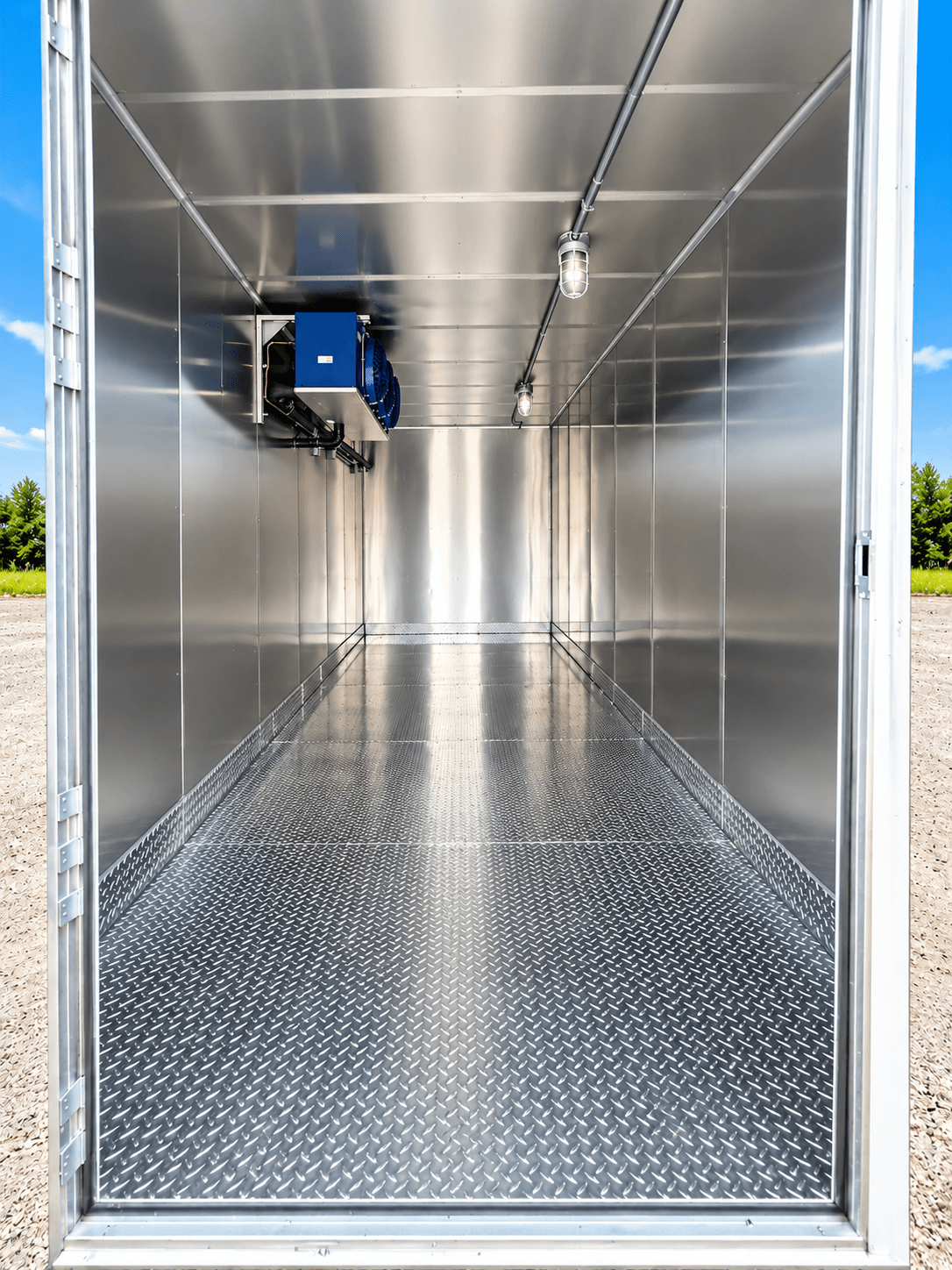
Prepare a rental brief for military dining
For a military dining inquiry in Minneapolis or a separate Idaho location, describe ingredients, preparation routines and proposed dates without assuming equipment availability. Ask the responsible dining lead to describe reserved stock and repeated ingredient retrieval before comparing the practical use of proposed temporary equipment.
Coordinate loading access with everyday activity
Temporary refrigeration can affect a receiving area that already serves staff, suppliers and other contractors. Explain that existing activity when discussing a location for the unit. Include the periods when deliveries arrive, where stock handling takes place and who can authorize temporary changes to the working area. Ask how the proposed loading arrangement should be assessed and whether additional site information is required. Use that review to align stock handling, daily activity and the proposed equipment position before the working arrangement is finalized. Keep the agreed access information with the rental inquiry and project schedule.
Build a practical load description
Prepare a short stock description that another person can understand without visiting the existing store. Include the main product groups, the largest package, the anticipated maximum load and the frequency of replenishment. Where stock must stay identifiable by order, batch or department, explain that requirement. A photograph or simple plan may help the discussion, but it should accompany measurements and a written brief. Ask what further information is needed to compare a refrigerated container or trailer with the work ahead. Use the written brief to compare the proposed unit with your packaging, stock movement and staff access needs.
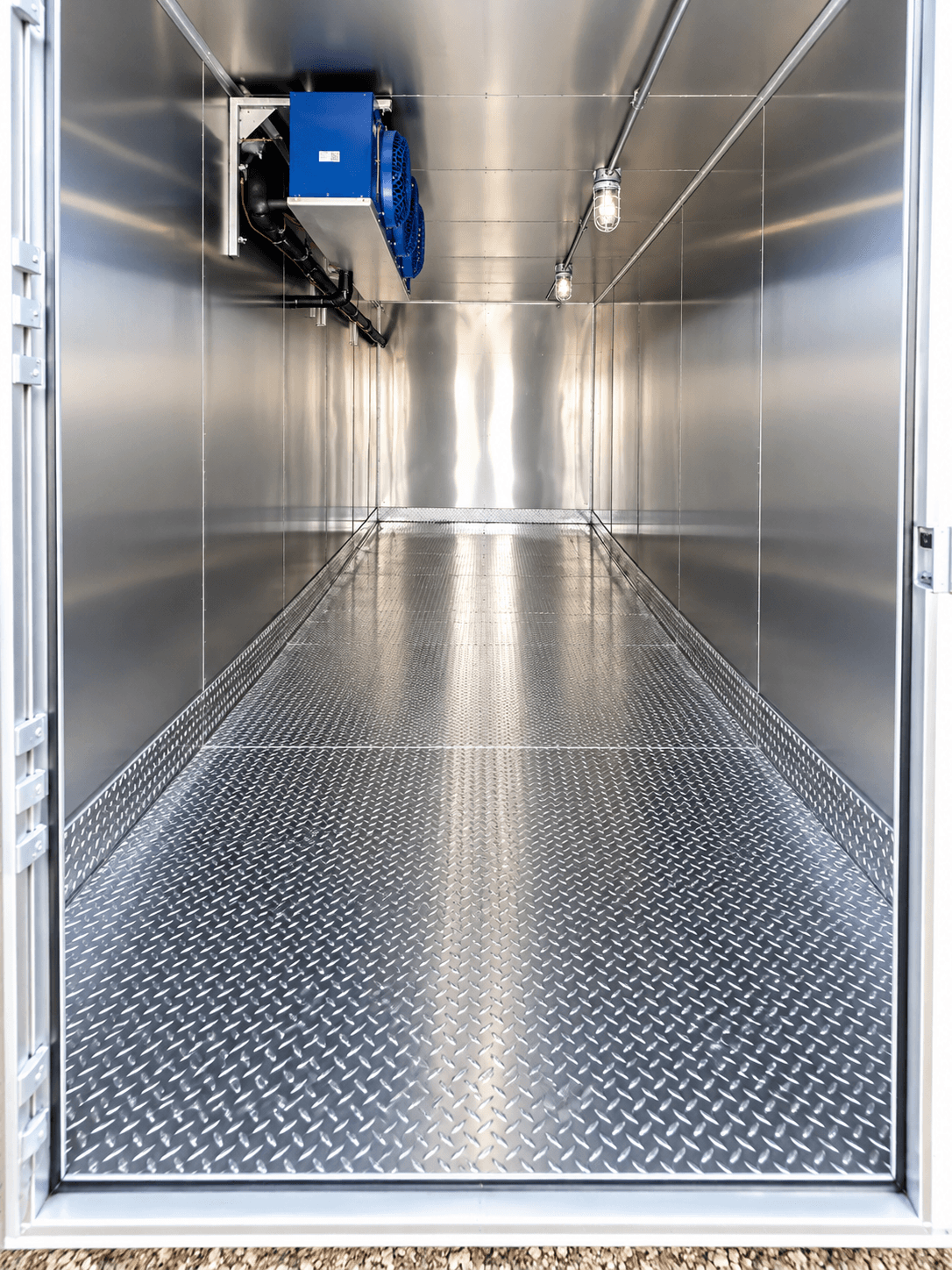
Keep container power separate from the other unit examples
No electrical supply is verified for RC2. BXRT20–1 lists 220V single-phase at 40–60A; P1 lists 220V single-phase at 200A; D1 lists 220V single-phase at 150A. Those figures describe different named examples. The responsible site professional needs the selected unit's exact connection requirements and connectors before arranging services at its proposed position.
Separate the work dates from the storage dates
The period requiring cold storage may start before repair or construction work and end after the permanent equipment returns. Build the inquiry around the stock transfer, site preparation and return-to-normal activities as well as the contractor's dates. Explain whether the program is fixed or may change after an inspection. Ask about the rental periods that can be considered, how an extension would be requested and what notice applies to collection. A short-term rental inquiry and a longer-term lease discussion may require different decisions. Request the current terms for your equipment and dates, and keep them with the latest version of the project brief.
Include access patterns in the temperature brief
A storage request should describe how the space will be used, including deliveries, frequent retrievals and any periods when several people need access. Give those details to the equipment contact alongside the required product conditions. Ask what loading and operating guidance applies to the proposed unit, and have the relevant staff review it before use. If the temporary store serves different teams, establish a shared procedure for recording concerns and contacting the person in charge. This connects the required storage conditions with daily retrieval, stock deliveries and handover procedures for the people working with the goods.
Keep the prep kitchen and dishwashing tasks outside the reserve store
P1 in the 26FT Mobile Kitchen Trailer guide lists a prep table, sinks and reach-in refrigerator/freezer, without a documented cooking line. This prep-only kitchen supports ingredient handling if preparation also moves, while the separate reserve store accommodates stock awaiting later use.
D1 in the 22FT Dishwashing Trailer Rental guide lists a low-temperature push-through dishwasher, soil tray, scraping table and sinks. Match that washing role to returned items and their clean destination. A longer rental requirement does not by itself establish a need to relocate either supporting function.
Review an extended rental against the current cycle
Compare the offered unit and current availability with the replenishment cycle still operating. The quote should identify the rental period, change process, delivery/collection and separate preparation work. Container pricing requires its own project quote; trailer calculator examples do not price this container arrangement.
Contact Worldwide Refrigerated Container Rental Facilities at +1 877-804-5153. Share your stock, site and dates, then ask about current equipment availability, rental or lease terms, delivery arrangements and a quote.
Review the repeating cycle when orders change
For a longer cooler-container inquiry, the stock-control lead can describe a recurring replenishment cycle using actual order records from the operation. Identify stock carried from the previous cycle, new deliveries expected before it leaves and any items normally retrieved between larger movements. The point is to show the recurring overlap rather than reduce the request to one average quantity.
Choose a clear reason to revisit that description, such as an additional supplier order or a changed collection pattern. Record who notices the change and who sends the revised requirement to the equipment contact. At a periodic review, compare the current cycle with the one originally discussed and flag the difference. This keeps an extended rental conversation connected to the operation without assuming that an initial equipment choice accommodates every later change.
Discuss your cold storage rental.
Confirm the equipment, delivery location, and rental period that fit your project.
Request availability