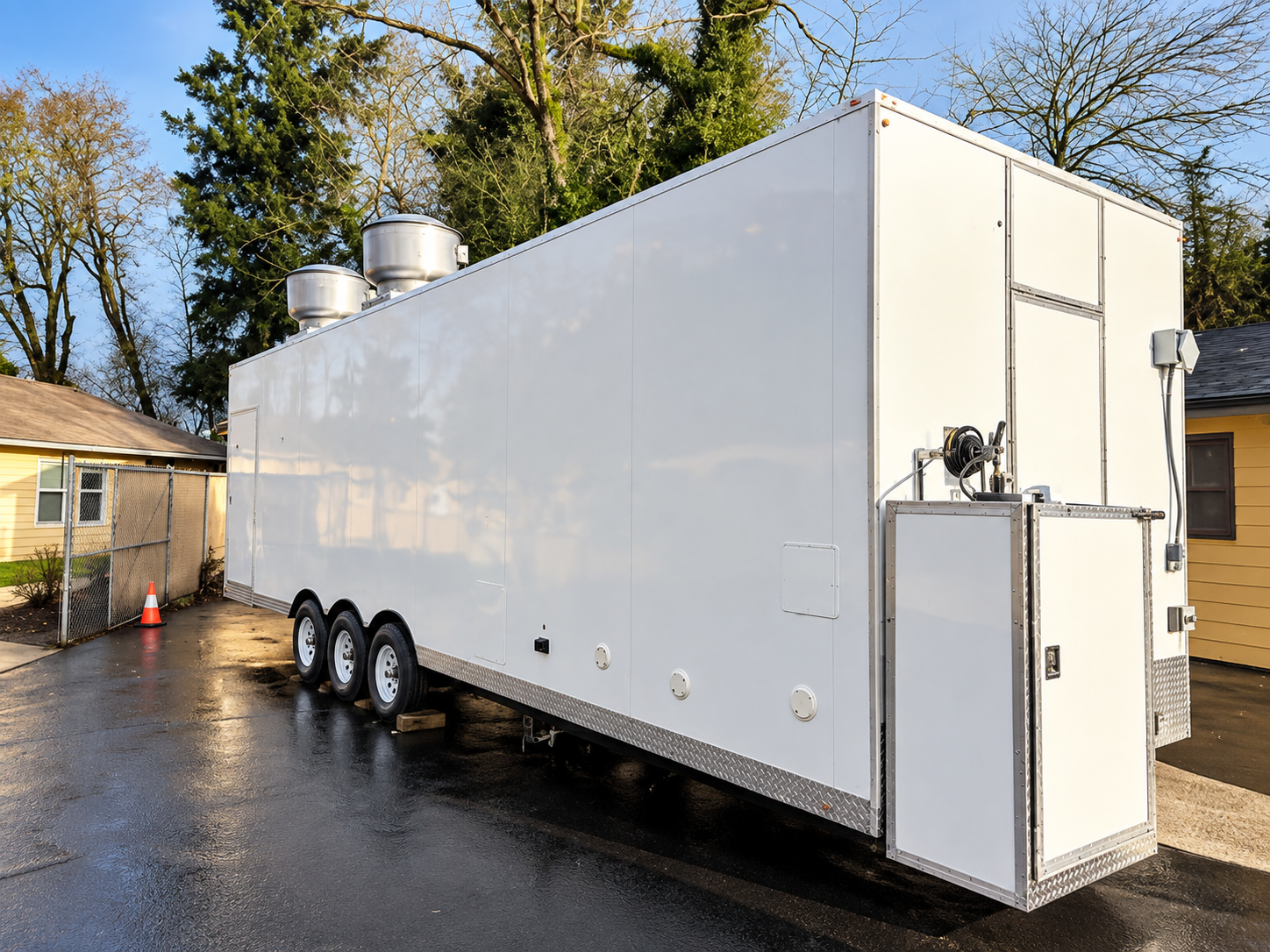
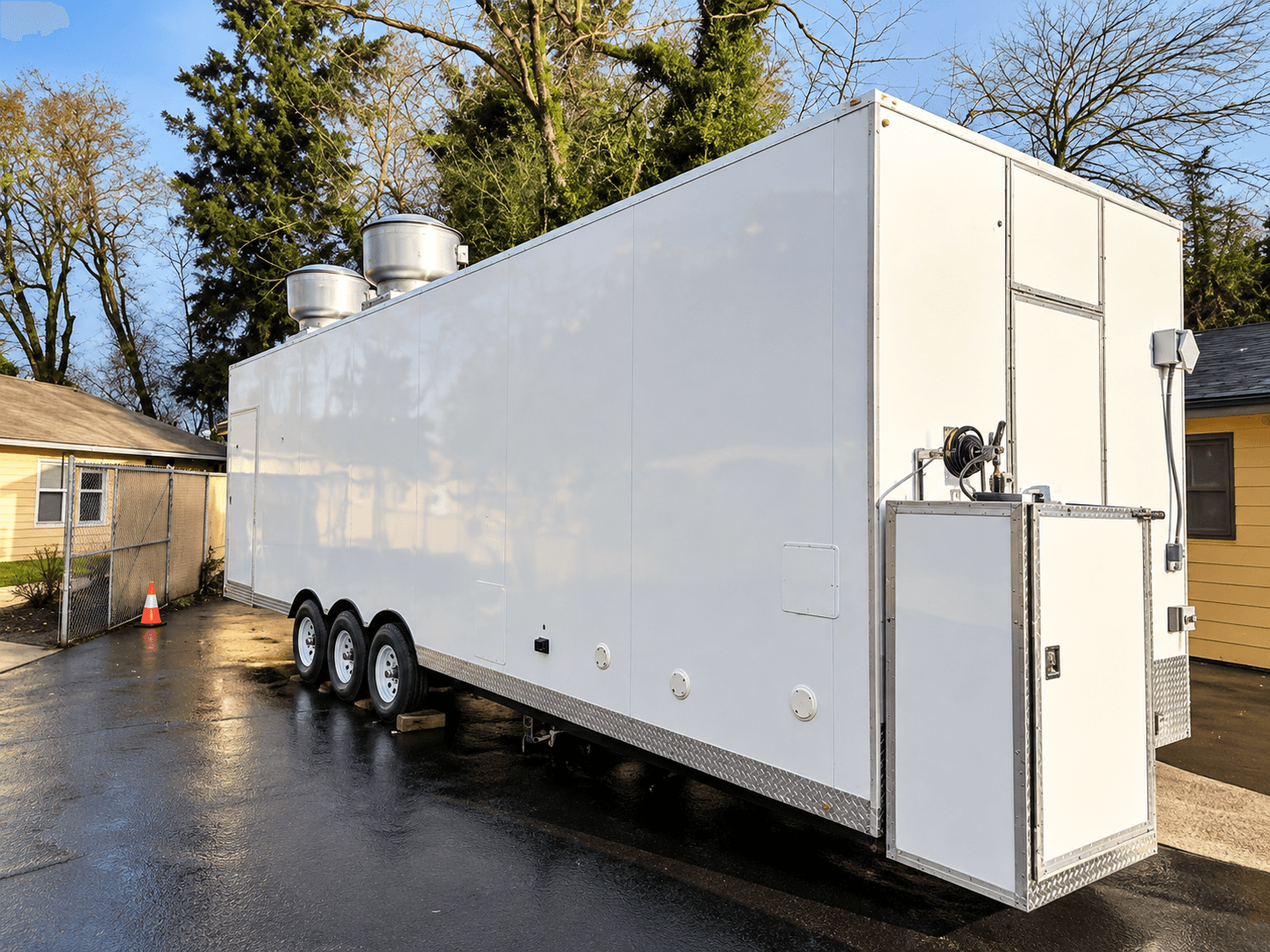
Commercial Kitchen Trailer Rentals for Temporary Food Service
Commercial kitchen trailer rentals can be discussed when an equipment failure interrupts cooking or planned work requires a temporary food-service arrangement. Begin with the menu and the functions that need another working space during a renovation, construction project or event. Restaurants, hotels, caterers and industrial or institutional food-service teams can ask Worldwide Refrigerated Container Rental Facilities about short rentals or longer leases. Compare the kitchen model labels with your process, then request the actual equipment and layout for review. Include any supporting refrigerated container rental or dishwashing requirement, along with the delivery address, access, utility information and dates. Contact the team to confirm a proposed configuration, availability and a project quote.
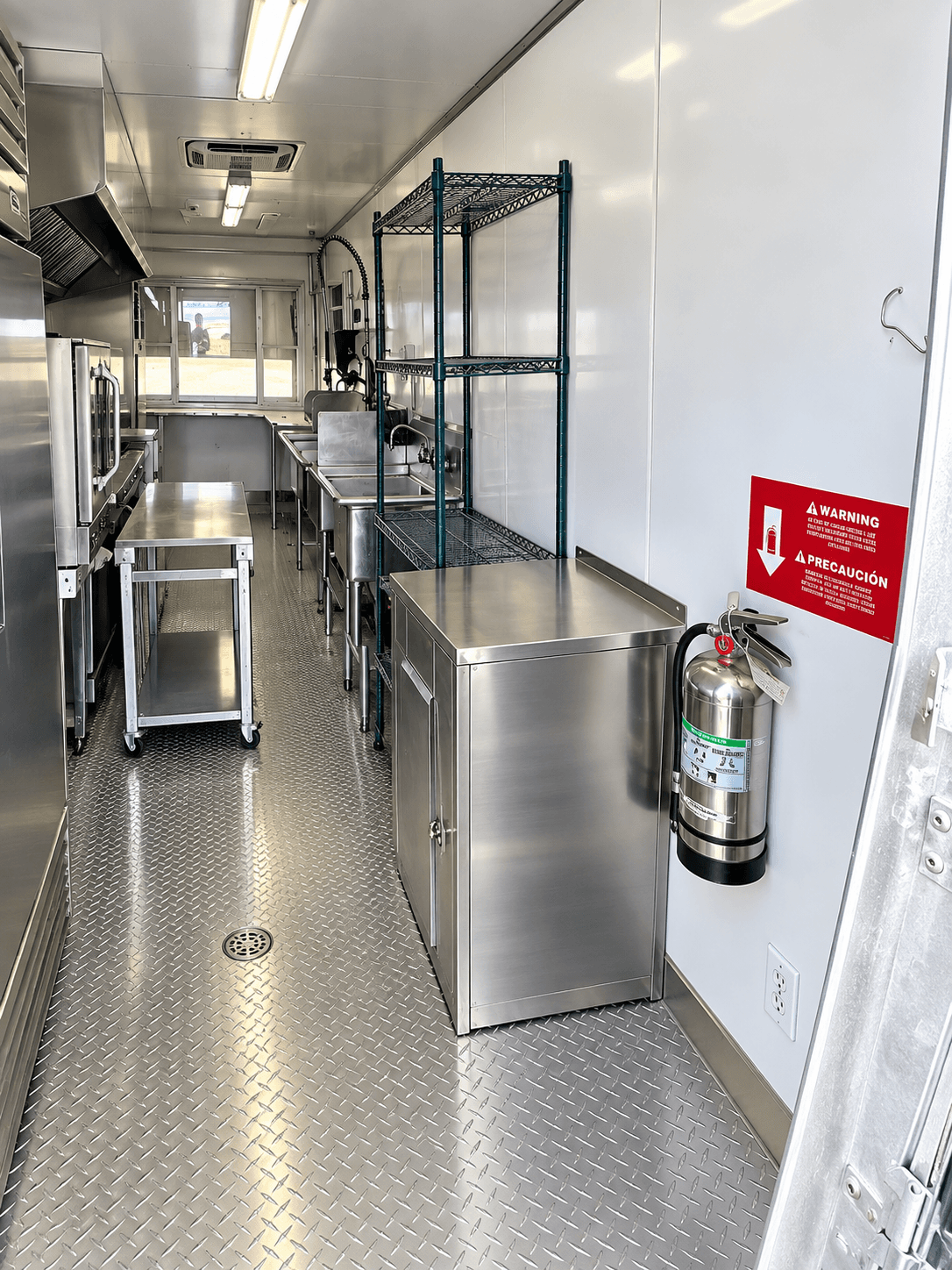
Compare the named unit examples below, including their listed power and equipment. Each model page also displays its specifications and complete published equipment list.
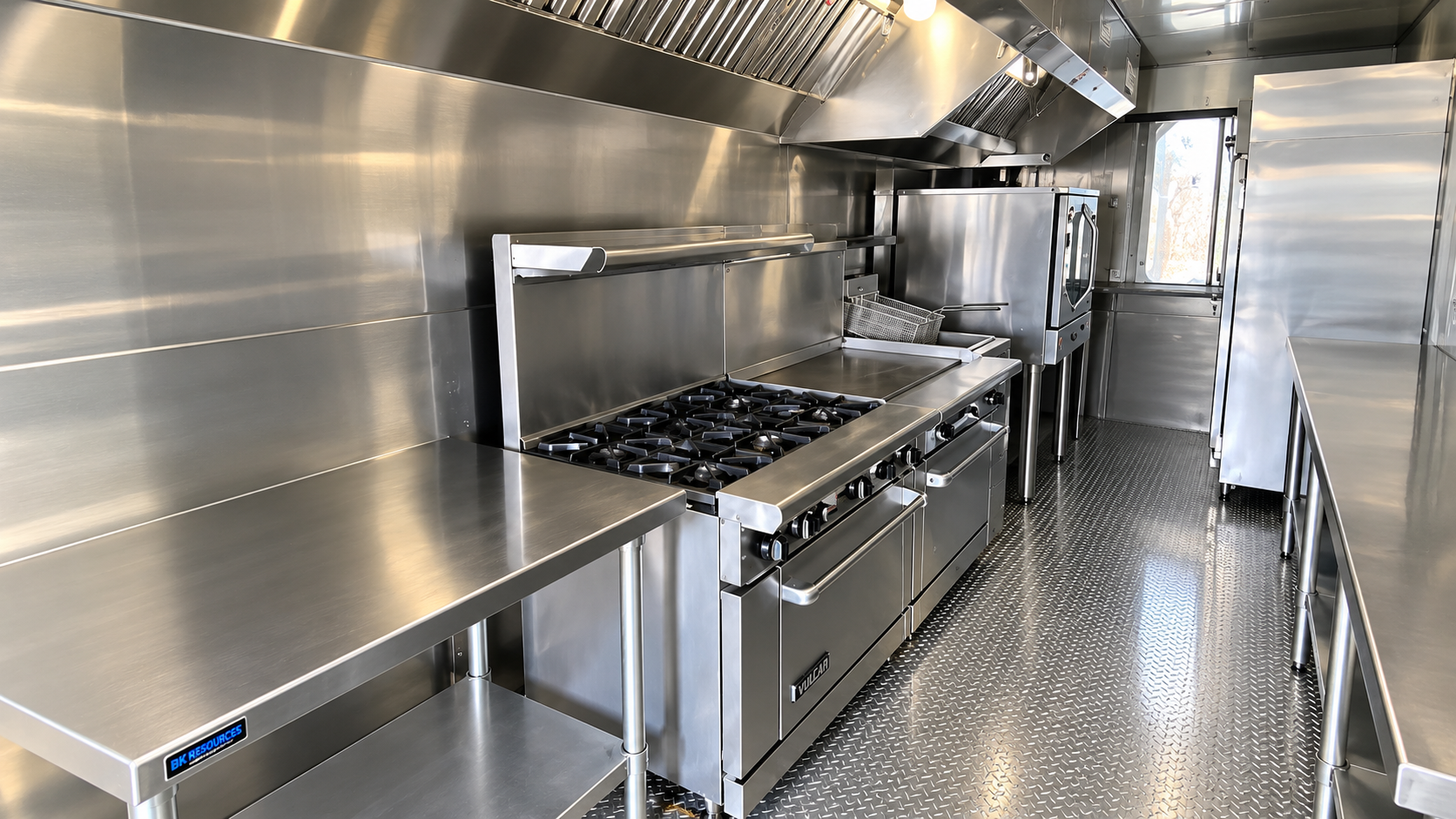
40ft Combo example A · 40ft nominal220V · single-phase · 200–220A
Single-stack convection oven
Griddle/oven combination
Six-burner range/oven combination
Deep fryers
Details come from named units in our equipment records (reviewed October 19, 2026). Your rental proposal confirms the unit and configuration supplied. Nominal length is a model label, not the interior space.
Water, drainage, fuel connections and the final electrical design remain specific to the supplied unit and site.
K1, the documented 24ft example, combines an oven, griddle, range and fryers with preparation sinks and reach-in cold storage. Compare those cooking methods with your menu, then review the unit-specific layout and connections.
The documented P1 is a 26ft preparation kitchen with sinks, a prep table, water heater and reach-in cold storage. Its list contains no oven, range or fryer, so preparation and any separate cooking arrangement need distinct roles.
P2 carries the Baby Bulk Kitchen label but documents preparation fixtures and reach-in cold storage, without cooking appliances. Compare its sinks and prep table with ingredient handling and batch preparation, while keeping any separate cooking requirement explicit.
K2 combines cooking appliances, preparation sinks and reach-in cold storage in a documented 28ft example. Compare its oven, griddle, range and fryers with the functions moving during each renovation stage; other 28ft configurations differ.
K14 is the documented 38ft cooking example, with an oven, griddle, range, fryers, sinks and reach-in cold storage. Use the equipment list to separate preparation, cooking and collection tasks before comparing the actual layout.
K21 adds a documented double-stack convection oven and tilting skillet alongside a fryer, griddle and range. Compare those cooking methods and reach-in storage with the menu; the inventory does not establish a meal-production rate.
K27 documents a double-stack oven, tilting skillet, fryer, griddle and range, plus a walk-in cooler and reach-in cold storage. Compare cooking and holding together without deriving batch capacity from the Bulk label.
The reviewed 40ft Bulk Combo example combines batch-cooking appliances with a walk-in cooler and reach-in cold storage. No dishwasher is documented, and the inventory supplies no batch-output or usable storage-capacity figure.
The documented 40ft Combo example joins cooking equipment with a walk-in cooler and reach-in cold storage. Its list has a single-stack oven and no machine dishwasher; compare actual features rather than assuming every Combo model includes the same functions.
Define the cooking requirement before selecting equipment
Start by listing the menu and identifying what has made a temporary kitchen necessary. A breakdown may interrupt a particular cooking function, while a renovation can move preparation and service through several stages. An event may require a defined period of temporary work around a venue's receiving and clear-out arrangements.
Explain which tasks can continue in an existing space and which need to move. Include the products, handling equipment and staff movements involved. That brief gives the model comparison a practical purpose: finding a configuration to review against the operation rather than choosing equipment by its exterior appearance or a broad size label.
Compare the nine kitchen model guides with the work ahead
The catalog has nine model guides: 24ft, 26ft, 28ft, 38ft and 40ft Mobile Kitchen; 26ft and 40ft Bulk Kitchen; 40ft Bulk Combo; and 40ft Combo. Their on-page specifications describe selected inventory examples. P1 and P2 document preparation equipment without a cooking line, while other examples list specific ovens, ranges, griddles or fryers.
Compare the named-unit appliance lists with the menu rather than treating length as a serving count. K1 and K2 list single-stack convection ovens, while K21 and K27 list double-stack ovens and tilting skillets. The selected 40ft Bulk and Combo examples also list walk-in coolers, without stating their usable volume or rated performance.
Coordinate your rental with events and catering
For events using shared facilities in Oregon or Washington, catering staff may need to receive supplies while venue employees prepare for an unrelated activity. Agree a supplier arrival plan with the venue contact, identifying who receives ingredients and where each preparation team collects its supplies.
Follow ingredients from receiving through storage and preparation, then describe the cooking task and where finished work goes next. Identify the points where staff hand items to another person or move between spaces. Include the busiest periods, when preparation, replenishment and service may overlap.
Ask for the proposed working layout and relevant equipment information so your kitchen lead can assess that sequence. Give any particular cart, container or packaging requirements. Overall length does not describe every entrance, work surface or circulation route, so those details need to be reviewed against the unit actually being considered.
Keep cold storage and dishwashing in the project brief
Temporary cooking is one part of a wider food-service operation. Identify where ingredients and products will be stored and how utensils or containers return for cleaning. Explain which existing facilities remain available and which supporting arrangements need discussion alongside the kitchen.
Give chilled and frozen storage requirements separately when considering a refrigerated container or trailer. For dishwashing, describe the items and their return pattern. Ask which functions are included in the kitchen proposal and which need another arrangement. Connect the positions and working routes so the project review addresses the complete operation rather than treating each equipment inquiry in isolation.
Review the property and the proposed connections
Provide the address, receiving entrance and intended equipment position. A facilities or property contact can explain shared loading activity, access restrictions and work that could change the area during the rental. Discuss staff routes and the movement of supplies as well as delivery of the unit itself.
Electrical entries are unit-specific: K1, P1, P2 and K2 list 220V single-phase at 200A; K14, K21, K27 and the selected 40ft Bulk Combo and Combo examples list 220V single-phase at 200–220A. Exact connectors, circuit design, gas, water and drainage details remain for the assigned unit’s connection review with a qualified site professional.
Build the rental period around the operational transition
Include the preparation needed before temporary cooking begins and the final move back to permanent facilities or another arrangement. A contractor's start and finish dates may describe only part of that period. For an event, include preparation and clear-out; for a breakdown, explain what is known about repair timing.
Ask about a short rental or longer lease based on the schedule and its uncertainties. Confirm how extensions, changes and collection notice would be handled. Keep the proposed equipment, operating dates and preparation tasks in a shared brief so the people arranging the rental and those using it work from the same information.
Request a current proposal for the complete arrangement
Ask the quote to identify the kitchen configuration, included equipment, availability, rental period and transport arrangements. Clarify which supporting functions and site tasks remain with the customer or another contractor. Review the proposal with both the kitchen lead and the person responsible for the property.
Compare options against the same menu, workflow, address and dates. Keep the accepted equipment list and layout with the project brief, and bring significant changes back for review. Contact the team to discuss the kitchen models relevant to your operation and request a current quote for the temporary arrangement you need.
Choose a guide by the question you need to resolve
If the main concern is moving between renovation phases, start with the guide that explores changing routes and transfers between spaces. If the challenge is repeated production, use a bulk-kitchen guide to work through the next batch and its handoffs. A service-focused inquiry can begin with staff overlap and collection of finished food.
These are ways to organize your questions, not a recommendation that a particular named model fits your site. Bring the resulting brief to the equipment discussion and request the configuration details for options worth reviewing. A useful comparison can involve several guides without assuming that a longer name or larger length label establishes operational suitability.
Keep the reason behind each equipment decision
When the team agrees that a task will remain in the building or move to temporary space, record why. The reason may be a menu requirement, a transfer route or a stage of the works. Keeping that context helps the next person understand which decision needs review if the project changes.
For example, a hypothetical change from plated service to packed meals could alter the final handling step even if the initial cooking task stays similar. Describe the revised work and ask how it affects the proposal. Update the shared brief and the related refrigeration or dishwashing questions rather than carrying an old equipment choice into a different operating plan.
Company-supplied accounts, adapted for this website.
The temporary kitchen rental supported our school meal program throughout a major renovation project. Their team coordinated closely with our staff and delivered exactly what was promised. We were able to keep daily operations running on schedule.
Michael T.Facilities Operations ManagerMoreno Valley Unified School District, California
When a renovation affected food service operations on base, they mobilized quickly and provided a complete temporary kitchen solution. The setup met operational requirements and allowed our personnel to continue receiving meals without interruption. Their professionalism exceeded expectations.
James W.Logistics OfficerFort Irwin, California
When our hospital food service area underwent modernization, they provided a compliant temporary kitchen that allowed us to continue serving patients and employees. Their installation team coordinated effectively with our staff and contractors. The experience was smooth and efficient.
Christopher A.Facilities ManagerVA Hospital, Arizona
Let’s talk about your project
Bring your dates. We’ll start with your needs.
Confirm the equipment, layout, site requirements and rental terms before you book.
Temporary refrigeration, kitchens and dishwashing can support many kinds of food-service operations. Each setting below starts with its own schedule, stock and site questions, and every project is reviewed individually.
Hospitality and restaurants
Hotels, restaurants and resorts can plan temporary refrigeration around breakfast, banquet and dinner service when a walk-in cooler fails or a kitchen is refurbished.
Healthcare food service
Hospital, nursing home and care-facility kitchens can describe meal schedules, delivery times and displaced stock so temporary storage follows the food-service routine.
Government and civic facilities
Municipal, county and public-building food-service teams can outline receiving arrangements, responsible contacts and project dates before a quote is prepared.
Military dining
Dining facility managers can explain the products displaced, the receiving arrangements and the proposed period, then review availability and terms with our team.
Education
Schools, colleges and universities can plan around term dates, serving windows and campus kitchen renovations so meal service can continue during repairs or construction.
Industrial and manufacturing workplaces
Plant cafeterias and employee dining areas can describe shift patterns and staged building work so temporary cold storage can be reviewed against the working schedule.
Events and catering
Caterers and venues can plan preparation windows, event days and overflow ingredients, and describe how stock moves between storage, the kitchen and service.
Food production and distribution
Producers, wholesalers and distributors can describe loading, staging and storage needs when a cooler breaks down or demand temporarily exceeds capacity.
These examples describe planning situations. Equipment, availability and terms are confirmed in a project quote.
Why Choose Us
Cold storage is only one part of a project. These are the questions we work through with you before anything is booked.
Refrigeration first, kitchens alongside
Start with refrigerated containers and refrigeration trailers, then add a temporary kitchen or dishwashing trailer when the project needs one, all in a single conversation.
Planning before delivery
Access, utilities and the intended position are reviewed before delivery is arranged, so the equipment is matched to your site rather than the other way around.
Emergency or planned work
Whether a walk-in cooler failed this morning or a renovation is months away, describe the real situation and plan around the stock, dates and people involved.
A local guide for every state
Planning guides cover all 50 states and more than 700 cities. Your address is then confirmed for equipment and delivery.