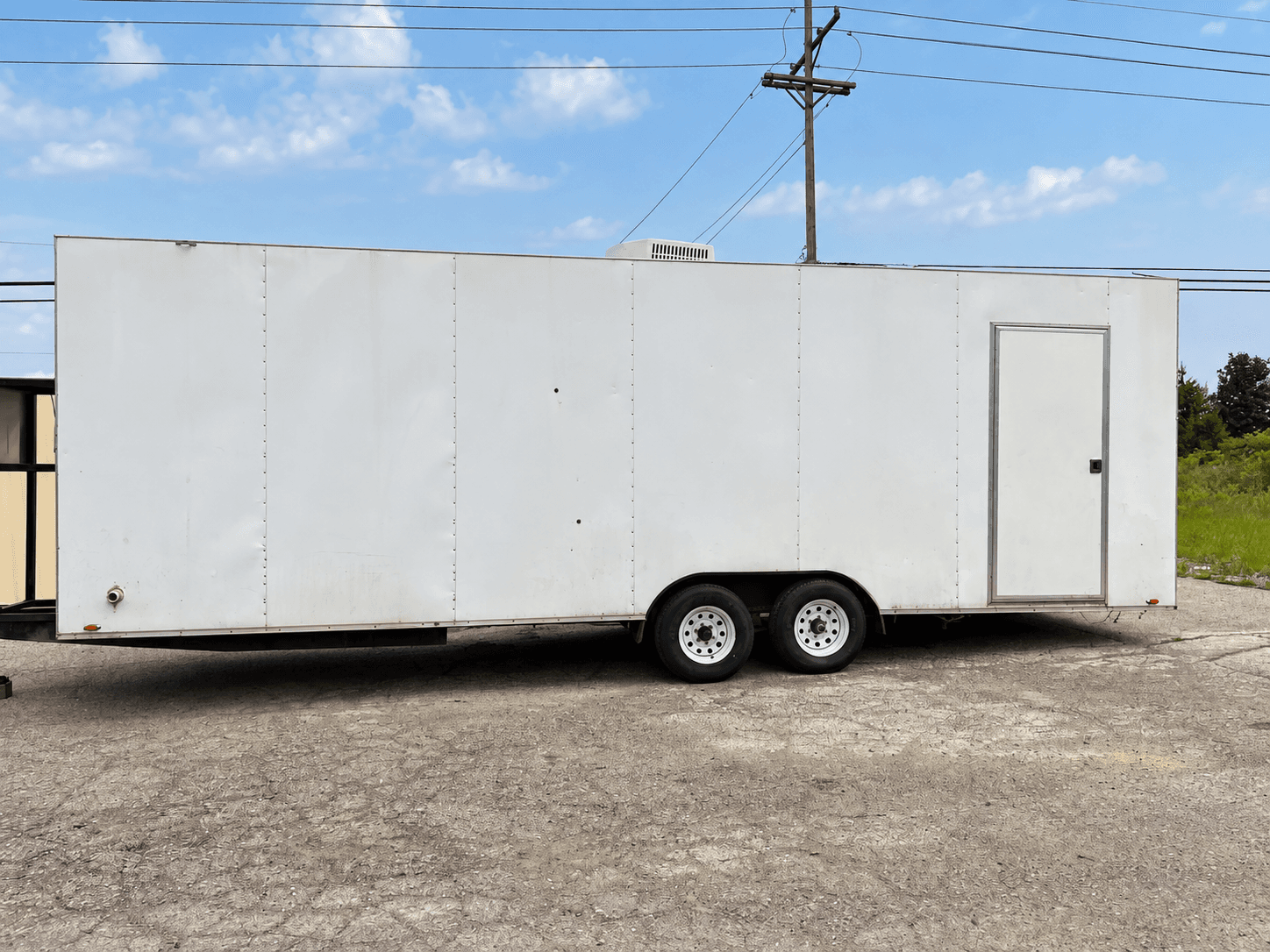
D7 has a low-temperature classification, with loading details unresolved
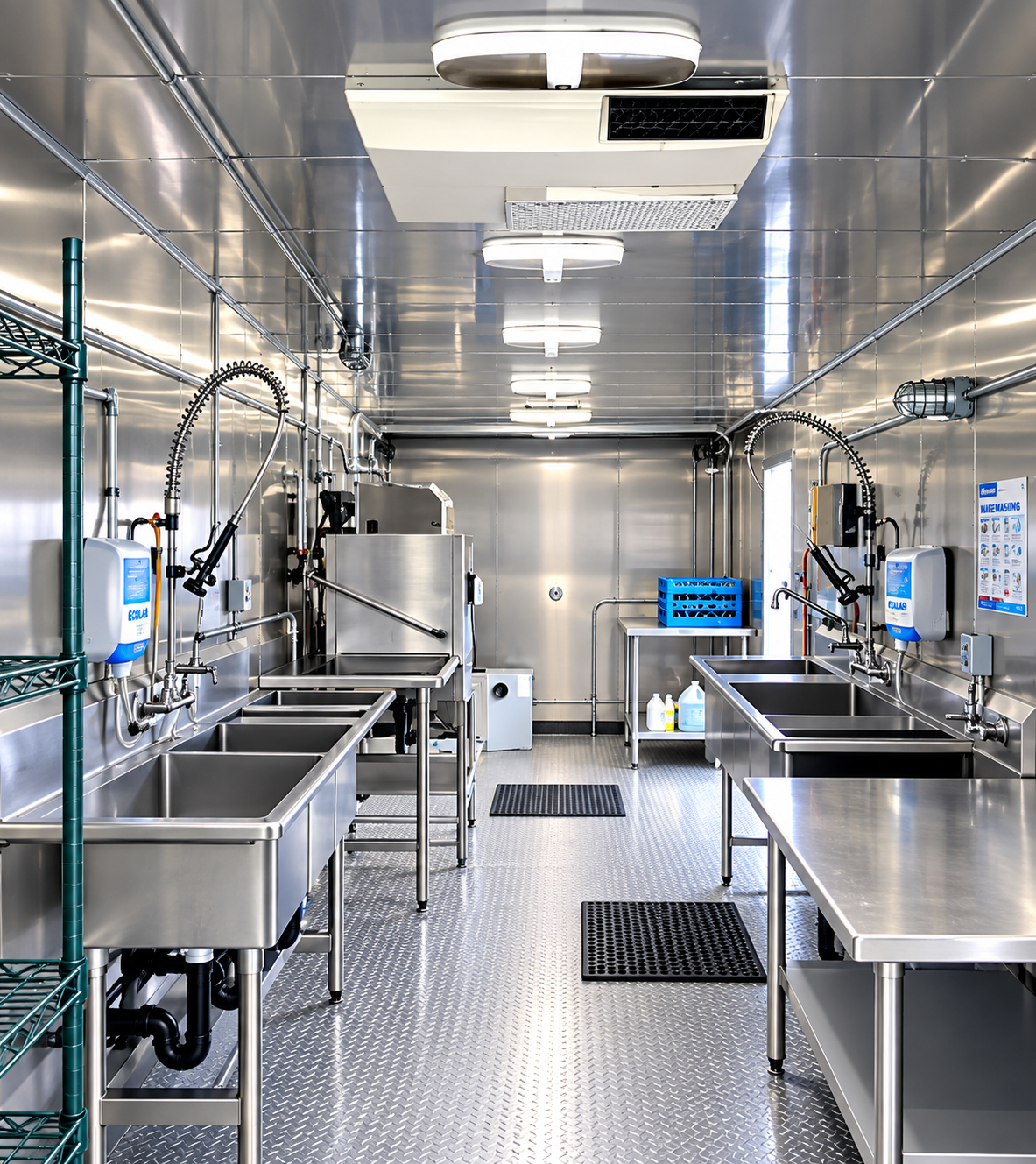
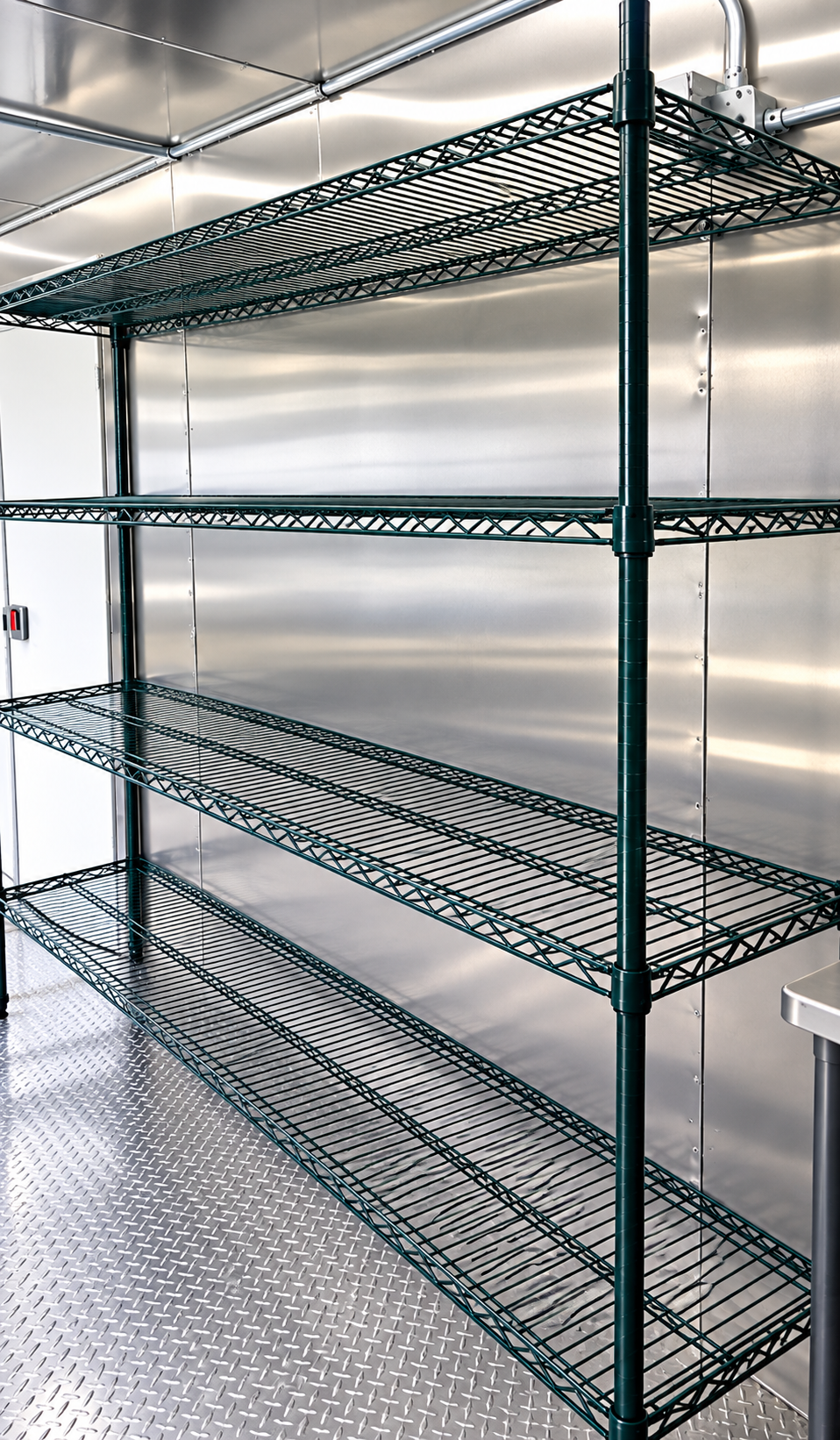
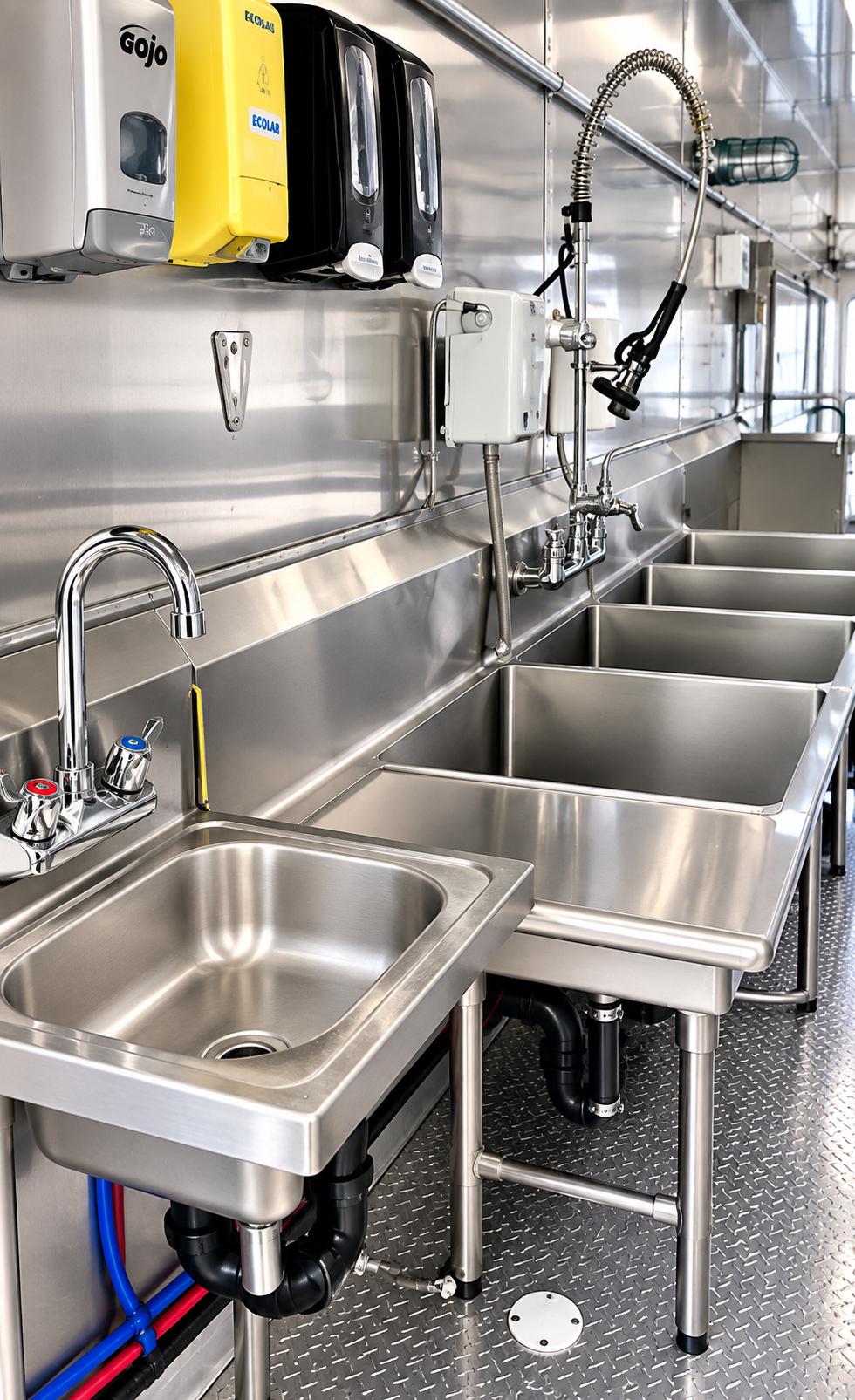
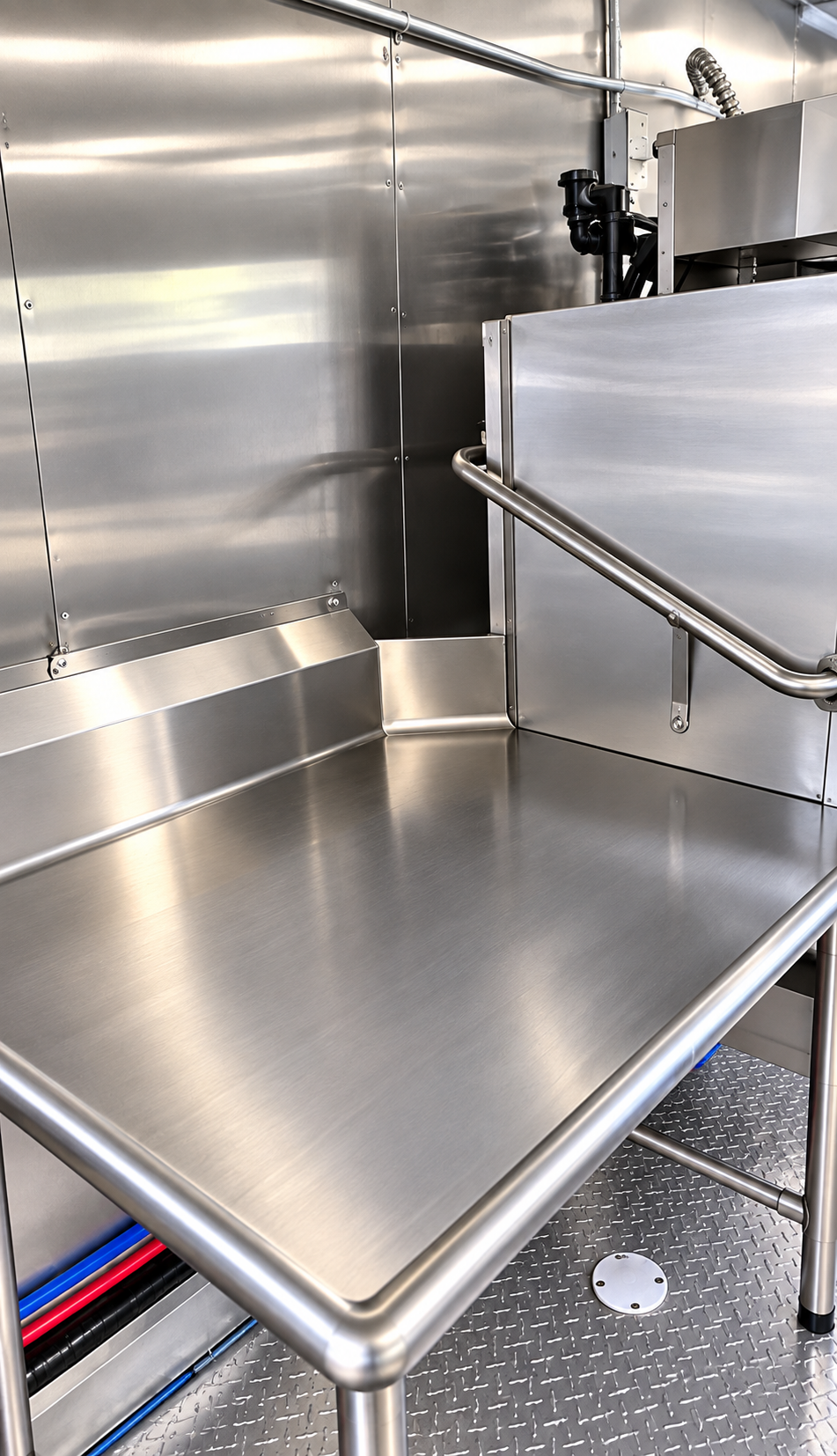
D7 is consistently identified as a nominal 38ft low-temperature dishwashing unit. Its recorded features include a soil tray, three-compartment sink, handwashing sink, prep table, storage rack, water heater, mop sink and wire racks. Those facts are usable for comparison even though the records disagree about the dishwasher’s loading mechanism.
The page therefore does not identify D7 as either push-through or conveyor. Low-temperature classification alone cannot resolve that difference, nor does it provide numeric wash and rinse temperatures, chemical supplies or throughput. The assigned machine’s documentation is needed for those operating details before staff plan a particular loading sequence or purchasing teams compare performance.
Use the size to set out clear zones
Soiled receiving, preliminary handling and clean-item collection are separate working tasks in any proposed dish-room arrangement. A 38ft inventory label supplies the nominal trailer length, without publishing a measured floor plan, rack staging area or doorway clearance. More length does not establish more machine capacity or a particular route through the trailer.
D7’s listed prep table and racks identify supporting surfaces and storage, but their dimensions are not given. Returned items, carts and waiting racks must be compared with the assigned layout. Keeping the clean-item destination visible also prevents unloaded items from occupying the space needed by the next part of the washing sequence.
Plan for pots, pans and trays as well as plates
A large kitchen produces large items. List the pots, pans, sheet trays and serving pieces that will pass through the dish room and when. These items often decide how much sink space and drying space are needed.
Ask the rental team how the proposed 38FT Low Temp Dishwashing Trailer handles bulky items and where they are stored while they dry. Agree where racks and carts stand when they are not in use, so that aisles stay clear at the busiest moments.
Check water, drainage and chemical storage
D7 lists a water heater and three types of sink, but the record gives no heater capacity, water demand, inlet size or drain connection requirements. Its electrical entry is 220V, single-phase, 220A, without an exact connector or circuit design. A qualified site professional needs the assigned unit’s information before arranging connections.
Low-temperature operation also requires the correct machine-specific instructions and supplies. The inventory does not identify a chemical product or prescribe an operating procedure. Those requirements should come from the actual equipment documentation and the responsible food-service team, rather than a generic description or an assumption about how another low-temperature trailer is operated.
Think about staff, heat and moisture
A busy dish room is hot, humid and noisy. Plan how many people will work inside at once, how long each shift lasts and when staff take breaks. Ask what ventilation the proposed unit includes.
Decide who is responsible for opening, checking and closing the dish room each day. A simple checklist at the door helps a new shift take over without delay. Make sure that someone is named to report problems to the rental team.
Confirm the route, ground and position
A 38ft trailer needs a clear approach and a firm, level resting place. Look at gate widths, turns, overhead cables, slopes and drainage. Photograph the route and the position for the rental team.
Keep the trailer close enough to the kitchen to shorten the walk with carts but clear of fire lanes and delivery access. A landlord, property manager or facilities office may need to approve the position, so ask early.
Compare it with the other dishwashing models
The site also describes 22ft and 24ft dishwashing trailers and a conveyor model. They suit different volumes and workflows, and the labels do not say which is best for you. Describe your volumes and peak times, then ask the rental team to explain the differences.
Read the other model guides to see how each topic is covered, and bring your questions to the call. A good choice follows from the work to be done and the space available, not from the length alone.
Prepare the quote request
Gather your volumes, peak times, site photographs, water and drainage information and dates before contacting Worldwide Refrigerated Container Rental Facilities. Ask what layout, equipment and supplies are proposed for the 38FT Low Temp Dishwashing Trailer, whether it is available and what the rental or lease arrangements would be.
Ask how the trailer would be delivered, connected and later collected at your address, and what the property must prepare. The dated refrigeration price tables elsewhere on this site are not a dishwashing quote. The team confirms current charges once your requirements and location are clear.