Define the item flow before discussing machine performance
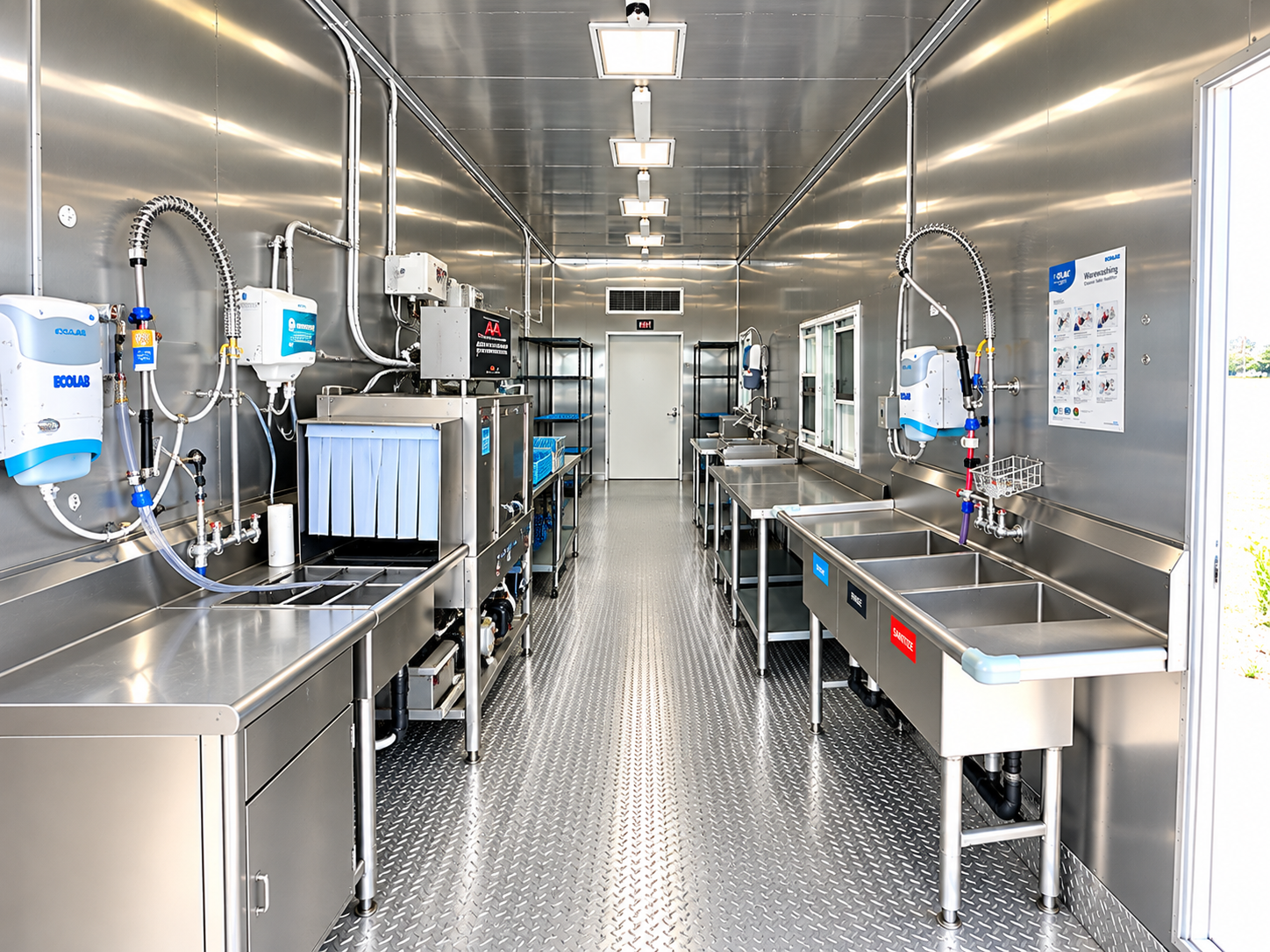
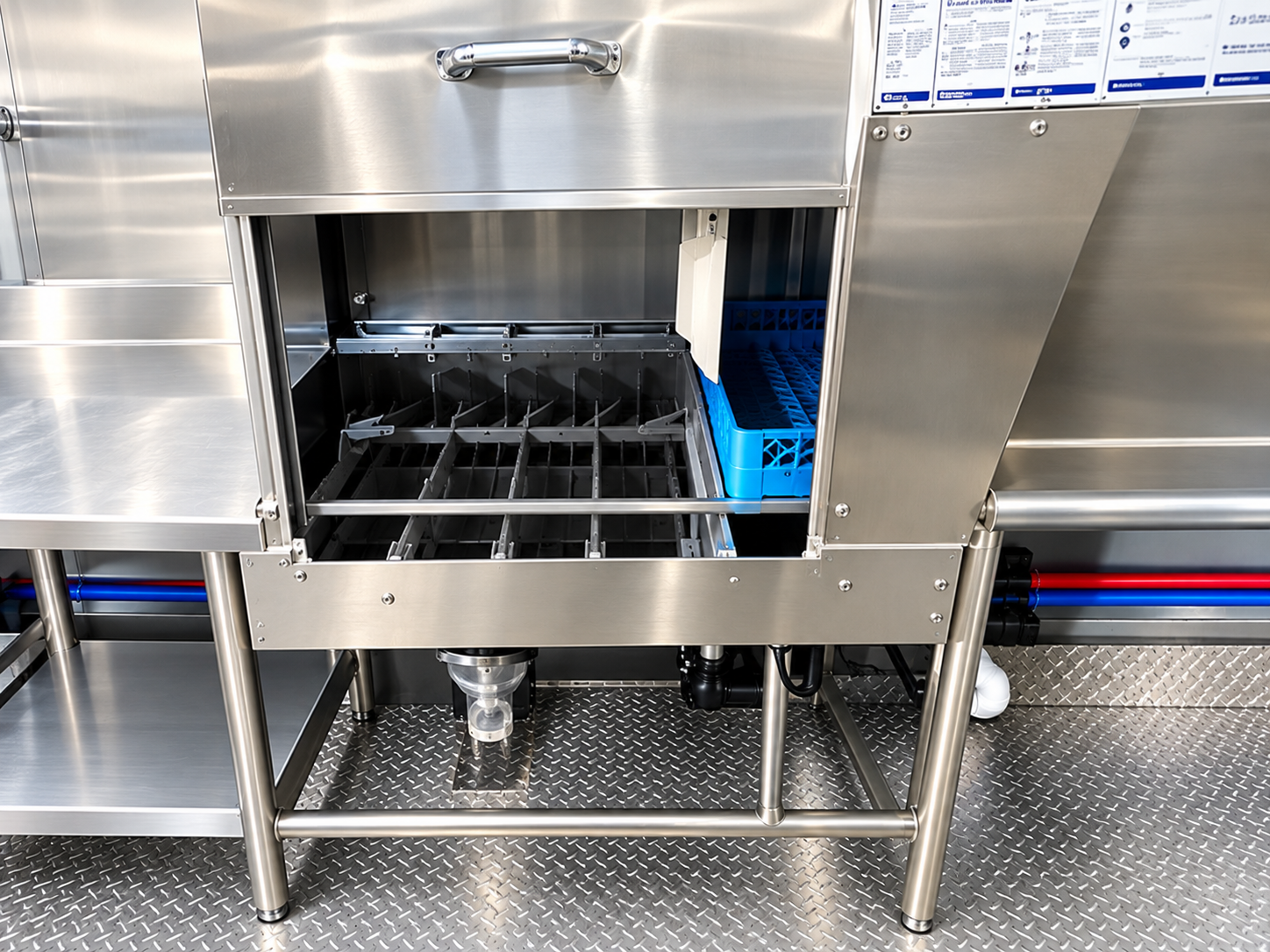
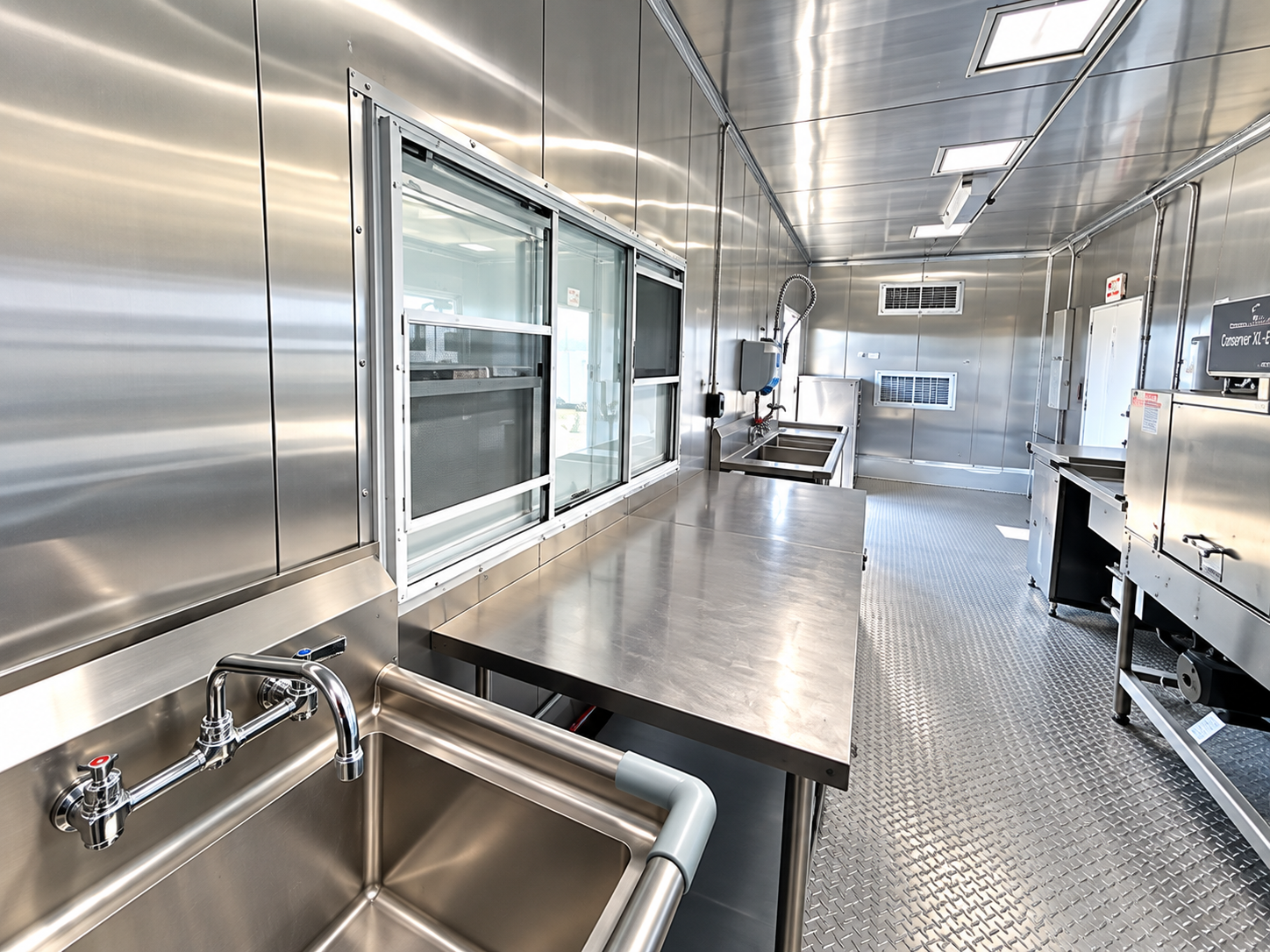
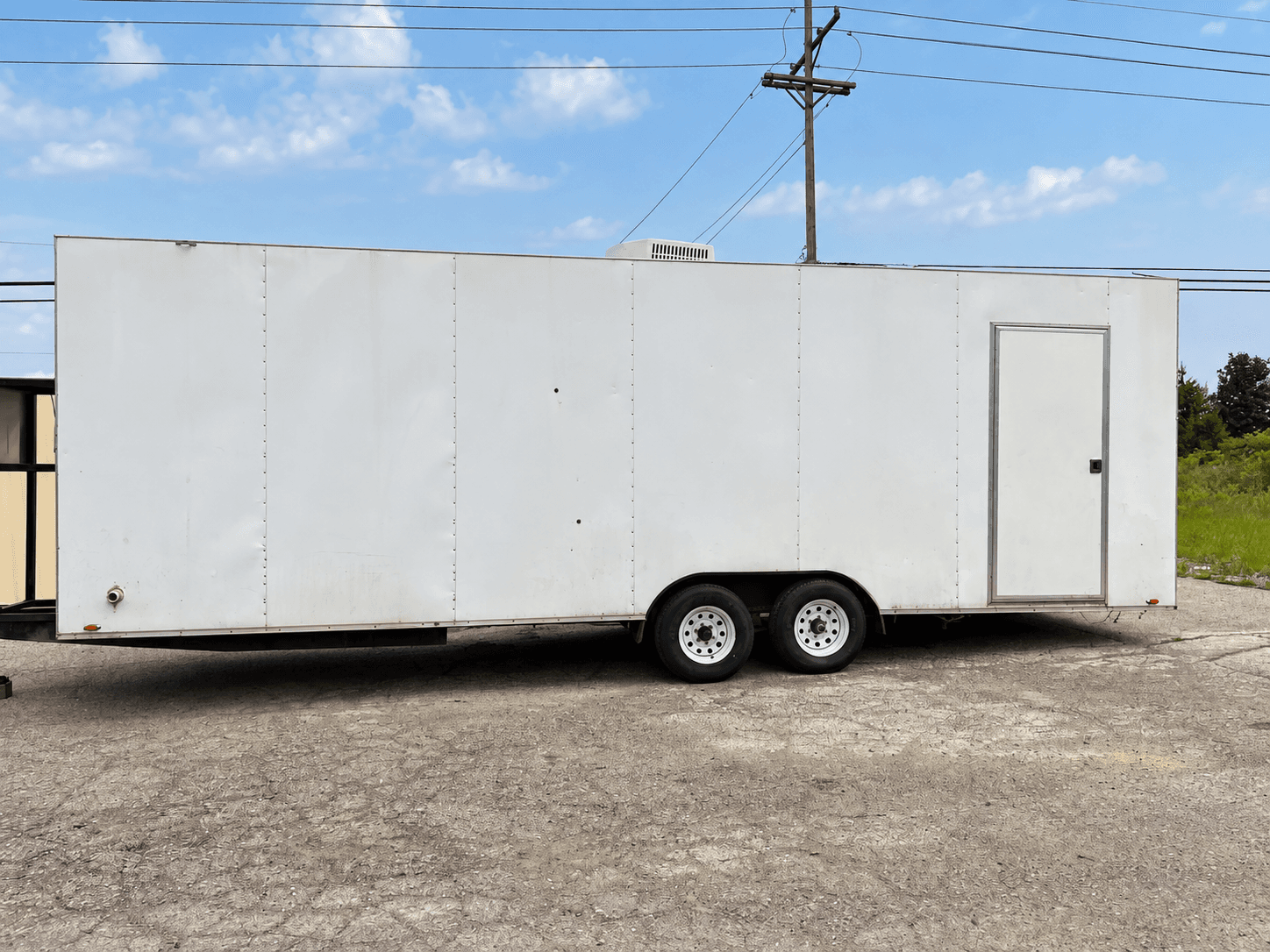
DTC1 documents a high-temperature conveyor dishwasher in a nominal 38ft trailer. The supporting list contains a soil tray, three-compartment sink, handwashing sink, prep table, storage rack, water heater, mop sink and wire racks. These are named-unit features rather than a fixed package or processing-rate guarantee for every 38ft conveyor trailer.
The busiest return period matters because item arrivals and clean collection can peak at different times. Trays, plates, utensils and cookware also differ in handling needs. The machine’s actual dimensions, operating instructions and layout are needed to compare that mix with the proposed sequence; the inventory supplies no racks-per-hour figure or numeric wash and rinse temperatures.
Plan the work before items enter the machine
Before items reach the conveyor, returned goods need an organized receiving and preliminary-handling area. DTC1’s soil tray, prep table and sinks identify functions to include, but the record does not publish their size or position. A waiting cart should not become an unintended obstacle to loading, handwashing or the next delivery of used items.
A useful working layout distinguishes the incoming return route from clean collection. It also gives waiting racks a destination so staff can see which task is ready and which is blocked. The equipment list can start that comparison, but an actual floor plan is needed before door openings, staging capacity or simultaneous staff movements are treated as established.
Connect industrial meal shifts with your rental plan
For an industrial workplace in Michigan, Ohio or Indiana, shift meals can send plates and utensils back in concentrated batches rather than a steady stream. Include the end of each break, the receiving route for used items and the staff handover that returns clean supplies before the next meal period.
Give unloading and clean-item transfer their own plan
Identify who receives items after the washing task and where those items go next. Describe the collection method, any staging required and the route back to the operation. A clear unloading plan helps the inquiry address the whole workflow rather than only the point where items enter the proposed machine.
Ask which staging or storage features are included in the configuration and which need another arrangement. Explain the carts, racks or containers involved so clearances can be reviewed. Your operation remains responsible for its working and handling procedures, and the equipment proposal should be assessed against the practical needs those procedures create.
Coordinate staff roles across the washing sequence
A conveyor-related inquiry should explain the responsibilities around receiving, loading, unloading and returning items to service. Describe whether those roles are shared or handled by separate teams. Include changes between service periods, when the return pattern or collection team may be different.
Request the operating information associated with the equipment being proposed and identify who will coordinate handover for your staff. Do not assume the model name defines a staffing level or a complete process. Review the working positions and handoffs with the people who will use the temporary arrangement before treating the plan as settled.
Request the actual utility and connection requirements
DTC1’s listed supply is 220V, single-phase, 300A. The documented 30ft conveyor example DTC3 lists 220V, three-phase, 200A instead. These examples show why nominal trailer length and a shared conveyor classification cannot establish electrical compatibility or substitute for the assigned unit’s technical information.
The inventory does not publish DTC1’s exact connector, circuit design, water flow, drain sizes or water-heater capacity. Those details need review against the proposed position and property services by a qualified site professional. Machine-specific instructions, staff handovers and the destination of clean items remain part of the operating plan, without assuming a particular output or training package is included.
Plan the term around the full dish-room requirement
For an emergency failure, explain which washing function has been interrupted and what is known about repairs. For renovation or construction work, identify when the permanent arrangement becomes unavailable and what determines its return. For an event, include preparation and final collection of remaining items.
Ask about short-term rental or longer lease terms suited to the expected program. Discuss how extensions, changes and collection notice would be handled. Keep any uncertain milestone visible in the brief. The proposed period should reflect the work needed to move into temporary washing and return to the next arrangement.
Request a quote for the connected workflow
Bring the item list, return pattern, staff responsibilities, storage plan and site information together. Ask the quote to identify the actual equipment, availability, dates, transport and customer responsibilities. Clarify what is included and which supporting tasks your team or another contractor needs to arrange.
Compare proposals using the same working requirement and period, with current charges and terms clearly stated. Keep the equipment information with the operating brief so the receiving team can review the accepted arrangement. Contact the team to discuss the 38FT Conveyor Dishwashing model and request a project-specific quote.