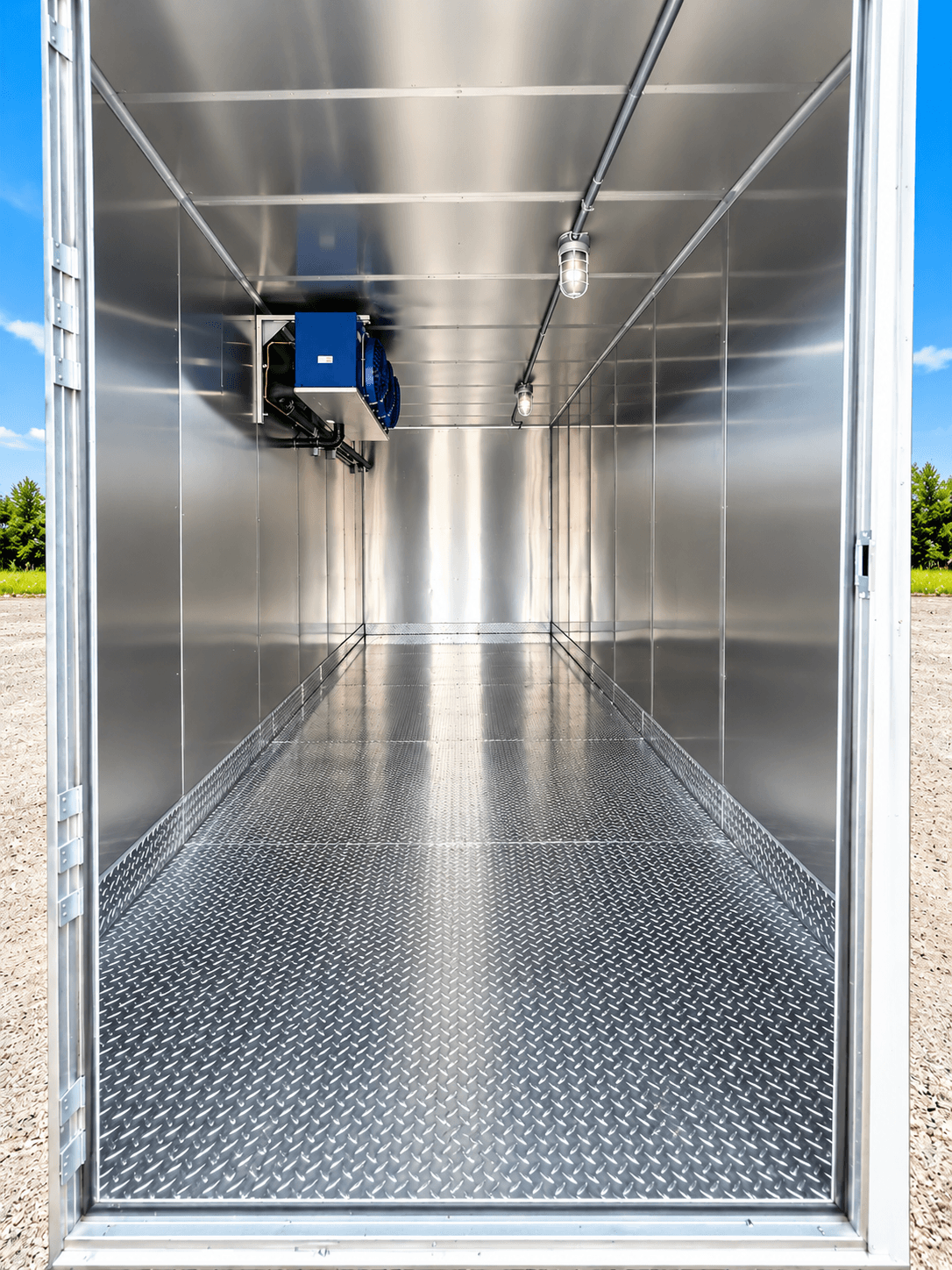
BXRT20–1Refrigerated trailer
- Nominal length
- 20ft
- Listed electrical supply
- 220V · single-phase · 40–60A
- Inventory temperature label
- 32°F
Idaho refrigerated container rentals give commercial kitchens another storage arrangement to discuss when a walk-in fails or a renovation takes permanent refrigeration out of use. Worldwide Refrigerated Container Rental Facilities serves Idaho with refrigeration trailer, cooler and freezer inquiries, alongside related kitchen and dishwashing options. A temporary store can support the conversation around urgent repairs, a staged replacement or additional catering supplies. Short rentals and longer lease needs should reflect the products and the way staff use them at the actual property. Share the address, receiving access and project dates to explore equipment, delivery coordination, current availability and a quote.
Emergency cooler or freezer failure in Idaho? A person answers rental inquiries 24/7. Availability and delivery timing are confirmed in your quote.
Plan your rental budget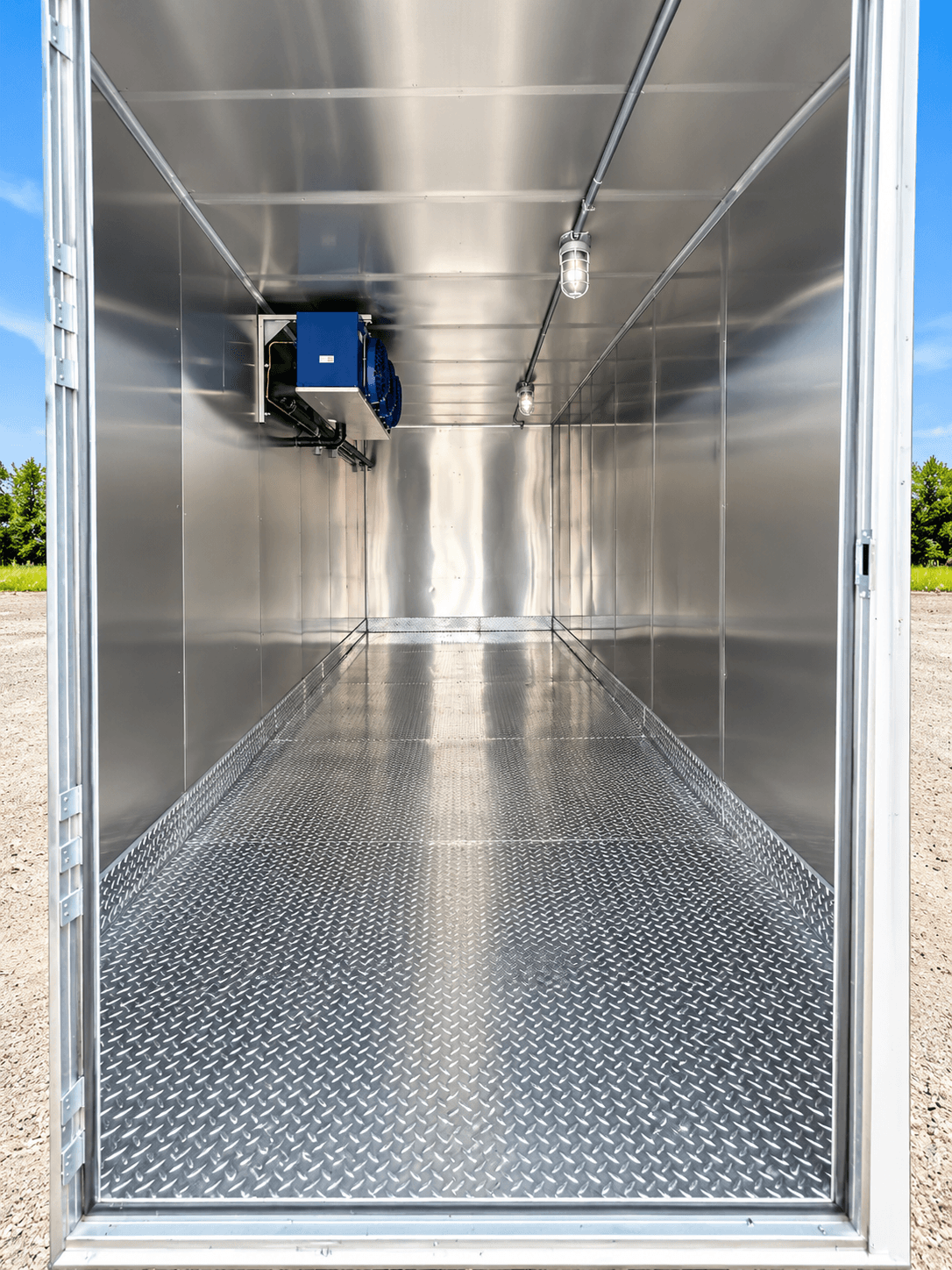
Compare the equipment
These published examples describe named company units. The supplied equipment, configuration and availability are confirmed for your project address.
Listed refrigeration trailer equipment: condensing unit, amps panel, lighting.
Equipment records reviewed October 19, 2026. Temperature labels are inventory labels, not verified operating ranges. Nominal length is a model label, not a measure of usable space or site footprint.
A closer look at your project area
Choose a city to explore refrigeration rental planning for your area. Bring the delivery address, preferred dates and storage needs to your inquiry.
Outline: Census TIGERweb generalized states, ACS 2025. City locations: 2025 Census Gazetteer.
Find the place that fits your project
Emergency portable walk-in cooler rentals in Idaho are used for breakdowns first, but the same equipment can be leased for renovations, events and seasonal storage. Tell the team whether you expect to rent for one repair or lease for a longer project, and the options can be compared in the quote. Cold storage is the usual starting point, and the same team can discuss a mobile kitchen rental or a dishwashing trailer lease if the interruption is wider.
Trailers for rent and trailer leasing cover emergency, short-term and long-term needs, from portable walk-in coolers to outdoor walk-in refrigeration for commercial sites. Tell the team what must stay cold and for how long; that decides whether a rental or a lease fits. Hotels, grocers, hospitals and commissaries can reach a person at any hour, because rental inquiries are answered 24/7.
Treefort Music Fest takes over downtown Boise every March, and a report on its 10th anniversary said 25,000 people attended, with an average daily attendance of 12,000 and 45 percent of attendees from out of state. Hospitality groups in Garden City, Kuna and Star may rent mobile refrigeration for a banquet season or lease modular cold storage during a hotel renovation. Hospitality operators in Middleton can rent mobile refrigeration for an event or lease modular cold storage during a renovation. Cold storage matters as much as cooking at a crowded event, so refrigerated trailers and a refrigeration container are usually the first equipment discussed, with mobile kitchen trailers added for larger menus. Dishwashing trailer rentals and warewashing capacity are quoted beside the kitchen and refrigeration when the whole food-service area is affected. Nothing here assumes available equipment or a delivery time; a person answers rental inquiries 24/7 and the quote confirms the details.
The Western Idaho Fair at Expo Idaho in Boise celebrates agriculture, ranching and life in Idaho each year. Caterers and concession operators in Placerville, Clayton and Jerome often need onsite refrigeration for a few days, then release the trailer as soon as the event ends. Events in Filer can rent portable cold storage for a weekend and release it afterward. Refrigerated trailers for rent and portable walk-in coolers hold drinks, produce and prepared food at crowded events, and a refrigeration container suits a longer festival run. Commercial refrigeration rentals are quoted for the actual address, so power, access and the rental period are confirmed before delivery. This is published public context, not company work; each request is quoted for its own address and dates.
When the Teton Dam failed on June 5, 1976, floodwater inundated Rexburg, Wilford, Sugar City, Salem and Hibbard, and accounts say about 3,000 homes were destroyed or heavily damaged. Caterers in St. Anthony and Rigby often need cold storage rental for a single event, while a commissary in Iona may need a longer lease through a busy season. Restaurants, schools and care facilities in Drummond can ask for an emergency walk-in cooler or freezer rental when a compressor fails. Mobile kitchen trailers and emergency refrigeration are often requested together by facilities that must keep serving meals through repairs. Kitchen, dishwashing and refrigeration rentals are separate equipment, and each can be rented short-term or leased long-term. A dishwashing trailer lease can be added to the same quote when returned dishes also need washing. These are public facts about the area, not a record of company jobs; equipment, availability and delivery are confirmed in the quote.
Micron’s annual report says construction on its first Boise fab began in October 2023 with first DRAM output projected for mid-2027, and that construction on a second Idaho fab began in 2026, with Hoffman Construction serving as general contractor. A phased renovation in Lewiston, a new kitchen build-out in Kimberly or a campus dining upgrade in White Bird can use a leased refrigeration trailer so food service continues while permanent cold rooms are rebuilt. Trailer leasing covers the length of a project: a refrigerated trailer for supplies and a refrigeration container for bulk stock, short-term or long-term. Walk-in coolers hold chilled stock and walk-in freezers hold frozen stock, so the rental should match whichever one is needed. A mobile dishwashing trailer and a mobile kitchen trailer are often requested together, with a refrigerated trailer for the stock. When cooking and dish washing stop together, a mobile kitchen, a dishwashing trailer and portable refrigeration can be one request. The context above comes from public sources and does not describe a completed job; availability and delivery are confirmed in the quote.
Dishwashing and kitchen outages often arrive together, so dishwashing trailer rentals and a mobile kitchen for rent are quoted beside emergency refrigeration. A dishwashing trailer, a mobile kitchen trailer and a refrigerated trailer for rent can each be short-term or long-term, depending on the repair. Emergency refrigeration, onsite and temporary, is meant to bridge the gap until the commercial walk-in freezer is repaired or replaced. A commercial walk-in freezer failure in Idaho is an emergency call, and onsite temporary refrigeration is how most such calls begin.
Emergency refrigeration rental covers walk-in coolers, walk-in freezers and refrigerated trailers for commercial kitchens, warehouses and plants. A mobile, modular or portable refrigeration setup in Idaho is chosen to match the walk-in cooler or freezer that failed. When cooking and dish washing stop with the walk-in freezer, a mobile kitchen, a dishwashing trailer and portable refrigeration can be one request. Emergency refrigeration rental, trailer rentals and trailer leasing are all handled through one inquiry, so one call can cover every option.
Refrigerated trailers for rent, refrigeration containers for lease and walk-in coolers for short-term use are the three questions most callers start with. A mobile dishwashing trailer and a mobile kitchen trailer are often requested together, with a refrigerated trailer for the stock. A mobile kitchen trailer for rent can sit beside onsite refrigeration, so cooking and cold storage are planned together. Portable refrigeration is not a permanent fix; it is a set of temporary facilities for the weeks between a failure and a repaired walk-in freezer.
Portable refrigerated trailers, refrigeration containers and outdoor walk-in refrigeration units can all be discussed for the same emergency. Mobile kitchens, dishwashing trailers and refrigerated trailers for rent can be quoted together as temporary facilities. Short-term or long-term, the same refrigerated trailer rental starts from the address, the stock and the dates. A portable refrigerated trailer suits most emergency calls, while a refrigeration container fits a longer, more stationary need.
Emergency refrigeration for commercial kitchens often starts with a portable refrigerated trailer and ends with a longer lease if repairs take time. Outdoor walk-in refrigeration can be set up beside the building as temporary facilities, so staff keep working while the permanent walk-in cooler or walk-in freezer is repaired. Modular and portable cold storage can be discussed in stages when a site needs more space than one refrigerated trailer provides. A commercial kitchen closed for repairs may need a mobile kitchen trailer lease, a dishwashing trailer and emergency refrigeration at the same time.
Refrigeration containers are often chosen for long-term storage, while refrigerated trailers are chosen for short-term emergencies; both can be rented. Onsite temporary facilities can include portable refrigeration, a mobile kitchen trailer and, if dishes are affected, a dishwashing trailer.
Boise Centre illustrates why a downtown receiving address needs more detail than the venue name. Its published loading guidance assigns the West building to the 9th Street dock and the East building to a different dock beneath the U.S. Bank building. The East approach has a slope, and the venue directs organizers to coordinate alternatives with its event manager where necessary. For temporary refrigeration planning at an authorized event, identify the assigned building, receiving point and separate operating position. A freight arrival slot does not establish where a refrigerated trailer or container may remain while ingredients are collected during service.
The Centre’s 2025 client guide also assigns catering and electrical services to its designated providers. Outside food requires prior written consent, while electrical requests belong on the submitted event plan. Those are venue-specific conditions, not permission to place rental equipment there. They make the first decision practical: is the requirement additional cold storage for an approved operator, or a displaced cooking or cleaning function as well? A kitchen arrangement changes food preparation; a dishwashing trailer handles the return of used pans and utensils. Refrigeration holds ingredients between those tasks. Each needs its own approved position, connections and working route.
During healthcare food-service planning in Idaho Falls or Twin Falls, Idaho, several preparation teams may collect ingredients from a shared receiving arrangement at different points in the day. Explain the planned transfer back to permanent rooms and identify who can confirm when ordinary food receiving is ready to resume.
Industrial maintenance schedules in Meridian or Pocatello, Idaho, may change after employee meal orders are confirmed, requiring receiving arrangements to be reviewed with site management. Review ingredient deliveries with the canteen supervisor and site coordinator so supplier instructions reflect the current contractor boundary and staff routes.
Explore the Boise rental guideA commercial kitchen upgrade in Meridian can take refrigeration out of use before the rest of the work changes meal preparation. Temporary storage can be considered around those stages, with the products displaced in each identified separately. One room may remain usable while another closes, creating a busy overlap later in the project. A portable cooler or freezer rental inquiry should describe that sequence, the required conditions and the way goods are packaged. This gives the equipment discussion a practical basis without treating every permanent room as equally occupied or assuming the entire project needs one unchanged temporary load.
A phased refurbishment can leave the range usable while the walk-in is closed, or take preparation benches out before cooking stops. Compare the work actually displaced. A refrigerated container or trailer addresses ingredient holding; a preparation unit supplies another work surface arrangement, and a cooking unit needs the appliances required by the menu. Dishwashing serves the returning utensils and pans rather than the ingredient load. Its sorting and clean-item handoff should stay distinct from the route used for food. Reopening one permanent room does not automatically end all three temporary jobs, so collection follows the remaining workload.
For government food-service teams in Pocatello or Boise, Idaho, a revised meal timetable can change ingredient retrieval without changing the dates proposed for the building work. Include the person authorized to release temporary equipment after the food transfer, so the proposed collection stage receives the same review as arrival.
Explore the Meridian rental guideNOAA describes strong seasonal temperature contrasts in Idaho, with elevation and mountain barriers creating substantial precipitation differences. Cool-season precipitation is important, and snowfall varies considerably with elevation. The Snake River Plain is a named geographic feature of southern Idaho, shown in the cited USGS map. These facts provide context for the destination and season rather than establish one outdoor setting for every commercial property.
Seasonal exposure belongs in the review of a particular position, not in an assumed capacity or temperature guarantee. The selected refrigeration unit’s documented electrical requirement must be checked against the supply available there. A long project also needs a usable staff approach when construction boundaries change. Where dishwashing equipment is involved, its water, wastewater and power requirements form a separate connection task. The regional setting cannot establish any of those connections. Compare the assigned model and site plan together, including how ingredients and cleaned utensils will move without blocking receiving.
For military meal service representatives in Twin Falls or Meridian, Idaho, documenting the actual site and receiving requirement can clarify questions before a proposed rental arrangement is reviewed. Ask for the complete proposed scope and availability, keeping any food-service schedule separate from an unconfirmed equipment commitment or transport arrangement.
A facility in Idaho Falls may have several teams using a single permanent refrigeration area. When that room is unavailable, a temporary store needs to reflect the separate ways those teams identify and retrieve their goods. A refrigerated container inquiry can describe stock ownership, packaging and the busiest overlap alongside the required product conditions. Some supplies may be accessed throughout a shift, while other products stay reserved for later. Explaining those patterns makes the working requirement clearer than a combined quantity alone and helps keep cooler and freezer needs distinct within the same repair or renovation project.
Shared refrigeration works better as an equipment decision when stock groups and retrieval patterns are visible. Large cases arriving together and ingredients taken out a few at a time place different demands on an entrance and aisle. Cooler and freezer requirements may also reduce at different stages of the repair. If meal preparation moves, compare the actual cooking or preparation equipment supplied rather than assuming every trailer has the same appliances. A dishwashing arrangement needs room for dirty returns and clean items awaiting use. The useful comparison is the proposed layout under the busiest working conditions, not empty floor area alone.
For hospitality food service in Meridian or Pocatello, Idaho, the quantity held for a function can remain unchanged while the timing of guest service moves. Explain how suppliers and employees share the receiving area, then ask the property representative to review the proposed equipment position.
Explore the Idaho Falls rental guideCatering in Pocatello can require temporary refrigeration before the public event begins. Ingredient deliveries, advance preparation and supplies for later functions may all share the same store. A cooler or freezer rental should be considered around that complete sequence and the conditions different products need. Attendance gives background, but package dimensions, delivery frequency and the quantity held at the busiest time explain the storage task. Include regular business continuing alongside the event so its stock remains part of the discussion, rather than treating function supplies as the only goods depending on the temporary equipment during the project.
Catering equipment has a sequence of use that extends beyond guest attendance. Refrigeration holds unopened cases and prepared components before service, while the preparation and cooking areas use smaller batches. Dishwashing activity can peak as pans and tableware return, including after the last meal is served. Compare that return stream with the offered loading arrangement and space for sorting and cleaned items. Keeping the ingredient route separate from used-item returns makes the working relationship easier to review. The final food transfer and the final washing task may finish at different times even during one short event.
Catering managers in Idaho Falls or Twin Falls, Idaho, may need to arrange temporary equipment before the organizer confirms the handover between supplier access and guest arrival. Give suppliers a named receiving contact and agreed arrival instructions, with a clear way to report changes to the catering lead.
Explore the Pocatello rental guideReplacing a walk-in in a Twin Falls commercial kitchen can leave goods needing temporary space before new refrigeration becomes part of normal operations. A refrigerated trailer or container can be considered for that transition. Identify what moves first, what remains needed for service and the orders expected during the work. Chilled ingredients and frozen supplies should remain distinct, with packaging and retrieval patterns explained. This helps define the busiest temporary load without assuming it will match the usual contents of a single permanent room or remain the same as different parts of the replacement project are completed.
The replacement sequence has an initial stock move, a period of everyday use and a return to permanent refrigeration. Each stage can have a different storage peak. A longer lease should accommodate that changing load without treating a nominal trailer length as a usable-capacity figure. If the renovation also removes washing facilities, a dishwashing trailer supplies a separate task with its own connections and clean-item destination. Cooking equipment becomes relevant where food production is displaced too. Match those work areas to the menu and cleanup pattern, keeping temporary ingredient holding available until the permanent rooms can receive the remaining supplies.
Where campus meal service spans separate buildings in Boise or Idaho Falls, Idaho, temporary arrangements may change how ingredients move between receiving points and preparation areas. Prepare a handover note covering supplier contacts, stock locations and outstanding access questions, with responsibility assigned for keeping it current.
Explore the Twin Falls rental guideAn emergency request starts with the stock displaced now and the next receiving peak. A person answers rental inquiries 24/7, so a late breakdown can be explained directly to the team. Equipment availability, dispatch and delivery timing are confirmed for the actual address; answering a call does not establish a delivery commitment.
For planned work, compare the proposed refrigeration layout and documented connections with the operating period. Food production and dishwashing can be considered where those functions are also displaced. Each work area needs an identified role, a practical route and a clear handback point, rather than one general construction completion date.
Food production teams planning phased maintenance in Pocatello or Boise, Idaho, may need to move ingredients without losing the connection between delivery records and batch allocation. Record where each product group will be held and how staff will locate reserved stock without interrupting the agreed receiving route.
For the Boise holding-space example, read the 40ft Refrigerated Container guide.
For a Meridian changeover, compare the 20ft Refrigerated Container guide. These nominal labels do not establish usable capacity or current availability.
For the 20ft Refrigerated Trailer, BXRT20–1, MT1 and LT2 each have listed electrical requirements of 220V single-phase and 40–60A. A listed temperature does not establish the full operating range. Confirm the offered unit’s usable capacity, temperature range and exact connector.
Continue with Nampa for catering refrigeration, Caldwell for repair-period holding and overflow, Coeur d'Alene for food-service events, or Post Falls for storage during refurbishment. These city guides provide another starting point for the equipment and operating task.
Before you decide
Yes. Supplies arriving during the temporary period can create a larger load than the goods held when the inquiry begins. Include order timing, packaging and which products are used first. Separating chilled and frozen needs makes the equipment discussion more useful than relying on an inventory snapshot or overall room dimensions alone.
Describe each stage and the products displaced as the project progresses. Include the period when normal and temporary stores overlap, along with any changing access. The proposed rental period and terms should reflect that sequence, including the final stock transfer, rather than assume a single unchanged requirement throughout the refurbishment.
The written proposal should establish the equipment, current availability, period, transport and charges for the actual address. Include known site services and access information when requesting it. Confirm responsibilities and terms for extensions or other changes before booking, especially when permanent repairs or construction still have an uncertain completion date.
The team can discuss a portable walk-in cooler rental or lease for a Idaho address, from a few days to several months. Useful details are the address, the quantity of stock, the required temperature and the expected dates. The quote confirms the equipment, the delivery timing and the rental terms for your site.
Emergency refrigeration can include portable refrigerated trailers, a refrigeration container, outdoor walk-in refrigeration or a walk-in cooler or walk-in freezer rental. Trailer leasing makes sense when a commercial kitchen will be closed for weeks, because one lease replaces repeated short-term rentals. Refrigeration is an emergency need: every call about a failed commercial walk-in freezer or refrigeration unit is an emergency call. Every call about a failed commercial walk-in freezer or refrigeration unit is an emergency call, and a person answers rental inquiries 24/7. Equipment, availability and delivery timing are confirmed in the quote.
City examples illustrate project planning; availability is confirmed for each delivery address.
Temporary refrigeration, kitchens and dishwashing can support many kinds of food-service operations. Each setting below starts with its own schedule, stock and site questions, and every project is reviewed individually.
Hotels, restaurants and resorts can plan temporary refrigeration around breakfast, banquet and dinner service when a walk-in cooler fails or a kitchen is refurbished.
Hospital, nursing home and care-facility kitchens can describe meal schedules, delivery times and displaced stock so temporary storage follows the food-service routine.
Municipal, county and public-building food-service teams can outline receiving arrangements, responsible contacts and project dates before a quote is prepared.
Dining facility managers can explain the products displaced, the receiving arrangements and the proposed period, then review availability and terms with our team.
Schools, colleges and universities can plan around term dates, serving windows and campus kitchen renovations so meal service can continue during repairs or construction.
Plant cafeterias and employee dining areas can describe shift patterns and staged building work so temporary cold storage can be reviewed against the working schedule.
Caterers and venues can plan preparation windows, event days and overflow ingredients, and describe how stock moves between storage, the kitchen and service.
Producers, wholesalers and distributors can describe loading, staging and storage needs when a cooler breaks down or demand temporarily exceeds capacity.
These examples describe planning situations. Equipment, availability and terms are confirmed in a project quote.
Cold storage is only one part of a project. These are the questions we work through with you before anything is booked.
Start with refrigerated containers and refrigeration trailers, then add a temporary kitchen or dishwashing trailer when the project needs one, all in a single conversation.
Access, utilities and the intended position are reviewed before delivery is arranged, so the equipment is matched to your site rather than the other way around.
Whether a walk-in cooler failed this morning or a renovation is months away, describe the real situation and plan around the stock, dates and people involved.
Planning guides cover all 50 states and more than 700 cities. Your address is then confirmed for equipment and delivery.
Use the rental calculator for a rate-range estimate and setup amount, then request a project quote that confirms availability, transport and the rental period.