BXRT20–1Refrigerated trailer
- Nominal length
- 20ft
- Listed electrical supply
- 220V · single-phase · 40–60A
- Inventory temperature label
- 32°F
Temporary cold storage in Post Falls, Idaho
The practical challenge in a kitchen renovation is often keeping ordinary work orderly while the building changes around it. Post Falls refrigeration rentals help customers discuss temporary chilled or frozen space for products displaced by that work, as well as emergency repairs and preparation overflow. Refrigerated containers, refrigeration trailers, portable coolers and freezers can be considered according to the load, handling routine and property. Start with what the kitchen must continue doing, then connect the equipment request with the construction sequence and complete storage period. Contact our team to discuss delivery, short rentals or longer leases, and request availability and a quote from Worldwide Refrigerated Container Rental Facilities.
Emergency cooler or freezer failure in Post Falls? A person answers rental inquiries 24/7. Availability and delivery timing are confirmed in your quote.
Plan your rental budget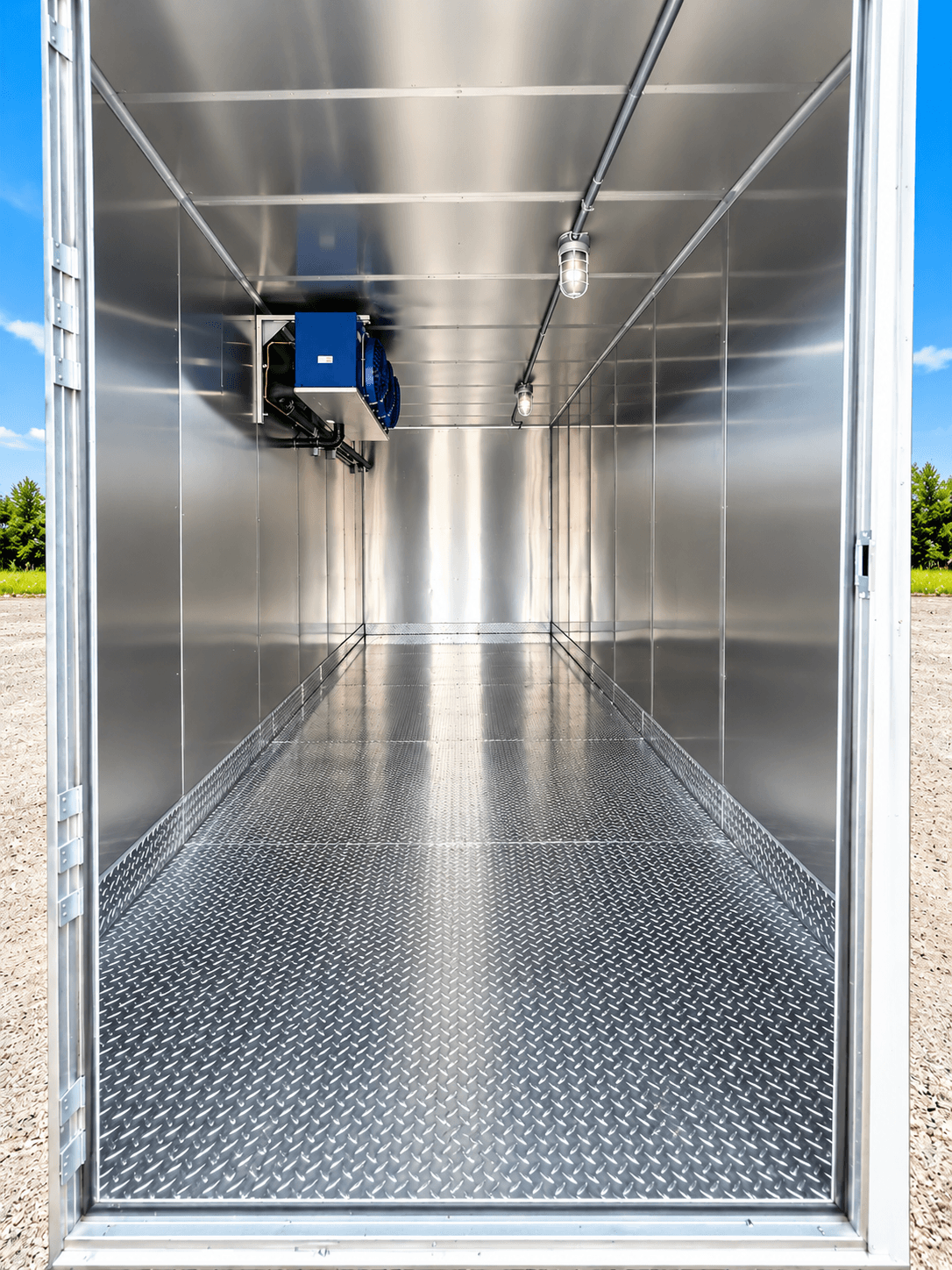
Compare the equipment
These published examples describe named company units. The supplied equipment, configuration and availability are confirmed for your project address.
Listed refrigeration trailer equipment: condensing unit, amps panel, lighting.
Equipment records reviewed October 19, 2026. Temperature labels are inventory labels, not verified operating ranges. Nominal length is a model label, not a measure of usable space or site footprint.
Renting a refrigeration container in Post Falls gives a catering commissary somewhere to put chilled and frozen stock while a failed compressor, door or walk-in is repaired. Short-term rentals usually fit a repair measured in days, while a longer-term lease fits a remodel, a phased construction project or a seasonal peak. If cooking is also interrupted, a mobile kitchen trailer rental can sit beside the refrigeration, and a dishwashing trailer for rent can handle returned dishes.
Refrigeration is an emergency need: when a commercial walk-in freezer or refrigeration unit breaks down, the call is an emergency, and a person answers rental inquiries 24/7. Hotels, grocers, hospitals and commissaries can reach a person at any hour, because rental inquiries are answered 24/7. Facilities in State Line, Moscow, Lapwai, Reubens and White Bird often ask the same questions as Post Falls operators: how long the rental will last, whether a lease makes sense and what the site needs for power and truck access.
Treefort Music Fest takes over downtown Boise every March, and a report on its 10th anniversary said 25,000 people attended, with an average daily attendance of 12,000 and 45 percent of attendees from out of state. Seasonal growers and packers in Meridian, Garden City and Nampa can compare a short-term refrigerated trailer rental with a long-term container lease for harvest and holiday peaks. Growers and packers in Kuna and Caldwell can compare a refrigerated trailer rental with a container lease for the busy season. Temporary kitchen trailer rentals, a dishwashing trailer and refrigerated trailers for rent can be quoted together as temporary facilities for a multi-day event. These are public facts about the area, not a record of company jobs; equipment, availability and delivery are confirmed in the quote.

When the Teton Dam failed on June 5, 1976, floodwater inundated Rexburg, Wilford, Sugar City, Salem and Hibbard, and accounts say about 3,000 homes were destroyed or heavily damaged. When a compressor fails at a grocery in St. Anthony, a school in Rigby or a care facility in Idaho Falls, an emergency walk-in cooler or freezer rental can protect the food while repairs are arranged. A restaurant in Iona or a food distributor in Drummond can call about emergency refrigeration rental as soon as a walk-in stops holding temperature. A failed commercial walk-in freezer after an outage is an emergency call, and walk-in coolers, walk-in freezers and refrigerated trailers are the first rentals discussed. Refrigeration is an emergency need: every call about a failed commercial walk-in freezer or refrigeration unit is an emergency call. The context above comes from public sources and does not describe a completed job; availability and delivery are confirmed in the quote.
Micron’s annual report says construction on its first Boise fab began in October 2023 with first DRAM output projected for mid-2027, and that construction on a second Idaho fab began in 2026, with Hoffman Construction serving as general contractor. Construction crews and facility managers near Star, Middleton and Placerville may lease refrigerated containers to hold food for a work site or a temporary dining area. Renovation projects in Twin Falls may use a rented refrigeration trailer, and a dishwashing trailer for rent if the dish room is affected. A long-term refrigeration trailer lease keeps supplies cold on site for the whole project, with power and access reviewed before delivery. A short-term emergency rental can become a long-term lease at the same address, as long as the quote says so. When cooking and dish washing stop together, a mobile kitchen, a dishwashing trailer and portable refrigeration can be one request. Nothing here assumes available equipment or a delivery time; a person answers rental inquiries 24/7 and the quote confirms the details.
Emergency refrigeration, onsite and temporary, is meant to bridge the gap until the commercial walk-in freezer is repaired or replaced. A commercial kitchen closed for repairs may need a mobile kitchen trailer lease, a dishwashing trailer and emergency refrigeration at the same time. Onsite temporary facilities can include portable refrigeration, a mobile kitchen trailer and, if dishes are affected, a dishwashing trailer. Mobile kitchens, dishwashing trailers and refrigerated trailers for rent can be quoted together as temporary facilities.
Kitchen, dishwashing and refrigeration rentals are separate equipment, and each can be rented short-term or leased long-term. Short-term or long-term, trailers for rent in Post Falls are quoted for the address, the stock and the dates. Modular and portable cold storage can be discussed in stages when a site needs more space than one refrigerated trailer provides. Short-term or long-term, the same refrigerated trailer rental starts from the address, the stock and the dates.
Dishwashing and kitchen outages often arrive together, so dishwashing trailer rentals and a mobile kitchen for rent are quoted beside emergency refrigeration. A mobile kitchen trailer for rent can sit beside onsite refrigeration, so cooking and cold storage are planned together. Portable refrigerated trailers, refrigeration containers and outdoor walk-in refrigeration units can all be discussed for the same emergency. Trailer rentals for emergencies are usually short-term, while trailer leasing for construction or seasonal work can run for months.
Trailer leasing makes sense when a commercial kitchen will be closed for weeks, because one lease replaces repeated short-term rentals. Temporary facilities for a commercial site usually mean refrigeration first, then a mobile kitchen or dishwashing trailer if cooking or washing is also interrupted. A commercial walk-in freezer failure in Post Falls is an emergency call, and onsite temporary refrigeration is how most such calls begin. Outdoor walk-in refrigeration can be set up beside the building as temporary facilities, so staff keep working while the permanent walk-in cooler or walk-in freezer is repaired.
A mobile, modular or portable refrigeration setup in Post Falls is chosen to match the walk-in cooler or freezer that failed. Emergency refrigeration in Post Falls can be rented for a few days or leased long-term, depending on how long the commercial walk-in is down. Emergency refrigeration rental covers walk-in coolers, walk-in freezers and refrigerated trailers for commercial kitchens, warehouses and plants. Emergency refrigeration can be arranged as a refrigerated trailer, a refrigeration container or a portable walk-in cooler, depending on the stock and the site.
A contractor may describe the project in demolition, installation and finishing stages. The kitchen needs another view: the last normal receiving day, the first stock transfer and the moment permanent storage can accept goods again. Put those milestones alongside the work sequence. Include incoming deliveries that arrive while the displaced inventory is still in temporary storage.
A Post Falls operation preparing food for a Rathdrum function may need storage beyond the contractor's working hours. A Coeur d'Alene facility could instead need a separate equipment position for its own room closure. If Hayden forms part of the same inquiry, identify that address and product load independently. Explain the actual local relationship so the proposed arrangement follows each kitchen's work.
Read the 20ft Refrigerated Container guide alongside this page when planning renovations; it looks at how to organize stock for a longer stay and at after-hours access to the unit.
State chilled and frozen conditions separately, then describe the packaging and largest items staff move. Cases, carts and food containers create different access needs. Compare the proposed refrigeration trailer, refrigerated container or walk-in cooler using confirmed interior and entry details. Ask which shelving or other arrangement is included where that affects daily use.
Two nearby cities approach their projects differently. Coeur d'Alene’s guide addresses food-service work and events, while the guide for operators in Lewiston addresses commercial access coordination, citing the Lewis-Clark State entry “campus notice, March 24, 2025”. Bring the same practical questions about access, timing and storage to your Post Falls inquiry.
The highest load is not the only consideration. Explain whether staff retrieve small quantities throughout service or remove large batches at set stages. Plan a reachable place for essential ingredients and retain labels. A freezer requirement should be explicit in the final configuration rather than treatinged as an assumed feature of any cold-storage option.
A military food-service team planning phased work in Post Falls or Hayden, Idaho, can describe how employee ingredient routes might change as permanent areas close and reopen. Ask the authorized representative to identify the documents and receiving details needed for review, rather than assume an inquiry confirms site access.
Provide photographs and measurements showing the entrance, approach, surface and intended equipment position. Include overhead obstructions and ordinary receiving activity. Identify any later project phase that occupies the same area. Required access and clearances must remain usable, and the rental should have a workable collection route when construction materials or other equipment are present.
NOAA's Idaho climate summary describes strong seasonal differences and precipitation contrasts linked partly to elevation and mountain barriers. Explain the actual Post Falls site's drainage, exposure and proposed use period rather than assigning a statewide pattern to the property. Obtain the equipment's electrical requirements and arrange appropriate review of the available connection before the first transfer.
For an unexpected refrigerator failure, give the address, product types, estimated quantity and next service deadline. Follow established food-safety procedures for goods affected by the interruption. Once rental options are confirmed, use a clear loading sequence so staff can reach the next meal's ingredients rather than having to rearrange the entire temporary room.
A Post Falls proposal should identify the equipment, full use period, transport and collection arrangements together. Discuss additional charges and how uncertain work dates affect the terms. If temporary kitchen or dishwashing equipment is also involved, show the shared layout so cold storage can support the overall operation without obstructing its other working areas.
For work lasting beyond one service cycle, identify who maintains the stock arrangement and communicates changes between shifts. Include normal checks, rotation and cleaning access in the routine. Review the layout when supplier quantities or the menu change. The first day's loading plan should evolve with the kitchen rather than becoming an obstacle to later preparation.
Before you book
Include the time needed to transfer stock before permanent storage closes. That may place the requested start ahead of the first active workday. Explain the loading sequence and operating schedule, then confirm the equipment and rental terms for the complete period required by the kitchen.
Displaced stock can still be held when new supplier orders arrive, creating a peak larger than the first transfer. Include prepared batches and packaging as well. The confirmed equipment layout should support that overlap and allow staff to retrieve products without repeatedly rebuilding the load.
Identify the work milestone that controls the return to permanent storage and ask how period changes are handled. Keep the provider informed as the project develops. Collection and any altered terms should be discussed rather than assuming the original arrangement automatically extends or ends early.
Rent a refrigeration container for a breakdown that will be fixed in days; lease it when the permanent cooler or freezer will be out of service for months. Useful details are the address, the quantity of stock, the required temperature and the expected dates. Equipment availability, delivery arrangements and setup are confirmed in the quote, not assumed.
Portable refrigerated trailers, refrigeration containers, outdoor walk-in refrigeration, and portable walk-in coolers or walk-in freezers can be discussed for onsite, short-term or long-term use. A dishwashing trailer lease can be added to the same quote when returned dishes also need washing. Every call about a failed commercial walk-in freezer or refrigeration unit is an emergency call, and a person answers rental inquiries 24/7. Equipment, availability and delivery timing are confirmed in the quote.
These public references inform the planning examples; equipment availability and delivery arrangements are confirmed for your address.
Temporary refrigeration, kitchens and dishwashing can support many kinds of food-service operations. Each setting below starts with its own schedule, stock and site questions, and every project is reviewed individually.
Hotels, restaurants and resorts can plan temporary refrigeration around breakfast, banquet and dinner service when a walk-in cooler fails or a kitchen is refurbished.
Hospital, nursing home and care-facility kitchens can describe meal schedules, delivery times and displaced stock so temporary storage follows the food-service routine.
Municipal, county and public-building food-service teams can outline receiving arrangements, responsible contacts and project dates before a quote is prepared.
Dining facility managers can explain the products displaced, the receiving arrangements and the proposed period, then review availability and terms with our team.
Schools, colleges and universities can plan around term dates, serving windows and campus kitchen renovations so meal service can continue during repairs or construction.
Plant cafeterias and employee dining areas can describe shift patterns and staged building work so temporary cold storage can be reviewed against the working schedule.
Caterers and venues can plan preparation windows, event days and overflow ingredients, and describe how stock moves between storage, the kitchen and service.
Producers, wholesalers and distributors can describe loading, staging and storage needs when a cooler breaks down or demand temporarily exceeds capacity.
These examples describe planning situations. Equipment, availability and terms are confirmed in a project quote.
Cold storage is only one part of a project. These are the questions we work through with you before anything is booked.
Start with refrigerated containers and refrigeration trailers, then add a temporary kitchen or dishwashing trailer when the project needs one, all in a single conversation.
Access, utilities and the intended position are reviewed before delivery is arranged, so the equipment is matched to your site rather than the other way around.
Whether a walk-in cooler failed this morning or a renovation is months away, describe the real situation and plan around the stock, dates and people involved.
Planning guides cover all 50 states and more than 700 cities. Your address is then confirmed for equipment and delivery.
Use the rental calculator for a rate-range estimate and setup amount, then request a project quote that confirms availability, transport and the rental period.