Ask what the Bulk Combo label includes
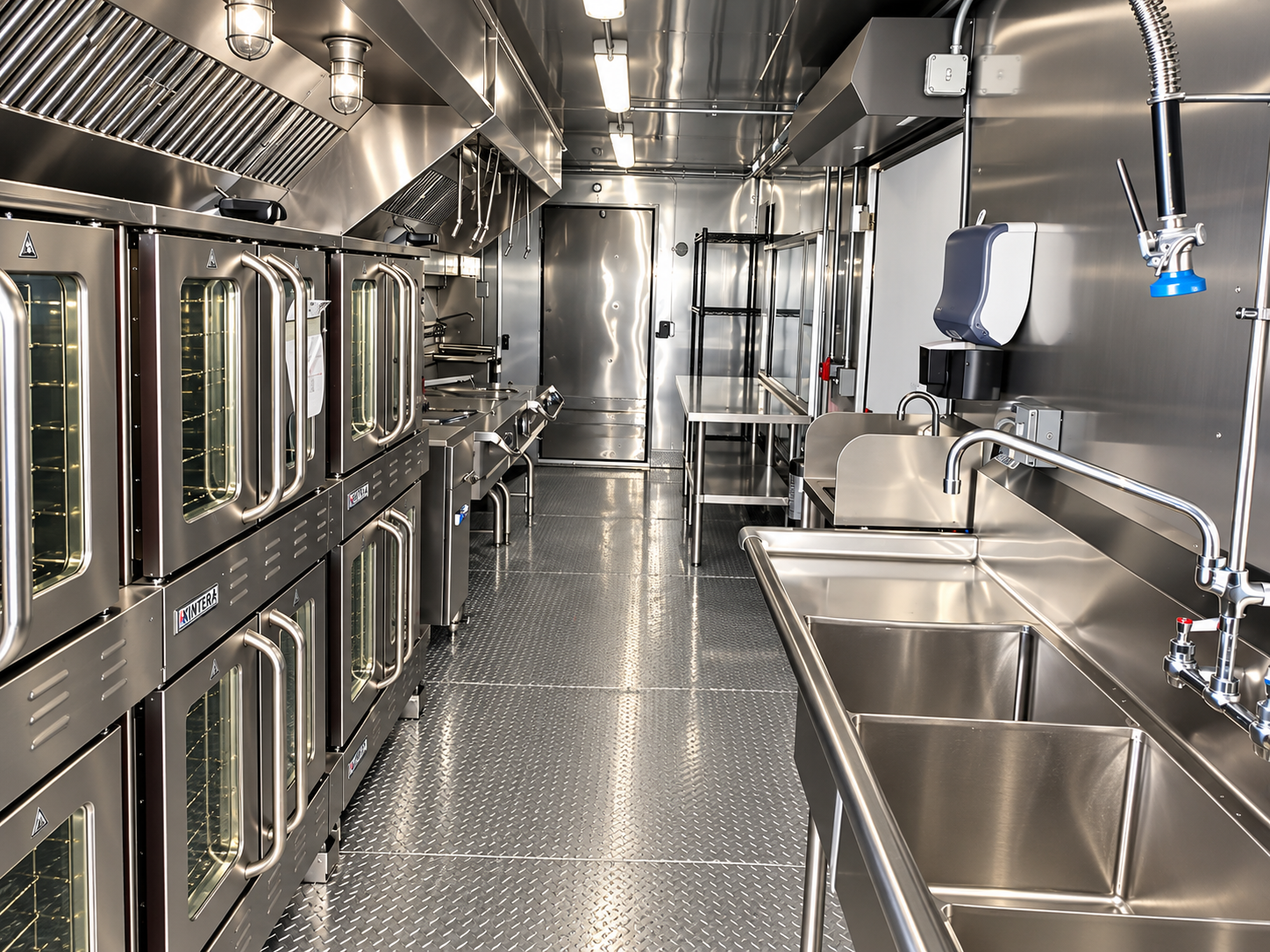
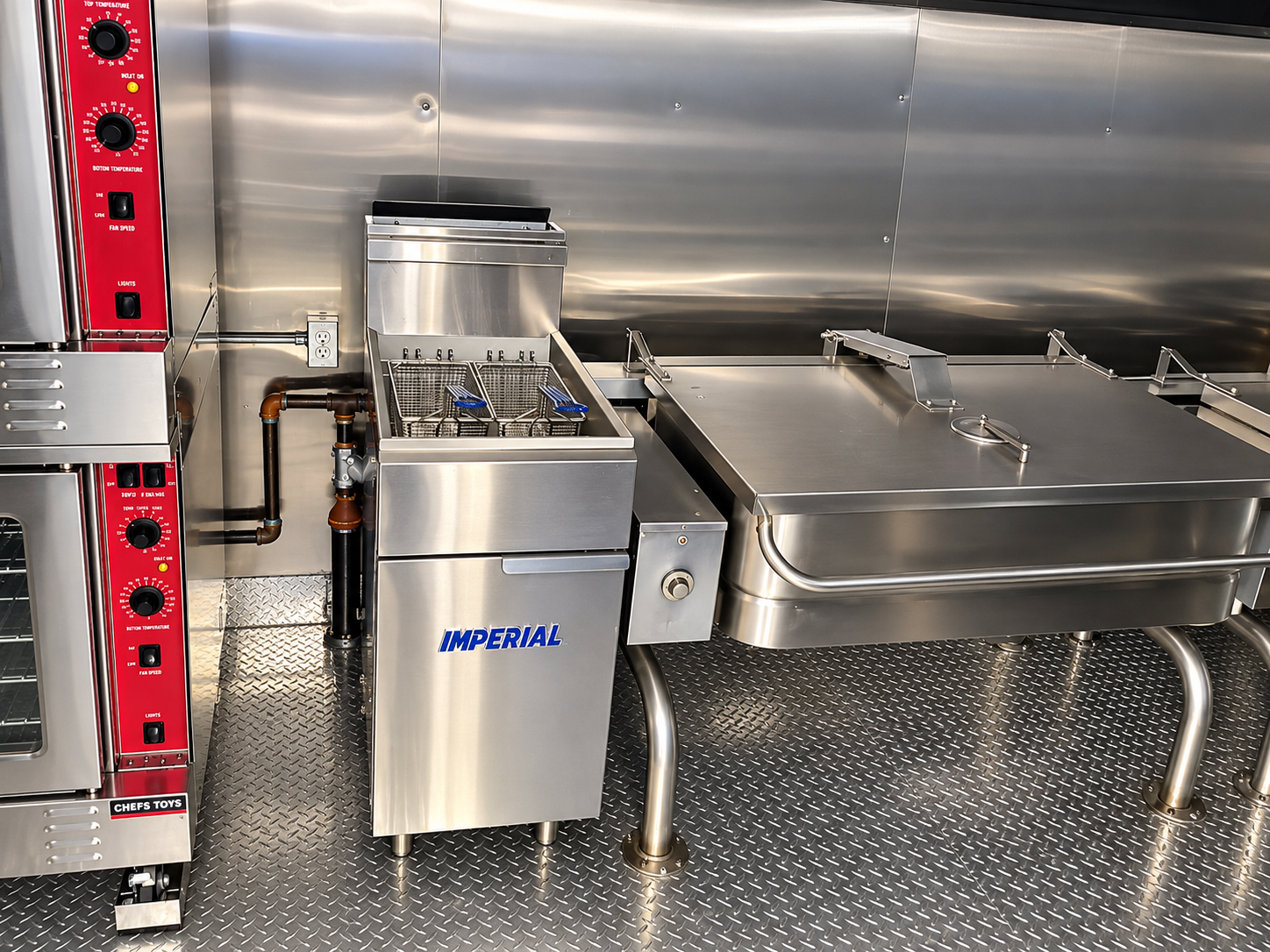
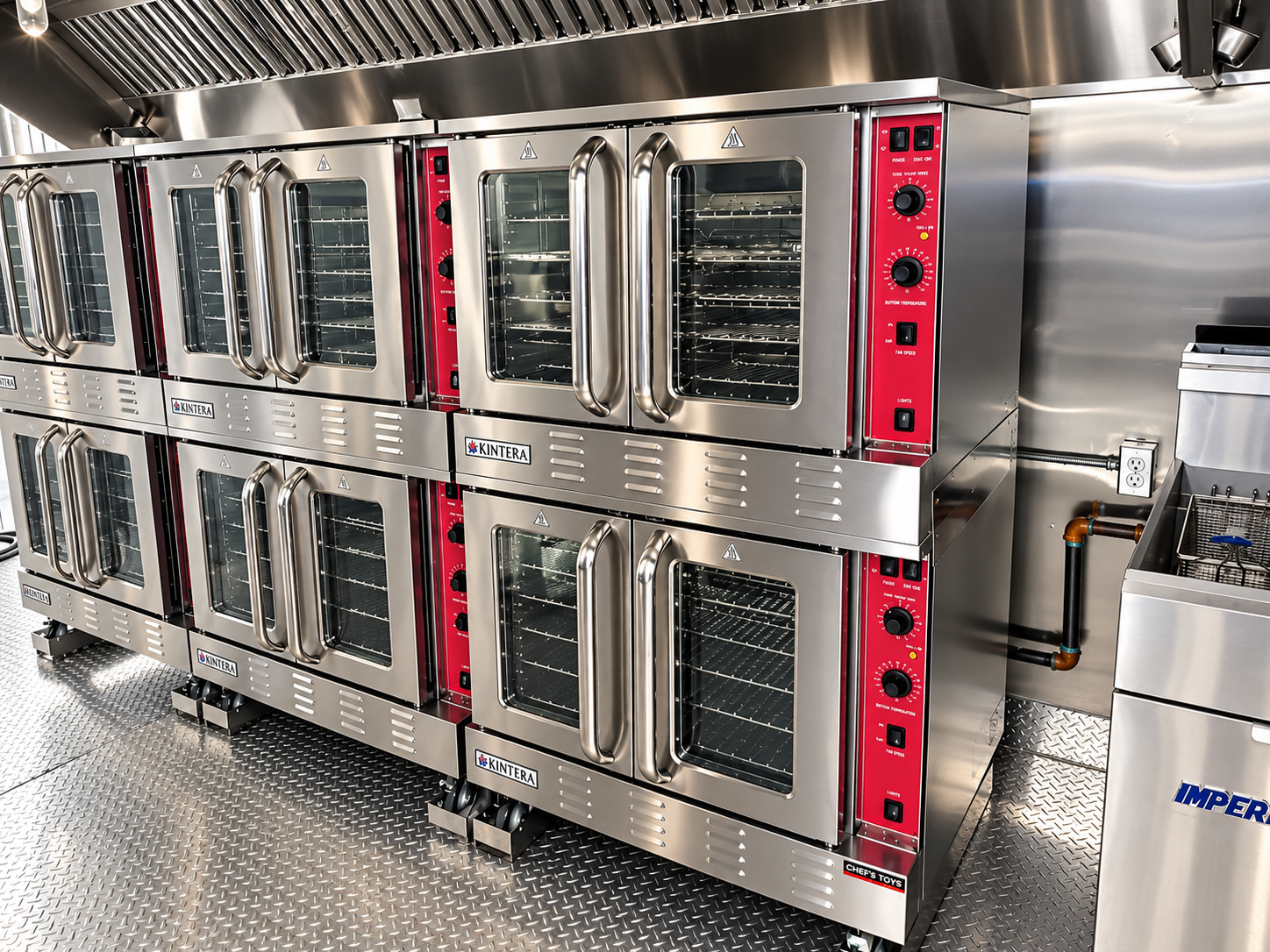
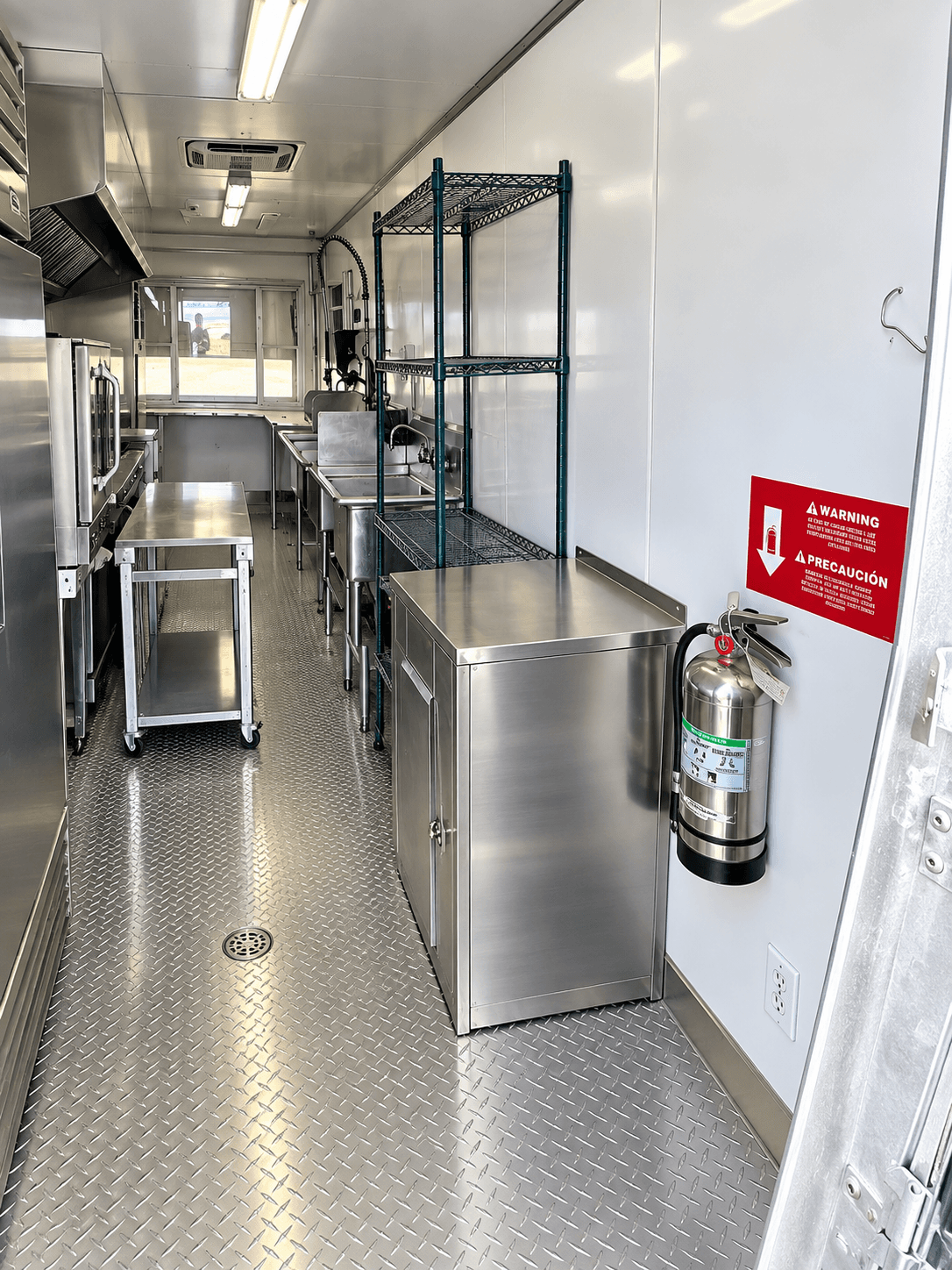
The reviewed Bulk Combo example lists a double-stack convection oven, deep fryer, tilting skillet, griddle/oven combination and six-burner range/oven combination. Its preparation equipment includes a handwashing sink, three-compartment sink and prep table, alongside reach-in refrigeration and a walk-in cooler. These features describe the named example rather than every trailer using the Bulk Combo label.
The combination documented here is cooking plus cold holding. No machine dishwasher appears in the list. That distinction helps separate ingredient storage, active production and the return of used utensils instead of reading Combo as an all-inclusive package. The record supplies no batch size, meal-production rate, appliance capacities or usable cold-storage volume.
Describe your batches, not just your menu
The double-stack oven and tilting skillet identify different cooking methods to compare with the menu, while the fryer, griddle and range add other documented functions. A batch using several of these stations can require handoffs between staff, utensils and holding areas. Its practical sequence depends on the food operation’s own quantities and timing, not simply the number of appliances.
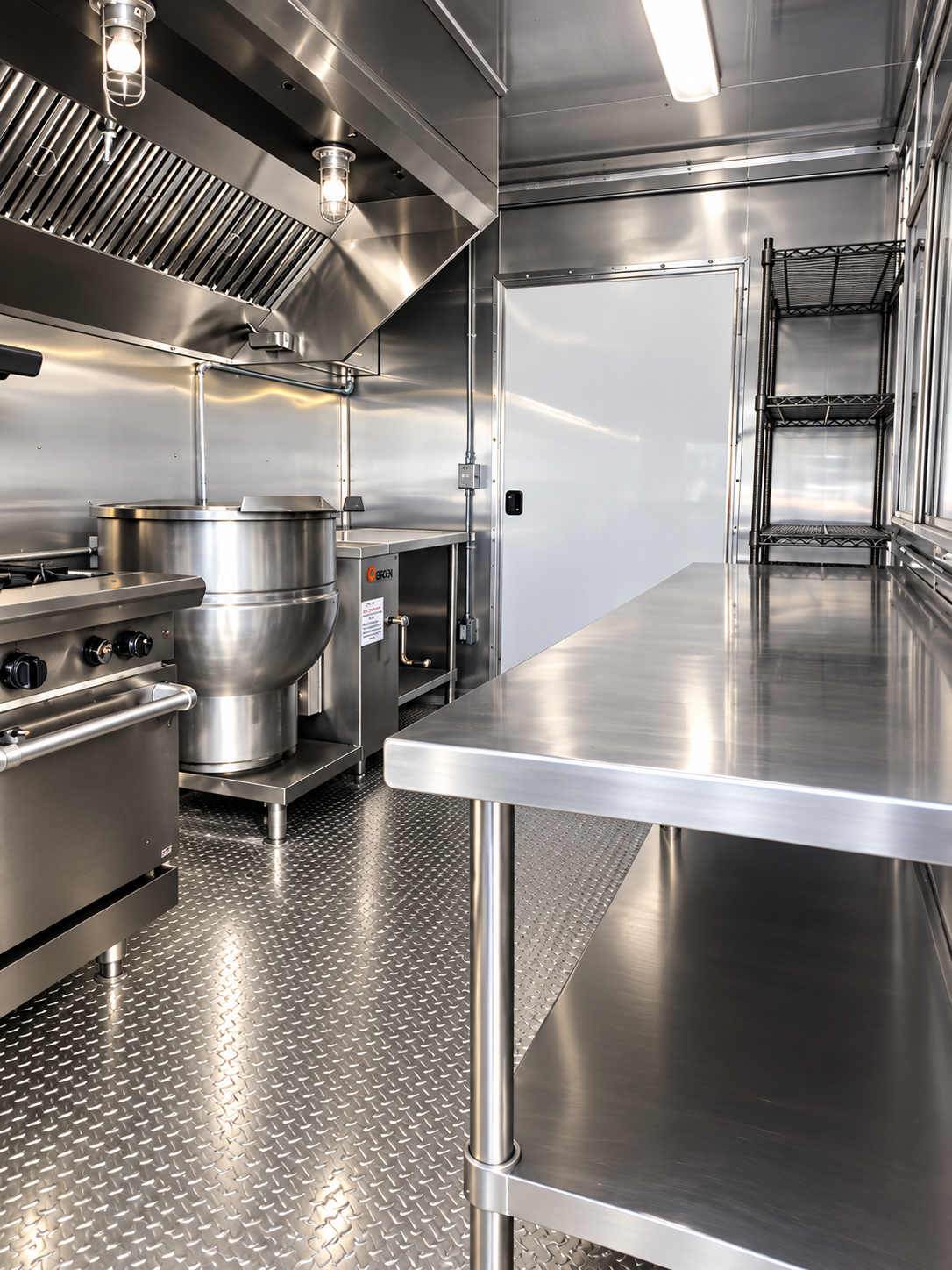
Reference photographs show examples of larger cooking equipment, but an image does not verify every feature of the assigned unit. Keep the actual equipment list beside the production sequence so a photographed kettle, extra oven or storage feature is not silently treated as included. No published output figure supports a promised portions-per-hour claim.
Plan how finished food leaves the trailer
Bulk production only helps if the food can leave the kitchen safely. Decide where finished food goes, how it is held, who carries it and how far it travels. A school, hospital or event site may have a receiving area, a serving line or a vehicle waiting nearby.
Think about carts, containers and doorways. A narrow door or a step can slow every trip. Ask the rental team about the entrances and steps of the proposed unit and plan the route from the exit to the place where food is received.
Match refrigeration and dry storage to batch production
A walk-in cooler and reach-in refrigerator and freezer appear in the reviewed example’s list. Those are distinct holding functions, but the inventory gives no usable volume, racking layout or temperature performance. Ingredient quantities held between deliveries therefore need comparison with the assigned unit’s actual storage details rather than its nominal 40ft length.
Cold holding also needs working access when staff collect ingredients repeatedly. A supply load that fits on paper can leave too little room for retrieval if package sizes or carts are ignored. Separate refrigeration remains a possible supporting requirement when the documented unit’s actual storage arrangement does not cover the load, with its own position, connections and rental scope.
Check ventilation, fuel and permissions
The reviewed Bulk Combo example lists 220V, single-phase power at 200–220A. Its inventory entry does not give fuel requirements, water flow, inlet and drain sizes, exact connector or circuit design. A qualified site professional should review the assigned equipment’s requirements and the distance to the property’s supply points before connection work.
Local authorities may set rules for temporary kitchens, especially with large cooking equipment. Ask who will arrange any permissions and what information is required. This site cannot advise on local requirements, so involve your facilities and compliance contacts early.
Confirm the route, ground and position
A 40ft trailer needs a clear route and a firm, level position. Look at gate widths, turns, overhead cables, slopes and soft ground. Photograph each difficult point and the intended resting place.
Share the photographs and measurements with the rental team before anyone commits. Check whether the position blocks deliveries or emergency access, and whether a landlord or facilities office needs to approve it. Good preparation prevents delays on delivery day.
Plan the people, shifts and cleanup
Batch production usually involves several people working in sequence. Decide who is responsible for each stage, how shifts hand over and where waste and soiled equipment go. Ask what hand-washing and warewashing arrangements the unit includes.
A dishwashing trailer rental may be worth discussing if the kitchen will produce many large pots and pans. Agree a simple routine for opening and closing each day. Appoint one person to coordinate with the rental team and to report problems promptly.
Prepare the quote request
Gather your menu, batch sizes, timing, site photographs, route measurements, utility information and dates before contacting Worldwide Refrigerated Container Rental Facilities. Ask what equipment is proposed for the 40FT Bulk Combo Kitchen, whether it is available and what the rental or lease arrangements would be.
Ask about delivery, setup and handback for your address. Historical refrigeration prices on this site do not apply to kitchen rentals. Current charges are confirmed in a project quote when your requirements and location are clear.