BXRT20–1Refrigerated trailer
- Nominal length
- 20ft
- Listed electrical supply
- 220V · single-phase · 40–60A
- Inventory temperature label
- 32°F
Temporary cold storage in Bangor, Maine
Bangor refrigerated storage rentals can support commercial ingredients after a freezer failure or while planned kitchen work closes the permanent store. Containers, refrigeration trailers, coolers and freezers can address different needs, with kitchen and dishwashing facilities considered when more functions are interrupted. Short-term rentals and longer leases can suit schools, hospitals, restaurants, hospitality businesses and industrial food-service teams. Worldwide Refrigerated Container Rental Facilities serves Bangor and discusses delivery for the actual equipment and property. Describe your receiving cycle, products and intended period to request availability and a quote for an arrangement that keeps storage connected to meal preparation.
Emergency cooler or freezer failure in Bangor? A person answers rental inquiries 24/7. Availability and delivery timing are confirmed in your quote.
Plan your rental budget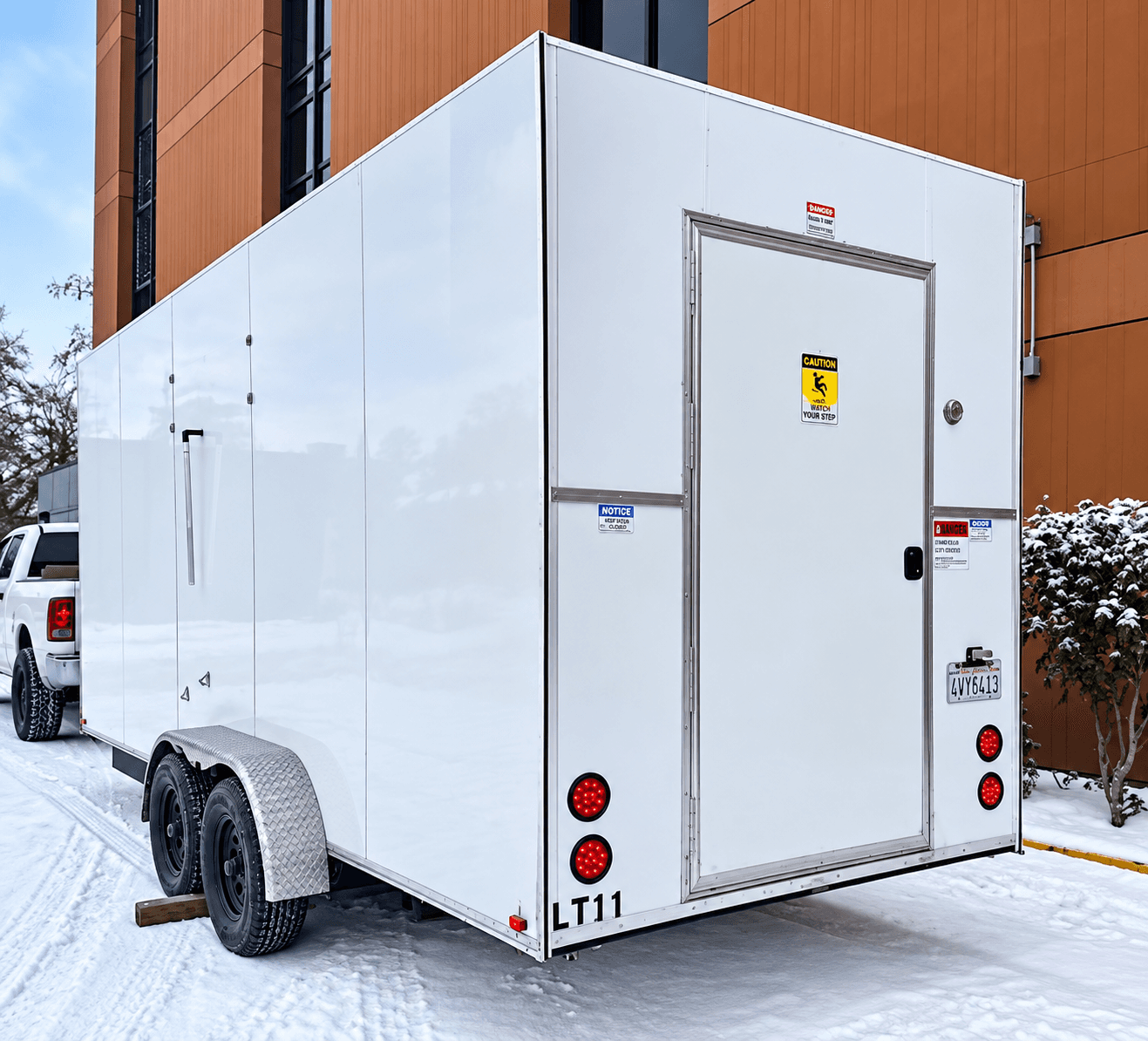
Compare the equipment
These published examples describe named company units. The supplied equipment, configuration and availability are confirmed for your project address.
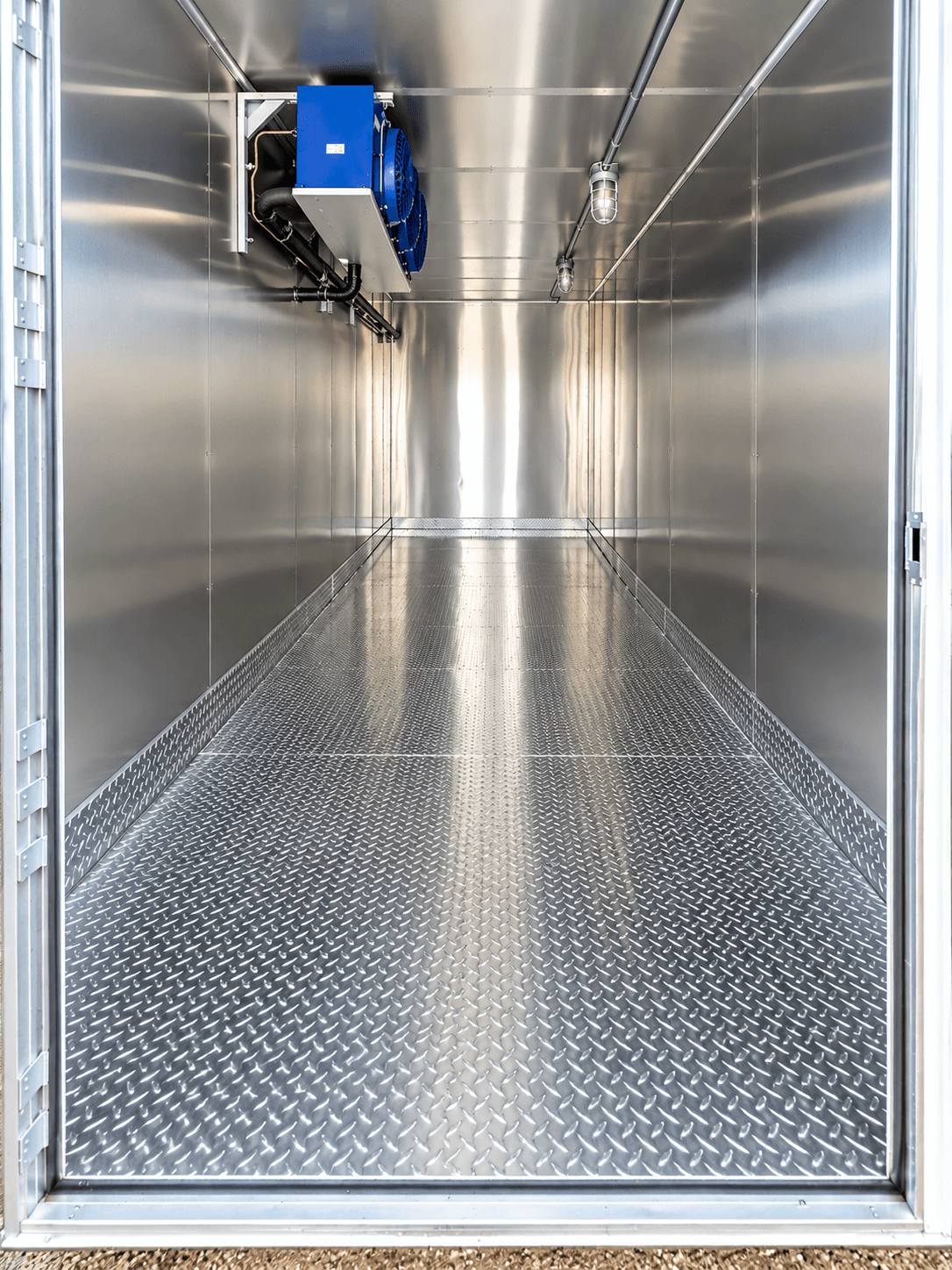
Listed refrigeration trailer equipment: condensing unit, amps panel, lighting.
Equipment records reviewed October 19, 2026. Temperature labels are inventory labels, not verified operating ranges. Nominal length is a model label, not a measure of usable space or site footprint.
When the commercial walk-in freezer or cooler fails at a catering commissary in Bangor, an emergency mobile refrigeration trailer rental can hold the affected stock while the permanent unit is repaired. Whether you rent for a weekend event or lease through a multi-month renovation, the rental period, delivery coordination and setup are confirmed in your quote. Cold storage is the usual starting point, and the same team can discuss a mobile kitchen rental or a dishwashing trailer lease if the interruption is wider.
Onsite temporary refrigeration facilities can be rented short term or leased long term, whether the need is an emergency breakdown, a mobile cold room for an event or commercial storage during construction. Calls about a failed walk-in cooler or freezer are answered by a person around the clock, and delivery timing and equipment availability are confirmed once the details are reviewed. Not every cold storage emergency happens in Bangor itself. A kitchen in Portland, a school in Westbrook or a food producer in South Portland can request a refrigerated trailer rental or container lease with the same details: where the unit would sit, how a truck reaches it and what must stay cold. Cold storage rental for an event or a seasonal peak follows the same steps as an emergency refrigeration rental. Most calls are about refrigeration: a failed cooler, a warm freezer or a compressor that will not restart. Refrigerated containers and trailers can hold product cold while the permanent cooler or freezer is repaired.
A 2012 Associated Press report described the Bangor State Fair, then in its 163rd year, as one of the largest fairs in Maine, drawing 60,000 to 70,000 people a year. Distributors and processors in Belfast, Waterville and Rockland can compare a short-term refrigeration trailer rental with a long-term lease for outdoor walk-in refrigeration. Growers and packers in Hallowell and Gardiner can compare a refrigerated trailer rental with a container lease for the busy season. Refrigerated trailers for rent and portable walk-in coolers hold drinks, produce and prepared food at crowded events, and a refrigeration container suits a longer festival run. The context above comes from public sources and does not describe a completed job; availability and delivery are confirmed in the quote.
During the January 1998 ice storm, more than 220,000 Central Maine Power customers, over 40 percent of its base, were in the dark by late on the first day, with Lewiston, Augusta and Bridgton among the hardest hit, and it took 23 days to restore power across the state. Grocers in Bath, hotels in Biddeford and commissaries in Sanford often face the same emergency, a walk-in that stops cooling, and ask first about a refrigerated trailer for rent. Hospitals and hotels in Saco and Presque Isle sometimes need portable refrigerated trailers when a commercial walk-in breaks down during a busy week. Emergency refrigeration comes first after a storm or outage: a portable refrigerated trailer, a refrigeration container or outdoor walk-in refrigeration can hold stock while power and repairs catch up. This is published public context, not company work; each request is quoted for its own address and dates.
MaineDOT’s 2026–2028 work plan covers 2,798 projects worth $4.5 billion, led by the $84.3 million Presque Isle Bypass Phase 2, and in Bangor the Broadway Bridge replacement that began in July 2023 is expected to finish in 2027. Seasonal refits in Calais, Eastport and Caribou can be covered by a lease that starts before demolition and ends after the stock moves back indoors. A long-term refrigeration trailer lease keeps supplies cold on site for the whole project, with power and access reviewed before delivery. Refrigeration is an emergency need: every call about a failed commercial walk-in freezer or refrigeration unit is an emergency call. Dishwashing trailer rentals and warewashing capacity are quoted beside the kitchen and refrigeration when the whole food-service area is affected. These are public facts about the area, not a record of company jobs; equipment, availability and delivery are confirmed in the quote.
A mobile, modular or portable refrigeration setup in Bangor is chosen to match the walk-in cooler or freezer that failed. Emergency refrigeration rental covers walk-in coolers, walk-in freezers and refrigerated trailers for commercial kitchens, warehouses and plants. A commercial kitchen closed for repairs may need a mobile kitchen trailer lease, a dishwashing trailer and emergency refrigeration at the same time. When cooking and dish washing stop with the walk-in freezer, a mobile kitchen, a dishwashing trailer and portable refrigeration can be one request.
A mobile dishwashing trailer and a mobile kitchen trailer are often requested together, with a refrigerated trailer for the stock. Trailer rentals, refrigerated trailers for rent and trailer leasing are all discussed with the address and the dates in hand. Emergency refrigeration, onsite and temporary, is meant to bridge the gap until the commercial walk-in freezer is repaired or replaced. A portable refrigerated trailer suits most emergency calls, while a refrigeration container fits a longer, more stationary need.
Emergency refrigeration for commercial kitchens often starts with a portable refrigerated trailer and ends with a longer lease if repairs take time. A commercial walk-in freezer failure in Bangor is an emergency call, and onsite temporary refrigeration is how most such calls begin. Outdoor walk-in refrigeration needs level ground and power nearby, so a long-term lease starts with a site conversation. Dishwashing and kitchen outages often arrive together, so dishwashing trailer rentals and a mobile kitchen for rent are quoted beside emergency refrigeration.
In Bangor, emergency refrigeration usually means a refrigerated trailer, a refrigeration container or a portable walk-in cooler matched to the stock. Outdoor walk-in refrigeration can be set up beside the building as temporary facilities, so staff keep working while the permanent walk-in cooler or walk-in freezer is repaired. Dishwashing trailer rentals and kitchen trailer rentals can be quoted alongside refrigerated trailers for rent when the whole kitchen is down. Mobile kitchens, dishwashing trailers and refrigerated trailers for rent can be quoted together as temporary facilities.
Modular, mobile or portable, the equipment is chosen to fit the work that continues at the site. Short-term or long-term, trailers for rent in Bangor are quoted for the address, the stock and the dates. Refrigerated trailers for rent, refrigeration containers for lease and walk-in coolers for short-term use are the three questions most callers start with. Portable refrigerated trailers, refrigeration containers and outdoor walk-in refrigeration units can all be discussed for the same emergency.
Onsite temporary facilities can include portable refrigeration, a mobile kitchen trailer and, if dishes are affected, a dishwashing trailer. A dishwashing trailer lease can be added to the same quote when returned dishes also need washing.
A school kitchen project in Bangor may leave the cooking equipment working while a cold room is replaced. In that case, temporary storage needs to fit the meal-service routine: deliveries arrive, ingredients are retrieved and staff return unused stock between preparation periods. A short, practical connection to the working kitchen can matter more than choosing the most visible open space on the grounds. Establish which parts of the building remain available before considering the rental position.
Storage volume should reflect the products held between deliveries, not simply the number of meals prepared. Explain packaging, stock rotation and whether chilled and frozen products need separate arrangements. If washing or preparation also moves during the work, consider the facilities together while keeping each requirement clear. This helps the temporary setup support the kitchen staff’s regular tasks, rather than adding unnecessary movement to an already disrupted service day. Consider the handover between shifts or preparation teams, too. The employees using the store should understand which products belong there and how deliveries will be received. This is particularly useful when part of the permanent kitchen remains operational. Clear separation of the temporary storage task helps the school discuss equipment without turning a limited interruption into an unnecessary whole-kitchen move.
Read the 12ft Refrigerated Trailer guide alongside this page when planning commercial meal service; it looks at a handback plan for the end of the rental and at which stock must move first.
A meal schedule does not show the quantity stored between supplier visits. Identify the biggest delivery overlap and the products remaining on site at that point. Packaging and required chilled or frozen conditions matter alongside quantity, particularly when the rental becomes the main store during a repair.
Readers in Bangor may also want to compare how other nearby cities approach their projects. Augusta’s guide focuses on catering and food-service changes, and a separate reading is Lewiston’s guide on phased food-service renovations. Treat each as background for your own questions rather than a description of conditions in Bangor.
Employees should be able to find and retrieve ingredients once the interior is full. Discuss the planned handling method and any storage fittings with the actual equipment offered. A reserve accessed occasionally can have a different arrangement from a unit used throughout preparation. Defining that role helps avoid choosing by an exterior view or meal count alone.
Campus meal planners in Bangor or Brewer, Maine, may need to adjust supplier orders when temporary working space cannot accommodate the normal ingredient receiving pattern. Prepare a handover note covering supplier contacts, stock locations and outstanding access questions, with responsibility assigned for keeping it current.
A Bangor kitchen receiving stock for an event in Brewer should distinguish ingredients held before preparation from supplies needing storage during service. The rental may belong at the working kitchen or at the event address, depending on that role. Explain the product flow instead of assuming one location can cover both functions.
For another comparison, the guide for operators in Auburn covers food-service renovations. It describes a different property and is useful mainly for the questions it raises.
For planned work in Old Town, a temporary store may support repeated daily access, while a catered function in Ellsworth can create a shorter, concentrated stock peak. These are separate project examples, not a claim that equipment is based in each community. The actual products, period and delivery address should shape the arrangement.
Maine’s state climate summary describes cold, snowy winters and generally mild summers. For a Bangor rental, include the expected months and whether repairs might extend, then discuss the selected equipment’s requirements for the proposed position.
Consider the route used by receiving staff and the employees preparing meals, including other deliveries sharing the area. The property contact can explain existing access arrangements. A general climate description does not establish an operating limit or a forecast; it helps focus the review on the actual unit, surface and connections rather than assuming any open space works equally well throughout the period.
If permanent refrigeration returns during a working week, staff may still need time to move ingredients and establish ordinary stock rotation. Include that overlap and the point when the temporary store can be released for collection. Ask how extensions or earlier changes would be handled under the agreement.
Review the complete quote for equipment, duration, transport, collection and other project charges. It turns a published daily, weekly or monthly range into an estimate for the number of periods you enter, with setup and delivery shown beside it. A clear scope helps purchasing and kitchen teams assess the same workable option rather than choosing an amount detached from the meal-service routine.
Before you book
Describe the peak stock quantity, delivery timing, packaging and conditions required by the products. Add how frequently employees retrieve ingredients. These details help compare usable layout and access, especially when temporary equipment replaces the everyday store rather than holding occasional reserves.
Yes. Explain the cold-storage function lost and the preparation or washing areas that remain usable. A refrigeration-only arrangement may address that interruption. If later project phases affect other functions, discuss their timing and layout separately instead of assuming a complete temporary kitchen is needed from the start.
Their knowledge of shared access, receiving space and planned building work can help evaluate the proposed position. Include the staff using ingredients as well. The actual unit’s entrance and connections should be reviewed against the daily routine, not decided solely from a photograph or convenient unloading space.
Both short-term rentals and longer leases of a mobile refrigeration trailer can be discussed for Bangor. Share the location, the products to be held and how long you expect to need the equipment, including whether dates may change. Equipment availability, delivery arrangements and setup are confirmed in the quote, not assumed.
Portable refrigerated trailers, refrigeration containers, outdoor walk-in refrigeration, and portable walk-in coolers or walk-in freezers can be discussed for onsite, short-term or long-term use. Trailers for rent are matched to the stock: a refrigerated trailer for frozen food, a portable cooler for produce, or both. Refrigeration containers are often chosen for long-term storage, while refrigerated trailers are chosen for short-term emergencies; both can be rented. Refrigeration is an emergency need, so describe the failed commercial unit and the stock at risk. The quote confirms availability, delivery and the rental period for the site.
These public references inform the planning examples; equipment availability and delivery arrangements are confirmed for your address.
Temporary refrigeration, kitchens and dishwashing can support many kinds of food-service operations. Each setting below starts with its own schedule, stock and site questions, and every project is reviewed individually.
Hotels, restaurants and resorts can plan temporary refrigeration around breakfast, banquet and dinner service when a walk-in cooler fails or a kitchen is refurbished.
Hospital, nursing home and care-facility kitchens can describe meal schedules, delivery times and displaced stock so temporary storage follows the food-service routine.
Municipal, county and public-building food-service teams can outline receiving arrangements, responsible contacts and project dates before a quote is prepared.
Dining facility managers can explain the products displaced, the receiving arrangements and the proposed period, then review availability and terms with our team.
Schools, colleges and universities can plan around term dates, serving windows and campus kitchen renovations so meal service can continue during repairs or construction.
Plant cafeterias and employee dining areas can describe shift patterns and staged building work so temporary cold storage can be reviewed against the working schedule.
Caterers and venues can plan preparation windows, event days and overflow ingredients, and describe how stock moves between storage, the kitchen and service.
Producers, wholesalers and distributors can describe loading, staging and storage needs when a cooler breaks down or demand temporarily exceeds capacity.
These examples describe planning situations. Equipment, availability and terms are confirmed in a project quote.
Cold storage is only one part of a project. These are the questions we work through with you before anything is booked.
Start with refrigerated containers and refrigeration trailers, then add a temporary kitchen or dishwashing trailer when the project needs one, all in a single conversation.
Access, utilities and the intended position are reviewed before delivery is arranged, so the equipment is matched to your site rather than the other way around.
Whether a walk-in cooler failed this morning or a renovation is months away, describe the real situation and plan around the stock, dates and people involved.
Planning guides cover all 50 states and more than 700 cities. Your address is then confirmed for equipment and delivery.
Use the rental calculator for a rate-range estimate and setup amount, then request a project quote that confirms availability, transport and the rental period.