Describe the volume of warewashing
DTC3 documents a high-temperature conveyor dishwasher in a nominal 30ft trailer. Its list includes a soil tray, three-compartment sink, handwashing sink, prep table, storage rack, water heater, mop sink and wire racks. These identify washing and supporting functions without supplying racks per hour, cycle timing or numeric wash and rinse temperatures.
A concentrated return after service can create waiting work before the machine and a collection peak after it. The relevant comparison is the incoming pattern, item types and actual staging layout, rather than length alone. A high-temperature classification does not establish how quickly a particular mix of trays, plates and utensils will pass through the assigned machine.
Map the soiled-to-clean flow
A conveyor arrangement connects receiving, preliminary handling, loading, washing, unloading and clean-item collection. Those tasks need to work as a sequence: a clear loading area cannot compensate for clean racks waiting at the exit, and an empty collection area does not remove an incoming backlog. The site's operating plan should identify who handles each transfer.
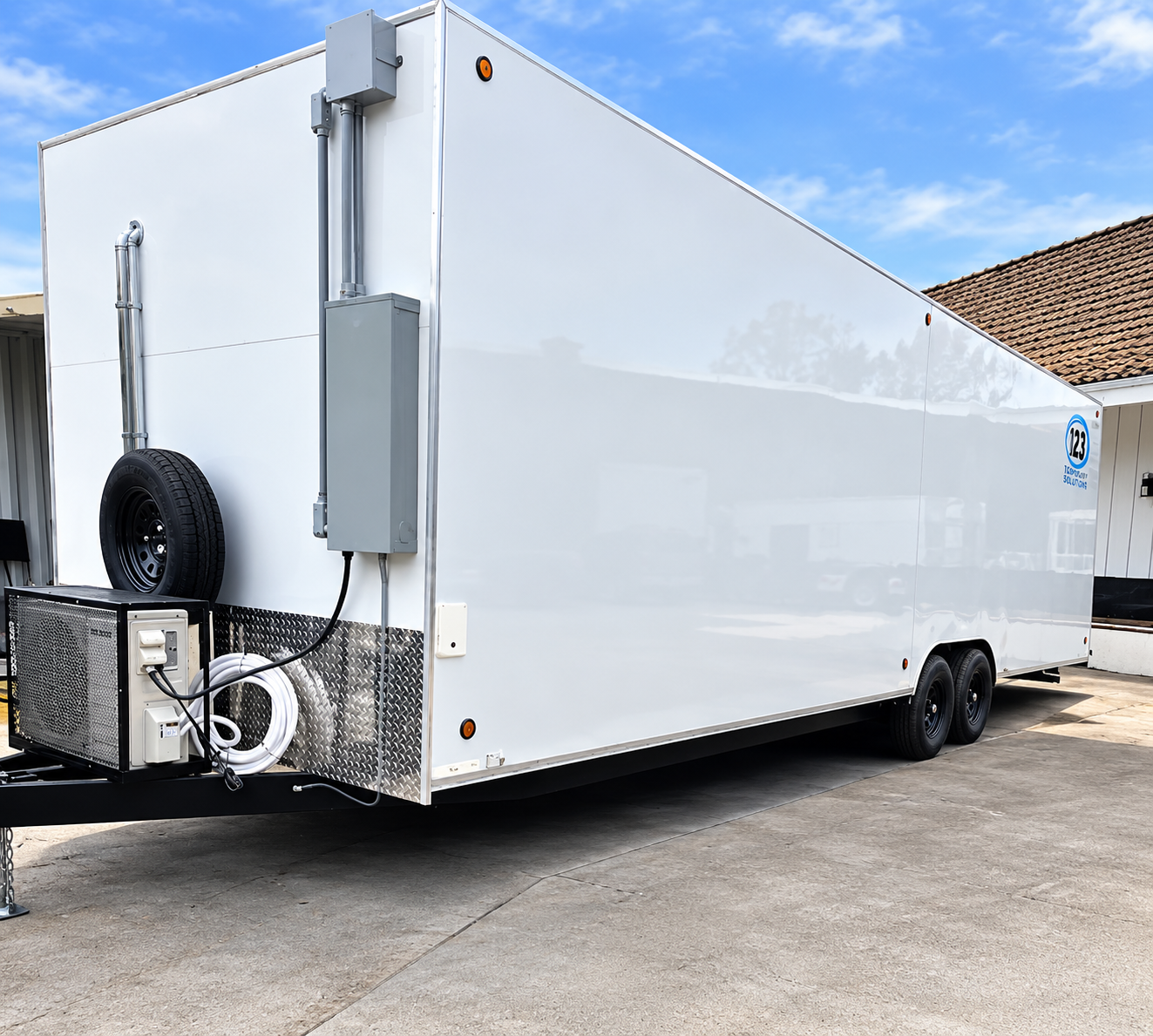
The reference photograph shows this model series from outside, including front-end electrical panels and conduit. It does not show the interior or establish rack staging, aisle width or entrance dimensions. A measured layout and the assigned machine’s documentation are needed for those details before the working sequence is treated as settled.
Plan the area outside the trailer
The trailer is only part of the dish room. Staff need a place to stage soiled carts, scrape plates and wait their turn, and another place to hold clean items. Decide where those areas are and how they connect to the kitchen and the serving line.
A covered or sheltered staging area helps in rain or heat. Keep the approach free of vehicles and keep walkways dry. Ask the rental team what outdoor space the unit needs around its doors and what access is required for service and collection.
Check water, drainage and waste
Warewashing uses water and produces wastewater and food waste. Ask what the proposed unit needs for supply, drainage and any heating, and who arranges each connection. Note the distance from the property's supply and drain points to the intended position.
Involve the facilities contact or a licensed contractor where connections are uncertain. Decide where food waste and used chemicals will go. This page states no water, drainage or chemical requirements for any model, so confirm them for the unit proposed in your quote.
Review electrical supply and ventilation questions
DTC3’s electrical entry is 220V, three-phase, 200A. The documented 38ft conveyor example DTC1 instead lists 220V, single-phase, 300A. This is a meaningful unit-specific distinction: choosing a longer or shorter trailer does not select the property’s electrical connection or establish compatibility with an existing supply.
The exact connector, circuit design, water-heater capacity and ventilation arrangement are not published for DTC3. A qualified site professional needs the assigned equipment information before connection work. Heat, steam and staff working conditions also need consideration alongside the actual water, drainage and power arrangements, without converting the high-temperature label into numeric operating or performance claims.
Confirm the route, position and ground
A 30ft trailer needs a clear approach and a firm, level place to stand. Check gate widths, turns, overhead cables and slopes along the route. Look at drainage on the ground beneath and around the trailer.
Photograph the route and the intended position for the rental team. The position should be close enough to the kitchen to keep the flow short but should not block fire routes or delivery lanes. A landlord or facilities office may need to approve it.
Plan staffing and training
A conveyor dish room works best with a small team that knows its tasks. Decide who loads, who unloads, who scrapes and who checks. Ask the rental team what instruction or information is available for the proposed machine.
Brief new staff before the first service, not during it. A simple card by the machine showing each job and the order of work reduces mistakes. Agree who reports problems to the rental team and how quickly the report should be made.
Prepare the quote request
Gather your volumes, peak times, site photographs, water and drainage information and dates before contacting Worldwide Refrigerated Container Rental Facilities. Ask what machine and layout are proposed for the 30FT Conveyor Dishwashing Trailer, whether it is available and what the rental or lease arrangements would be.
Ask also about delivery, setup and handback at your address. Historical refrigeration prices on this site do not apply to dishwashing rentals. Current charges are confirmed in a project quote once your requirements are clear.