BXRT20–1Refrigerated trailer
- Nominal length
- 20ft
- Listed electrical supply
- 220V · single-phase · 40–60A
- Inventory temperature label
- 32°F
Wisconsin refrigerated container rentals give commercial kitchens temporary storage when a walk-in cooler or freezer fails. Refrigeration trailers and portable coolers or freezers can also support planned renovations, with kitchen and dishwashing trailers discussed where more of the operation is affected. Restaurants, hotels, schools, hospitals and industrial food operations can explore short-term rental or longer lease needs with Worldwide Refrigerated Container Rental Facilities. We serve Wisconsin businesses, coordinating equipment and delivery around the actual site and project dates. Describe the stock, required conditions and intended outside position to request availability and a current quote.
Emergency cooler or freezer failure in Wisconsin? A person answers rental inquiries 24/7. Availability and delivery timing are confirmed in your quote.
Plan your rental budget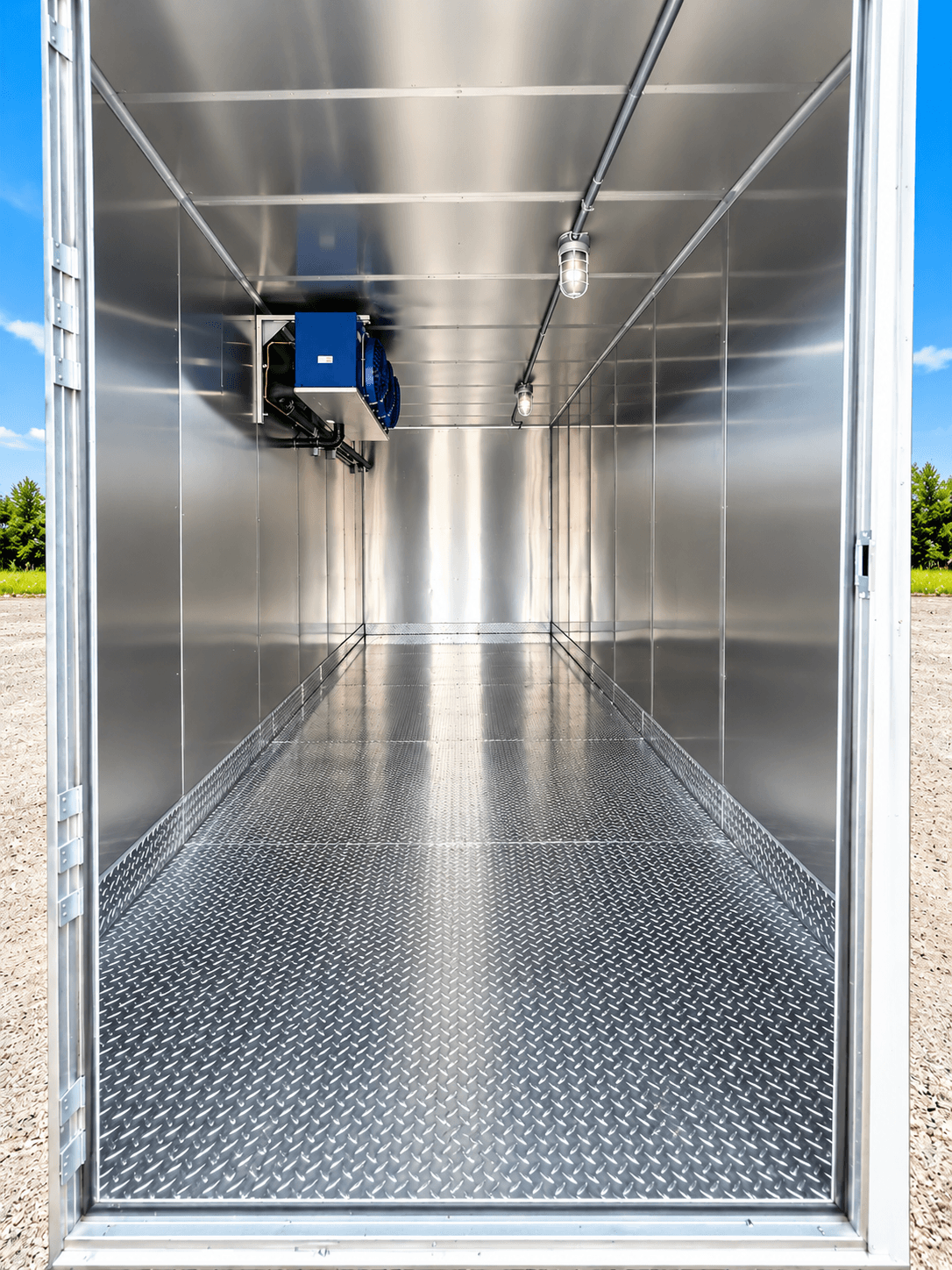
Compare the equipment
These published examples describe named company units. The supplied equipment, configuration and availability are confirmed for your project address.
Listed refrigeration trailer equipment: condensing unit, amps panel, lighting.
Equipment records reviewed October 19, 2026. Temperature labels are inventory labels, not verified operating ranges. Nominal length is a model label, not a measure of usable space or site footprint.
A closer look at your project area
Choose a city to explore refrigeration rental planning for your area. Bring the delivery address, preferred dates and storage needs to your inquiry.
Outline: Census TIGERweb generalized states, ACS 2025. City locations: 2025 Census Gazetteer.
Find the place that fits your project
Emergency refrigeration rental in Wisconsin often starts with one decision: whether the stock belongs in a refrigerated trailer for rent or in a different format, such as a rented walk-in freezer. Tell the team whether you expect to rent for one repair or lease for a longer project, and the options can be compared in the quote. Cold storage is the usual starting point, and the same team can discuss a mobile kitchen rental or a dishwashing trailer lease if the interruption is wider.
Trailers for rent and trailer leasing cover emergency, short-term and long-term needs, from portable walk-in coolers to outdoor walk-in refrigeration for commercial sites. Setup, delivery and the rental period are reviewed for each address rather than assumed. Restaurants, hospitals, schools, hotels, caterers and food producers can describe the problem to a person who answers rental inquiries 24/7. Outdoor walk-in refrigeration and refrigerated trailers are discussed first when stock is at risk.
A CBS 58 report based on a list of the largest events in each state named Summerfest in Milwaukee the most-attended event in Wisconsin, with attendance around 900,000. Food distributors in Wauwatosa, West Milwaukee and Shorewood can ask about leasing a refrigeration trailer for overflow stock when permanent coolers are full. Distributors in Brookfield can compare a short-term refrigerated trailer rental with a longer lease for outdoor walk-in refrigeration. Cold storage matters as much as cooking at a crowded event, so refrigerated trailers and a refrigeration container are usually the first equipment discussed, with mobile kitchen trailers added for larger menus. A walk-in cooler and a walk-in freezer can be rented together when a commercial site needs both. The context above comes from public sources and does not describe a completed job; availability and delivery are confirmed in the quote.
EAA AirVenture in Oshkosh reported a record 686,000 attendees in 2024. Operators in Omro, Neenah and Fond du Lac use rentals, leases and trailers for rent in different ways, from one-night events to months of temporary facilities. Hospitality operators in Fox Crossing can rent mobile refrigeration for an event or lease modular cold storage during a renovation. Event refrigeration is quoted by the day or the week: portable refrigerated trailers for a weekend, trailer leasing for a full season. Refrigerated trailers for rent, refrigeration containers for lease and walk-in coolers for short-term use are the three questions most callers start with. Dishwashing trailer rentals and warewashing capacity are quoted beside the kitchen and refrigeration when the whole food-service area is affected. Mobile kitchens, dishwashing trailers and refrigerated trailers for rent can be quoted together as temporary facilities. When cooking and dish washing stop together, a mobile kitchen, a dishwashing trailer and portable refrigeration can be one request. Nothing here assumes available equipment or a delivery time; a person answers rental inquiries 24/7 and the quote confirms the details.

During the August 20–21, 2018 flooding in Dane County, a Black Earth Creek gauge rose from about 2.5 feet to a record 9.73 feet in under 12 hours, evacuations were ordered in Black Earth, Cross Plains and Mazomanie, and a later estimate put Wisconsin flood damage at $209 million. If a hospital kitchen in Middleton, a university dining hall in Monona or a distribution center in Waunakee loses its cooler, a portable refrigerated unit can be rented while the repair is scheduled. A commercial freezer that fails in Janesville is handled the same way as anywhere else: describe the stock, the address and the dates, and compare rental options. Emergency refrigeration comes first after a storm or outage: a portable refrigerated trailer, a refrigeration container or outdoor walk-in refrigeration can hold stock while power and repairs catch up. Onsite temporary facilities can include portable refrigeration, trailers for rent and, if dishes are affected, a dishwashing trailer. A dishwashing trailer lease can be added to the same quote when returned dishes also need washing. This is published public context, not company work; each request is quoted for its own address and dates.
Microsoft’s Mount Pleasant campus is a roughly $7.3 billion project across two data center facilities, with the first nearing completion and a second $4 billion facility continuing, while WisDOT previews more than 400 highway projects for 2026, including I-94 East-West in Milwaukee, which continues toward 2033. A phased renovation in Sturtevant, a new kitchen build-out in Caledonia or a campus dining upgrade in Somers can use a leased refrigeration trailer so food service continues while permanent cold rooms are rebuilt. A long-term refrigeration trailer lease keeps supplies cold on site for the whole project, with power and access reviewed before delivery. Modular, mobile or portable, the equipment is chosen to fit the work that continues at the site. A mobile dishwashing trailer and a mobile kitchen trailer are often requested together, with a refrigerated trailer for the stock. These are public facts about the area, not a record of company jobs; equipment, availability and delivery are confirmed in the quote. Outdoor walk-in refrigeration and refrigerated trailers are discussed first when stock is at risk.
When cooking and dish washing stop with the walk-in freezer, a mobile kitchen, a dishwashing trailer and portable refrigeration can be one request. Emergency refrigeration can be arranged as a refrigerated trailer, a refrigeration container or a portable walk-in cooler, depending on the stock and the site. Kitchen, dishwashing and refrigeration rentals are separate equipment, and each can be rented short-term or leased long-term. A commercial kitchen closed for repairs may need a mobile kitchen trailer lease, a dishwashing trailer and emergency refrigeration at the same time.
Short-term or long-term, the same refrigerated trailer rental starts from the address, the stock and the dates. Mobile kitchens, dishwashing trailers and refrigerated trailers for rent can be quoted together as temporary facilities. Refrigeration is an emergency need: every call about a failed commercial walk-in freezer or refrigeration unit is an emergency call. Emergency refrigeration, onsite and temporary, is meant to bridge the gap until the commercial walk-in freezer is repaired or replaced.
In Wisconsin, emergency refrigeration usually means a refrigerated trailer, a refrigeration container or a portable walk-in cooler matched to the stock. For Wisconsin kitchens, plants and warehouses, trailer leasing and trailer rentals are two ways to get the same portable refrigerated storage. Onsite temporary facilities can include portable refrigeration, a mobile kitchen trailer and, if dishes are affected, a dishwashing trailer. A mobile, modular or portable refrigeration setup in Wisconsin is chosen to match the walk-in cooler or freezer that failed.
A mobile kitchen trailer for rent can sit beside onsite refrigeration, so cooking and cold storage are planned together. A dishwashing trailer lease can be added to the same quote when returned dishes also need washing. Refrigeration containers are often chosen for long-term storage, while refrigerated trailers are chosen for short-term emergencies; both can be rented. Portable refrigerated trailers, refrigeration containers and outdoor walk-in refrigeration units can all be discussed for the same emergency.
Emergency refrigeration for commercial kitchens often starts with a portable refrigerated trailer and ends with a longer lease if repairs take time. Outdoor walk-in refrigeration can be set up beside the building as temporary facilities, so staff keep working while the permanent walk-in cooler or walk-in freezer is repaired. Temporary facilities for a commercial site usually mean refrigeration first, then a mobile kitchen or dishwashing trailer if cooking or washing is also interrupted. Trailer rentals, refrigerated trailers for rent and trailer leasing are all discussed with the address and the dates in hand.
A commercial walk-in freezer failure in Wisconsin is an emergency call, and onsite temporary refrigeration is how most such calls begin. Dishwashing and kitchen outages often arrive together, so dishwashing trailer rentals and a mobile kitchen for rent are quoted beside emergency refrigeration.
Baird Center’s public food-and-beverage information distinguishes concessions, backstage catering and full-course banquets through its food-service partner. Each format gives food a different destination after receiving and preparation. In a comparable interruption, ingredients supporting production and products assigned to an upcoming service would need identifiable places in temporary refrigeration. The required conditions follow the actual goods, as defined by the responsible operator. Public venue information does not identify a current rental project or authorize outside equipment at that property.
The 40ft Refrigerated Container is a nominal comparison, with usable capacity, full temperature range, electrical requirements and included fittings still needing confirmation for the supplied unit. Its label does not establish a pallet count, aisle width or shelving package. A store entered repeatedly during preparation needs accessible daily ingredients after the largest order arrives. Stock assigned to another service may remain inside longer. Those distinct movements describe the useful refrigeration task more clearly than event attendance or a photograph of an empty interior.
A healthcare facilities contact in La Crosse or Madison, Wisconsin, can describe construction boundaries while the dining supervisor explains the food supplies needed throughout each proposed phase. Explain which ingredients employees retrieve repeatedly and which remain reserved, using the handling requirements supplied by the facility's own responsible team.
A temporary change to industrial site circulation in Eau Claire or Milwaukee, Wisconsin, can affect where meal supplies are accepted and how dining staff collect them. Identify who can approve changes to the equipment position, and record how dining staff will learn about revised receiving arrangements.
Explore the Milwaukee rental guideMT1, an example in the 20ft Refrigerated Trailer guide, lists a condensing unit, amps panel, lighting and 220V single-phase power at 40–60A. Its 15°F inventory label is not a verified operating range. Exact NEMA plug configuration and usable capacity remain unconfirmed. These details belong to that named record, not every trailer or an available La Crosse unit. They provide concrete equipment facts while leaving the supplied configuration and its suitability for the intended products to be established.
Catered preparation can begin before the public program, with new ingredients arriving while earlier stock and finished batches await their next stage. The refrigerated load follows that overlap rather than guest hours alone. A kitchen trailer takes on cooking if preparation also moves. Dishwashing has a separate returned-item sequence, which can continue after the last meal. Their equipment periods may differ from the final cold holding needed while remaining goods return to permanent rooms or leave for another authorized destination.
A government dining supervisor in Milwaukee or Green Bay, Wisconsin, can explain the busiest overlap between incoming supplies, ingredient preparation and the staff responsible for receiving goods. Ask the agency representative which documents are needed to assess the proposal, without assuming the inquiry establishes an approved purchasing arrangement.
Explore the La Crosse rental guideNOAA describes Wisconsin’s strong seasonal contrasts, colder northern conditions, warm and humid summer air and cold, dry winter conditions with variation from changing air masses. Lake Michigan moderates temperatures along the eastern shoreline. Include the full expected rental period when discussing an outdoor unit, especially if a repair may become a longer project.
The seasonal setting is useful background, with the offered unit’s own operating limits and actual property conditions still needing review. An equipment approach practical on delivery day may change as work occupies another entrance. Staff collecting ingredients also need a usable daily route, separate from the space temporarily needed to unload supplies. Drainage and the assigned connection remain part of the refrigerated arrangement through final clearance. A longer lease needs that continued working position as well as a practical collection route once the last products leave.
A military food-service manager in Madison or Eau Claire, Wisconsin, can explain the largest anticipated stock overlap rather than use the number of meals as the entire requirement. Keep the dining requirement separate from any site authorization, and request confirmation of equipment availability and the proposed transport scope before booking.
UW–Madison’s dining information identifies campus dining markets, coffee shops, convenience stores and catering. It separately explains that leftover unserved market food is made into prepackaged frozen microwaveable meals through a food-access program. These public examples distinguish several destinations and holding stages. In a comparable institutional interruption, daily ingredients and finished packaged products should retain their own identities and operator-defined conditions. This context does not mean a temporary unit can freeze a production load or replace the institution’s food-handling procedures.
A temporary freezer used for already frozen reserves performs a different task from a chilled ingredient room entered throughout preparation. The largest stock overlap includes supplier deliveries while earlier goods remain inside. Package dimensions, agreed fittings and collection frequency affect the useful interior arrangement. A shared purchasing contact can coordinate several outlets while keeping the products and receiving destinations separate. The refrigeration proposal needs to match that working role rather than rely on one campus-wide meal total or assume every outlet shares a connection.
For hospitality managers reviewing placement in Eau Claire or Milwaukee, Wisconsin, a doorway convenient for unloading may also serve guests, maintenance staff or other visiting suppliers. Describe the packaging, busiest retrieval period and employee route rather than using guest numbers alone to explain the space needed.
Explore the Madison rental guideWhen a Green Bay refurbishment removes cooking as well as permanent storage, the temporary kitchen and refrigerated unit have related but distinct purposes. Cooking appliances do not establish the usable volume available for the main ingredient load. Supplies awaiting preparation may need to stay in a separate unit even when the cooking facility has its own refrigerator. The arrangement should connect the products to their next working stage while retaining practical access to reserves after receiving. The actual equipment records, rather than a general service label, define the offered facilities.
A dishwashing trailer supports a different flow as reusable items return for cleaning and later service. Its supply and return paths should remain identifiable beside the ingredient route. The occupied areas and connections are separate requirements even when the same project contact coordinates them. Refrigeration may start before cooking moves and stay after it returns indoors. Collection follows the last goods held temporarily, while the washing facility may have another release point as the final reusable supplies clear.
For events using shared facilities in La Crosse or Madison, Wisconsin, catering staff may need to receive supplies while venue employees prepare for an unrelated activity. Identify where staff will check incoming supplies and keep delivery records while other venue activity continues around the preparation area.
Explore the Green Bay rental guideAn Eau Claire school reopening can involve several stock movements. Ingredients for trial preparation may transfer before the permanent room accepts all ordinary supplier deliveries. Unopened reserves can remain temporarily outside while the first meals are served indoors. The refrigerated layout needs useful access through that change, including when new supplies overlap with the last stored cases. A contractor’s completion date and the operator’s final stock clearance are distinct milestones. The equipment period should follow the actual products and the stage at which their permanent destination becomes usable.
For a longer lease, the temporary store can become part of ordinary replenishment over several receiving cycles. The supplied doorway and any agreed interior fittings should support the cartons and handling equipment used during that routine. Kitchen and dishwashing facilities can return on separate dates if those functions also moved. Their release does not automatically empty the refrigerated unit. The staff approach, assigned supply and final collection space need to remain available until the remaining goods have a confirmed destination.
Colleges planning holiday maintenance in Green Bay or La Crosse, Wisconsin, may still need meals for staff, residential students or activities continuing outside the normal timetable. Ask the dining lead to match the proposed menu with ingredient arrivals, available working space and the planned staff handover.
Explore the Eau Claire rental guideFor another Wisconsin property, continue with Kenosha, Racine, Appleton or Waukesha. Contact our team to request equipment availability and a current project quote.
A food distribution operator in Milwaukee or Green Bay, Wisconsin, may need a fallback receiving arrangement if supplier arrivals continue before the permanent holding area is handed back. Ask the operator to distinguish ingredient holding, finished product handling and order collection requirements before discussing the proposed temporary arrangement.
Before you decide
Include the highest quantity held at once, especially the overlap between incoming deliveries and existing goods. An average can miss the point when temporary storage is busiest. Separate chilled and frozen requirements and describe packaging and access frequency so the proposed layout can be assessed against real use.
Give the full rental period and any known seasonal access or drainage concerns from the property team. Include the staff route and the approach needed for equipment, then review the selected unit’s connections and placement requirements. This makes the discussion specific to the project rather than relying only on the season.
Discuss each stage’s stock load and the point when the permanent room can accept goods. Temporary storage may need a different end date from cooking or dishwashing facilities. Confirm that working period and the process for extensions or collection in the quote, with one contact keeping changes connected.
A short rental usually suits a repair, while a longer lease suits a renovation or a seasonal peak. Give the address, the stock to be stored and any access limits for a delivery truck. Delivery timing, availability and the rental period are confirmed once the details are reviewed.
Emergency refrigeration can include portable refrigerated trailers, a refrigeration container, outdoor walk-in refrigeration or a walk-in cooler or walk-in freezer rental. Short-term rental suits a repair, and long-term leasing suits a renovation, so ask the quote to say which applies. Modular and portable cold storage can be discussed in stages when a site needs more space than one refrigerated trailer provides. Every call about a failed commercial walk-in freezer or refrigeration unit is an emergency call, and a person answers rental inquiries 24/7. Equipment, availability and delivery timing are confirmed in the quote.
City examples illustrate project planning; availability is confirmed for each delivery address.
Temporary refrigeration, kitchens and dishwashing can support many kinds of food-service operations. Each setting below starts with its own schedule, stock and site questions, and every project is reviewed individually.
Hotels, restaurants and resorts can plan temporary refrigeration around breakfast, banquet and dinner service when a walk-in cooler fails or a kitchen is refurbished.
Hospital, nursing home and care-facility kitchens can describe meal schedules, delivery times and displaced stock so temporary storage follows the food-service routine.
Municipal, county and public-building food-service teams can outline receiving arrangements, responsible contacts and project dates before a quote is prepared.
Dining facility managers can explain the products displaced, the receiving arrangements and the proposed period, then review availability and terms with our team.
Schools, colleges and universities can plan around term dates, serving windows and campus kitchen renovations so meal service can continue during repairs or construction.
Plant cafeterias and employee dining areas can describe shift patterns and staged building work so temporary cold storage can be reviewed against the working schedule.
Caterers and venues can plan preparation windows, event days and overflow ingredients, and describe how stock moves between storage, the kitchen and service.
Producers, wholesalers and distributors can describe loading, staging and storage needs when a cooler breaks down or demand temporarily exceeds capacity.
These examples describe planning situations. Equipment, availability and terms are confirmed in a project quote.
Cold storage is only one part of a project. These are the questions we work through with you before anything is booked.
Start with refrigerated containers and refrigeration trailers, then add a temporary kitchen or dishwashing trailer when the project needs one, all in a single conversation.
Access, utilities and the intended position are reviewed before delivery is arranged, so the equipment is matched to your site rather than the other way around.
Whether a walk-in cooler failed this morning or a renovation is months away, describe the real situation and plan around the stock, dates and people involved.
Planning guides cover all 50 states and more than 700 cities. Your address is then confirmed for equipment and delivery.
Use the rental calculator for a rate-range estimate and setup amount, then request a project quote that confirms availability, transport and the rental period.