BXRT20–1Refrigerated trailer
- Nominal length
- 20ft
- Listed electrical supply
- 220V · single-phase · 40–60A
- Inventory temperature label
- 32°F
California refrigerated container rentals help commercial operations explore temporary storage when a walk-in cooler fails, a freezer needs repair or renovation changes the kitchen layout. Worldwide Refrigerated Container Rental Facilities serves projects across the state with refrigeration trailers, portable coolers and freezers, plus related kitchen and dishwashing options. A short rental may address an unexpected interruption; a longer lease inquiry can cover phased construction and the return to permanent storage. The most useful arrangement reflects the products, handling routine and actual property. Share your address, access details and dates to discuss equipment, delivery coordination, current availability and a project quote.
Emergency cooler or freezer failure in California? A person answers rental inquiries 24/7. Availability and delivery timing are confirmed in your quote.
Plan your rental budget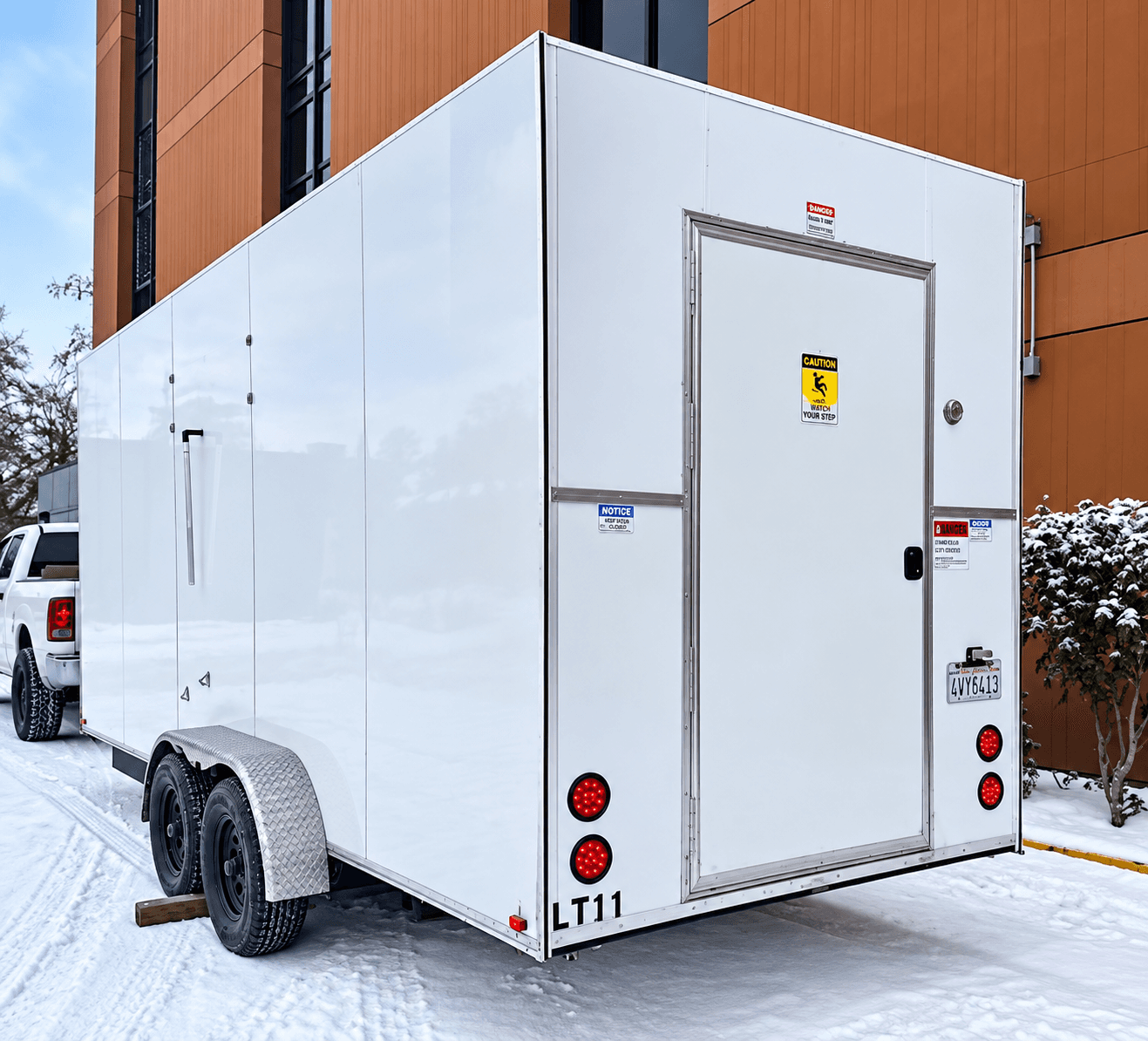
Compare the equipment
These published examples describe named company units. The supplied equipment, configuration and availability are confirmed for your project address.
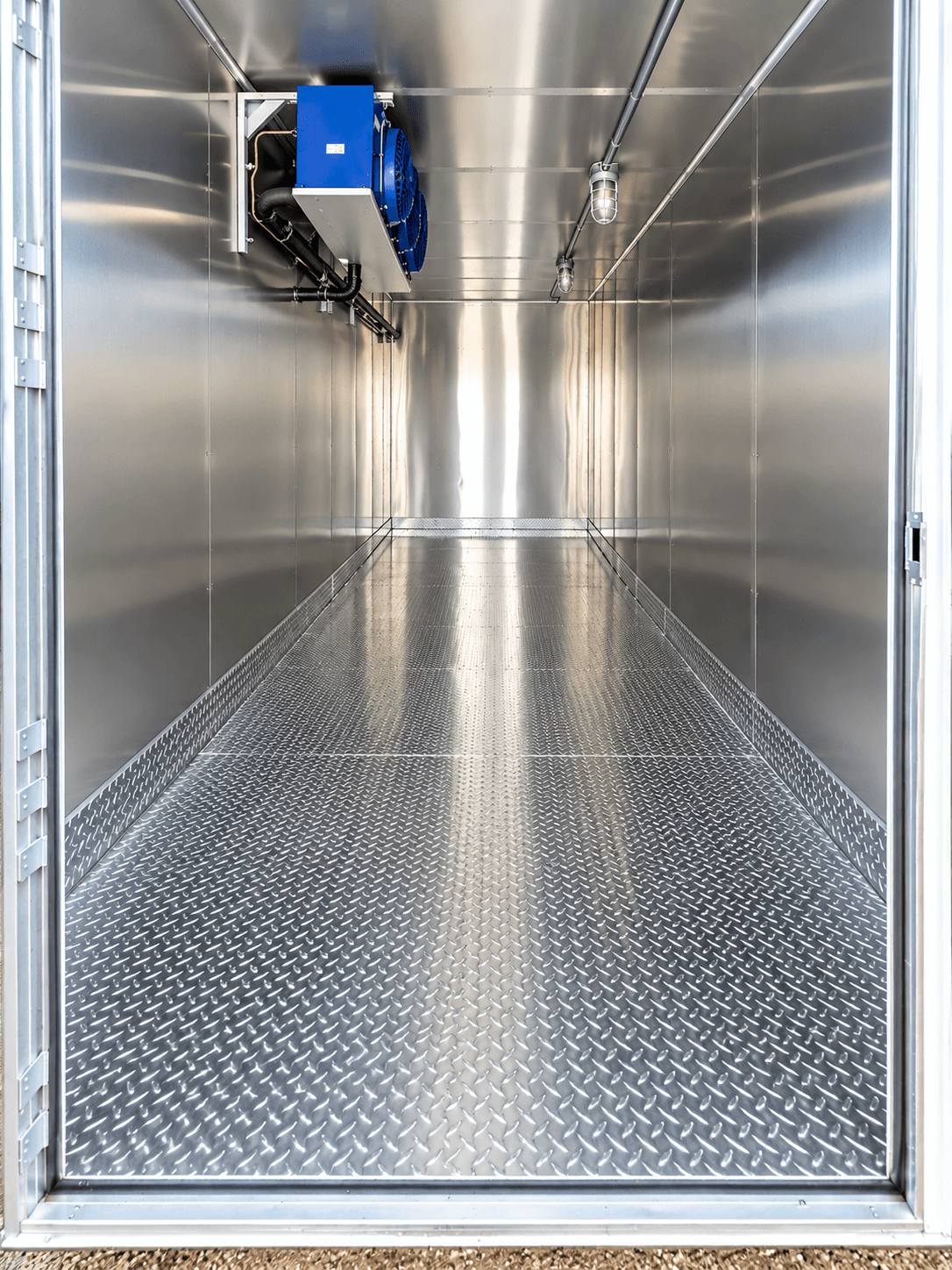
Listed refrigeration trailer equipment: condensing unit, amps panel, lighting.
Equipment records reviewed October 19, 2026. Temperature labels are inventory labels, not verified operating ranges. Nominal length is a model label, not a measure of usable space or site footprint.
A closer look at your project area
Choose a city to explore refrigeration rental planning for your area. Bring the delivery address, preferred dates and storage needs to your inquiry.
Outline: Census TIGERweb generalized states, ACS 2025. City locations: 2025 Census Gazetteer.
Find the place that fits your project
Emergency refrigeration rental in California often starts with one decision: whether the stock belongs in a portable walk-in freezer for rent or in a different format, such as a rented walk-in freezer. Whether you rent for a weekend event or lease through a multi-month renovation, the rental period, delivery coordination and setup are confirmed in your quote. Kitchen outages often bring more than one need: a mobile kitchen for rent for cooking, a dishwashing trailer lease for warewashing and refrigerated storage for the ingredients.
Trailers for rent and trailer leasing cover emergency, short-term and long-term needs, from portable walk-in coolers to outdoor walk-in refrigeration for commercial sites. Photos of the failed unit or the available space can help the team understand the request. Hotels, grocers, hospitals and commissaries can reach a person at any hour, because rental inquiries are answered 24/7.
San Diego Comic-Con fills the San Diego Convention Center each summer, with attendance consistently reported at about 130,000 and a 2016 CNBC analysis citing roughly $150 million in economic impact for the city. Food producers in El Cajon, La Mesa and Santee can ask about leasing a refrigerated container for seasonal stock or a temporary overflow. Distributors in Lemon Grove can compare a short-term refrigerated trailer rental with a longer lease for outdoor walk-in refrigeration. Refrigerated trailers for rent and portable walk-in coolers hold drinks, produce and prepared food at crowded events, and a refrigeration container suits a longer festival run. Refrigerated trailers for rent, refrigeration containers for lease and walk-in coolers for short-term use are the three questions most callers start with. The context above comes from public sources and does not describe a completed job; availability and delivery are confirmed in the quote.
An events-industry report puts Coachella attendance in Indio at about 750,000 for 2023 and the Rose Parade in Pasadena at roughly 250,000 in-person spectators, figures it attributes to other sources. Distributors and processors in San Marino, South Pasadena and Glendale can compare a short-term refrigeration trailer rental with a long-term lease for outdoor walk-in refrigeration. Hospitality operators in La Cañada Flintridge can rent mobile refrigeration for an event or lease modular cold storage during a renovation. Portable refrigerated trailers and walk-in coolers are usually the first equipment discussed for event stock, with onsite power and access reviewed early. A walk-in cooler and a walk-in freezer can be rented together when a commercial site needs both. Mobile kitchens, dishwashing trailers and refrigerated trailers for rent can be quoted together as temporary facilities. A mobile dishwashing trailer and a mobile kitchen trailer are often requested together, with a refrigerated trailer for the stock. Kitchen, dishwashing and refrigeration rentals are separate equipment, and each can be rented short-term or leased long-term. These are public facts about the area, not a record of company jobs; equipment, availability and delivery are confirmed in the quote.
CAL FIRE’s retrospective on the November 8, 2018 Camp Fire in Butte County records at least 85 civilian deaths, 153,336 acres burned and more than 18,000 structures destroyed, with most of the damage in Paradise and Concow. If a hospital kitchen in Chico, a university dining hall in Orland or a distribution center in Corning loses its cooler, a portable refrigerated unit can be rented while the repair is scheduled. A commercial walk-in failure in Tehama calls for the same first step as anywhere else in the state: an emergency refrigerated trailer rental or container lease sized to the stock. After an outage or storm, refrigerated trailers for rent and walk-in freezers protect frozen stock first, and the quote confirms equipment and delivery. Outdoor walk-in refrigeration needs level ground and power nearby, so a long-term lease starts with a site conversation. When cooking and dish washing stop together, a mobile kitchen, a dishwashing trailer and portable refrigeration can be one request. This is published public context, not company work; each request is quoted for its own address and dates.
A California state Senate budget document gives 2032 as the updated completion date for the Merced–Bakersfield early operating segment of high-speed rail, with fare service beginning in 2033. Construction managers in Shafter, Arvin and McFarland sometimes lease a refrigerated container for the length of a project, with a mobile kitchen trailer added when the crew or the public still needs meals. On long projects, contractors compare a refrigerated trailer lease with a refrigeration container for bulk crew supplies. A dishwashing trailer lease can be added to the same quote when returned dishes also need washing. Dishwashing trailer rentals and warewashing capacity are quoted beside the kitchen and refrigeration when the whole food-service area is affected. Nothing here assumes available equipment or a delivery time; a person answers rental inquiries 24/7 and the quote confirms the details.
Emergency refrigeration, onsite and temporary, is meant to bridge the gap until the commercial walk-in freezer is repaired or replaced. Dishwashing trailer rentals and kitchen trailer rentals can be quoted alongside refrigerated trailers for rent when the whole kitchen is down. Dishwashing and kitchen outages often arrive together, so dishwashing trailer rentals and a mobile kitchen for rent are quoted beside emergency refrigeration. For California kitchens, plants and warehouses, trailer leasing and trailer rentals are two ways to get the same portable refrigerated storage.
Emergency refrigeration rental, trailer rentals and trailer leasing are all handled through one inquiry, so one call can cover every option. A mobile kitchen trailer for rent can sit beside onsite refrigeration, so cooking and cold storage are planned together. Portable refrigeration is not a permanent fix; it is a set of temporary facilities for the weeks between a failure and a repaired walk-in freezer. A dishwashing trailer lease can be added to the same quote when returned dishes also need washing.
Temporary facilities for a commercial site usually mean refrigeration first, then a mobile kitchen or dishwashing trailer if cooking or washing is also interrupted. A mobile, modular or portable refrigeration setup in California is chosen to match the walk-in cooler or freezer that failed. Emergency refrigeration rental covers walk-in coolers, walk-in freezers and refrigerated trailers for commercial kitchens, warehouses and plants. Refrigeration containers are often chosen for long-term storage, while refrigerated trailers are chosen for short-term emergencies; both can be rented.
In California, emergency refrigeration usually means a refrigerated trailer, a refrigeration container or a portable walk-in cooler matched to the stock. Short-term or long-term, trailers for rent in California are quoted for the address, the stock and the dates. Onsite temporary facilities can include portable refrigeration, a mobile kitchen trailer and, if dishes are affected, a dishwashing trailer. A commercial kitchen closed for repairs may need a mobile kitchen trailer lease, a dishwashing trailer and emergency refrigeration at the same time.
Temporary facilities can be arranged onsite for an event, a renovation or an emergency, and collected when the permanent kitchen is ready. Portable refrigerated trailers, refrigeration containers and outdoor walk-in refrigeration units can all be discussed for the same emergency. A portable refrigerated trailer suits most emergency calls, while a refrigeration container fits a longer, more stationary need. Modular, mobile or portable, the equipment is chosen to fit the work that continues at the site.
A Los Angeles restaurant replacing a failed walk-in needs to account for incoming deliveries, prepared components for the next service and frozen products with different requirements. BXRT20–1 in the 20FT Refrigerated Trailer guide lists a condensing unit, amps panel and lighting, with a 32°F inventory label and 220V single-phase at 40–60A. The label is not a complete operating range or approval for every ingredient. Compare the offered unit’s usable space and entrance with supplier cases and the goods cooks retrieve repeatedly. Nominal 20ft and 40ft refrigerated containers are other formats to assess; their usable capacity, temperature capabilities and electrical requirements remain unconfirmed.
A storage outage can leave cooking and washing usable. If preparation also moves, P1 in the 26FT Mobile Kitchen Trailer guide lists a prep table, sinks, reach-in refrigerator/freezer and water heater, but no documented cooking line. K21 in the 40FT Mobile Kitchen Trailer guide lists a double-stack convection oven, deep fryer, tilting skillet, griddle/oven and six-burner range/oven, plus reach-in refrigerator/freezer; its list does not document a walk-in cooler. These are different production roles to compare with the displaced menu. P1 lists 220V single-phase at 200A and K21 at 200–220A; the responsible site professional still needs the offered units’ exact connections and supply requirements.
During healthcare food-service planning in Los Angeles or San Francisco, California, several preparation teams may collect ingredients from a shared receiving arrangement at different points in the day. Request a written scope for the food-service requirement, with equipment availability, the proposed rental period and property arrangements subject to review.
Where industrial staff work overlapping shifts in Fresno or San Diego, California, a temporary meal service arrangement may need clear responsibility for shared ingredients and equipment. Agree who accepts meal supplies during each shift and how responsibility transfers when the incoming team takes over the working area.
Los Angeles Convention Center’s current planner FAQ says exhibitors need specific written permission from its Food Services Division before providing food samples or beverage tastings. For an approved sampling program, the storage question is the actual stock waiting to be served, not the total exhibit footprint. Preparation space and cleanup need separate review alongside any proposed cooler or freezer, with the authorized food-service scope settled before choosing equipment.
Explore the Los Angeles rental guideA hospitality kitchen in San Diego may support daily meal service and catered functions from the same refrigeration space. When permanent storage closes for work, a temporary cooler or freezer rental needs to reflect both activities. Distinguish recurring supplies from the additional products held before a function, then identify when they overlap. Menu variety, packaging and delivery frequency can explain the load more clearly than guest totals alone. A refrigeration inquiry built around those details gives the property a practical way to discuss extra space while keeping separate temperature requirements visible throughout the project.
A San Diego function can return its largest load of used tableware after ingredients have left storage. DTC3 in the 30FT Conveyor Dishwashing Trailer guide lists a high-temperature conveyor dishwasher, soil tray, prep table, racks, sinks and water heater. Its electrical entry is 220V three-phase at 200A; matching another unit’s voltage does not settle phase or connector compatibility. Compare the offered machine’s loading arrangement with returned items, their sorting area and the clean-item handoff. Keep that route separate from incoming ingredients. Where permanent cooking rooms stay open, temporary refrigeration may remain the only displaced function.
A government facility preparing to reopen its dining area in San Diego or Sacramento, California, can distinguish the first supplier delivery from the date ordinary meal service resumes. Ask the agency representative which documents are needed to assess the proposal, without assuming the inquiry establishes an approved purchasing arrangement.
Explore the San Diego rental guideFor a San Francisco commercial kitchen, the available storage position and the route to it can shape a temporary refrigeration arrangement as much as the quantity of stock. A refrigerated container or trailer inquiry should describe the proposed space, receiving access and the way staff would use it. If the property has shared loading arrangements or restrictions, include those as site facts rather than assuming a particular approach will work. The aim is to consider the equipment as part of the working property, with clear distinctions between chilled ingredients, frozen supplies and other stored materials.
Available floor area is only part of a workable equipment position. Compare the assigned entrance, loading clearance and staff approach with the case sizes and retrieval pattern. A refrigerated container and a trailer are different formats to assess against those constraints, without assuming their nominal lengths establish the same usable interior. When washing also moves, dishwashing support needs its own incoming used-item area and outgoing clean-item handoff. Connections and waste handling for the proposed cleaning unit remain separate questions from the electrical service required by the storage unit.
A military food-service team planning phased work in San Francisco or Fresno, California, can describe how employee ingredient routes might change as permanent areas close and reopen. Keep the dining requirement separate from any site authorization, and request confirmation of equipment availability and the proposed transport scope before booking.
Explore the San Francisco rental guideA school, hospital or other institutional kitchen project in Sacramento can displace refrigeration in stages. The first closed room may hold different products from the one taken out of use later, and the busiest overlap can occur between those phases. Temporary refrigerated container rentals can be discussed around that changing load. Explain the delivery cycle, package sizes and which supplies must remain available for meal production. Instead of adding all room capacities together, describe how the actual stock moves through the project and where permanent storage remains usable at each step.
Meal production can resume in stages while the store remains temporary. The proposed range, oven and preparation surfaces should match the production duties displaced rather than a general meal count. Dishwashing trailers handle the used-item cycle and need a review of the supplied machine, sorting space and clean-item storage. Check the warewashing unit’s water, wastewater and electrical requirements separately from the cold store’s power. Refrigeration continues holding ingredients for whichever production areas remain active. Returning one permanent room therefore changes part of the equipment workload without automatically ending the other temporary functions.
For hospitality teams managing supplier substitutions in Fresno or San Diego, California, different packaging can change how staff organize and retrieve ingredients within the proposed temporary arrangement. Ask the dining supervisor to identify frequently retrieved ingredients and describe how employees will reach them while other property activities continue.
Explore the Sacramento rental guideCalifornia’s coastal, interior and higher-elevation settings have different climates, as NOAA’s state summary explains. The Pacific Ocean moderates coastal temperatures. Inland places experience larger temperature variations, while dry summers and wetter winters form a broad seasonal pattern with substantial regional and annual differences. A temporary store should therefore be considered against the season and actual property rather than a single statewide equipment assumption.
Describe the proposed position, the route used by staff and any changes in the surrounding work during the rental. An area that looks convenient before a refurbishment may be needed for receiving or contractor activity later. Climate context helps frame those placement questions; it does not establish a unit’s performance or suitability. Connect the storage conditions required by the products with the information for the equipment being proposed, including the site services and access available throughout the project.
A college dining transition in Sacramento or Los Angeles, California, can place supplier arrivals, contractor access and staff preparation within the same restricted part of campus. Ask the dining lead to match the proposed menu with ingredient arrivals, available working space and the planned staff handover.
A Fresno commercial operation may need its largest amount of refrigeration space immediately after a supplier delivery. During an equipment failure or renovation, that receiving peak can be more useful than an end-of-day stock count when discussing temporary storage. Describe the products, their packaging and how long different goods stay before use. A cooler holding frequently retrieved ingredients works differently from a freezer used for less frequent withdrawals. Keeping those operating patterns separate helps the discussion focus on storage that supports production, rather than treating the rental as an empty box measured only by overall dimensions.
Package shape and access can limit a store before the overall floor looks full. Compare case dimensions, usable door clearance and the space needed to reach frequently used products after receiving. A freezer requirement should remain distinct from chilled holding, with operating conditions taken from the specific unit being offered. If a processing or meal-service area also loses washing facilities, dishwashing needs follow the used pans and utensils rather than the number of stored cases. Keep that cleaning workload and its water, wastewater and power requirements visible as a separate part of the equipment scope.
A catering setup in Los Angeles or San Francisco, California, can remain occupied by staff and supplies after guest service ends, affecting the proposed equipment collection arrangement. Keep the supplier schedule, menu revisions and venue access instructions together so replacement staff can understand the agreed catering setup.
Explore the Fresno rental guideBuild the California requirement around the displaced products, receiving peak, working route and proposed equipment. At the end of use, some goods may return indoors while others remain temporarily and normal deliveries continue. Include that overlap when discussing a short rental or longer lease, so the proposed period follows the complete stock transfer rather than a construction date alone.
A food production transition in San Diego or Sacramento, California, may require incoming ingredients and prepared products to pass through working areas managed by different staff teams. Ask how the operator records returned goods and separates them from available stock before agreeing the proposed equipment position and product route.
Use the 12ft Refrigerated Trailer guide with the Los Angeles repair example.
Compare the 20ft Refrigerated Container with the San Diego storage changeover. Confirm usable capacity and connection requirements for the offered unit before selecting it.
For additional operating examples, read San Jose on a phased lease, Long Beach on cooler and freezer choices, Oakland on shared ingredient stores, and Bakersfield on commercial repair-period storage. Select the guide that best fits the work being displaced.
Before you decide
No. Required product conditions, packaging, receiving patterns and the available property space can differ substantially. Describe those details before choosing equipment. A short restaurant repair, a catered event and a phased institutional renovation each create a different working load, even when the initial request uses the same general cold-storage category.
Yes, include the expected stock transfer and any overlap when discussing the period. Permanent equipment becoming available does not always mean every product moves immediately. Explain the sequence, deliveries still expected and any work that affects access, so the proposed terms reflect the complete transition rather than only construction dates.
California is within the business’s service area. The equipment, current availability, transport and commercial terms for an individual property still require a project quote. Provide the full address, proposed dates and access information so the written proposal can establish those details without assuming a nearby depot or a fixed delivery interval.
The team can discuss a portable walk-in freezer rental or lease for a California address, from a few days to several months. Give the address, the stock to be stored and any access limits for a delivery truck. The quote confirms the equipment, the delivery timing and the rental terms for your site.
Emergency refrigeration can include portable refrigerated trailers, a refrigeration container, outdoor walk-in refrigeration or a walk-in cooler or walk-in freezer rental. Outdoor walk-in refrigeration can be set up beside the building as temporary facilities, so staff keep working while the permanent walk-in cooler or walk-in freezer is repaired. Commercial refrigeration rentals for a school, hospital or hotel are usually planned around the busiest service of the week. Every call about a failed commercial walk-in freezer or refrigeration unit is an emergency call, and a person answers rental inquiries 24/7. Equipment, availability and delivery timing are confirmed in the quote.
City examples illustrate project planning; availability is confirmed for each delivery address.
Temporary refrigeration, kitchens and dishwashing can support many kinds of food-service operations. Each setting below starts with its own schedule, stock and site questions, and every project is reviewed individually.
Hotels, restaurants and resorts can plan temporary refrigeration around breakfast, banquet and dinner service when a walk-in cooler fails or a kitchen is refurbished.
Hospital, nursing home and care-facility kitchens can describe meal schedules, delivery times and displaced stock so temporary storage follows the food-service routine.
Municipal, county and public-building food-service teams can outline receiving arrangements, responsible contacts and project dates before a quote is prepared.
Dining facility managers can explain the products displaced, the receiving arrangements and the proposed period, then review availability and terms with our team.
Schools, colleges and universities can plan around term dates, serving windows and campus kitchen renovations so meal service can continue during repairs or construction.
Plant cafeterias and employee dining areas can describe shift patterns and staged building work so temporary cold storage can be reviewed against the working schedule.
Caterers and venues can plan preparation windows, event days and overflow ingredients, and describe how stock moves between storage, the kitchen and service.
Producers, wholesalers and distributors can describe loading, staging and storage needs when a cooler breaks down or demand temporarily exceeds capacity.
These examples describe planning situations. Equipment, availability and terms are confirmed in a project quote.
Cold storage is only one part of a project. These are the questions we work through with you before anything is booked.
Start with refrigerated containers and refrigeration trailers, then add a temporary kitchen or dishwashing trailer when the project needs one, all in a single conversation.
Access, utilities and the intended position are reviewed before delivery is arranged, so the equipment is matched to your site rather than the other way around.
Whether a walk-in cooler failed this morning or a renovation is months away, describe the real situation and plan around the stock, dates and people involved.
Planning guides cover all 50 states and more than 700 cities. Your address is then confirmed for equipment and delivery.
Use the rental calculator for a rate-range estimate and setup amount, then request a project quote that confirms availability, transport and the rental period.