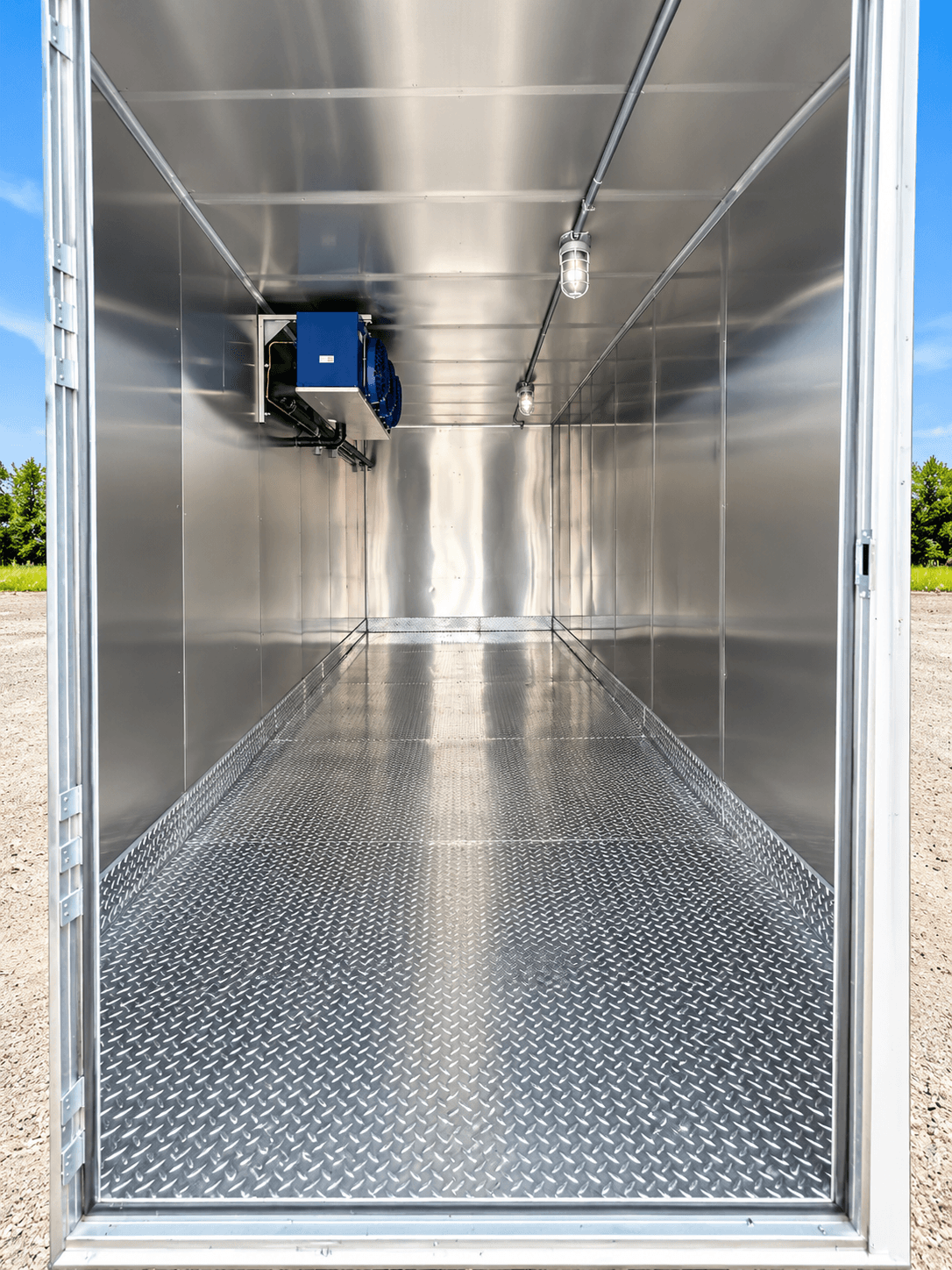
BXRT20–1Refrigerated trailer
- Nominal length
- 20ft
- Listed electrical supply
- 220V · single-phase · 40–60A
- Inventory temperature label
- 32°F
Temporary cold storage in San Francisco, California
When a walk-in fails in San Francisco, the clock starts at the refrigerator door. Worldwide Refrigerated Container Rental Facilities offers refrigerated containers and trailers, portable coolers and freezers for emergency breakdowns and planned kitchen work, with related kitchen and dishwashing inquiries. A person answers rental inquiries 24/7. Short rentals can cover a repair and longer lease discussions can cover a refurbishment. Send your delivery address, receiving access, product conditions and dates to discuss equipment, delivery coordination, current availability and a project quote.
Emergency cooler or freezer failure in San Francisco? A person answers rental inquiries 24/7. Availability and delivery timing are confirmed in your quote.
Plan your rental budget
Compare the equipment
These published examples describe named company units. The supplied equipment, configuration and availability are confirmed for your project address.
Listed refrigeration trailer equipment: condensing unit, amps panel, lighting.
Equipment records reviewed October 19, 2026. Temperature labels are inventory labels, not verified operating ranges. Nominal length is a model label, not a measure of usable space or site footprint.
Emergency portable refrigerated trailer rentals in San Francisco are used for breakdowns first, but the same equipment can be leased for renovations, events and seasonal storage. Whether you rent for a weekend event or lease through a multi-month renovation, the rental period, delivery coordination and setup are confirmed in your quote. Kitchen outages often bring more than one need: a mobile kitchen for rent for cooking, a dishwashing trailer lease for warewashing and refrigerated storage for the ingredients.
Refrigeration is an emergency need: when a commercial walk-in freezer or refrigeration unit breaks down, the call is an emergency, and a person answers rental inquiries 24/7. A person answers rental inquiries 24/7, so an emergency in San Francisco can be reported at any hour, including nights, weekends and holidays. Teams working in Berkeley, Oakland and Vallejo, as well as San Francisco, can ask for trailer rental or leasing details for their own address, since equipment and delivery are reviewed site by site.
An events-industry report puts Coachella attendance in Indio at about 750,000 for 2023 and the Rose Parade in Pasadena at roughly 250,000 in-person spectators, figures it attributes to other sources. Caterers and concession operators in San Marino, South Pasadena and Glendale often need onsite refrigeration for a few days, then release the trailer as soon as the event ends. Growers and packers in La Cañada Flintridge and El Monte can compare a refrigerated trailer rental with a container lease for the busy season. Refrigerated trailers for rent and portable walk-in coolers hold drinks, produce and prepared food at crowded events, and a refrigeration container suits a longer festival run. Onsite temporary facilities can include portable refrigeration, trailers for rent and, if dishes are affected, a dishwashing trailer. Mobile kitchens, dishwashing trailers and refrigerated trailers for rent can be quoted together as temporary facilities. The context above comes from public sources and does not describe a completed job; availability and delivery are confirmed in the quote.
CAL FIRE’s retrospective on the November 8, 2018 Camp Fire in Butte County records at least 85 civilian deaths, 153,336 acres burned and more than 18,000 structures destroyed, with most of the damage in Paradise and Concow. A freezer failure at a nursing home in Chico, a cafeteria in Orland or a bakery in Corning can start with a phone call and a short list of details: the address, the stock and the temperature to hold. Hospitals and hotels in Tehama and Yuba City sometimes need portable refrigerated trailers when a commercial walk-in breaks down during a busy week. Emergency refrigeration comes first after a storm or outage: a portable refrigerated trailer, a refrigeration container or outdoor walk-in refrigeration can hold stock while power and repairs catch up. A short-term emergency rental can become a long-term lease at the same address, as long as the quote says so. A mobile dishwashing trailer and a mobile kitchen trailer are often requested together, with a refrigerated trailer for the stock. Nothing here assumes available equipment or a delivery time; a person answers rental inquiries 24/7 and the quote confirms the details.
A California state Senate budget document gives 2032 as the updated completion date for the Merced–Bakersfield early operating segment of high-speed rail, with fare service beginning in 2033. Renovation projects in Shafter, Arvin and McFarland can use a rented refrigeration trailer while permanent coolers are rebuilt, with a mobile kitchen trailer added if the cooking line is closed too. Facility teams in Lancaster can lease portable refrigeration as temporary facilities while a permanent cold room is rebuilt. A long-term refrigeration trailer lease keeps supplies cold on site for the whole project, with power and access reviewed before delivery. Outdoor walk-in refrigeration needs level ground and power nearby, so a long-term lease starts with a site conversation. When cooking and dish washing stop together, a mobile kitchen, a dishwashing trailer and portable refrigeration can be one request. This is published public context, not company work; each request is quoted for its own address and dates. Cold storage rental is often the first step, since frozen and chilled stock cannot wait for a repair. Refrigeration rentals range from a portable walk-in cooler for a few days to a refrigeration container leased for months.
Emergency refrigeration, onsite and temporary, is meant to bridge the gap until the commercial walk-in freezer is repaired or replaced. Trailer leasing makes sense when a commercial kitchen will be closed for weeks, because one lease replaces repeated short-term rentals. A commercial kitchen closed for repairs may need a mobile kitchen trailer lease, a dishwashing trailer and emergency refrigeration at the same time. Portable refrigerated trailers, refrigeration containers and outdoor walk-in refrigeration units can all be discussed for the same emergency.
Emergency refrigeration in San Francisco can be rented for a few days or leased long-term, depending on how long the commercial walk-in is down. Mobile kitchens, dishwashing trailers and refrigerated trailers for rent can be quoted together as temporary facilities. A dishwashing trailer, a mobile kitchen trailer and a refrigerated trailer for rent can each be short-term or long-term, depending on the repair. A commercial walk-in freezer failure in San Francisco is an emergency call, and onsite temporary refrigeration is how most such calls begin.
Rent, lease and leasing describe contract shapes: a rental is short, a lease is longer, and trailer leasing can be discussed for more than one unit. Refrigerated trailers for rent, refrigeration containers for lease and walk-in coolers for short-term use are the three questions most callers start with. Temporary facilities for a commercial site usually mean refrigeration first, then a mobile kitchen or dishwashing trailer if cooking or washing is also interrupted. Onsite temporary facilities can include portable refrigeration, a mobile kitchen trailer and, if dishes are affected, a dishwashing trailer.
A dishwashing trailer lease can be added to the same quote when returned dishes also need washing. Outdoor walk-in refrigeration can be set up beside the building as temporary facilities, so staff keep working while the permanent walk-in cooler or walk-in freezer is repaired. All calls about a failed commercial walk-in freezer or refrigeration system are emergency calls, and a person answers rental inquiries 24/7. Emergency refrigeration can be arranged as a refrigerated trailer, a refrigeration container or a portable walk-in cooler, depending on the stock and the site.
Short-term or long-term, trailers for rent in San Francisco are quoted for the address, the stock and the dates. Modular, mobile or portable, the equipment is chosen to fit the work that continues at the site. A mobile, modular or portable refrigeration setup in San Francisco is chosen to match the walk-in cooler or freezer that failed. Dishwashing and kitchen outages often arrive together, so dishwashing trailer rentals and a mobile kitchen for rent are quoted beside emergency refrigeration.
A mobile kitchen trailer for rent can sit beside onsite refrigeration, so cooking and cold storage are planned together.
Moscone Center’s loading-dock guidance identifies catering deliveries sharing dock space and refrigerated trucks occupying specific bays. It also explains that those trucks may need to move to other docks to serve an event, coordinated with the general service contractor. For a comparable authorized food operation, the ingredient store needs a working position beyond the initial unloading. A published bay description does not reserve space or approve a rental placement; the event’s responsible contacts settle that arrangement.
Incoming reserves and ingredients collected throughout preparation use the refrigerated store differently. A receiving approach can accommodate a supplier unloading cases while still being awkward for employees making repeated trips. The occupied arrangement needs to leave the products in daily use accessible beside later orders. Dishwashing returns have another route if reusable service items also move through that area.
MT1, a named example in the 20ft Refrigerated Trailer guide, lists a condensing unit, amps panel, lighting and 220V single-phase power at 40–60A. Its 15°F inventory label is not a verified operating range. Exact NEMA plug configuration and usable capacity remain unconfirmed. Availability and suitability for the intended food products need review for the unit offered.
UCSF Health’s Mission Bay Adult Hospital information distinguishes room service for hospitalized patients from a café and grab-and-go dining on the first floor. Those are separate food-service destinations within one hospital. For a comparable dining interruption, ingredients awaiting preparation and food allocated to retail replenishment need identifiable positions in temporary holding. The responsible dining team sets the product conditions and handling requirements. This is a food-service example, rather than a clinical-storage specification.
The 20ft Refrigerated Container offers another nominal format. Its capacity, temperature capability and supply need unit-specific confirmation. Compare that offered configuration with the products displaced while the permanent room is unavailable.
An unavailable freezer can affect different products from a chilled ingredient room. Keep their holding requirements distinct rather than assuming one refrigerated enclosure provides separate temperature zones. A dishwashing facility supports returned reusable items if that function also moves; it does not replace the ingredient holding space.
For hospitality businesses arranging repairs in San Francisco or San Anselmo, California, the last transfer back to permanent rooms deserves attention alongside the initial movement of supplies. Confirm who can release the equipment after supplies move back indoors, and include that transition when requesting the complete rental proposal.
A Mill Valley restaurant repair can leave cooking active while refrigerated ingredients move outside. Frequently retrieved trays need a different working position from reserve cartons collected only for the next batch. When construction changes the receiving entrance, that daily ingredient route needs to remain usable after suppliers unload. A kitchen trailer with cooking equipment serves another function if production also moves, with its own connections and equipment period.
For another working property, continue with Daly City, Richmond or San Mateo. The guide for each address supports a separate equipment inquiry; a shared buyer does not create one combined load across several sites.
During a Fairfax refurbishment, usable permanent refrigeration can retain reserves while another room closes. A San Anselmo caterer may need advance ingredients at preparation rather than the public venue.
NOAA’s 1991–2020 normals for the San Francisco International Airport station list a July high of 72.6°F and a low of 55.3°F. That is an airport station, so neighborhoods can differ, and the number says nothing about wind, shade or door openings at your loading position. Describe the site and the working season, and the supplier can review the offered unit against them. NOAA’s statewide summary describes the ocean moderating the coast.
San Francisco’s Environmental Health Branch publishes food safety guidelines for retail establishments before, during and after a power outage and flooding. With doors closed, they say a refrigeration unit keeps food safe for 4 hours and a full freezer holds its temperature for 48 hours, or 24 hours if half full. They say not to prepare food during the outage, and to throw food out when in doubt.
Four hours leaves little time to decide, so know your access and power before an emergency. Describe the loading position, the electrical service and whether the street or a shared dock controls where a trailer can stand. The guidelines also treat flooding separately, so say if water reached the cold room. Whether a rented unit suits a given food depends on the unit’s conditions and the city’s rules.
A carton, tray or loaded cart gives the doorway comparison a practical reference. Cartons need accessible product faces; trays used throughout preparation need a workable retrieval position; carts need their loaded dimensions and turning movement considered. Agreed shelving and loading aids remain specific to the supplied unit. An exterior photograph cannot show what fittings are included.
Some reserves can remain in temporary cold storage while ingredients for immediate production return first. Keep the selected unit’s supply available until those groups clear. Contact our team for San Francisco availability and a complete quote covering the equipment, working period and transport.
Before you book
The temporary entrance supports everyday preparation after the first unloading. Larger receiving loads and frequent smaller movements can compete for the same space. Describing both helps the proposed arrangement relate to the operation rather than only to an area that appears available on a property plan.
Identify the usable store and what it continues to hold. This clarifies the goods actually needing another location and how the temporary requirement changes during work. A phased description is more informative than a full-capacity assumption that does not explain product movement or receiving peaks.
Include that phase with the expected period and the route under consideration. Staff still need the store while work progresses. The equipment arrangement should be considered against actual property changes rather than only the access available before construction or the repair project begins.
Note when the failure began and the current food temperatures, because the city’s after-outage tables depend on how long food was out of temperature. Add the loading position, any shared dock or street rules, the electrical service and the products involved. This lets the team review a refrigerated trailer or container against the actual site, and a dishwashing trailer if returned dishes also need handling.
The choice depends on how long the walk-in cooler or freezer will be unavailable: a short rental for a repair, a lease for a longer project. Give the address, the stock to be stored and any access limits for a delivery truck. Equipment, availability and delivery timing are confirmed in the quote.
Mobile and modular refrigeration, from refrigerated trailers for rent to a refrigeration container lease, can be discussed for short-term or long-term needs. A short-term emergency rental can become a long-term lease at the same address, as long as the quote says so. A commercial walk-in freezer or refrigeration breakdown is an emergency, so call at any hour; a person answers rental inquiries 24/7, and the quote confirms the equipment and delivery for your address.
These public references inform the planning examples; equipment availability and delivery arrangements are confirmed for your address.
Temporary refrigeration, kitchens and dishwashing can support many kinds of food-service operations. Each setting below starts with its own schedule, stock and site questions, and every project is reviewed individually.
Hotels, restaurants and resorts can plan temporary refrigeration around breakfast, banquet and dinner service when a walk-in cooler fails or a kitchen is refurbished.
Hospital, nursing home and care-facility kitchens can describe meal schedules, delivery times and displaced stock so temporary storage follows the food-service routine.
Municipal, county and public-building food-service teams can outline receiving arrangements, responsible contacts and project dates before a quote is prepared.
Dining facility managers can explain the products displaced, the receiving arrangements and the proposed period, then review availability and terms with our team.
Schools, colleges and universities can plan around term dates, serving windows and campus kitchen renovations so meal service can continue during repairs or construction.
Plant cafeterias and employee dining areas can describe shift patterns and staged building work so temporary cold storage can be reviewed against the working schedule.
Caterers and venues can plan preparation windows, event days and overflow ingredients, and describe how stock moves between storage, the kitchen and service.
Producers, wholesalers and distributors can describe loading, staging and storage needs when a cooler breaks down or demand temporarily exceeds capacity.
These examples describe planning situations. Equipment, availability and terms are confirmed in a project quote.
Cold storage is only one part of a project. These are the questions we work through with you before anything is booked.
Start with refrigerated containers and refrigeration trailers, then add a temporary kitchen or dishwashing trailer when the project needs one, all in a single conversation.
Access, utilities and the intended position are reviewed before delivery is arranged, so the equipment is matched to your site rather than the other way around.
Whether a walk-in cooler failed this morning or a renovation is months away, describe the real situation and plan around the stock, dates and people involved.
Planning guides cover all 50 states and more than 700 cities. Your address is then confirmed for equipment and delivery.
Use the rental calculator for a rate-range estimate and setup amount, then request a project quote that confirms availability, transport and the rental period.