BXRT20–1Refrigerated trailer
- Nominal length
- 20ft
- Listed electrical supply
- 220V · single-phase · 40–60A
- Inventory temperature label
- 32°F
Refrigerated container rentals in Alaska start with the operation you need to keep supplied when permanent refrigeration is unavailable. Worldwide Refrigerated Container Rental Facilities serves Alaska commercial projects, including inquiries for refrigeration trailers, walk-in coolers and freezers, plus related kitchen and dishwashing equipment. A sudden cold-room failure, a restaurant refurbishment and a planned catering project each create a different storage task. Short-term rentals and longer lease inquiries can be considered around the products, destination and schedule. Share the actual delivery address, access arrangements and required dates so we can discuss suitable equipment, current availability and a project quote.
Emergency cooler or freezer failure in Alaska? A person answers rental inquiries 24/7. Availability and delivery timing are confirmed in your quote.
Plan your rental budget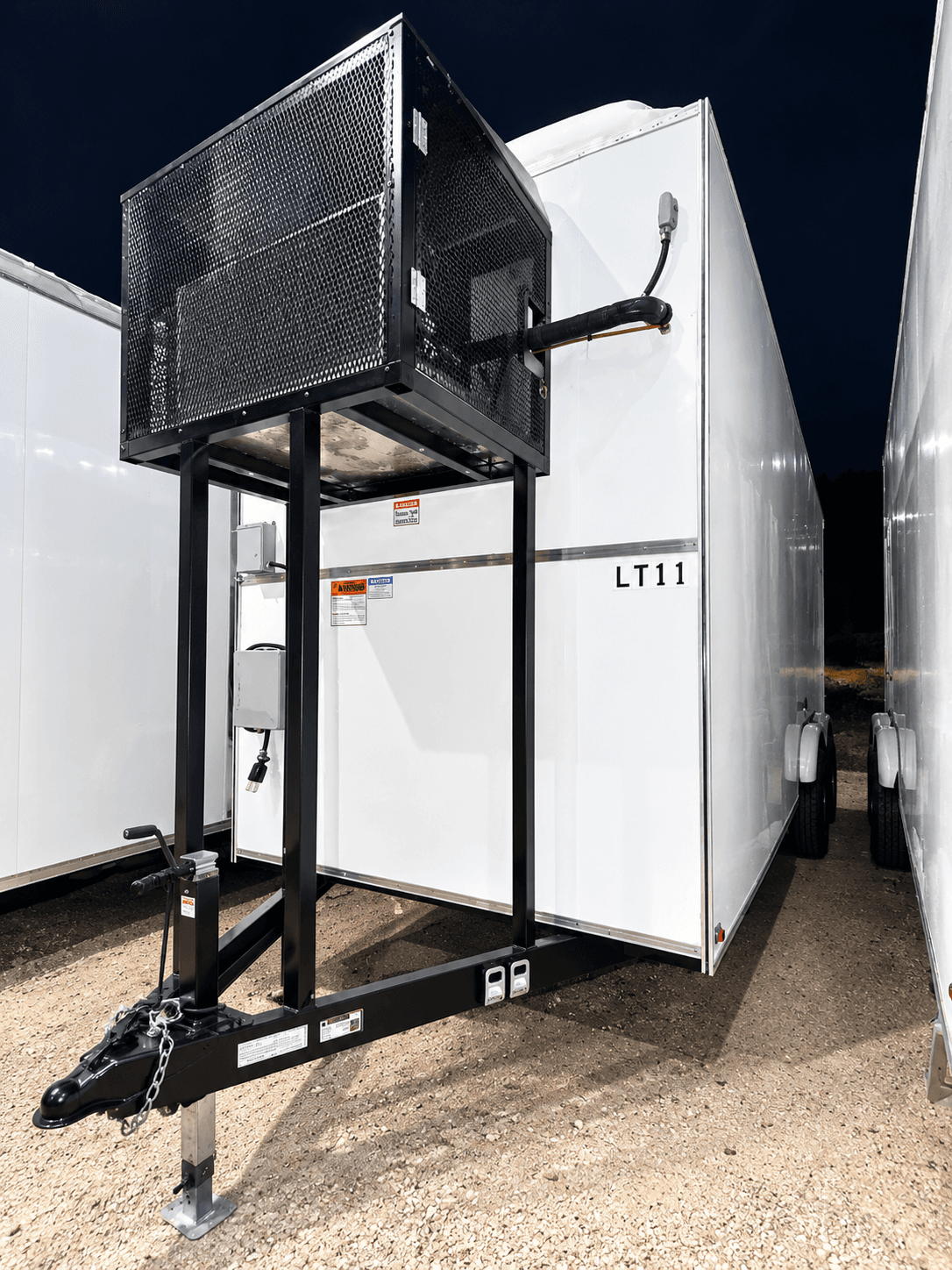
Compare the equipment
These published examples describe named company units. The supplied equipment, configuration and availability are confirmed for your project address.
Listed refrigeration trailer equipment: condensing unit, amps panel, lighting.
Equipment records reviewed October 19, 2026. Temperature labels are inventory labels, not verified operating ranges. Nominal length is a model label, not a measure of usable space or site footprint.
A closer look at your project area
Choose a city to explore refrigeration rental planning for your area. Bring the delivery address, preferred dates and storage needs to your inquiry.
Outline: Census TIGERweb generalized states, ACS 2025. City locations: 2025 Census Gazetteer.
Find the place that fits your project
Emergency refrigeration container rentals in Alaska are used for breakdowns first, but the same equipment can be leased for renovations, events and seasonal storage. The same equipment can be rented for a few days or leased for several months, depending on how long the permanent storage will be out of service. Cold storage is the usual starting point, and the same team can discuss a mobile kitchen rental or a dishwashing trailer lease if the interruption is wider.
Commercial customers can ask about portable refrigerated trailers, refrigeration containers and walk-in coolers or freezers for emergency, modular or temporary onsite use. Photos of the failed unit or the available space can help the team understand the request. Restaurants, hospitals, schools, hotels, caterers and food producers can describe the problem to a person who answers rental inquiries 24/7.
Anchorage’s Fur Rendezvous, known as Fur Rondy, is a 12-day February festival that has run since 1935, with a carnival, snow sculptures and the state’s largest fireworks show. Hospitality groups in Soldotna, Homer and Kachemak may rent mobile refrigeration for a banquet season or lease modular cold storage during a hotel renovation. Refrigerated trailers for rent and portable walk-in coolers hold drinks, produce and prepared food at crowded events, and a refrigeration container suits a longer festival run. Refrigeration is an emergency need: every call about a failed commercial walk-in freezer or refrigeration unit is an emergency call. A mobile dishwashing trailer and a mobile kitchen trailer are often requested together, with a refrigerated trailer for the stock. These are public facts about the area, not a record of company jobs; equipment, availability and delivery are confirmed in the quote.
The Alaska State Fair in Palmer, listed as the state’s largest event, runs from late August into early September, and its 2026 run is listed as August 21 to September 7. Distributors and processors in Larsen Bay, Egegik and Bettles can compare a short-term refrigeration trailer rental with a long-term lease for outdoor walk-in refrigeration. Event refrigeration is quoted by the day or the week: portable refrigerated trailers for a weekend, trailer leasing for a full season. Trailer rentals, trailers for rent and trailer leasing are all discussed with the address and the dates in hand. Mobile kitchens, dishwashing trailers and refrigerated trailers for rent can be quoted together as temporary facilities. Dishwashing trailer rentals and warewashing capacity are quoted beside the kitchen and refrigeration when the whole food-service area is affected. When cooking and dish washing stop together, a mobile kitchen, a dishwashing trailer and portable refrigeration can be one request. Nothing here assumes available equipment or a delivery time; a person answers rental inquiries 24/7 and the quote confirms the details.

In September 2022 the remnants of Typhoon Merbok brought high winds and major coastal flooding to the western Alaska coast, with a state disaster emergency declared on September 17 and a federal disaster declaration approved on September 23. A freezer failure at a nursing home in Clark's Point, a cafeteria in Napaskiak or a bakery in Napakiak can start with a phone call and a short list of details: the address, the stock and the temperature to hold. Emergency refrigeration comes first after a storm or outage: a portable refrigerated trailer, a refrigeration container or outdoor walk-in refrigeration can hold stock while power and repairs catch up. This is published public context, not company work; each request is quoted for its own address and dates.
The Associated General Contractors of Alaska’s 2026 construction forecast says work will begin on the Port of Alaska Terminal 1 replacement in Anchorage and expects public-sector port and airport spending to rise to about $900 million in 2026. Facility teams in Platinum and Hoonah can lease portable refrigeration as temporary facilities while a permanent cold room is rebuilt. Trailer leasing covers the length of a project: a refrigerated trailer for supplies and a refrigeration container for bulk stock, short-term or long-term. Refrigerated trailers for rent, refrigeration containers for lease and walk-in coolers for short-term use are the three questions most callers start with. A dishwashing trailer lease can be added to the same quote when returned dishes also need washing. The context above comes from public sources and does not describe a completed job; availability and delivery are confirmed in the quote.
The fiscal 2026 defense authorization includes $80 million to upgrade Army barracks at Fort Wainwright near Fairbanks and $8 million for the design of a dining facility. Contractors in Tenakee Springs and Angoon often ask for a mobile kitchen trailer lease alongside a refrigerated container when a dining area closes for construction. A long-term refrigeration trailer lease keeps supplies cold on site for the whole project, with power and access reviewed before delivery. Kitchen, dishwashing and refrigeration rentals are separate equipment, and each can be rented short-term or leased long-term. This is published public context, not company work; each request is quoted for its own address and dates.
A Defense Visual Information Distribution Service report says the F-35 beddown at Eielson Air Force Base near Fairbanks closed an eight-year program from 2016 to 2024 in which about 25 facilities were built. In Kake or Kupreanof, a kitchen remodel can be covered by a lease measured in weeks or months, and the same quote can include a dishwashing trailer for rent if the dish room is affected. Portable kitchen trailers, a mobile dishwashing trailer and portable refrigeration are leased together as temporary facilities when a main kitchen is closed for work. Outdoor walk-in refrigeration needs level ground and power nearby, so a long-term lease starts with a site conversation. Mobile kitchens, dishwashing trailers and refrigerated trailers for rent can be quoted together as temporary facilities. This is published public context, not company work; each request is quoted for its own address and dates.
A short-term emergency rental can become a long-term lease at the same address, as long as the quote says so. Trailer rentals for emergencies are usually short-term, while trailer leasing for construction or seasonal work can run for months. Onsite temporary facilities can include portable refrigeration, a mobile kitchen trailer and, if dishes are affected, a dishwashing trailer. A dishwashing trailer, a mobile kitchen trailer and a refrigerated trailer for rent can each be short-term or long-term, depending on the repair.
Mobile refrigeration, mobile kitchens and mobile dishwashing trailers are different equipment, and each can be rented separately or together. Walk-in coolers hold chilled stock and walk-in freezers hold frozen stock, so the rental should match whichever one failed. Modular, mobile or portable, the equipment is chosen to fit the work that continues at the site. Outdoor walk-in refrigeration can be set up beside the building as temporary facilities, so staff keep working while the permanent walk-in cooler or walk-in freezer is repaired.
Mobile kitchens, dishwashing trailers and refrigerated trailers for rent can be quoted together as temporary facilities. Emergency refrigeration rental, trailer rentals and trailer leasing are all handled through one inquiry, so one call can cover every option. Trailer rentals, refrigerated trailers for rent and trailer leasing are all discussed with the address and the dates in hand. Emergency refrigeration, onsite and temporary, is meant to bridge the gap until the commercial walk-in freezer is repaired or replaced.
A mobile dishwashing trailer and a mobile kitchen trailer are often requested together, with a refrigerated trailer for the stock. Emergency refrigeration rental covers walk-in coolers, walk-in freezers and refrigerated trailers for commercial kitchens, warehouses and plants. A portable refrigerated trailer suits most emergency calls, while a refrigeration container fits a longer, more stationary need. Outdoor walk-in refrigeration needs level ground and power nearby, so a long-term lease starts with a site conversation.
Temporary facilities can be arranged onsite for an event, a renovation or an emergency, and collected when the permanent kitchen is ready. Emergency refrigeration for commercial kitchens often starts with a portable refrigerated trailer and ends with a longer lease if repairs take time. Refrigeration is an emergency need: every call about a failed commercial walk-in freezer or refrigeration unit is an emergency call.
NOAA describes several Alaska climate types shaped by elevation, distance from the ocean and other geographic differences. Interior locations have particularly pronounced seasonal temperature contrasts. The Arctic region lies north of the Brooks Range. A statewide description cannot establish the conditions beside a restaurant or facility, so identify the exact placement and the season included in the proposed rental.
The storage format changes how a crew uses the site. A refrigerated trailer can serve a displaced stock-holding task, while a container offers another format to compare; the model label alone does not establish usable capacity or connections. Keep package dimensions, working aisles and access to frequently used ingredients in the comparison. A unit’s stated power needs belong with that assigned unit, not every item carrying the same length label. Seasonal exposure and a clear staff approach remain separate site considerations.
For healthcare facilities planning food-service repairs in Juneau or Wasilla, Alaska, the staff handover should explain which supplies remain accessible and where incoming orders are received. Include staff collection routes and ingredient destinations in the inquiry so the facility can review the temporary arrangement against its meal service.
Industrial meal service managers in Fairbanks or Ketchikan, Alaska, may need to maintain clear staff handovers when different shifts share the same temporary equipment. Ask the meal service lead how shared supplies will be labelled and handed over between staff using the proposed temporary arrangement.
An Anchorage restaurant losing a walk-in needs to account for products already inside and supplies still arriving. Portable cold storage can be considered around that combined load while the permanent equipment is assessed. Separate frozen goods from chilled ingredients, then identify the quantities required for the next service periods. This keeps the refrigeration discussion connected to the kitchen’s work instead of the dimensions of the failed room alone.
If only the cold room is down, the temporary replacement needs to hold products, not reproduce every work area in the restaurant. Cooking equipment becomes relevant when preparation or production space also closes. Compare the proposed oven, range and preparation surfaces with the menu and batch pattern; do not assume a length label fixes that package. Dishwashing support serves another job: receiving used pans, moving items through the supplied wash equipment and returning clean utensils to use. The food route between those tasks and refrigeration should stay clear of the return route for soiled items.
For government facilities considering temporary equipment in Ketchikan or Anchorage, Alaska, a clear dining brief can distinguish the stock displaced from food supplies that remain indoors. Ask the food-service lead to describe the busiest stock overlap and give the agency reviewer the proposed period needed for temporary equipment.
Anchorage Convention Centers’ published catering page separates banquets, concessions, crew meals and exhibit-booth services within an exclusive in-house operation. For an authorized event, ingredient holding should follow the busiest overlap of those food-service streams, while cleaning follows the items each returns. The center’s food-service team would need to review how a temporary store connects with its existing operation before a unit or position is selected.
Explore the Anchorage rental guideFor a commercial kitchen refurbishment in Juneau, refrigeration may need to move before other work begins. Existing stores, receiving access and preparation areas can become unavailable at different times. A temporary refrigerated container inquiry should describe those changes in order, including any interval when both old and new stock must be held. That makes the busiest storage period visible without assuming the construction dates alone define the rental.
Keep the three functions distinct during a staged move. Refrigeration holds ingredients between deliveries and preparation; a temporary kitchen provides the cooking or preparation area displaced by the works. Dishwashing trailers take a separate cleaning workload, so the proposed layout needs a place for incoming dirty items as well as clean items waiting to return. Compare the space for sorting, racks and handoffs with the actual machine configuration in the offer; model titles do not prove how loading works. A dishwashing plan also needs the water supply, wastewater arrangement and electrical details that belong to the selected unit. The destination and property access still shape transport review, without establishing a particular route or lead time.
For military food-service inquiries in Wasilla or Fairbanks, Alaska, a tentative repair schedule can affect the requested rental period even when the meal requirement remains unchanged. Ask the responsible dining lead to describe reserved stock and repeated ingredient retrieval before comparing the practical use of proposed temporary equipment.
Explore the Juneau rental guideA Fairbanks facility planning temporary refrigeration across more than one season needs more than a date for the first delivery. The store may remain in place while the working area, receiving schedule or repair program changes. Refrigeration trailers and containers can be discussed around that expected use, with product conditions, access patterns and the proposed equipment information considered together. The aim is storage that fits the operation’s actual timetable.
A breakdown and a longer refrigeration lease place different demands on the same temporary store. The urgent task is the stock displaced now; an extended job also needs receiving space for later orders and a workable return to permanent rooms. A repair to storage alone does not automatically call for cooking equipment. Where washing facilities also close, a dishwashing unit can keep the used-item workload separate from ingredient holding. The facilities contact should match the assigned equipment’s connections with the proposed position, while the dining team checks the route for products and cleaned utensils. Neither a photograph nor a room’s nominal size establishes all of those requirements.
For hospitality businesses arranging repairs in Fairbanks or Ketchikan, Alaska, the last transfer back to permanent rooms deserves attention alongside the initial movement of supplies. Keep the current menu, supplier schedule and proposed dates together so a change reaches everyone responsible for the temporary working arrangement.
School facilities managers in Anchorage or Juneau, Alaska, may face different access arrangements for suppliers and contractors when a dining refurbishment changes routes through occupied buildings. Prepare a handover note covering supplier contacts, stock locations and outstanding access questions, with responsibility assigned for keeping it current.
Explore the Fairbanks rental guideA Ketchikan catering operation may need cold storage for ingredient deliveries, preparation and remaining supplies after an event. A portable cooler or freezer rental should cover that whole working period. Describe the products and the frequency of retrieval, especially when staff collect small batches repeatedly. This gives the equipment discussion a more useful basis than guest numbers or a photograph of an empty storage area.
Catering storage should distinguish unopened ingredient cases, prepared components waiting for use and supplies remaining after service. A cooler or freezer addresses a holding condition; it does not create preparation benches, cooking appliances or a washing area. If those work areas are displaced too, compare them as related jobs. A dishwashing trailer is useful to assess where pans and tableware return in repeated batches, with space for sorting and clean-item storage rather than a single pile of event equipment. Separate the last collection of used items from the time guests leave, because the cleanup workload can continue after food service ends.
A catering team in Juneau or Wasilla, Alaska, may need an alternative ingredient receiving position when venue preparation temporarily blocks its normal service route. Give suppliers a named receiving contact and agreed arrival instructions, with a clear way to report changes to the catering lead.
Explore the Ketchikan rental guideReplacing permanent refrigeration in Wasilla can involve an awkward overlap: old stock needs a home before the replacement store is ready. A refrigerated container rental provides an option to explore for that transition. Identify which goods move first, which remain accessible for service and how deliveries will be handled during installation. A staged inventory plan makes the temporary requirement clearer than adding together every room on the property.
Keep the changeover in three stages: the initial move out, daily use while work continues, and the return to permanent storage. Cooler and freezer loads may reduce at different times, so the remaining products still need clear holding locations and retrieval access. If meal preparation also moves, the proposed cooking equipment should follow the actual menu rather than a generic trailer package. Dishwashing needs depend on the items returning for cleaning and the rhythm of service. Decide where dirty items arrive and where clean items go next, then review the assigned unit’s connections and loading arrangement. The facilities handover and the end of the washing workload need not be the same milestone.
Food production operators in Ketchikan or Anchorage, Alaska, may need an alternative product route when planned work restricts movement between receiving, preparation and dispatch areas. Record where each product group will be held and how staff will locate reserved stock without interrupting the agreed receiving route.
For the Anchorage storage requirement, compare the 12ft Refrigerated Trailer. Confirm the supplied configuration, usable interior and electrical requirements before selecting the offered unit.
For the Juneau changeover, compare the 20ft Refrigerated Container. Confirm usable capacity, connection requirements and fit at the actual working position.
For other operating examples, read Sitka for commercial service continuity, Kenai for shared ingredient stock, Palmer for catering preparation and repairs, and Bethel for food-service holding.
Explore the Wasilla rental guideBefore you decide
No local stock location is established by this guide. Alaska is within the confirmed service area, while the equipment and transport proposed for an individual destination require review. Give the complete address and dates so the rental conversation can address that project rather than assume a nearby dispatch point.
Yes. Identify the first date temporary refrigeration is needed and explain what determines the expected finish. A repair assessment, replacement delivery or construction handover may still be pending. Discuss how extensions and collection would be handled so the proposed rental period accommodates those uncertainties without treating them as agreed terms.
Describe the required storage conditions, packaging and largest quantity expected at one time. Include supplies still due to arrive and the way staff retrieve goods during service. Photos and measurements of the proposed position then connect that operating requirement with the equipment layout and site arrangements under consideration.
A short rental usually suits a repair, while a longer lease suits a renovation or a seasonal peak. Tell the team the address, what is stored, the target temperature and when the permanent unit should be back. Delivery timing, availability and the rental period are confirmed once the details are reviewed.
Mobile and modular refrigeration, from refrigerated trailers for rent to a refrigeration container lease, can be discussed for short-term or long-term needs. For Alaska kitchens, plants and warehouses, trailer leasing and trailer rentals are two ways to get the same portable refrigerated storage. A mobile, modular or portable refrigeration setup in Alaska is chosen to match the walk-in cooler or freezer that failed. Refrigeration is an emergency need, so describe the failed commercial unit and the stock at risk. The quote confirms availability, delivery and the rental period for the site.
City examples illustrate project planning; availability is confirmed for each delivery address.
Temporary refrigeration, kitchens and dishwashing can support many kinds of food-service operations. Each setting below starts with its own schedule, stock and site questions, and every project is reviewed individually.
Hotels, restaurants and resorts can plan temporary refrigeration around breakfast, banquet and dinner service when a walk-in cooler fails or a kitchen is refurbished.
Hospital, nursing home and care-facility kitchens can describe meal schedules, delivery times and displaced stock so temporary storage follows the food-service routine.
Municipal, county and public-building food-service teams can outline receiving arrangements, responsible contacts and project dates before a quote is prepared.
Dining facility managers can explain the products displaced, the receiving arrangements and the proposed period, then review availability and terms with our team.
Schools, colleges and universities can plan around term dates, serving windows and campus kitchen renovations so meal service can continue during repairs or construction.
Plant cafeterias and employee dining areas can describe shift patterns and staged building work so temporary cold storage can be reviewed against the working schedule.
Caterers and venues can plan preparation windows, event days and overflow ingredients, and describe how stock moves between storage, the kitchen and service.
Producers, wholesalers and distributors can describe loading, staging and storage needs when a cooler breaks down or demand temporarily exceeds capacity.
These examples describe planning situations. Equipment, availability and terms are confirmed in a project quote.
Cold storage is only one part of a project. These are the questions we work through with you before anything is booked.
Start with refrigerated containers and refrigeration trailers, then add a temporary kitchen or dishwashing trailer when the project needs one, all in a single conversation.
Access, utilities and the intended position are reviewed before delivery is arranged, so the equipment is matched to your site rather than the other way around.
Whether a walk-in cooler failed this morning or a renovation is months away, describe the real situation and plan around the stock, dates and people involved.
Planning guides cover all 50 states and more than 700 cities. Your address is then confirmed for equipment and delivery.
Use the rental calculator for a rate-range estimate and setup amount, then request a project quote that confirms availability, transport and the rental period.