BXRT20–1Refrigerated trailer
- Nominal length
- 20ft
- Listed electrical supply
- 220V · single-phase · 40–60A
- Inventory temperature label
- 32°F
Temporary cold storage in Juneau, Alaska
Juneau refrigerated container rentals give commercial kitchens another storage option to explore when a walk-in fails or renovation removes permanent refrigeration. Worldwide Refrigerated Container Rental Facilities serves Alaska with refrigeration trailers, portable coolers and freezers, alongside related kitchen and dishwashing inquiries. A useful arrangement connects displaced products with the property where they are received, held and prepared. Short rentals and longer lease discussions can cover different stages of that transition. Share your complete delivery address, site access, storage conditions and dates to discuss equipment, delivery coordination, current availability and a project quote.
Emergency cooler or freezer failure in Juneau? A person answers rental inquiries 24/7. Availability and delivery timing are confirmed in your quote.
Plan your rental budget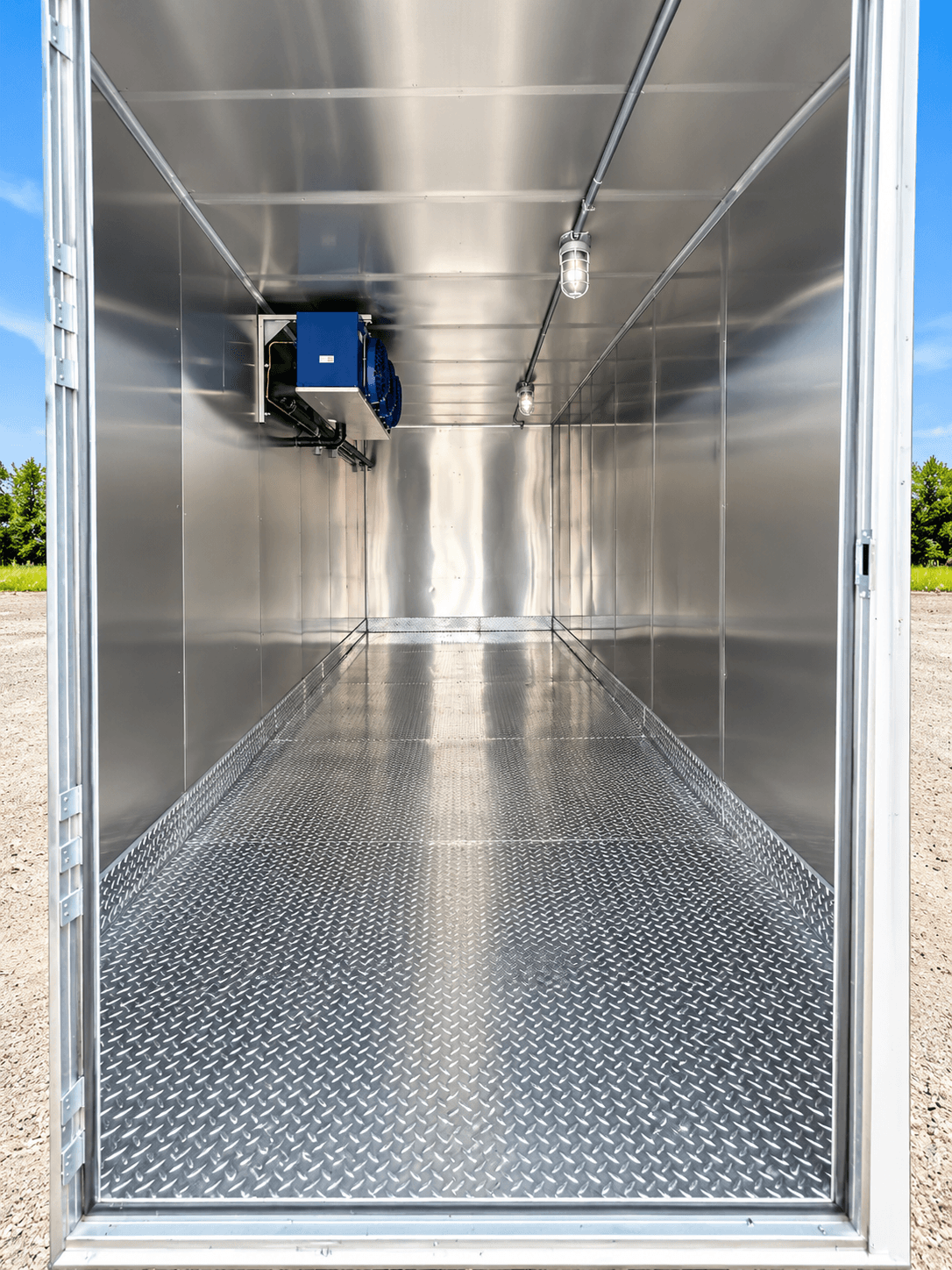
Compare the equipment
These published examples describe named company units. The supplied equipment, configuration and availability are confirmed for your project address.
Listed refrigeration trailer equipment: condensing unit, amps panel, lighting.
Equipment records reviewed October 19, 2026. Temperature labels are inventory labels, not verified operating ranges. Nominal length is a model label, not a measure of usable space or site footprint.
Commercial refrigeration problems in Juneau rarely wait, so a commercial bakery may ask about a portable walk-in cooler rental as soon as a walk-in cooler or freezer breaks down. Whether you rent for a weekend event or lease through a multi-month renovation, the rental period, delivery coordination and setup are confirmed in your quote. If cooking is also interrupted, a mobile kitchen trailer rental can sit beside the refrigeration, and a dishwashing trailer for rent can handle returned dishes.
Commercial customers can ask about portable refrigerated trailers, refrigeration containers and walk-in coolers or freezers for emergency, modular or temporary onsite use. Hotels, grocers, hospitals and commissaries can reach a person at any hour, because rental inquiries are answered 24/7. Businesses in Juneau and across the state, including those in Tenakee Springs, Angoon, Kake, Kupreanof and Edna Bay, can ask about emergency rentals or longer leases using the same inquiry. Availability, delivery arrangements and the rental period are confirmed in the quote for each address.
Anchorage’s Fur Rendezvous, known as Fur Rondy, is a 12-day February festival that has run since 1935, with a carnival, snow sculptures and the state’s largest fireworks show. Operators in Wasilla, Palmer and Kenai use rentals, leases and trailers for rent in different ways, from one-night events to months of temporary facilities. Packers and distributors in Soldotna can compare a short rental with a longer lease for seasonal stock. Portable refrigerated trailers and walk-in coolers are usually the first equipment discussed for event stock, with onsite power and access reviewed early. Walk-in coolers hold chilled stock and walk-in freezers hold frozen stock, so the rental should match whichever one is needed. This is published public context, not company work; each request is quoted for its own address and dates.

In September 2022 the remnants of Typhoon Merbok brought high winds and major coastal flooding to the western Alaska coast, with a state disaster emergency declared on September 17 and a federal disaster declaration approved on September 23. Caterers in Homer and Kachemak often need cold storage rental for a single event, while a commissary in Fairbanks may need a longer lease through a busy season. A hotel or grocery in Bethel with a failed cooler can ask about renting a refrigerated trailer. A failed commercial walk-in freezer after an outage is an emergency call, and walk-in coolers, walk-in freezers and refrigerated trailers are the first rentals discussed. Outdoor walk-in refrigeration needs level ground and power nearby, so a long-term lease starts with a site conversation. Dishwashing trailer rentals and warewashing capacity are quoted beside the kitchen and refrigeration when the whole food-service area is affected. The context above comes from public sources and does not describe a completed job; availability and delivery are confirmed in the quote.
The Associated General Contractors of Alaska’s 2026 construction forecast says work will begin on the Port of Alaska Terminal 1 replacement in Anchorage and expects public-sector port and airport spending to rise to about $900 million in 2026. Renovation projects in Larsen Bay, Egegik and Clark's Point can use a rented refrigeration trailer while permanent coolers are rebuilt, with a mobile kitchen trailer added if the cooking line is closed too. On long projects, contractors compare a refrigerated trailer lease with a refrigeration container for bulk crew supplies. When cooking and dish washing stop together, a mobile kitchen, a dishwashing trailer and portable refrigeration can be one request. A dishwashing trailer lease can be added to the same quote when returned dishes also need washing. These are public facts about the area, not a record of company jobs; equipment, availability and delivery are confirmed in the quote.
The fiscal 2026 defense authorization includes $80 million to upgrade Army barracks at Fort Wainwright near Fairbanks and $8 million for the design of a dining facility. A kitchen remodel in Bettles, Ketchikan or Napaskiak can be covered by a lease measured in weeks or months, and the same quote can include a dishwashing trailer for rent if the dish room is affected. Trailer leasing covers the length of a project: a refrigerated trailer for supplies and a refrigeration container for bulk stock, short-term or long-term. Refrigeration is an emergency need: every call about a failed commercial walk-in freezer or refrigeration unit is an emergency call. Nothing here assumes available equipment or a delivery time; a person answers rental inquiries 24/7 and the quote confirms the details.
Emergency refrigeration can be arranged as a refrigerated trailer, a refrigeration container or a portable walk-in cooler, depending on the stock and the site. Temporary facilities for a commercial site usually mean refrigeration first, then a mobile kitchen or dishwashing trailer if cooking or washing is also interrupted. Emergency refrigeration rental, trailer rentals and trailer leasing are all handled through one inquiry, so one call can cover every option. Outdoor walk-in refrigeration can be set up beside the building as temporary facilities, so staff keep working while the permanent walk-in cooler or walk-in freezer is repaired.
Refrigeration is an emergency need: every call about a failed commercial walk-in freezer or refrigeration unit is an emergency call. A commercial kitchen closed for repairs may need a mobile kitchen trailer lease, a dishwashing trailer and emergency refrigeration at the same time. A dishwashing trailer lease can be added to the same quote when returned dishes also need washing. A mobile dishwashing trailer and a mobile kitchen trailer are often requested together, with a refrigerated trailer for the stock.
Dishwashing and kitchen outages often arrive together, so dishwashing trailer rentals and a mobile kitchen for rent are quoted beside emergency refrigeration. For Juneau kitchens, plants and warehouses, trailer leasing and trailer rentals are two ways to get the same portable refrigerated storage. Refrigeration containers are often chosen for long-term storage, while refrigerated trailers are chosen for short-term emergencies; both can be rented. Emergency refrigeration, onsite and temporary, is meant to bridge the gap until the commercial walk-in freezer is repaired or replaced.
Onsite temporary facilities can include portable refrigeration, a mobile kitchen trailer and, if dishes are affected, a dishwashing trailer. Mobile kitchens, dishwashing trailers and refrigerated trailers for rent can be quoted together as temporary facilities. Modular, mobile or portable, the equipment is chosen to fit the work that continues at the site. Portable refrigerated trailers, refrigeration containers and outdoor walk-in refrigeration units can all be discussed for the same emergency.
Refrigerated trailers for rent, refrigeration containers for lease and walk-in coolers for short-term use are the three questions most callers start with. Trailer rentals for emergencies are usually short-term, while trailer leasing for construction or seasonal work can run for months. Emergency refrigeration rental covers walk-in coolers, walk-in freezers and refrigerated trailers for commercial kitchens, warehouses and plants. Short-term or long-term, the same refrigerated trailer rental starts from the address, the stock and the dates.
A portable refrigerated trailer suits most emergency calls, while a refrigeration container fits a longer, more stationary need.
A commercial kitchen project needs more detail than the wider community name. Describe the property where products will be held, the proposed position and the receiving routine. The temporary refrigeration requirement should follow that working location, especially if food is prepared at one place and served elsewhere. Equipment and transport can then be discussed against the same destination rather than different interpretations of the project.
For Juneau inquiries, include the person who can explain site access and known services. The information for the specific proposed unit should guide connection questions. A general category or photograph does not establish a complete configuration, compatible supply or transport arrangement for the property.
A refurbishment may close one permanent room while another continues holding supplies. Identify which products move at each stage and the busiest overlap of incoming orders. Chilled and frozen requirements should stay separate, with packaging and retrieval routines explained so the proposed space is considered as a working store rather than only a replacement footprint.
If cooking or dishwashing also moves temporarily, describe those as separate functions related to refrigeration. Ingredients still pass through receiving and storage before preparation. Including that sequence makes the equipment conversation useful to the operating team while other work continues around the property, instead of leaving staff movement to be solved after a unit is selected.
When an industrial dining facility closes for repairs in Juneau or Hoonah, Alaska, supplier deliveries may continue before an alternative receiving position has been agreed. Confirm how the dining team will account for shared stock and report missing supplies when responsibility passes between different working shifts.
A project coordinator discussing work in Juneau and Excursion Inlet should identify the storage requirement at each actual destination. Shared management does not mean the goods, receiving space or schedule are identical. Keep the receiving points and proposed storage positions separate when discussing the transport and period of use.
A further point of reference is Sitka’s guide, which covers commercial food-service continuity. Check your own site details separately before relying on any comparison.
A Hoonah kitchen refurbishment can be described through its own closures and return to service. For a food-service request in Whitestone Logging Camp, explain the products held and the property where staff prepare them rather than assuming the place name describes an equipment package. The useful regional conversation keeps each address, operating load and expected period attached to the proposed refrigeration arrangement.
NOAA explains that Alaska has several climate types shaped by elevation, ocean proximity and other geographic differences. Interior areas experience particularly strong seasonal temperature contrasts. These state-level observations provide background, not a forecast or equipment specification for a Juneau property. Include the intended season and the actual working surroundings at the proposed position.
A longer project may change receiving access or staff routes as work advances. Describe those stages and use the property’s established arrangements for changing conditions. Required product conditions, known site services and information for the specific equipment establish the practical storage arrangement; general regional context helps identify questions without replacing those facts.
The return to permanent refrigeration can be gradual. Some goods may move inside while others stay temporarily and deliveries continue. Explain that overlap so the expected period follows the storage job rather than ending automatically when one room or replacement unit becomes ready. This gives the final transfer the same attention as the first move out.
A Juneau quote should establish equipment, current availability, transport, charges and responsibilities, including terms for changes or extensions. Separate confirmed dates from an uncertain finish when work is still being assessed. A short rental or longer lease can then be discussed against the complete transition without treating a preliminary schedule as an agreed booking commitment.
Before you book
The equipment proposal needs to relate to the property where storage will be used, including access and available services. A wider project or event name may describe somewhere else. Keeping the actual receiving address clear prevents those different locations from becoming one unexplained request.
Describe them as related but separate requirements if both are affected by the work. Include dishwashing where relevant and explain how ingredients move between the proposed areas. This supports a coherent operating discussion without implying an included package, shared connection or standard configuration for every function.
Include the sequence and the supplies remaining temporarily while deliveries continue. This makes the expected period more representative of actual storage use. The proposal should address the period and change terms rather than assuming every temporary requirement ends at one repair or construction milestone.
Call or send a request at any hour; a person answers rental inquiries 24/7. Say what stopped working, what needs to stay cold and where the unit would sit. Tell the team the address, what is stored, the target temperature and when the permanent unit should be back. Equipment, availability and delivery timing are confirmed in the quote.
Portable refrigerated trailers, refrigeration containers, outdoor walk-in refrigeration, and portable walk-in coolers or walk-in freezers can be discussed for onsite, short-term or long-term use. When a commercial walk-in cooler fails, the emergency is the stock inside it, which is why the first call should describe the product and the temperature. Every call about a failed commercial walk-in freezer or refrigeration unit is an emergency call, and a person answers rental inquiries 24/7. Equipment, availability and delivery timing are confirmed in the quote.
These public references inform the planning examples; equipment availability and delivery arrangements are confirmed for your address.
Temporary refrigeration, kitchens and dishwashing can support many kinds of food-service operations. Each setting below starts with its own schedule, stock and site questions, and every project is reviewed individually.
Hotels, restaurants and resorts can plan temporary refrigeration around breakfast, banquet and dinner service when a walk-in cooler fails or a kitchen is refurbished.
Hospital, nursing home and care-facility kitchens can describe meal schedules, delivery times and displaced stock so temporary storage follows the food-service routine.
Municipal, county and public-building food-service teams can outline receiving arrangements, responsible contacts and project dates before a quote is prepared.
Dining facility managers can explain the products displaced, the receiving arrangements and the proposed period, then review availability and terms with our team.
Schools, colleges and universities can plan around term dates, serving windows and campus kitchen renovations so meal service can continue during repairs or construction.
Plant cafeterias and employee dining areas can describe shift patterns and staged building work so temporary cold storage can be reviewed against the working schedule.
Caterers and venues can plan preparation windows, event days and overflow ingredients, and describe how stock moves between storage, the kitchen and service.
Producers, wholesalers and distributors can describe loading, staging and storage needs when a cooler breaks down or demand temporarily exceeds capacity.
These examples describe planning situations. Equipment, availability and terms are confirmed in a project quote.
Cold storage is only one part of a project. These are the questions we work through with you before anything is booked.
Start with refrigerated containers and refrigeration trailers, then add a temporary kitchen or dishwashing trailer when the project needs one, all in a single conversation.
Access, utilities and the intended position are reviewed before delivery is arranged, so the equipment is matched to your site rather than the other way around.
Whether a walk-in cooler failed this morning or a renovation is months away, describe the real situation and plan around the stock, dates and people involved.
Planning guides cover all 50 states and more than 700 cities. Your address is then confirmed for equipment and delivery.
Use the rental calculator for a rate-range estimate and setup amount, then request a project quote that confirms availability, transport and the rental period.