Start with the stock that has lost its cooler
A failed walk-in can displace several different storage tasks at once. Frequently retrieved ingredients, unopened delivery cases and frozen stock need different access patterns even when they share the same commercial operation. The load to be moved includes products already inside the failed room and any incoming orders that cannot be rescheduled.
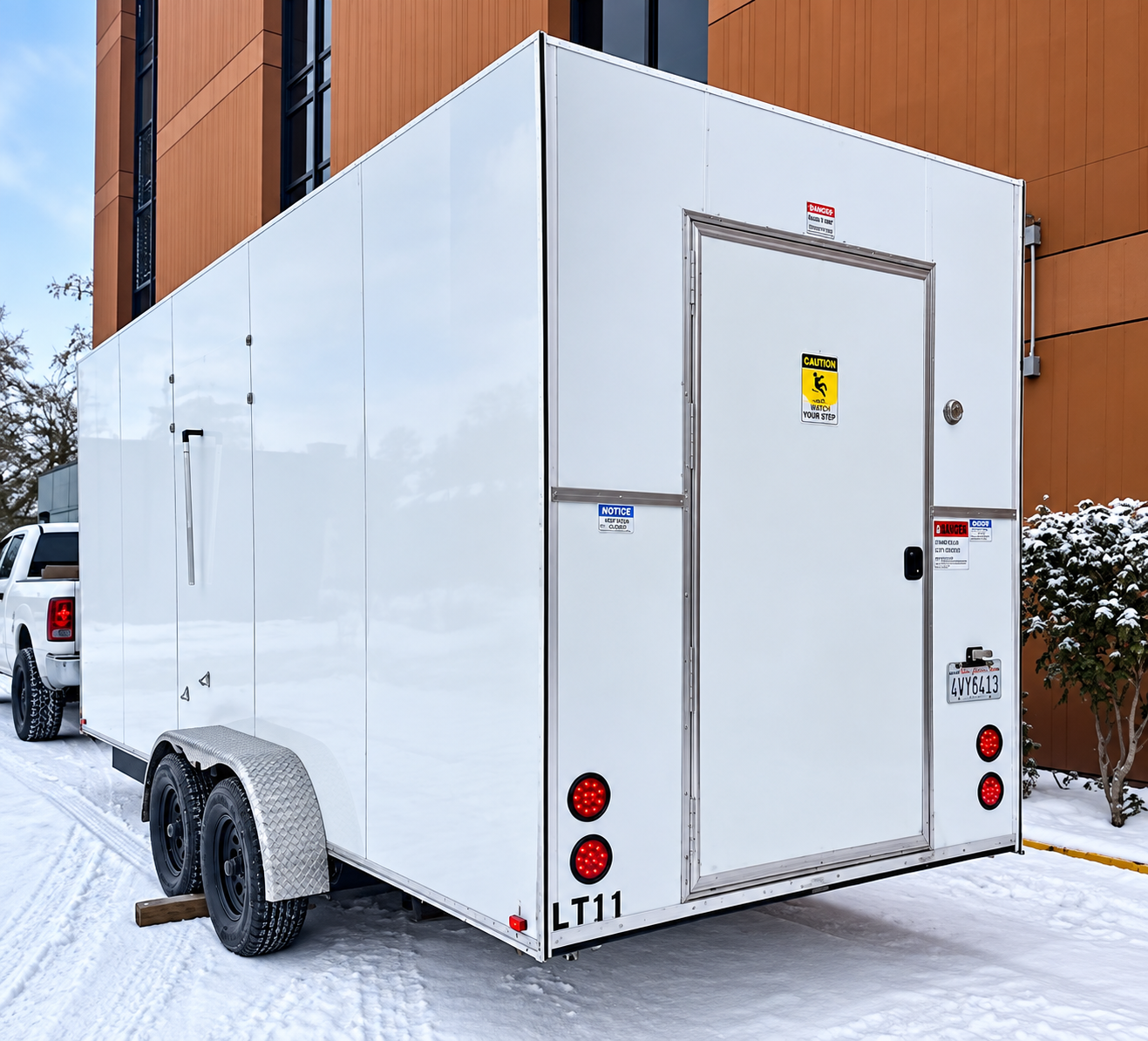
Before choosing a 12ft trailer, check that it can hold the full displaced load. The named BXRT12 records list a 32°F inventory label, which is not a verified operating range, so tell the team the temperature your product needs. Product conditions, packaging and the busiest stock overlap should be compared with the actual unit before choosing it as the replacement arrangement.
Decide whether a smaller trailer suits the site
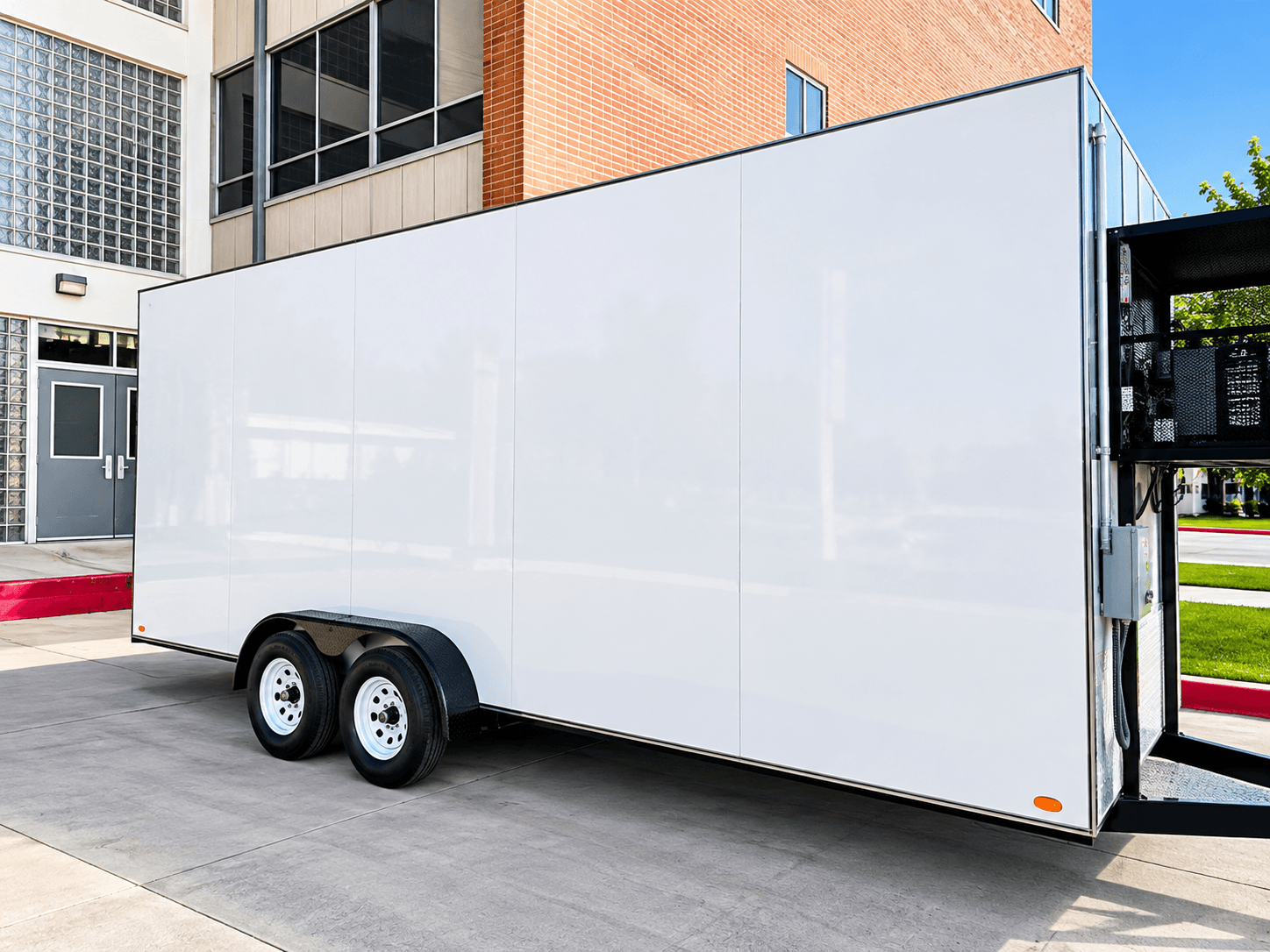
Compact describes the nominal model category rather than a measured site footprint. Ask for the assigned trailer's body dimensions, drawbar length, door opening, usable internal space and the working clearance needed for loading and service. A short-looking trailer can still require room for the delivery vehicle and staff accessing stock.
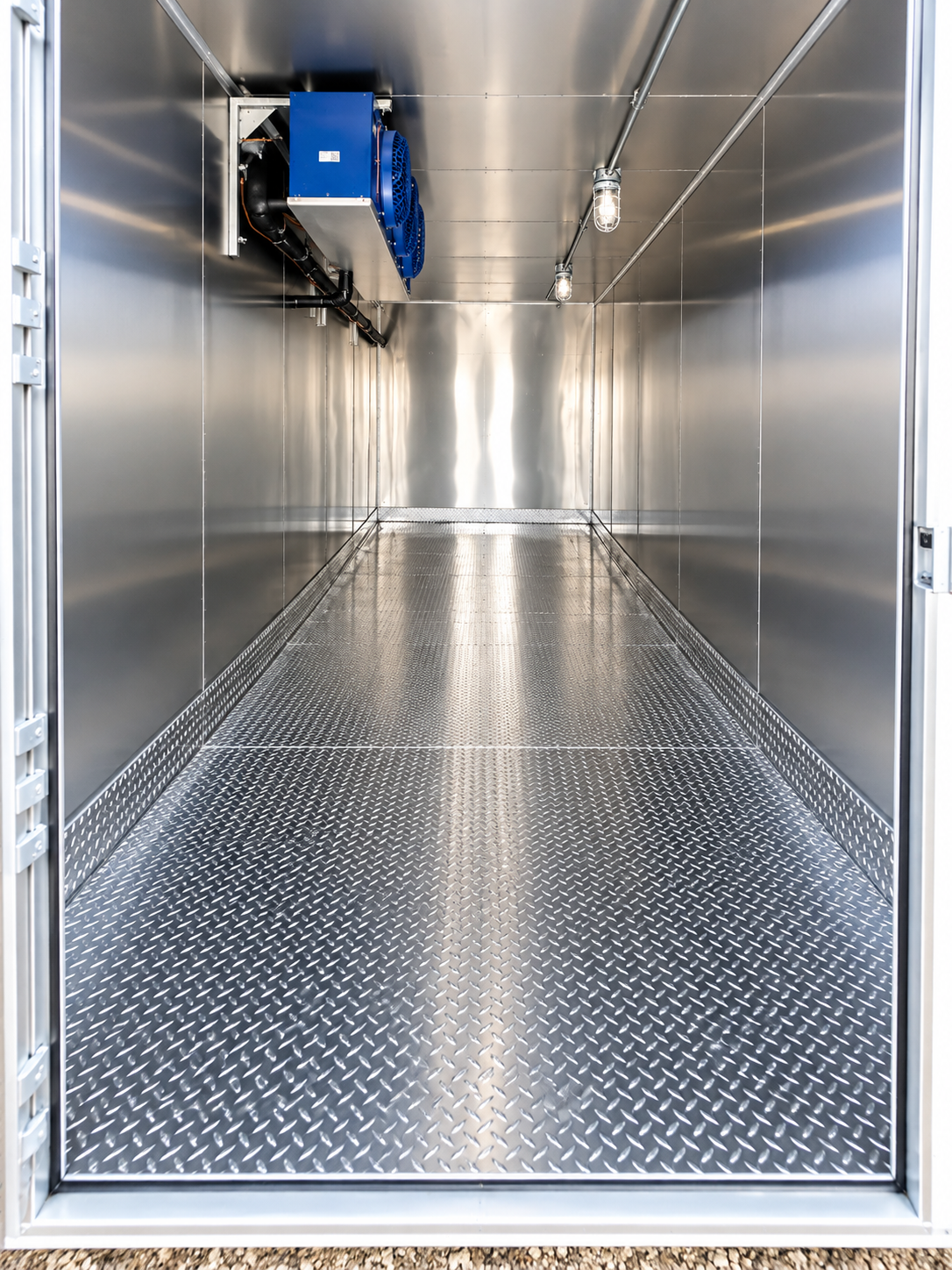
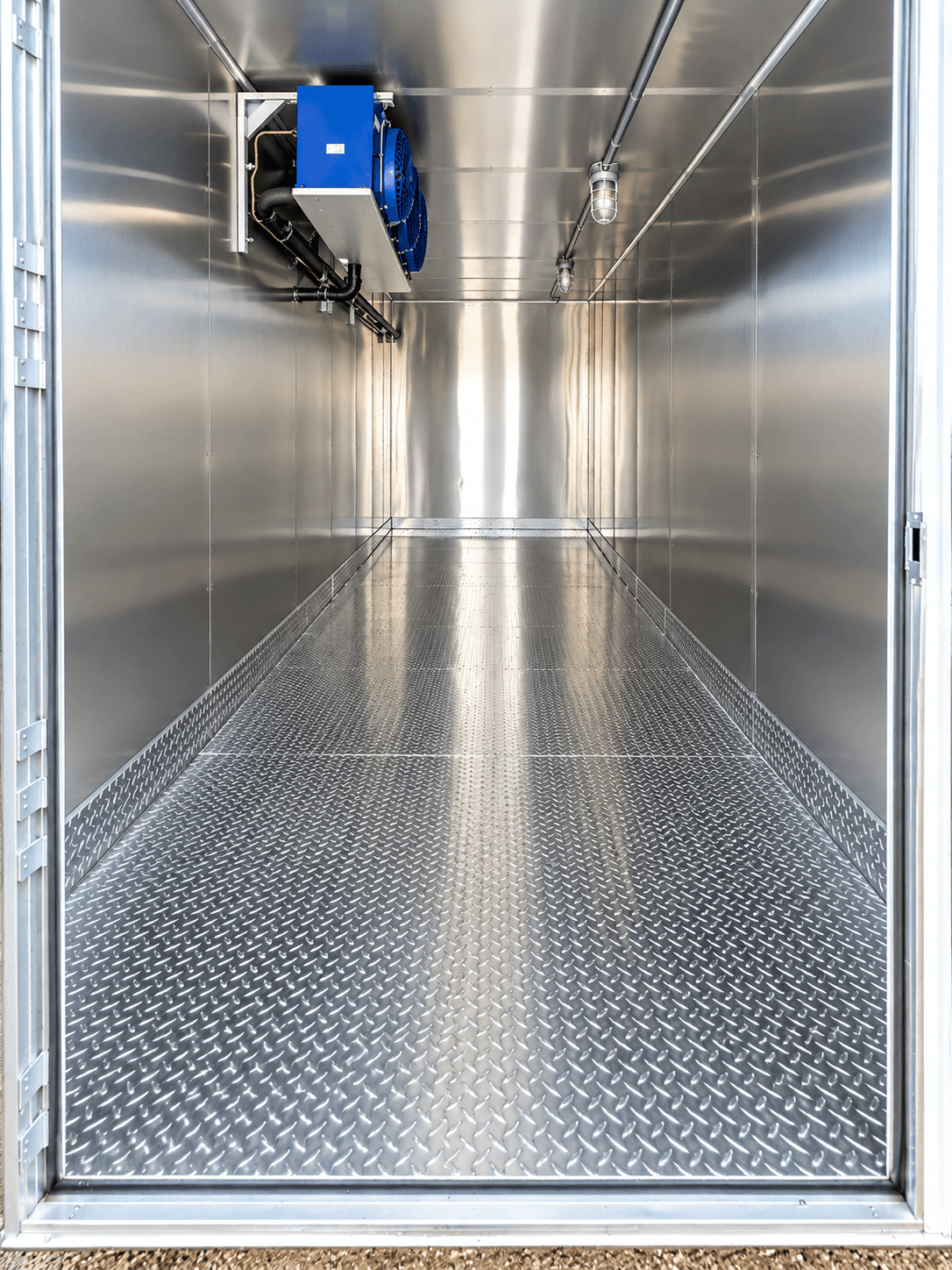
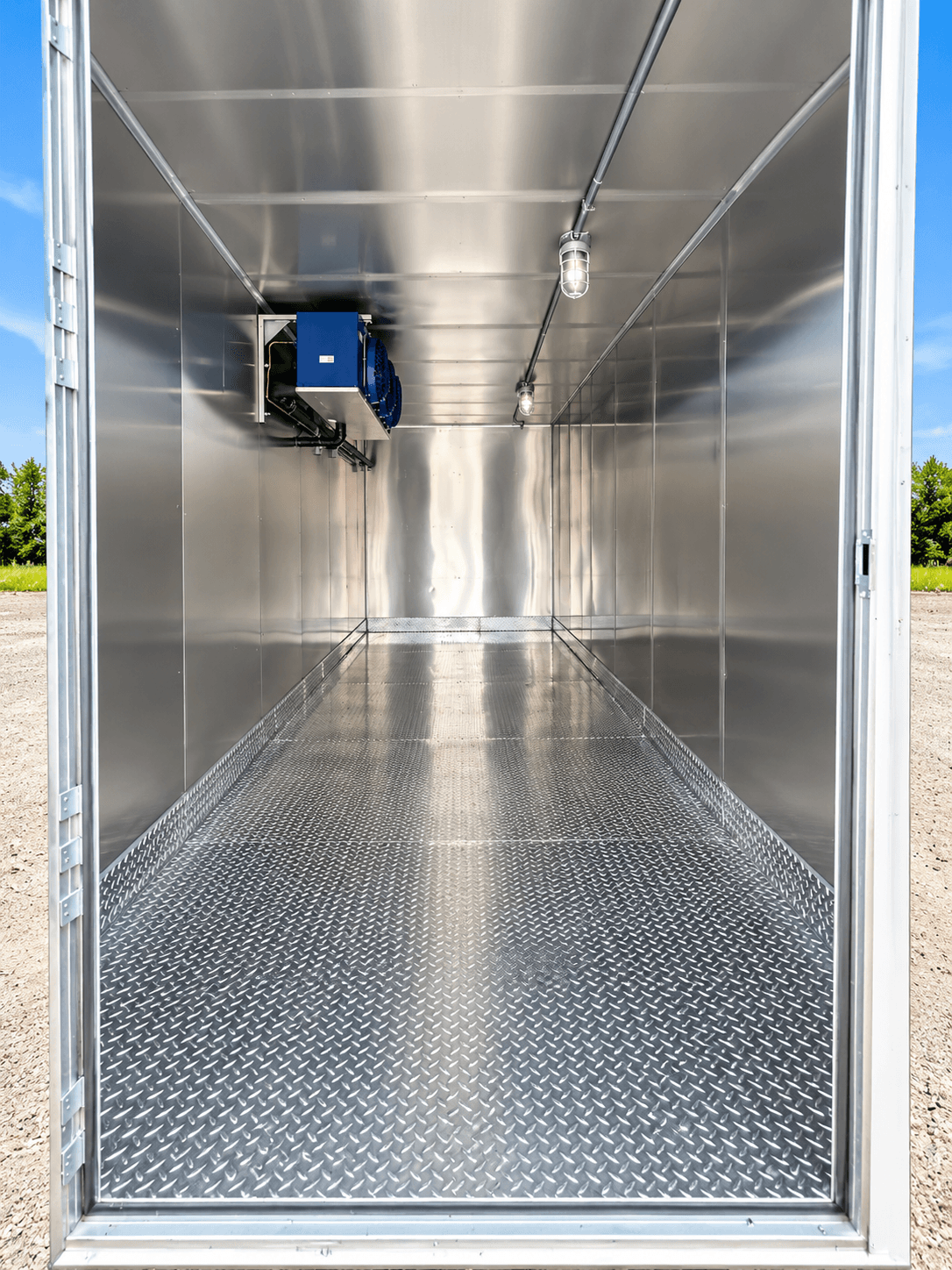
The useful comparison is between the actual assigned unit and the job at the property. Package sizes and handling methods determine whether stock can move through the doorway and remain accessible. Photographs illustrate visible features, but no storage volume, pallet count or electrical compatibility should be derived from the image or the 12ft model label.
Choose a position that suits the people carrying stock
Staff will walk to the trailer many times a day, so its position matters as much as its size. The closest safe place to the kitchen door can cut handling time, while a position that crosses a delivery lane or fire route may create new problems. Mark the proposed spot and walk it with the kitchen lead.
Check the surface for firmness and drainage, since a trailer on soft or sloping ground can be awkward to level and load. Consider wet weather, ice and lighting at the places staff will use after dark. Ask what the rental team needs from the site to position the trailer and keep it stable.
Confirm the power supply before delivery
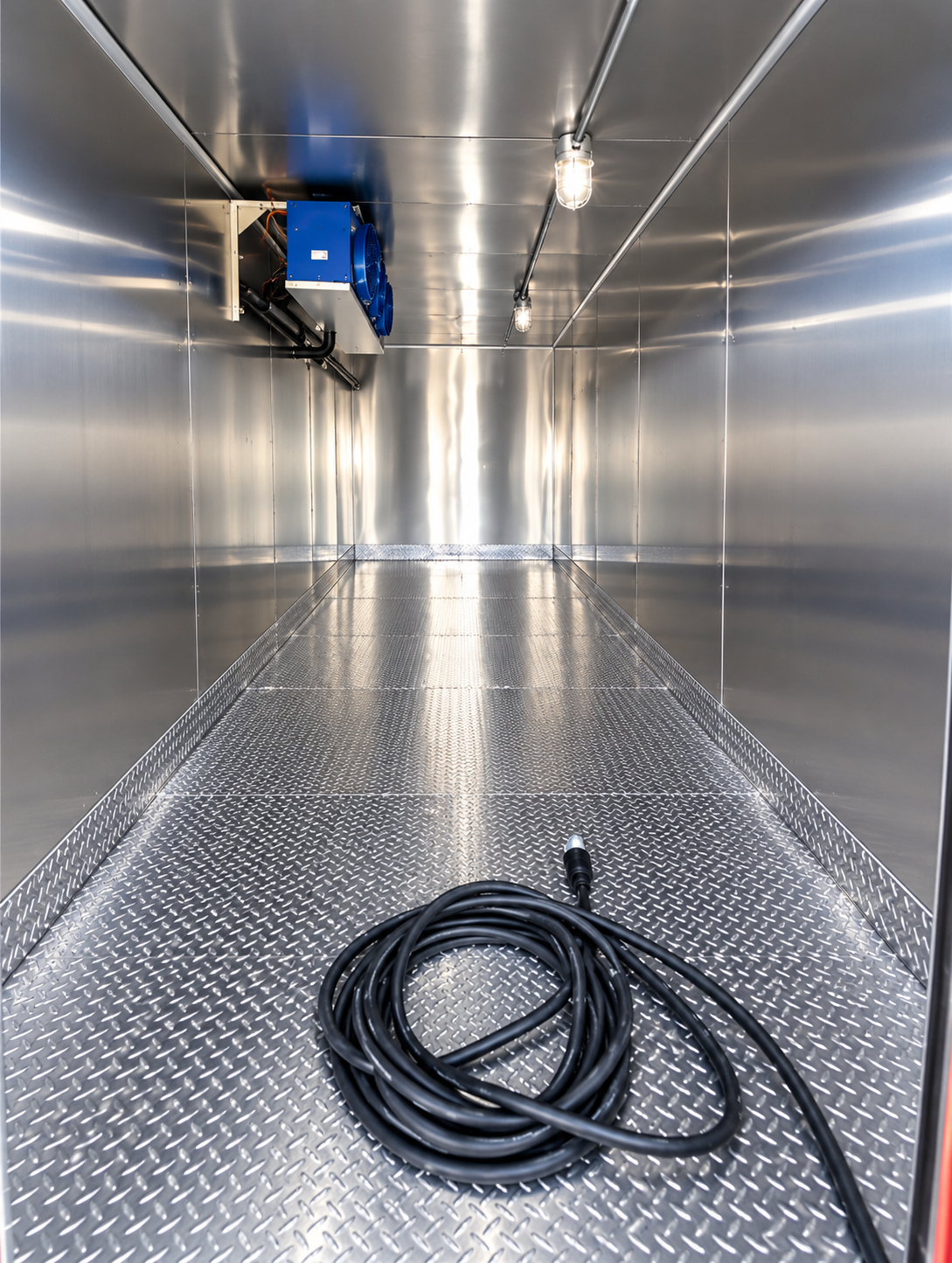
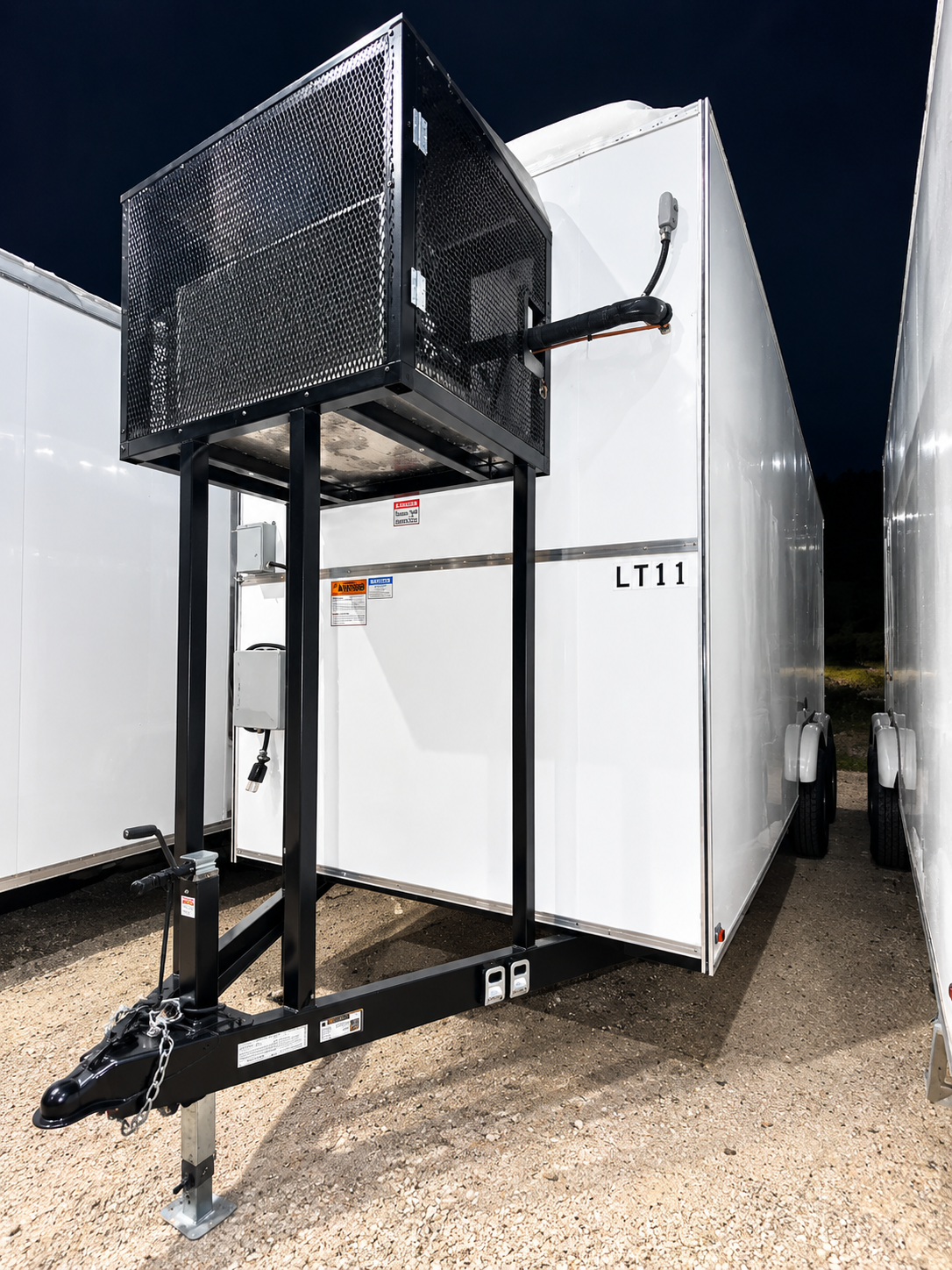
The named BXRT12 records list 220V single-phase power at 40–60A and a NEMA plug, with a condensing unit, amps panel and lighting. The same records describe the unit as 20ft while their names say 12, so confirm the length and connection details for the assigned unit before the property arranges its electrical connection.
A qualified site professional should review the voltage, phase, amperage, connector and required circuit information once verified. The intended position and distance to a suitable supply point belong in the same review. The page does not promise a generator, a particular plug or an operating temperature, and a photograph of a cooling unit cannot settle those details.
Plan loading, rotation and access
A small interior rewards careful organization. Decide how stock will be grouped, how older items will be used first and who has permission to open the door. Ask whether shelving or racking is part of the proposed unit or has to be arranged separately, and what can safely stand on the floor.
Think about the busiest moment, such as an incoming delivery or a pre-service rush, and how people will move through it. If several staff will use the trailer, a simple note on the door of what is stored where can reduce time with the door open and help the team find items quickly.
Match the rental period to the repair or project
A short breakdown, a phased renovation and a seasonal peak create different rental periods. Give the rental team the best information you have about the repair schedule, the likely end of the work and the point at which the permanent cooler will be ready for restocking, and note where the schedule is uncertain.
Ask how a rental can be extended if the work runs long and what notice is needed to end it early. Historical price pages on this site are dated references only. Current rates, minimum terms and any additional charges are confirmed in a project quote for your address and dates.
Keep food-safety records with the people responsible
Moving stock into temporary storage does not change the responsibility to keep it safe. Decide who will check the temperature, how often and where the readings will be recorded. Ask what monitoring the proposed unit provides, and agree what the team will do if a reading falls outside the range your operation needs.
Tell your local health authority or inspector about the temporary arrangement if your operation requires it. This site cannot advise on regulatory requirements, and the equipment photographs are not evidence of any approval or certification. Treat the rental team's answers as part of your own food-safety plan.
Plan the handback before the trailer arrives
The end of the rental deserves as much thought as the start. Decide when the permanent cooler or freezer will be back in service, who will move the stock and how the trailer will be emptied and cleaned. A clear handback plan reduces last-minute decisions when the project is already stretched.
Make sure the path to the trailer is open for collection and that anyone with a key knows the date. Photograph the interior and exterior at delivery and return, and record the date and time. Then contact the team to confirm the equipment, availability and terms, and ask for a project quote.