BXRT20–1Refrigerated trailer
- Nominal length
- 20ft
- Listed electrical supply
- 220V · single-phase · 40–60A
- Inventory temperature label
- 32°F
Temporary cold storage in Chicago, Illinois
Worldwide Refrigerated Container Rental Facilities offers Chicago refrigerated container and trailer rentals for commercial walk-in cooler or freezer failures and planned repairs or renovations. Portable coolers and freezers can also be considered around the products requiring temporary holding. Restaurants, caterers, healthcare dining teams and industrial meal operations can discuss short-term rentals or longer leases. Supporting mobile kitchen and dishwashing trailers have separate roles when preparation or cleanup also moves. Equipment and delivery coordination follow the actual property, required conditions and receiving schedule. Contact our team to request availability and a quote for your Chicago project.
Emergency cooler or freezer failure in Chicago? A person answers rental inquiries 24/7. Availability and delivery timing are confirmed in your quote.
Plan your rental budget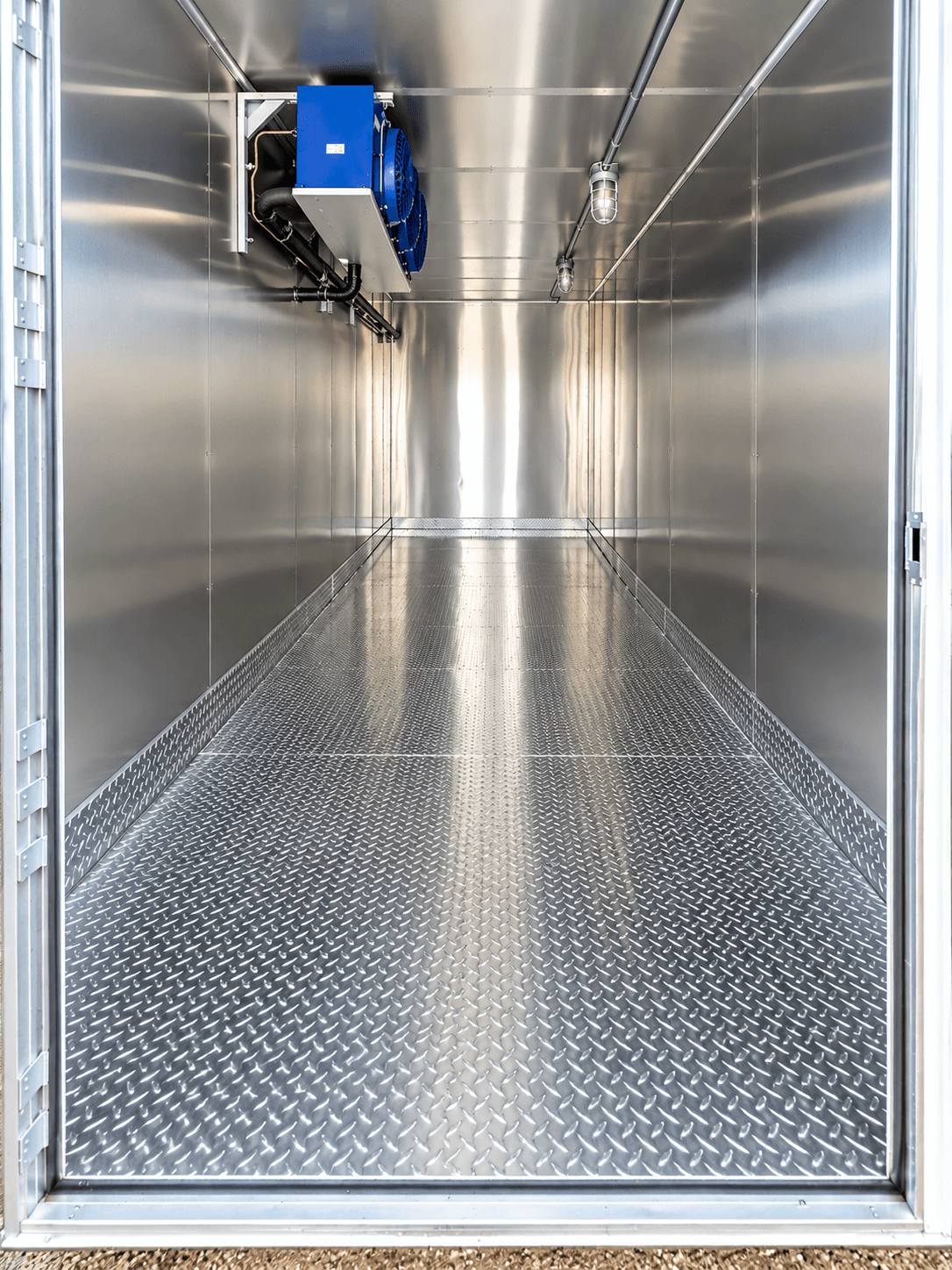
Compare the equipment
These published examples describe named company units. The supplied equipment, configuration and availability are confirmed for your project address.
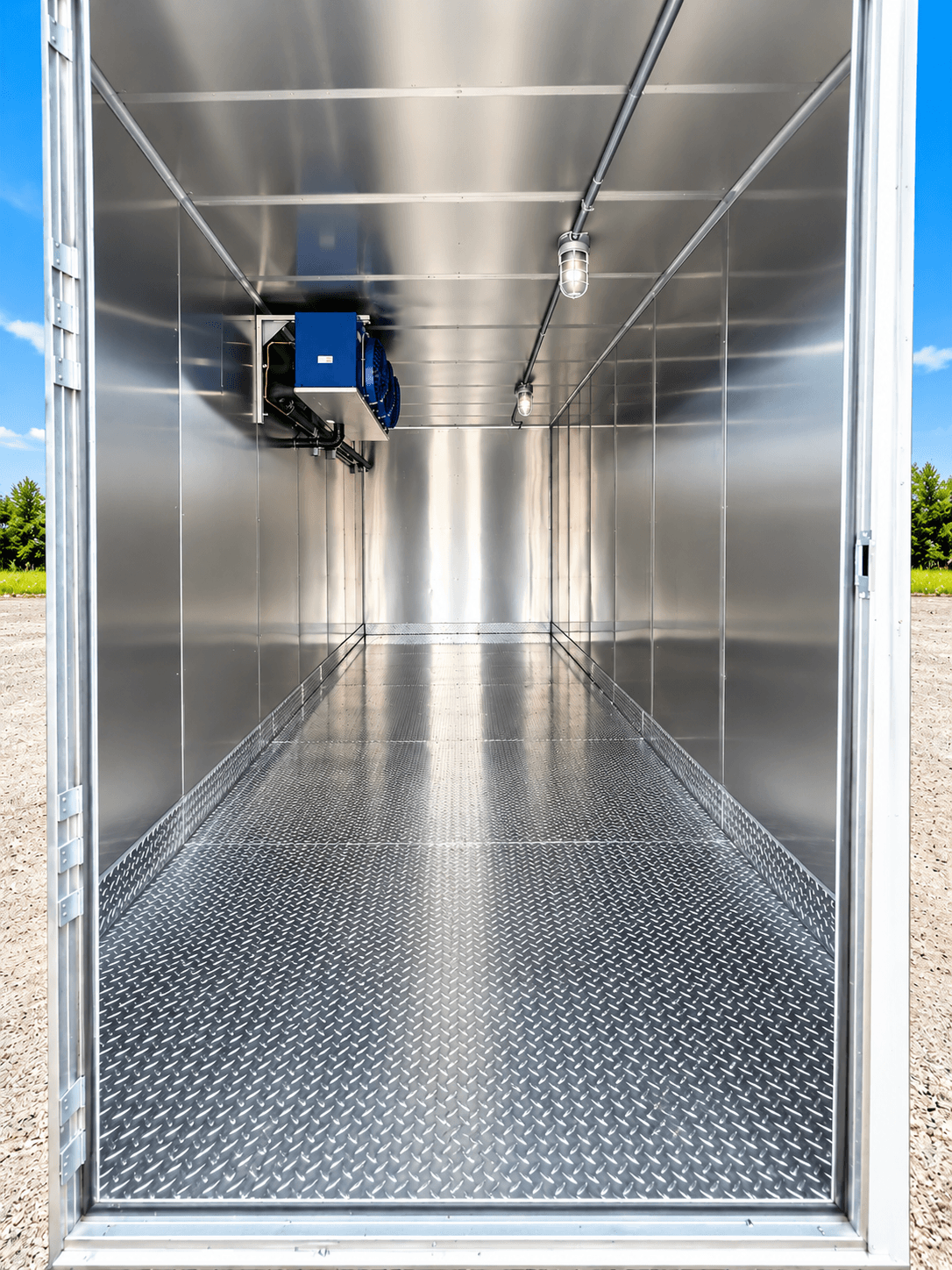
Listed refrigeration trailer equipment: condensing unit, amps panel, lighting.
Equipment records reviewed October 19, 2026. Temperature labels are inventory labels, not verified operating ranges. Nominal length is a model label, not a measure of usable space or site footprint.
Leasing a refrigerated container in Chicago is one way to protect inventory during an emergency outage, a planned shutdown or a busy season. The same equipment can be rented for a few days or leased for several months, depending on how long the permanent storage will be out of service. Kitchen outages often bring more than one need: a mobile kitchen for rent for cooking, a dishwashing trailer lease for warewashing and refrigerated storage for the ingredients.
Onsite temporary refrigeration facilities can be rented short term or leased long term, whether the need is an emergency breakdown, a mobile cold room for an event or commercial storage during construction. Calls about a failed walk-in cooler or freezer are answered by a person around the clock, and delivery timing and equipment availability are confirmed once the details are reviewed. Whether the site is in Chicago, Elgin or Waukegan, the inquiry asks for the address, the stock and the dates, and the team reviews rental or lease options for that location, including Kankakee and nearby sites.
BizBash’s 2018 list of Chicago festivals ranked Lollapalooza first, with about 100,000 people a day in Grant Park, and counted about 1.5 million visitors at the Taste of Chicago. Food producers in Lisle, Bolingbrook and Lockport can ask about leasing a refrigerated container for seasonal stock or a temporary overflow. Events and stadium concessions in Warrenville and Crest Hill sometimes call for portable cold storage rental for a weekend, with kitchen trailers considered for larger menus. Refrigerated trailers for rent and portable walk-in coolers hold drinks, produce and prepared food at crowded events, and a refrigeration container suits a longer festival run. Walk-in coolers hold chilled stock and walk-in freezers hold frozen stock, so the rental should match whichever one is needed. Dishwashing trailer rentals and warewashing capacity are quoted beside the kitchen and refrigeration when the whole food-service area is affected. This is published public context, not company work; each request is quoted for its own address and dates.
The November 17, 2013 tornado that struck Washington, Illinois, near Peoria was rated EF-4 and damaged more than 1,000 homes, according to the Daily Herald’s anniversary report. A freezer failure at a nursing home in Peoria Heights, a cafeteria in West Peoria or a bakery in East Peoria can start with a phone call and a short list of details: the address, the stock and the temperature to hold. A restaurant in Bloomington or a care home in Springfield can call about an emergency freezer rental as soon as the temperature alarm goes off. A failed commercial walk-in freezer after an outage is an emergency call, and walk-in coolers, walk-in freezers and refrigerated trailers are the first rentals discussed. A walk-in cooler and a walk-in freezer can be rented together when a commercial site needs both. When cooking and dish washing stop together, a mobile kitchen, a dishwashing trailer and portable refrigeration can be one request. Nothing here assumes available equipment or a delivery time; a person answers rental inquiries 24/7 and the quote confirms the details.
Illinois is investing $298.2 million in five major infrastructure projects around Champaign-Urbana, including the U.S. 45 resurfacing expected to finish in fall 2026, and the Illinois Department of Transportation is working on 12 projects costing nearly $492 million in southern Illinois this season. Temporary facilities for a remodel in Savoy, Mahomet or Decatur usually combine refrigeration, a mobile kitchen for rent and, if dishes are affected, a dishwashing trailer lease. Facility teams in Le Roy can lease portable refrigeration as temporary facilities while a permanent cold room is rebuilt. A long-term refrigeration trailer lease keeps supplies cold on site for the whole project, with power and access reviewed before delivery. Mobile kitchens, dishwashing trailers and refrigerated trailers for rent can be quoted together as temporary facilities. A dishwashing trailer lease can be added to the same quote when returned dishes also need washing. Kitchen, dishwashing and refrigeration rentals are separate equipment, and each can be rented short-term or leased long-term. The context above comes from public sources and does not describe a completed job; availability and delivery are confirmed in the quote.
Trailer leasing makes sense when a commercial kitchen will be closed for weeks, because one lease replaces repeated short-term rentals. Walk-in coolers hold chilled stock and walk-in freezers hold frozen stock, so the rental should match whichever one failed. A commercial walk-in freezer failure in Chicago is an emergency call, and onsite temporary refrigeration is how most such calls begin. Onsite temporary facilities can include portable refrigeration, a mobile kitchen trailer and, if dishes are affected, a dishwashing trailer.
A mobile dishwashing trailer and a mobile kitchen trailer are often requested together, with a refrigerated trailer for the stock. Refrigerated trailers for rent, refrigeration containers for lease and walk-in coolers for short-term use are the three questions most callers start with. Outdoor walk-in refrigeration needs level ground and power nearby, so a long-term lease starts with a site conversation. A portable refrigerated trailer suits most emergency calls, while a refrigeration container fits a longer, more stationary need.
Dishwashing and kitchen outages often arrive together, so dishwashing trailer rentals and a mobile kitchen for rent are quoted beside emergency refrigeration. When cooking and dish washing stop with the walk-in freezer, a mobile kitchen, a dishwashing trailer and portable refrigeration can be one request. Emergency refrigeration for commercial kitchens often starts with a portable refrigerated trailer and ends with a longer lease if repairs take time. Outdoor walk-in refrigeration can be set up beside the building as temporary facilities, so staff keep working while the permanent walk-in cooler or walk-in freezer is repaired.
Emergency refrigeration in Chicago can be rented for a few days or leased long-term, depending on how long the commercial walk-in is down. Emergency refrigeration rental, trailer rentals and trailer leasing are all handled through one inquiry, so one call can cover every option. Temporary facilities for a commercial site usually mean refrigeration first, then a mobile kitchen or dishwashing trailer if cooking or washing is also interrupted. A commercial kitchen closed for repairs may need a mobile kitchen trailer lease, a dishwashing trailer and emergency refrigeration at the same time.
Emergency refrigeration, onsite and temporary, is meant to bridge the gap until the commercial walk-in freezer is repaired or replaced. Portable refrigerated trailers, refrigeration containers and outdoor walk-in refrigeration units can all be discussed for the same emergency. Portable refrigeration is not a permanent fix; it is a set of temporary facilities for the weeks between a failure and a repaired walk-in freezer. In Chicago, emergency refrigeration usually means a refrigerated trailer, a refrigeration container or a portable walk-in cooler matched to the stock.
McCormick Place’s freight guidance requires a contractor’s production and dock-door usage plan to schedule docks and service elevators. It also says freight arriving before the licensed move-in date will not be accepted. For an event operator arranging refrigeration, the arrival slot and the place where ingredients remain held are separate decisions. A truck-marshaling space is not automatically permission to operate a cold store throughout service.
A Chicago preparation site supplying a Cicero address needs a destination for ingredients before service. A Stickney replacement can retain receiving through several work phases, while a Berwyn function can split stock between preparation and service. Keep those loads with their actual properties rather than combine every order under one booking address.
The 40ft Refrigerated Container guide provides a nominal storage format, with usable capacity, temperature capability, electrical requirements and included fittings still needing confirmation. Exterior length does not show the entrance or room for loaded carts. Staff need to reach earlier cases after replenishment, with any proposed shelving identified for the supplied unit.
UChicago Medicine’s Hyde Park dining information describes food service across several buildings, including the Kitchen at Billings near basement elevators and cafés or food courts elsewhere on campus. For a comparable institutional interruption, a public dining room’s floor is not necessarily the ingredient-receiving destination. Repeated collection by preparation staff can be a different journey from the one used by visitors to buy a meal.
MT1 in the 20ft Refrigerated Trailer guide lists a condensing unit, amps panel and lighting, with 220V single-phase power at 40–60A. Its 15°F inventory label is not a verified operating range. Usable capacity and exact connector configuration need confirmation against the actual products and supply for the offered unit.
K27 in the 40ft Bulk Kitchen Trailer guide lists cooking appliances including a double-stack convection oven, tilting skillet, griddle/oven and six-burner range/oven combinations and deep fryer. Sinks, a prep table, reach-in refrigerator and freezer, and a walk-in cooler are also listed, with 220V single-phase power at 200–220A. That integrated cooler belongs to the named cooking example; it does not specify the separate 40ft container or show capacity for every displaced reserve.
For a Naperville production site or an Aurora service property, keep each order’s receiving point and required conditions attached to its destination. One purchasing team does not create one shared store or mean the same utilities at both addresses.
Food distribution operations in Chicago or Cicero, Illinois, may need temporary equipment while a changed loading arrangement affects the sequence of supplier arrivals and customer collections. Include supplier arrival windows and expected dispatch activity in the inquiry so the proposed equipment position supports the operator's actual workflow.
A failed walk-in can interrupt chilled holding while cooking continues. An electrical or property interruption may also close preparation, receiving or washing. The temporary refrigeration task depends on which functions remain usable and the products still requiring storage. The responsible food-service team assesses goods already affected under its own handling procedures; equipment availability alone cannot show their condition.
D1 in the 22ft Dishwashing Trailer guide lists a low-temperature push-through dishwasher, soil tray, scraping table, three-compartment sink and handwashing sink, with 220V single-phase power at 150A. Dishwashing trailers need water, drainage and a dirty-to-clean route apart from food retrieval. The power listed for D1 also differs from MT1’s 40–60A refrigeration example.
For a planned Joliet transition, supplier orders need a destination before stock moves and while permanent storage is handed back. Keep the first displaced goods accessible alongside later deliveries. A reopened preparation line may still depend on refrigeration holding the last reserves before they return indoors.
NOAA’s Illinois summary describes pronounced seasonal differences and Lake Michigan’s influence on the northeastern part of the state. For an outdoor Chicago refrigeration position, that context makes the project months relevant alongside surface drainage and staff access. It does not give the actual unit’s ambient operating limit or replace its technical data.
Show each equipment position, available supply and staff approach on the working layout. Ordinary food deliveries, contractor materials and waste collection can change the service area after unloading. The property representative or venue event manager reviews access for the actual operation; an arrival slot alone does not settle continued equipment placement.
A person answers rental inquiries 24/7 when a cooler or freezer failure interrupts service. Availability and transport are confirmed for the individual Chicago address and equipment. Keep the temporary store supplied and reachable until the last stock transfer, and request a complete project quote covering the selected units, expected period, collection and any revised-date arrangements.
Before you book
Send measurements and photographs covering the entrance, approach, intended position and staff route. Explain ordinary delivery activity and any property access controls. Include later contractor phases and collection needs so the proposed location can be considered through the complete project rather than only the arrival day.
Describe the services that continue, the receiving pattern and the ingredients staff need most often. Include the largest overlap of displaced stock and new orders. Those details support a comparison of usable layout and access alongside the confirmed conditions required for the products.
Identify the milestone that controls the return to permanent storage and discuss rental-period changes before booking. Allow for checks and the return transfer. Keep the provider informed as work progresses so collection and any revised terms can be addressed against the actual kitchen schedule.
You can ask about a short rental for a repair or a longer lease for a renovation or seasonal need in Chicago. Useful details are the address, the quantity of stock, the required temperature and the expected dates. Delivery timing, availability and the rental period are confirmed once the details are reviewed.
Mobile and modular refrigeration, from refrigerated trailers for rent to a refrigeration container lease, can be discussed for short-term or long-term needs. Short-term or long-term, trailers for rent in Chicago are quoted for the address, the stock and the dates. Portable walk-in coolers and portable walk-in freezers are chosen by the temperature the stock needs, not by the size of the building. A commercial walk-in freezer or refrigeration breakdown is an emergency, so call at any hour; a person answers rental inquiries 24/7, and the quote confirms the equipment and delivery for your address.
These public references inform the planning examples; equipment availability and delivery arrangements are confirmed for your address.
Temporary refrigeration, kitchens and dishwashing can support many kinds of food-service operations. Each setting below starts with its own schedule, stock and site questions, and every project is reviewed individually.
Hotels, restaurants and resorts can plan temporary refrigeration around breakfast, banquet and dinner service when a walk-in cooler fails or a kitchen is refurbished.
Hospital, nursing home and care-facility kitchens can describe meal schedules, delivery times and displaced stock so temporary storage follows the food-service routine.
Municipal, county and public-building food-service teams can outline receiving arrangements, responsible contacts and project dates before a quote is prepared.
Dining facility managers can explain the products displaced, the receiving arrangements and the proposed period, then review availability and terms with our team.
Schools, colleges and universities can plan around term dates, serving windows and campus kitchen renovations so meal service can continue during repairs or construction.
Plant cafeterias and employee dining areas can describe shift patterns and staged building work so temporary cold storage can be reviewed against the working schedule.
Caterers and venues can plan preparation windows, event days and overflow ingredients, and describe how stock moves between storage, the kitchen and service.
Producers, wholesalers and distributors can describe loading, staging and storage needs when a cooler breaks down or demand temporarily exceeds capacity.
These examples describe planning situations. Equipment, availability and terms are confirmed in a project quote.
Cold storage is only one part of a project. These are the questions we work through with you before anything is booked.
Start with refrigerated containers and refrigeration trailers, then add a temporary kitchen or dishwashing trailer when the project needs one, all in a single conversation.
Access, utilities and the intended position are reviewed before delivery is arranged, so the equipment is matched to your site rather than the other way around.
Whether a walk-in cooler failed this morning or a renovation is months away, describe the real situation and plan around the stock, dates and people involved.
Planning guides cover all 50 states and more than 700 cities. Your address is then confirmed for equipment and delivery.
Use the rental calculator for a rate-range estimate and setup amount, then request a project quote that confirms availability, transport and the rental period.