BXRT20–1Refrigerated trailer
- Nominal length
- 20ft
- Listed electrical supply
- 220V · single-phase · 40–60A
- Inventory temperature label
- 32°F
Temporary cold storage in Bloomington, Illinois
Bloomington refrigerated container rentals can be discussed alongside kitchen and dishwashing rentals when temporary service changes affect food operations. Emergency commercial freezer failures need a stock decision, while planned alterations allow receiving and goods transfers to be coordinated. Short rentals and longer leasing periods can be reviewed for restaurants, industrial operators, institutions, venues and other commercial customers. Delivery coordination should identify the working entrance, approved placement and a contact who understands changes around the property. Explain your refrigeration conditions, incoming goods and the milestones expected to restore permanent facilities. Request availability and an address-specific quote from Worldwide Refrigerated Container Rental Facilities for a plan based on the actual operating requirement.
Emergency cooler or freezer failure in Bloomington? A person answers rental inquiries 24/7. Availability and delivery timing are confirmed in your quote.
Plan your rental budget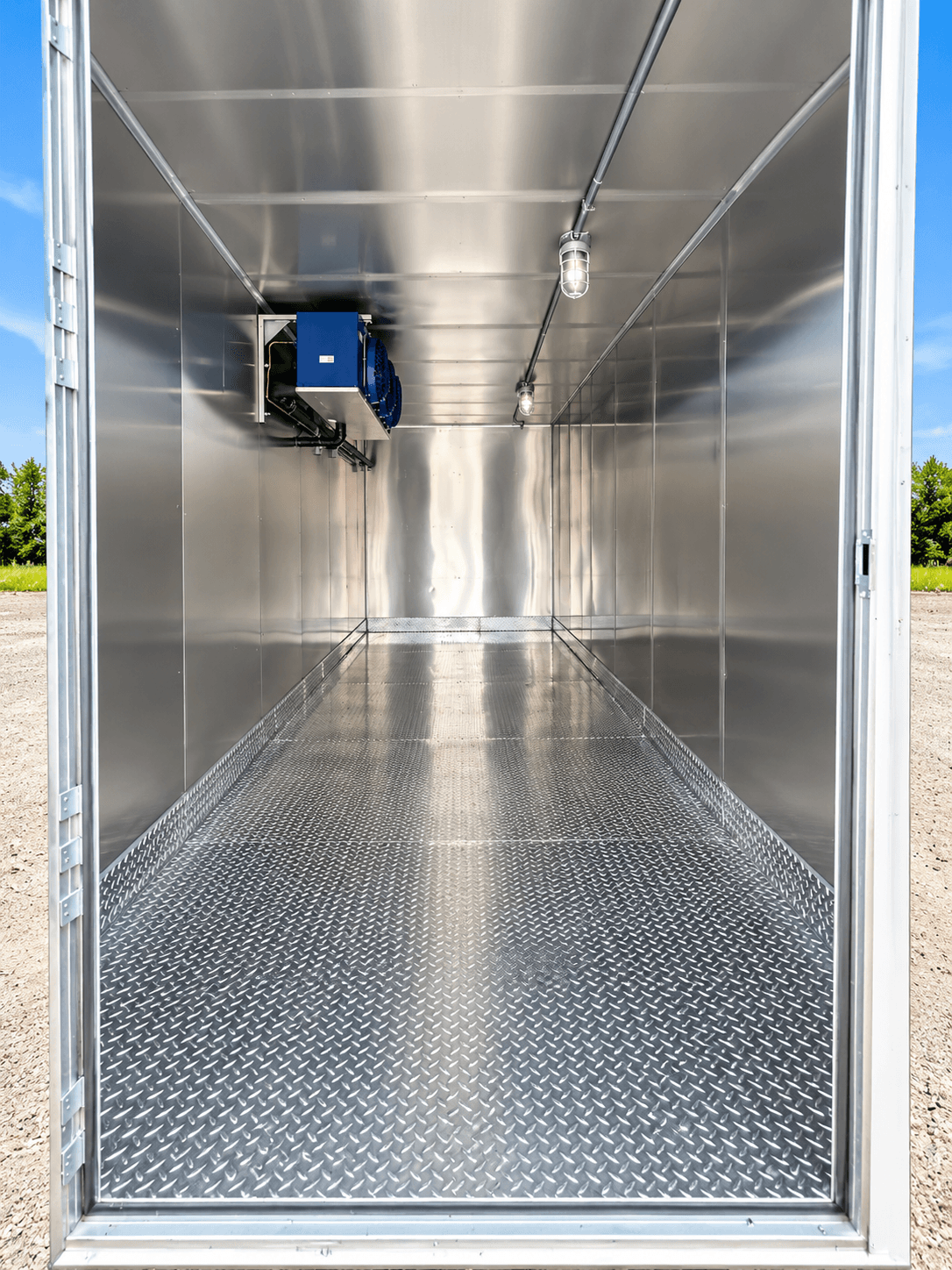
Compare the equipment
These published examples describe named company units. The supplied equipment, configuration and availability are confirmed for your project address.
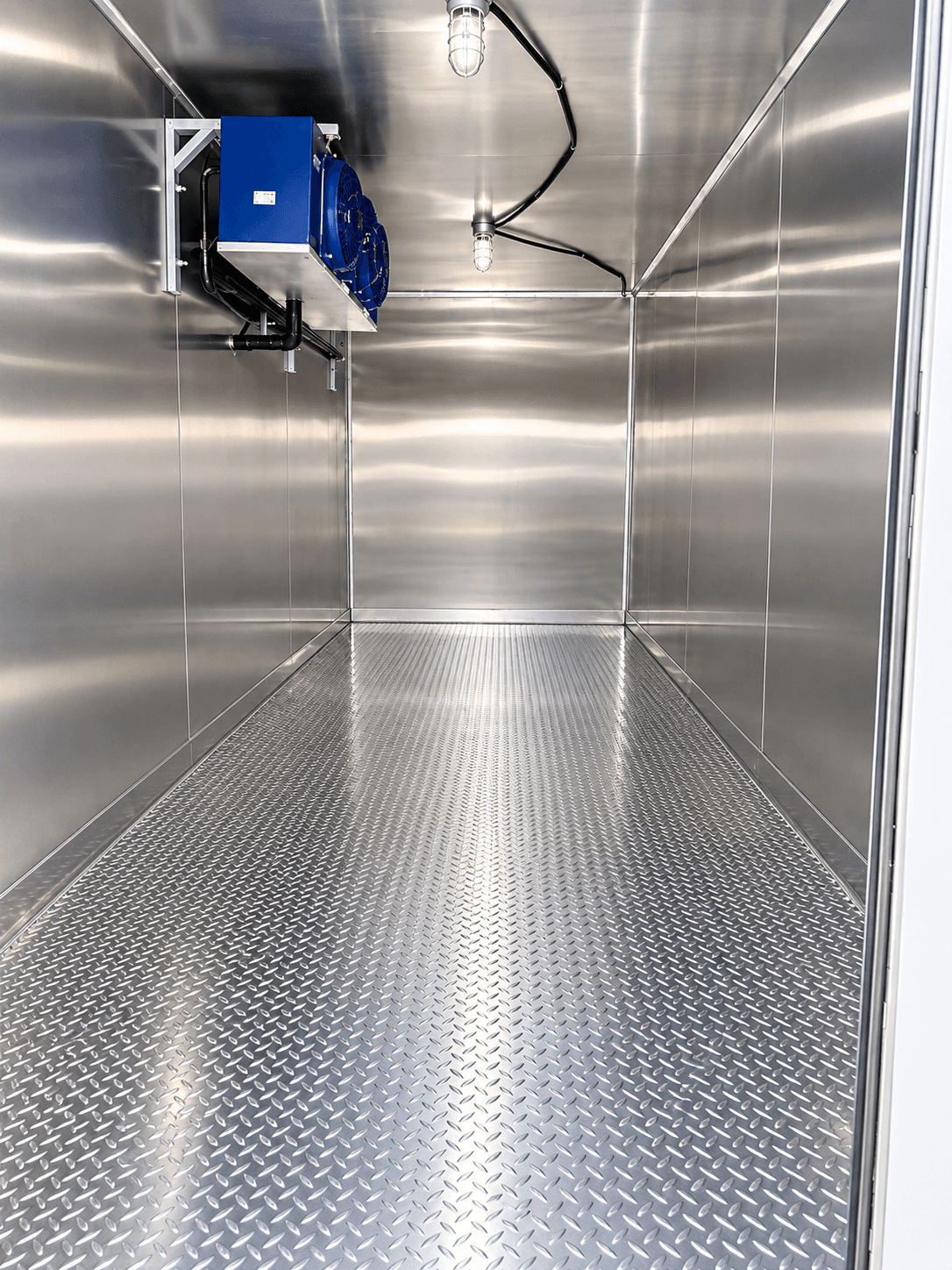
Listed refrigeration trailer equipment: condensing unit, amps panel, lighting.
Equipment records reviewed October 19, 2026. Temperature labels are inventory labels, not verified operating ranges. Nominal length is a model label, not a measure of usable space or site footprint.
NOAA’s 2022 Illinois summary documents historical climate variability and higher recent averages for heavy precipitation events. It does not establish flooding or an outage at a Bloomington business. An interruption can make receiving difficult even while some permanent refrigeration continues working. Identify which goods remain protected, which orders can be changed and which products need another holding location. Kitchen activity may continue with a reduced purchasing schedule; dishwashing can require access to the same rear service area at other times. Explain those continuing movements before requesting a cooler or freezer. A useful temporary plan addresses the actual storage gap and retrieval route rather than assuming that usable room capacity automatically means normal receiving can continue.
For downtown receiving adjustments, the 20ft Refrigerated Container guide gives the kitchen team a checklist that starts with one resting place for the whole project and after-hours access to the unit.
Bloomington’s municipal 2025 accomplishments report records construction beginning on the 600 block of Main Street as the first downtown streetscape phase launched. It is a dated infrastructure example, not present route advice or evidence that equipment was supplied to nearby businesses. For an independent operator, the planning issue is whether the working entrance and on-site approach remain approved during the proposed rental period. Cold storage placed at a rear service door may interact with changes outside the immediate property. Identify the receiving route explicitly and ask the site contact to confirm current restrictions. A refrigerated inquiry should use those actual conditions rather than infer access from a familiar downtown address or a historical public project schedule.
Several neighboring guides cover situations that resemble parts of an inquiry from Bloomington. Peoria’s guide is organized around food preparation. A separate comparison is Decatur’s guide, which covers corridor businesses and stock transfers, citing the Decatur entry “Jasper Street corridor project narrative”. Use them to prepare questions, not to infer availability or terms for Bloomington.
Industrial project coordinators in Bloomington or Le Roy, Illinois, may need to resolve conflicting supplier and contractor access instructions before temporary employee dining arrangements begin. Check where arriving suppliers should wait, which staff member receives ingredients, and how access problems are escalated during shift changes.
A hypothetical Bloomington business refurbishing a service room may use frequent small orders instead of holding a large reserve. The temporary refrigerated requirement then depends on retrieval and receiving as well as the largest quantity. Kitchen staff should identify the goods needed throughout each shift, while dishwashing returns keep their own assigned location and route. Separate freezer goods from other stock according to the conditions established by the operator. If refurbishment changes the receiving entrance, tell suppliers which goods remain in permanent rooms and which move to the temporary unit. A clear location plan prevents purchasing from treating a relocated product as missing inventory and ordering duplicates during an already constrained operating period.
Operators near Bloomington can also compare Champaign’s guide, which covers catering and repairs. Check your own site details separately before relying on any comparison.
Normal, Le Roy and Clinton are nearby communities whose individual receiving locations should be stated plainly in a regional inquiry. A Bloomington purchasing office may coordinate the agreement without being the site where refrigeration is proposed. At the working property, provide the entrance, approach images and approved cold storage position with shared yard uses identified. Explain periods when routine receiving or collections occupy the route. Identify who can approve changes during the rental and who will be available for collection after the room reopens. Current transport suitability and permissions require review for the actual dates; nearby-place distances and a public streetscape record cannot establish access or a delivery charge at another property.
For a refrigeration quote, state quantities, packaging, required conditions and the highest simultaneous load. Explain how often goods arrive and how frequently staff retrieve them, particularly when the temporary position differs from the permanent room. Include preferred dates, placement permission, site electrical information from an appropriate representative and the coordinating contact. Name the acceptance step that restores permanent storage and flag any uncertain construction milestone. Ask the proposal to state equipment suitability, rental period, transport and collection assumptions, with revisions addressed explicitly. Availability and final charges depend on the reviewed property and operating plan. A clear stock and access brief gives purchasing a better comparison than a building area or an unexplained equipment size request.
Before you book
They may reduce the largest stock load, but explain committed orders and the busiest overlap. Frequent retrieval can also affect how staff use the space. Ask the equipment review to consider both quantity and working pattern rather than assuming a low average stock count settles the layout.
Provide current information for the requested dates and identify the authorized property entrance. Ask the transport assessment to review the intended route, including the final on-site turns. A quotation based on an earlier approach should be revisited if restrictions or access permissions change.
Clearly label both the billing office and actual equipment destination. The working site controls placement, access and transport questions. Give a receiving contact familiar with that property so the refrigerator or freezer requirement can be reviewed alongside the route staff will use.
These public references inform the planning examples; equipment availability and delivery arrangements are confirmed for your address.
Temporary refrigeration, kitchens and dishwashing can support many kinds of food-service operations. Each setting below starts with its own schedule, stock and site questions, and every project is reviewed individually.
Hotels, restaurants and resorts can plan temporary refrigeration around breakfast, banquet and dinner service when a walk-in cooler fails or a kitchen is refurbished.
Hospital, nursing home and care-facility kitchens can describe meal schedules, delivery times and displaced stock so temporary storage follows the food-service routine.
Municipal, county and public-building food-service teams can outline receiving arrangements, responsible contacts and project dates before a quote is prepared.
Dining facility managers can explain the products displaced, the receiving arrangements and the proposed period, then review availability and terms with our team.
Schools, colleges and universities can plan around term dates, serving windows and campus kitchen renovations so meal service can continue during repairs or construction.
Plant cafeterias and employee dining areas can describe shift patterns and staged building work so temporary cold storage can be reviewed against the working schedule.
Caterers and venues can plan preparation windows, event days and overflow ingredients, and describe how stock moves between storage, the kitchen and service.
Producers, wholesalers and distributors can describe loading, staging and storage needs when a cooler breaks down or demand temporarily exceeds capacity.
These examples describe planning situations. Equipment, availability and terms are confirmed in a project quote.
Cold storage is only one part of a project. These are the questions we work through with you before anything is booked.
Start with refrigerated containers and refrigeration trailers, then add a temporary kitchen or dishwashing trailer when the project needs one, all in a single conversation.
Access, utilities and the intended position are reviewed before delivery is arranged, so the equipment is matched to your site rather than the other way around.
Whether a walk-in cooler failed this morning or a renovation is months away, describe the real situation and plan around the stock, dates and people involved.
Planning guides cover all 50 states and more than 700 cities. Your address is then confirmed for equipment and delivery.
Use the rental calculator for a rate-range estimate and setup amount, then request a project quote that confirms availability, transport and the rental period.