BXRT20–1Refrigerated trailer
- Nominal length
- 20ft
- Listed electrical supply
- 220V · single-phase · 40–60A
- Inventory temperature label
- 32°F
Temporary cold storage in Decatur, Illinois
Decatur refrigerated container rentals can be assessed with kitchen and dishwashing rentals when a broader food-service change affects continuing operations. Emergency commercial cooler breakdowns require a stock decision, while planned refurbishment allows receiving and transfers to be arranged in stages. Short-term rentals and longer leasing requests can be discussed for manufacturers, restaurants, institutions, venues and other commercial users. Delivery coordination needs the approved equipment position, actual receiving entrance and a contact responsible for site access. Explain your refrigeration conditions, stock movements and the milestone for returning to permanent rooms. Request availability and an address-specific quote from Worldwide Refrigerated Container Rental Facilities that reflects the operation you intend to maintain.
Emergency cooler or freezer failure in Decatur? A person answers rental inquiries 24/7. Availability and delivery timing are confirmed in your quote.
Plan your rental budget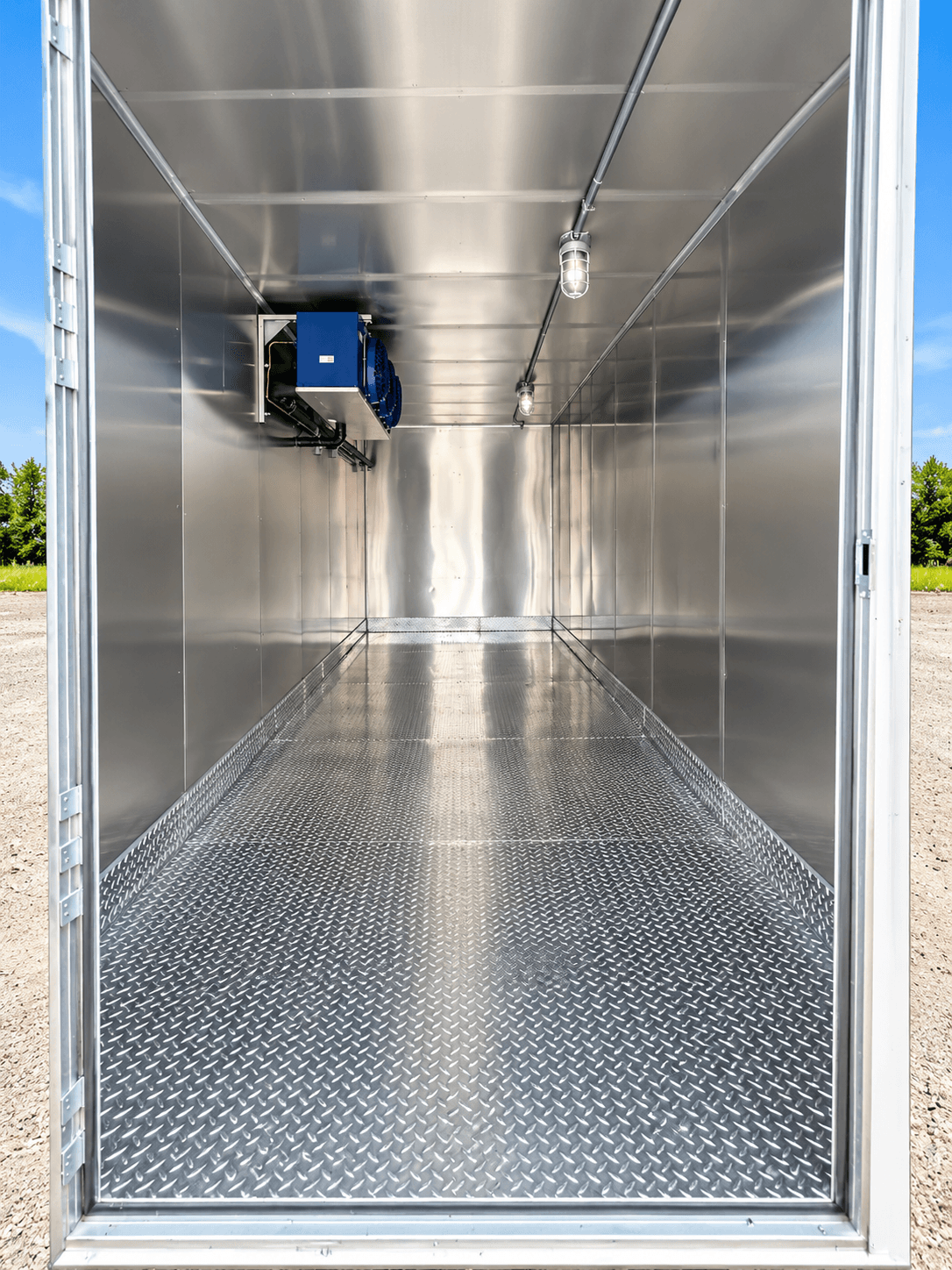
Compare the equipment
These published examples describe named company units. The supplied equipment, configuration and availability are confirmed for your project address.
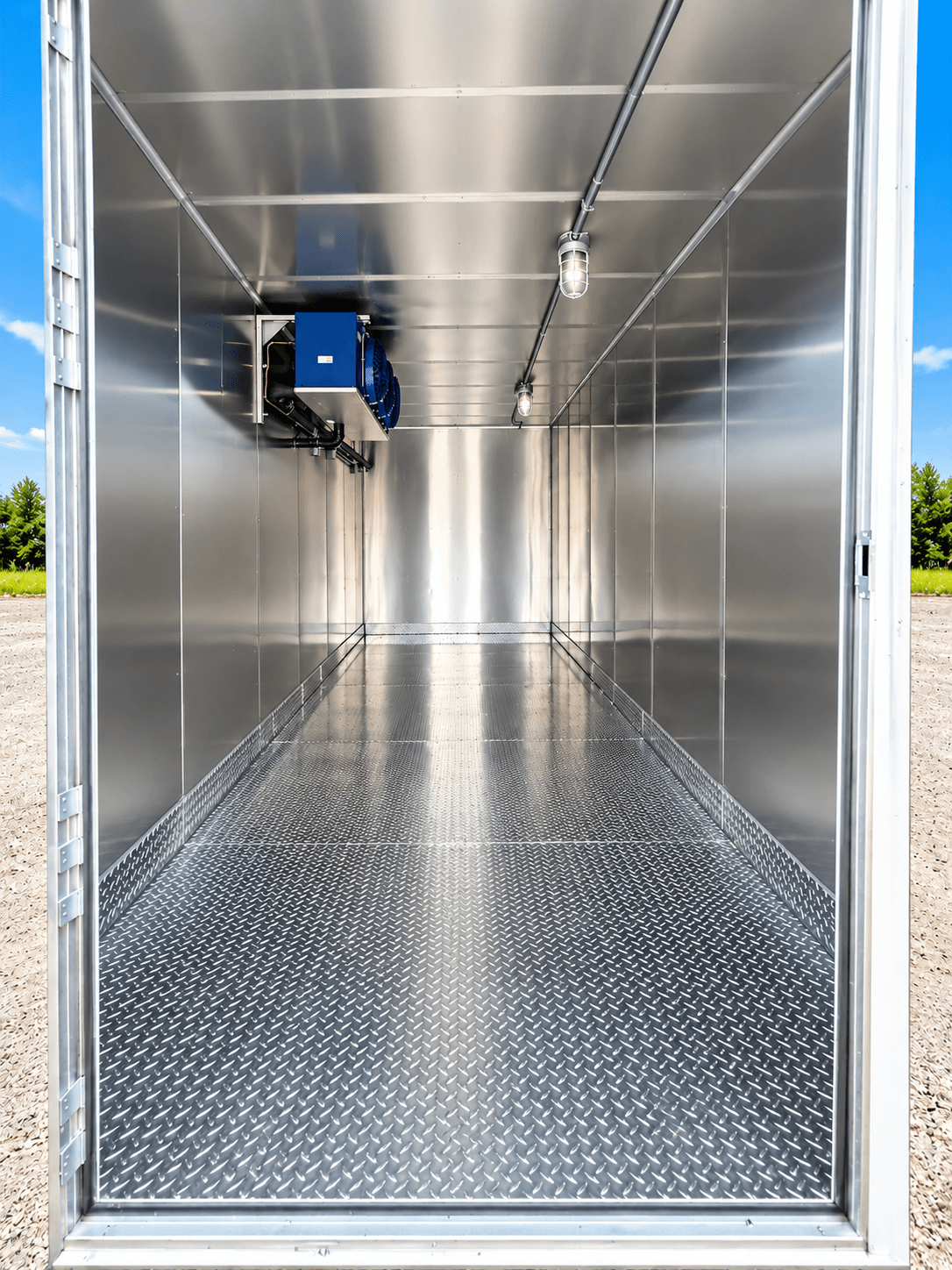
Listed refrigeration trailer equipment: condensing unit, amps panel, lighting.
Equipment records reviewed October 19, 2026. Temperature labels are inventory labels, not verified operating ranges. Nominal length is a model label, not a measure of usable space or site footprint.
The 2022 NOAA Illinois summary reviews historical temperature and precipitation variation, including recent periods with more heavy-rain events. Those statewide observations do not establish an interruption at a Decatur property. A refrigeration fault can create uncertainty about stock location even before any goods move. Identify the working cooler capacity that remains and which goods require another destination. Kitchen service may continue while purchasing reduces new orders. Dishwashing can serve a different activity at the same premises and should not be assumed to stop automatically. Give the inquiry one accountable stock contact and a clear list of required conditions. The temporary assessment should follow the actual remaining load rather than a general assumption about how a business of that type operates.
Read the 20ft Refrigerated Container guide alongside this page when planning corridor businesses and stock transfers; it looks at one resting place for the whole project and at the ground and drainage beneath the unit.
Decatur’s Jasper Street project narrative records council adoption of the corridor roadmap on September 18, 2023. The municipal plan provides dated local redevelopment context, not evidence that every property is under construction or requires rental equipment. For a separate corridor business planning its own alterations, identify which phase changes receiving and when stored goods must leave their permanent room. A refrigeration inquiry needs those operating dates, rather than a broad regeneration timeline. Show whether temporary cold storage would serve the business throughout the work or only during one transfer stage. The authorized property contact should confirm the proposed space and access independently of the public planning record.
For comparison, read what nearby cities emphasize. In Springfield, the guide covers food-service renovations; in Champaign, it covers catering and repairs. Use them to prepare questions, not to infer availability or terms for Decatur.
A hospitality manager considering a rental in Decatur or Forsyth, Illinois, can describe which goods remain reserved and which staff collect in small amounts throughout service. Request a proposal that distinguishes the equipment period from the property's wider works schedule and identifies arrangements needing separate confirmation.
A hypothetical Decatur operation may keep some stock in a retained room while moving other goods temporarily. Assign each product to a named location and identify who records transfers between them. Kitchen preparation stock can turn over rapidly while freezer reserves remain allocated for later use. Dishwashing supplies and returns belong in their own working area, rather than appearing as unrecorded contents of the product-storage unit. Tell purchasing which goods remain available before new orders are placed. If the contractor’s next phase changes access, update the stock plan at the same time. Temporary refrigerated capacity should reflect the largest real overlap, without adding quantities that have already been assigned to another functioning location.
For another comparison, the guide for operators in Bloomington covers downtown receiving adjustments, citing the Bloomington entry “municipal 2025 accomplishments report”. Use it as a prompt for your own questions about timing, access and storage.
Forsyth, Mount Zion and Clinton are nearby communities that may be part of an operator’s supply activity. State which property would actually hold the refrigerated equipment and explain transfers from other sites only where they affect the load. At a Decatur address, show the service gate, final on-site approach and proposed cold storage position. Identify shared receiving, collections and routes reserved for other users. A location convenient for staff may still need further transport or property review. Give the contact authorized to approve the arrangement for both placement and collection, especially if construction access ends sooner. Geographic proximity and a public corridor plan do not establish permissions, travel times or an equipment-delivery promise.
Send a refrigeration quote request containing goods, packaging, required conditions and the maximum quantity held simultaneously. Explain retained stock, incoming orders and transfers between premises so the same goods are not counted twice. Add intended dates, placement photographs, relevant site electrical information and the authorized property contact. State what milestone allows goods to return to permanent rooms and which dates remain provisional. Ask the proposal to identify equipment suitability, rental period, transport and collection assumptions, plus the process for a revised requirement. Availability and final charges require address-specific review. A reconciled stock picture gives the reviewer a stronger operating basis than a combined warehouse figure that includes goods never displaced by the project.
Before you book
Explain them separately and show whether they will actually enter the proposed temporary storage. The relevant capacity is the largest simultaneous load at that location, not the sum of all inventory owned by the business. Identify any transfer schedule that creates a temporary overlap.
Use it as background, then provide the current access and work information for your own property. A corridor plan does not establish a construction restriction, permission or rental need at every address. The refrigeration inquiry should describe the operating change you actually intend.
Use consistent location labels and identify who records each movement. Tell purchasing when goods move rather than allowing a changed room to look like missing stock. Share the remaining load and expected end milestone if the temporary requirement changes during the work.
These public references inform the planning examples; equipment availability and delivery arrangements are confirmed for your address.
Temporary refrigeration, kitchens and dishwashing can support many kinds of food-service operations. Each setting below starts with its own schedule, stock and site questions, and every project is reviewed individually.
Hotels, restaurants and resorts can plan temporary refrigeration around breakfast, banquet and dinner service when a walk-in cooler fails or a kitchen is refurbished.
Hospital, nursing home and care-facility kitchens can describe meal schedules, delivery times and displaced stock so temporary storage follows the food-service routine.
Municipal, county and public-building food-service teams can outline receiving arrangements, responsible contacts and project dates before a quote is prepared.
Dining facility managers can explain the products displaced, the receiving arrangements and the proposed period, then review availability and terms with our team.
Schools, colleges and universities can plan around term dates, serving windows and campus kitchen renovations so meal service can continue during repairs or construction.
Plant cafeterias and employee dining areas can describe shift patterns and staged building work so temporary cold storage can be reviewed against the working schedule.
Caterers and venues can plan preparation windows, event days and overflow ingredients, and describe how stock moves between storage, the kitchen and service.
Producers, wholesalers and distributors can describe loading, staging and storage needs when a cooler breaks down or demand temporarily exceeds capacity.
These examples describe planning situations. Equipment, availability and terms are confirmed in a project quote.
Cold storage is only one part of a project. These are the questions we work through with you before anything is booked.
Start with refrigerated containers and refrigeration trailers, then add a temporary kitchen or dishwashing trailer when the project needs one, all in a single conversation.
Access, utilities and the intended position are reviewed before delivery is arranged, so the equipment is matched to your site rather than the other way around.
Whether a walk-in cooler failed this morning or a renovation is months away, describe the real situation and plan around the stock, dates and people involved.
Planning guides cover all 50 states and more than 700 cities. Your address is then confirmed for equipment and delivery.
Use the rental calculator for a rate-range estimate and setup amount, then request a project quote that confirms availability, transport and the rental period.