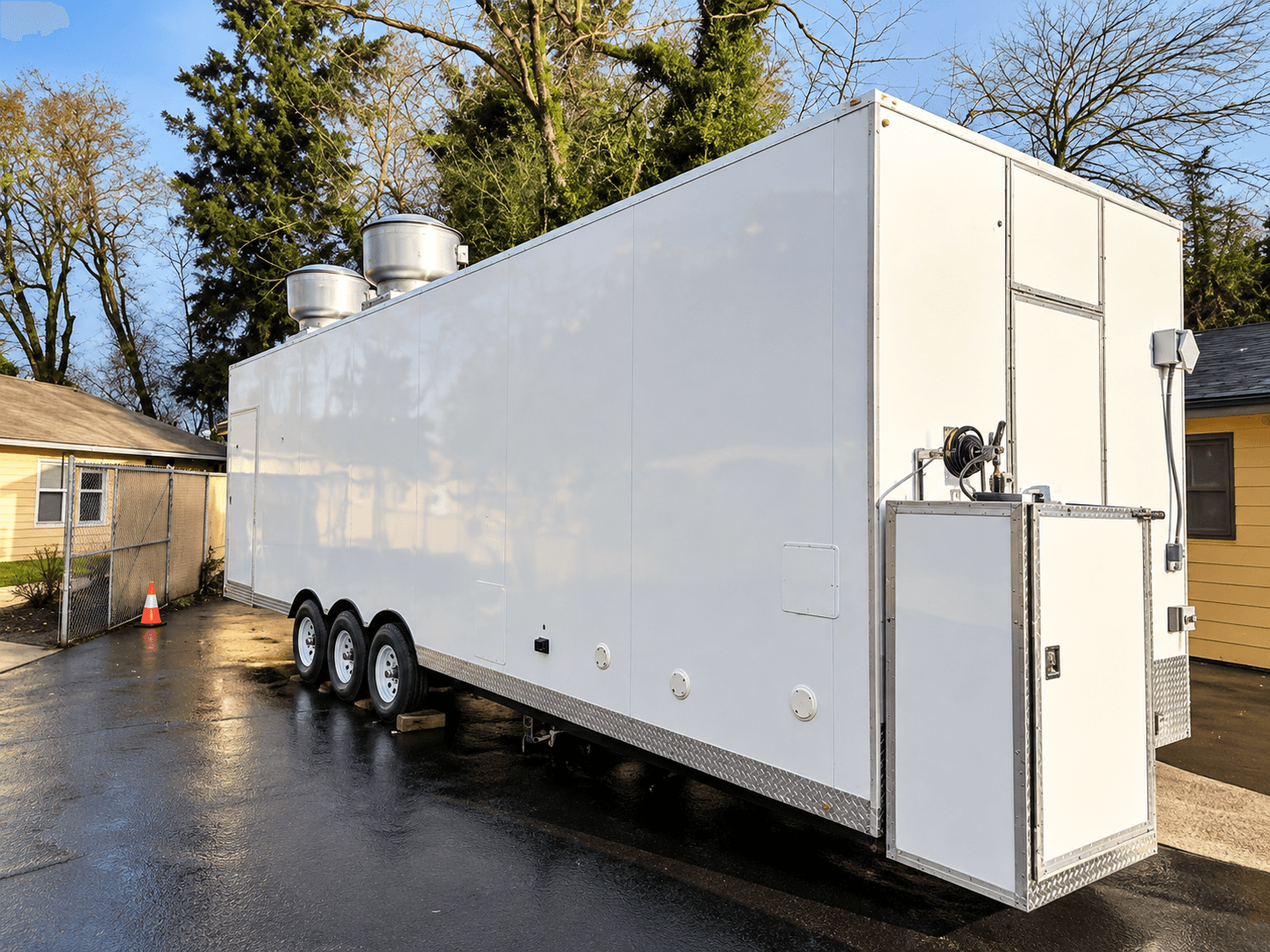
Kitchen Trailer Rentals
Explore mobile, bulk and combination kitchen trailer guides. Reference photographs show cooking lines, ovens and batch equipment; appliance packages vary with the unit.
Explore Kitchen Trailer Rentals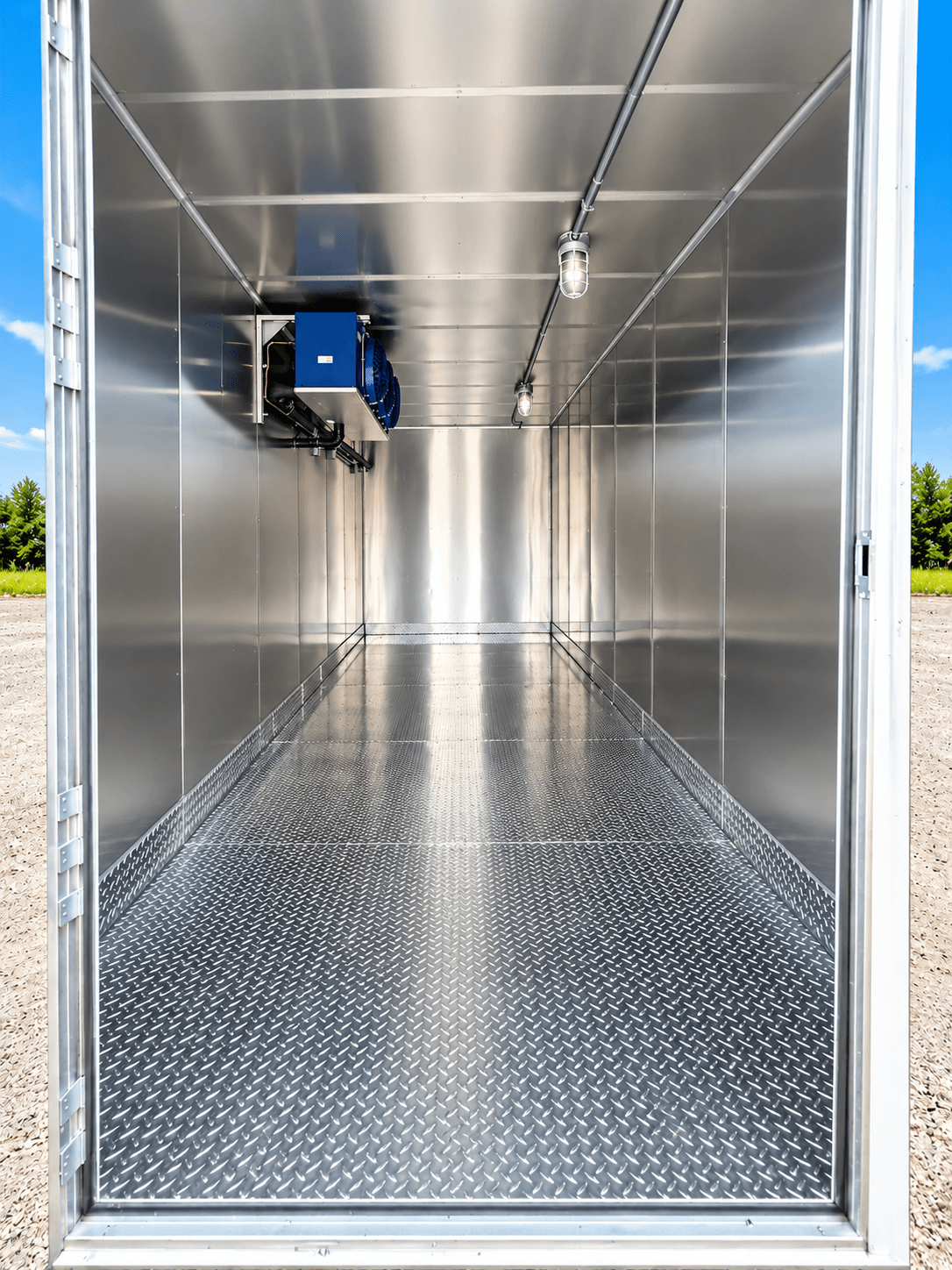
A failed commercial walk-in cooler or freezer leaves ingredients and daily meal service without their usual storage. Worldwide Refrigerated Container Rental Facilities offers refrigerated container and trailer rental options for that interruption, along with planned renovations, construction and events. Coverage extends across all 50 states, including California, Texas, Florida, Illinois and New York. Compare temporary cold storage for chilled or frozen products, then consider a mobile kitchen or dishwashing trailer when cooking or cleaning must move as well. Restaurants, hotels, healthcare facilities, schools, government and military dining operations have different menus and service schedules; the equipment arrangement should reflect the work that continues on site. Short-term rentals and longer-term leasing can be reviewed around the project period. Delivery coordination starts with the property address, access and available utilities. Contact our team to check equipment availability and request a complete project quote.
Temporary cold storage for commercial projects.
Temporary space for stock displaced by a failed commercial walk-in.
Storage for the gap between an existing room closing and its replacement opening.
Cold storage through preparation, serving periods and the final clear-out.
A separate holding-space option for seasonal or overflow stock.
4 cold-storage model guides
Compare refrigeration model guides, photographed layouts and published unit examples for a breakdown, renovation or event. Trailer access, storage interiors and connection details help distinguish the options.
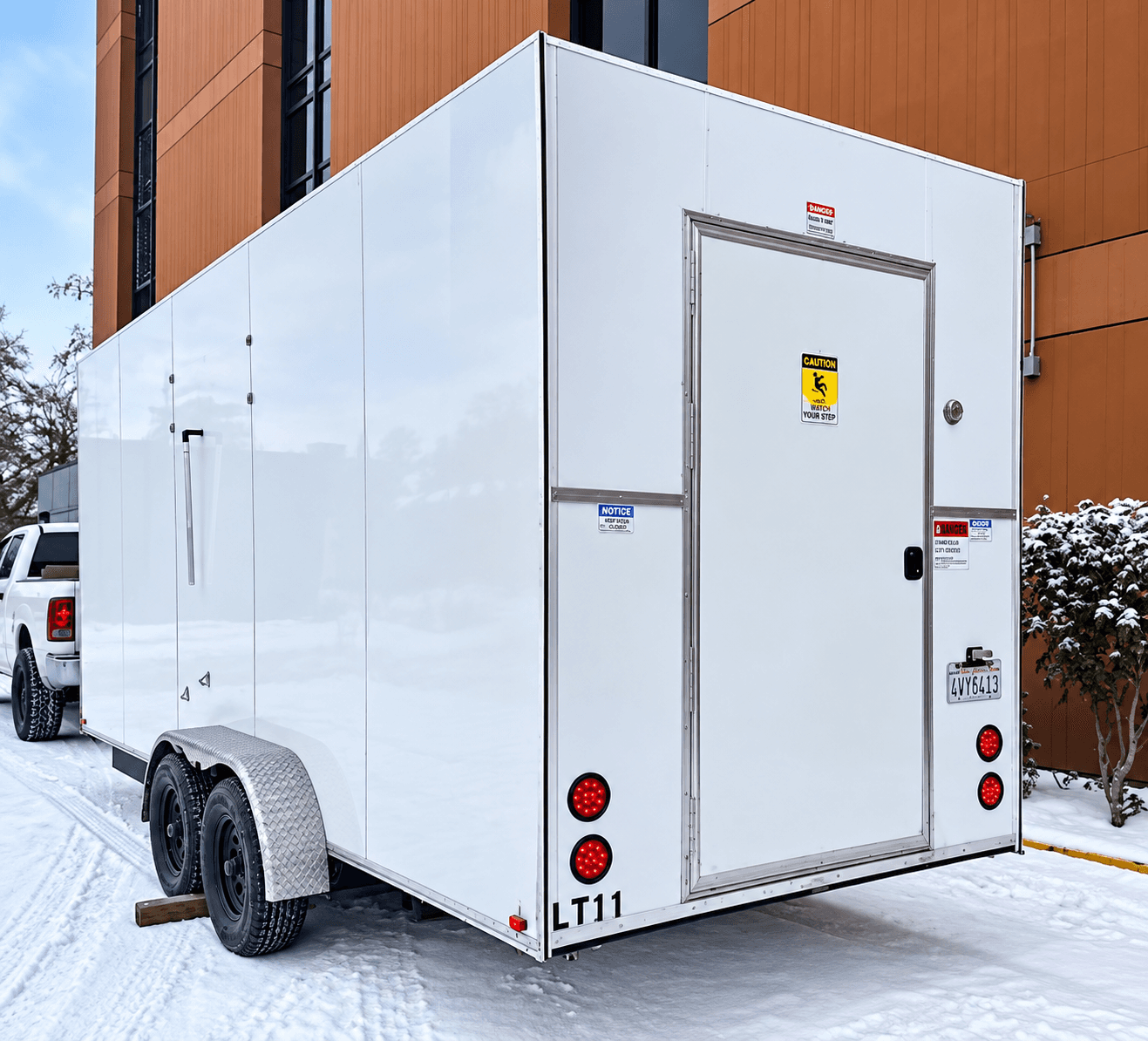
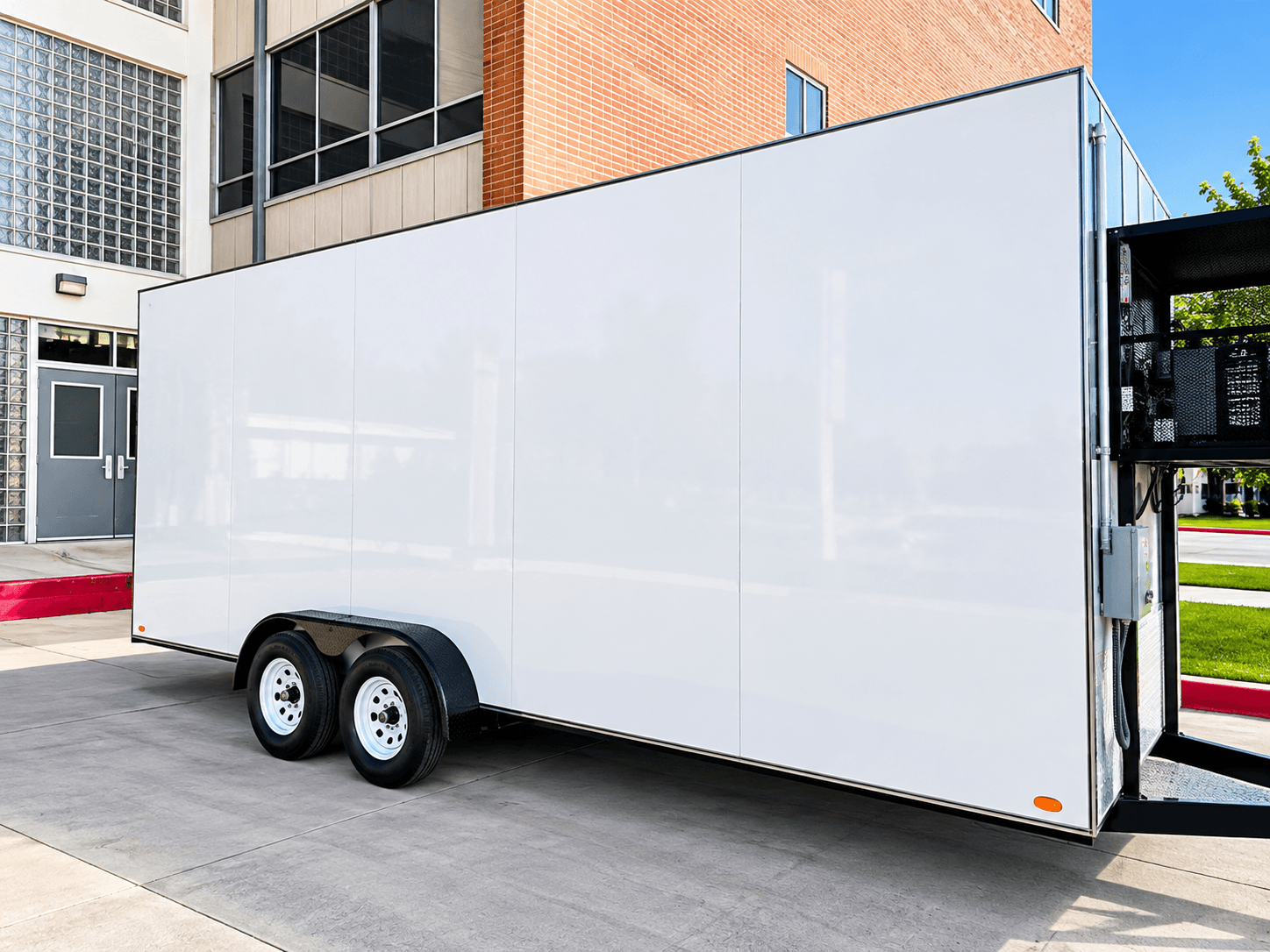
The reference exterior shows the rear access door, wheels and trailer body.
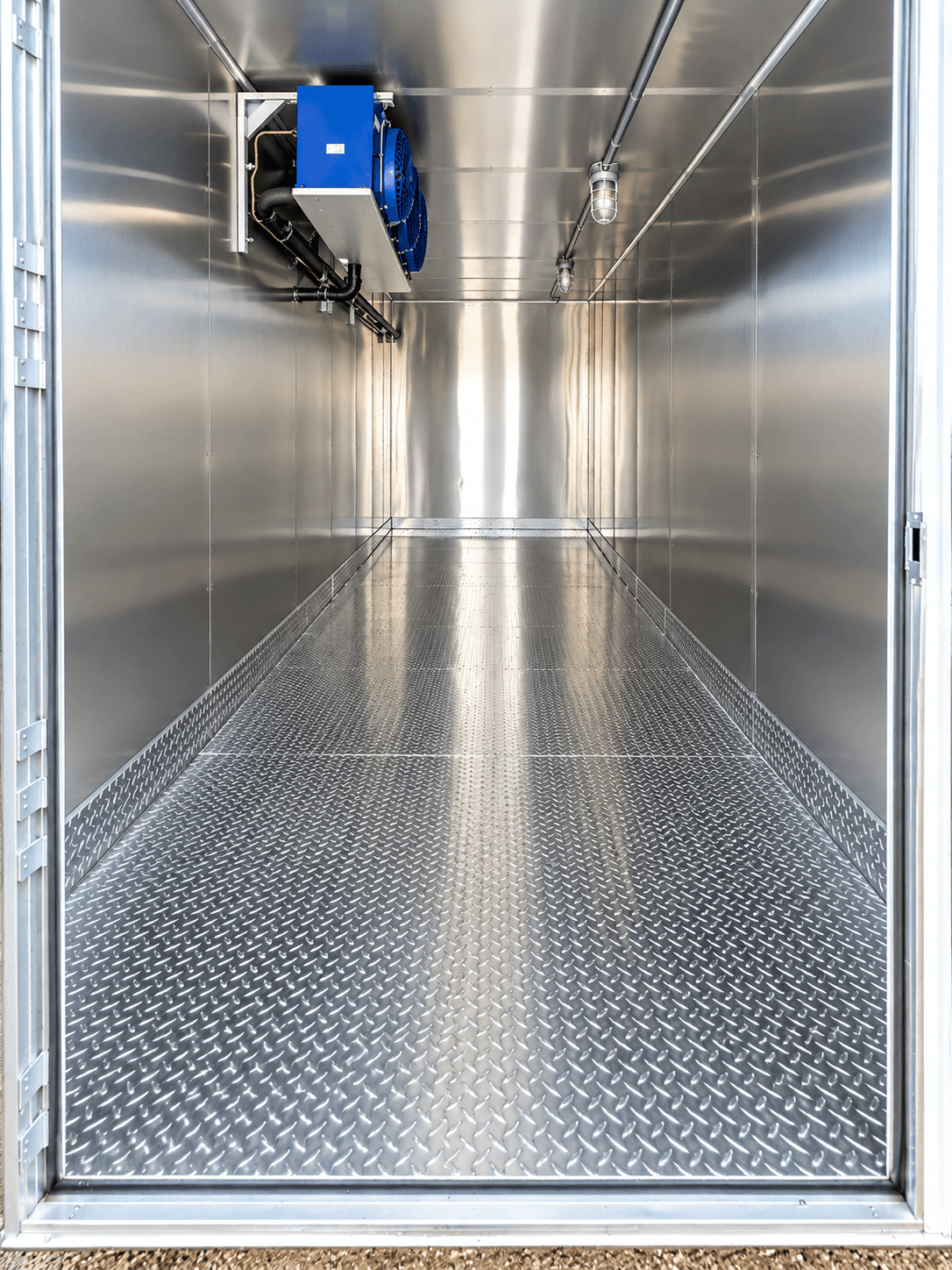
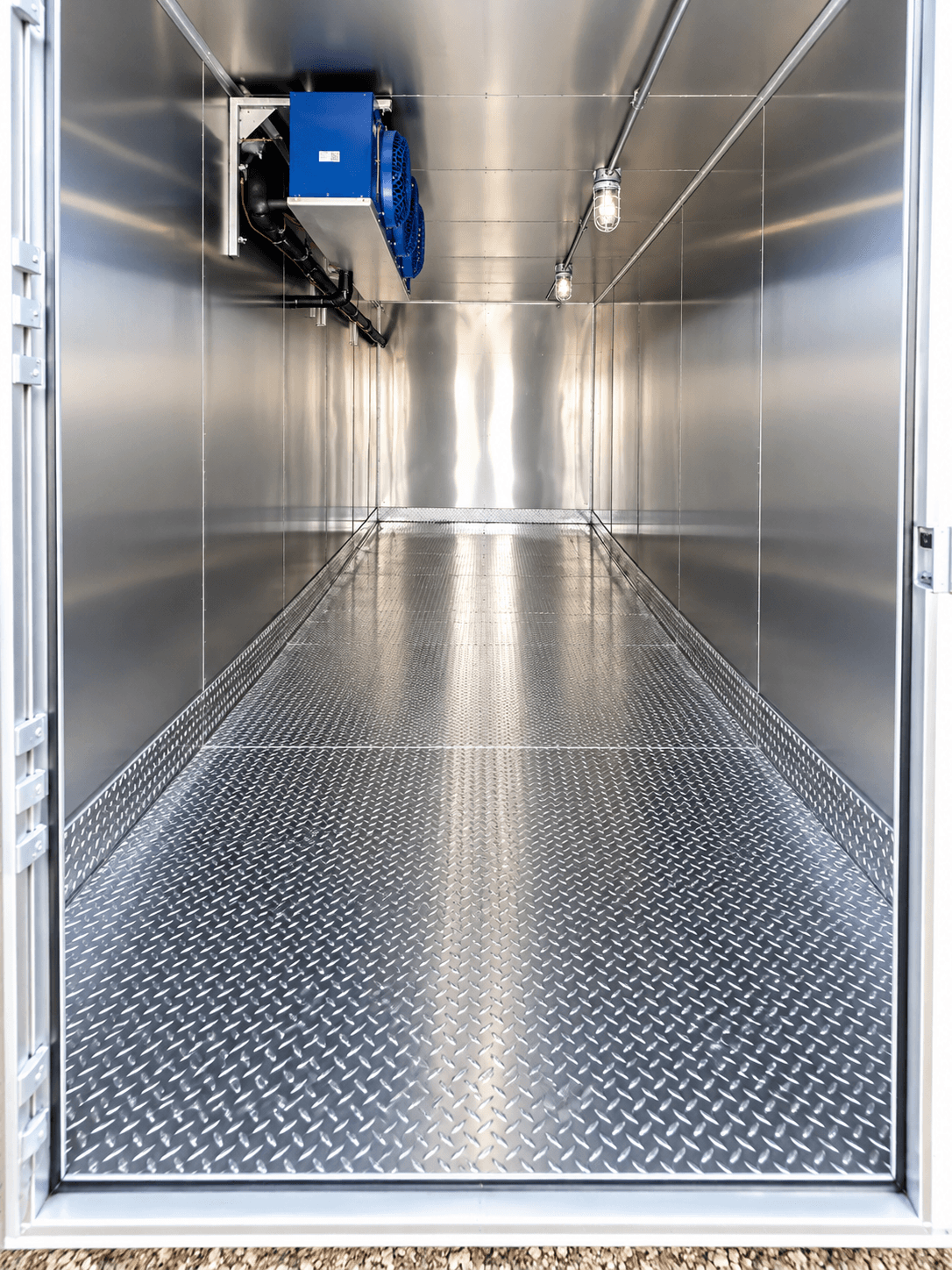
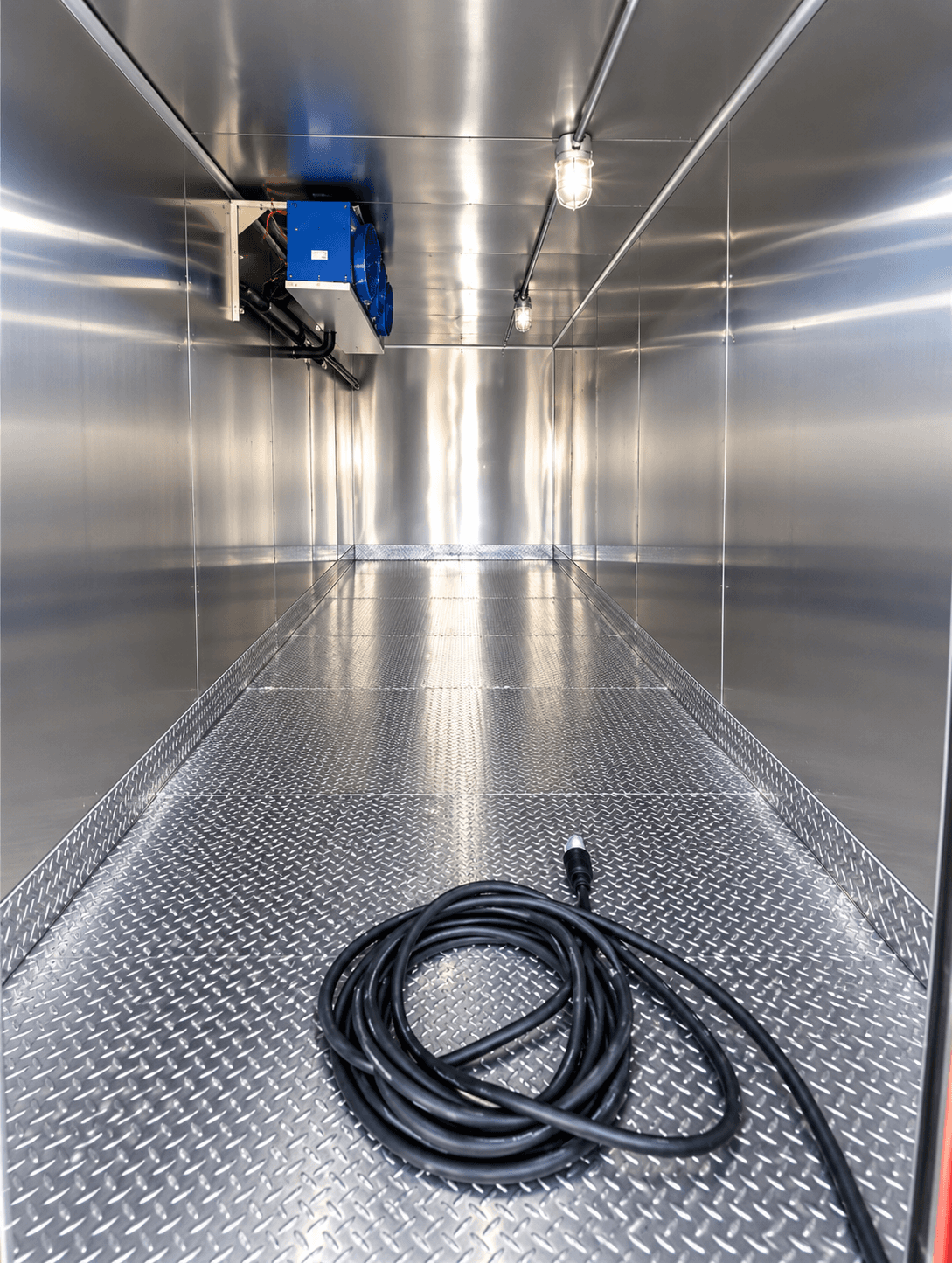
Metal-lined walls, a diamond-plate floor and a high-mounted cooling unit are visible.
| Named model | Company inventory examples |
|---|---|
| 12FT Refrigerated Trailer |
|
| 20FT Refrigerated Trailer |
|
| 20FT Refrigerated Container | Tell us what you need to keep cold. Your quote confirms the container’s power, temperature and storage space for your project. |
| 40FT Refrigerated Container | Tell us what you need to keep cold. Your quote confirms the container’s power, temperature and storage space for your project. |
Temperatures are inventory labels for separate unit examples, not a verified operating range. Capacity, setpoints and connections remain unit-specific; lengths are catalog model labels, and the BXRT12 records also mention 20ft. The 40ft container guide shows labeled 20ft photographs because no 40ft container photograph is available.
Explore all 4 refrigerated trailer and container guidesKeep the whole food-service operation moving
Browse 9 kitchen model guides and 5 dishwashing model guides, including mobile, bulk, combination and conveyor options.
Explore mobile, bulk and combination kitchen trailer guides. Reference photographs show cooking lines, ovens and batch equipment; appliance packages vary with the unit.
Explore Kitchen Trailer Rentals
Compare standard, conveyor and low-temperature dishwashing model guides. Reference photos show washing equipment, pre-rinse areas and stainless work surfaces; the proposed machine determines the actual process.
Explore Dishwasher Trailer Rental| Model guide | Example unit | Listed power | Listed equipment |
|---|---|---|---|
| 24FT Mobile Kitchen Trailer | K1 · 24ft | 220V · single-phase · 200A | Single-stack convection oven, Griddle/oven combination, Six-burner range/oven combination, Deep fryers, Handwashing sink |
| 38FT Mobile Kitchen Trailer Rental | K14 · 38ft | 220V · single-phase · 200–220A | Single-stack convection oven, Griddle/oven combination, Six-burner range/oven combination, Deep fryers, Handwashing sink |
| 40FT Mobile Kitchen Trailer | K21 · 40ft | 220V · single-phase · 200–220A | Double-stack convection oven, Deep fryer, Tilting skillet, Griddle/oven combination, Six-burner range/oven combination |
| 40FT Bulk Kitchen Trailer Rental | K27 · 40ft | 220V · single-phase · 200–220A | Double-stack convection oven, Deep fryer, Tilting skillet, Griddle/oven combination, Six-burner range/oven combination |
| 40FT Bulk Combo Kitchen Trailer | 40ft Bulk Combo example A · 40ft | 220V · single-phase · 200–220A | Double-stack convection oven, Deep fryer, Tilting skillet, Griddle/oven combination, Six-burner range/oven combination |
| 22FT Dishwashing Trailer Rental | D1 · 22ft | 220V · single-phase · 150A | Push-through low-temperature dishwasher, Soil tray, Three-compartment sink, Scraping table, Handwashing sink |
| 24FT Dishwashing Trailer Rental | D4 · 24ft | 220V · single-phase · 150A | Push-through low-temperature dishwasher, Soil tray, Three-compartment sink, Scraping table, Handwashing sink |
| 30FT Conveyor Dishwashing Trailer | DTC3 · 30ft | 220V · three-phase · 200A | High-temperature conveyor dishwasher, Soil tray, Three-compartment sink, Handwashing sink, Prep table |
| 38FT Conveyor Dishwashing Trailer Rental | DTC1 · 38ft | 220V · single-phase · 300A | High-temperature conveyor dishwasher, Soil tray, Three-compartment sink, Handwashing sink, Prep table |
Each row is one unit record, not every unit of that size. Models whose records disagree are explained on their own guides, and the rental proposal sets the equipment and availability for your project.
Compare the equipment, see the reference photographs and understand the rates before choosing your rental.
Refrigerated trailers and containers lead the range, with cooking and dishwashing options for projects that also displace those work areas.
749 city guides connect commercial rental needs with local context. Read the customer testimonials for project experiences.
The rental calculator estimates a range from published daily, weekly and monthly rates. A project quote sets the rental term and complete charges.
Each operation moves food differently. These examples show how temporary storage, preparation and washing fit the work that continues during an interruption.
A hotel or restaurant in Los Angeles or San Diego, California, that loses its walk-in can hold stock in a refrigeration trailer (the listed examples run on 220V at 40–60A) and add a kitchen trailer if cooking stops too. Breakfast, banquets and dinner can then keep drawing on the same ingredients.
Scheduled meals and tray returns set the pace of hospital and care-facility dining in Chicago or Springfield, Illinois. Temporary refrigeration covers the ingredients while a food-service store is out of use, and a dishwashing trailer, such as the 22ft example listed at 150A, handles returning trays. Food-service staff remain responsible for handling products during the transfer.
In a public-building food-service project in Birmingham or Huntsville, Alabama, a cold-storage unit keeps ingredients outside the affected store while receiving and staff access carry on as part of the occupied site's routine. The project scope lists equipment and responsibilities before purchase approval.
The Army’s February 2026 Fort Drum report identified another on-post café and a food kiosk as meal alternatives during dining-facility remodeling. For comparable military dining work in New York City or Buffalo, New York, refrigeration holds ingredients around meal periods. A kitchen or warewashing unit serves a separate function if those areas also close. Keep supplier receiving and staff collection usable; the authorized site representative reviews access and placement.
A phased refurbishment on a campus in San Diego or San Francisco, California, can take away a receiving or storage area before it reaches the serving line. A temporary cooler fills that gap while deliveries, meal service and dish return stay in one layout.
Employee meal breaks at an industrial food-service site in Huntsville or Mobile, Alabama, may be spread across shifts rather than bunched at lunchtime. Temporary refrigeration holds stock for those windows during dining-area repairs, positioned so it does not block a production or vehicle route.
A catering operation in Springfield or Chicago, Illinois, needs cold storage before service begins and while the venue is cleared. A dishwashing trailer can handle returned plates and utensils away from incoming food and the kitchen's preparation work.
If a holding area fails at a producer or distributor in Buffalo or New York City, New York, a refrigerated container gives incoming ingredients separate storage before scheduled dispatch, while batch identification and stock rotation stay with the operator.
Illustrative food-service uses within our nationwide coverage. The project quote defines equipment, availability and scope.
Some customers ask for cold storage before anything fails, and others call in the middle of a breakdown. These stories show both. They are planning examples, not customer accounts.
Natural disasters
A restaurant owner in Mobile, Alabama, remembers the power outages that followed Hurricane Sally in September 2020. Before the next storm season, the owner asks whether a refrigeration trailer can be arranged in advance, and settles the stock, the power supply and the parking position while the weather is calm.
Breakdowns
A restaurant's walk-in cooler stops on a Friday afternoon. The manager contacts the inquiry line, where a person answers 24/7, and describes the stock, the address and the power available. The team reviews those details so equipment and timing can be agreed for the project.
Emergencies
Students still need meals while the permanent kitchen is repaired. The facilities team asks about temporary cold storage for the ingredients and a mobile kitchen for cooking, and plans where each unit will stand until the cafeteria reopens.
Events
A caterer preparing for an exhibition at McCormick Place plans around the venue's rule that freight arriving before the licensed move-in date is not accepted. The question to the rental team is when cold storage could arrive and where it would stand, not just when the doors open.
Construction and renovation
A hospital dietary team knows its permanent walk-in will be out of service for weeks. Months ahead, it asks about a refrigeration trailer and a dishwashing trailer for that window, and works out the delivery route and power connection with the contractor.
Other industries
Hotels, schools, government offices, military dining, plant cafeterias and food producers follow the same pattern: describe the stock, the site and the dates, and the quote sets out the equipment. The industry examples above show how each setting differs.
Illustrative planning stories, not customer accounts or promises of availability. A person answers rental inquiries 24/7; whether a unit can be held in advance, its availability and its delivery timing are confirmed in your quote.
Choose the storage format
A refrigerated container works as a separate ingredient store while a permanent cold room is out of use. The guides cover nominal 20ft and 40ft containers; compare their interior, doors and fittings with your cases, carts and working space.
Refrigeration trailer guides compare rear access, interior layout and the power needed at the working position. The catalog includes nominal 12ft and 20ft trailer guides. Named 20ft examples list a condensing unit, amps panel and lighting; their individual electrical entries and temperature labels appear in the comparison above. A length label or an exterior photograph does not show usable capacity.
Equipment that fits the task
Chilled ingredients and frozen reserves need equipment suited to their required conditions. They may remain in separate permanent rooms or move to separate temporary units. A cooler used continuously during preparation has a different job from a freezer holding unopened cases between deliveries. Choose the configuration for those products and tasks; a refrigerated exterior does not promise separate temperature zones.
Count the largest stock overlap, including the next delivery and goods held back for later service. Case dimensions, trays or carts and how often staff retrieve ingredients show whether an interior and doorway will work, which nominal floor length alone cannot. Leave room for staff and carts once the stock is loaded.
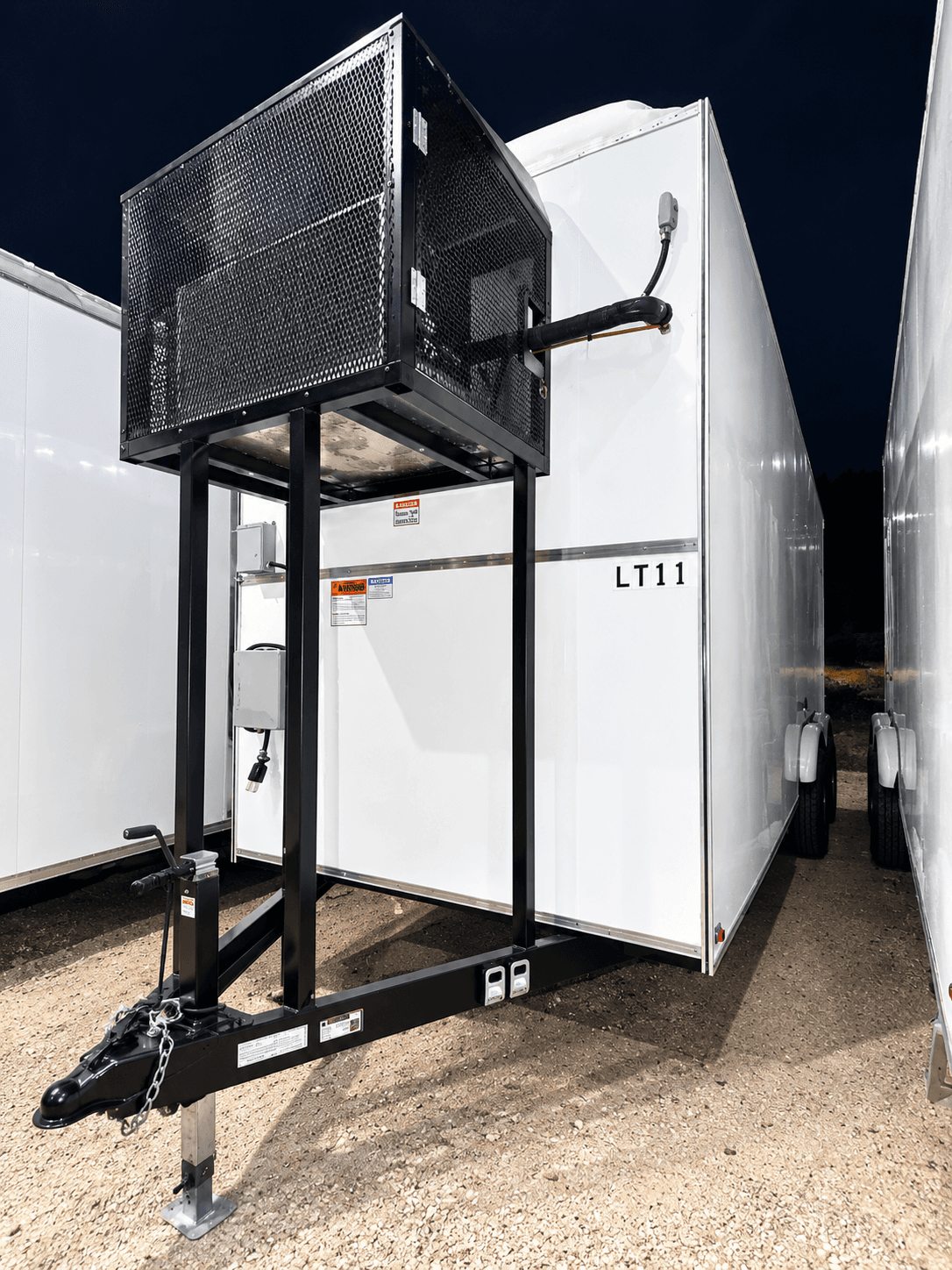
When refrigeration breaks down
A failed commercial walk-in can close storage while cooking and service continue. Temporary refrigeration replaces the missing holding space through repairs and the transfer back indoors. The busiest load may arrive after the urgent first move, when another supplier order overlaps with stock still outside. The rental period should cover that continuing routine, not end automatically when the repair contractor finishes.
A person answers rental inquiries 24/7. Equipment availability and delivery timing are agreed for the project, and decisions about affected food stay with the responsible operator and its procedures.
Local context. A clearer next step.
Refrigeration rental coverage spans all 50 US states. Explore local guides and the regional conditions that matter when equipment stands outside a working facility.
New York City’s Hunts Point Food Distribution Center brings together produce, meat and fish markets. A business receiving through that supply chain can hold reserves separately from ingredients drawn during service. Buffalo’s lake-effect snow and summer heat across New York, documented by NOAA, also make the outdoor operating season relevant. Temporary refrigeration needs a compatible supply and usable staff access alongside the products’ required conditions.
Chicago’s McCormick Place requires a production and dock-door plan for freight scheduling; arrivals before the licensed move-in date are not accepted. That receiving window differs from the period ingredients may need refrigerated holding at a preparation site or venue. Springfield projects also share Illinois’s cold winters and humid summers. Match the chosen equipment and staff route to the working property and season.
Birmingham’s BJCC August 2024 guide requires prior approval for exhibitor loading-dock access involving refrigerated trailers. A delivery slot and a working storage position therefore need separate review. Huntsville projects share Alabama’s hot summers and year-round rainfall; Mobile also faces coastal storm disruption, including power outages documented during Hurricane Sally in September 2020. An isolated walk-in failure and a wider utility interruption need different arrangements for refrigeration, power and access.
Los Angeles Convention Center requires specific written food-service permission for exhibitor food sampling and beverage tastings. For an approved program, refrigerated holding follows the products awaiting service, with preparation and cleanup considered separately. San Diego and San Francisco share California’s coastal influence, while conditions differ inland. Match the chosen equipment to the working property and operating season.
Make room for what comes next
A renovation can move cold storage before cooking or cleanup. Follow the food from receiving through refrigeration, preparation, cooking and service, then allow for returned items. Kitchen units have different roles: the named P1 example in the 26ft Mobile Kitchen Trailer guide lists prep space, sinks and reach-in cold storage, without a documented cooking line. Cooking-equipped models and dishwashing trailers support other tasks when those permanent areas also close.
An event needs ingredient holding before guests arrive and while the venue clears afterward. Storage, cooking and dishwashing may therefore finish at different times. Keep incoming food in the refrigerated unit apart from returned items in the layout, and match each facility to its workload and connections. Plan the rental period from setup to final handover, not only the guest hours.
A closer look
Our team-library photographs show refrigerated storage, a cooking line and a dishwashing workspace. Open a view for a closer look at the doors, flooring, cooling equipment or work surfaces. Layouts and appliance packages vary by unit.
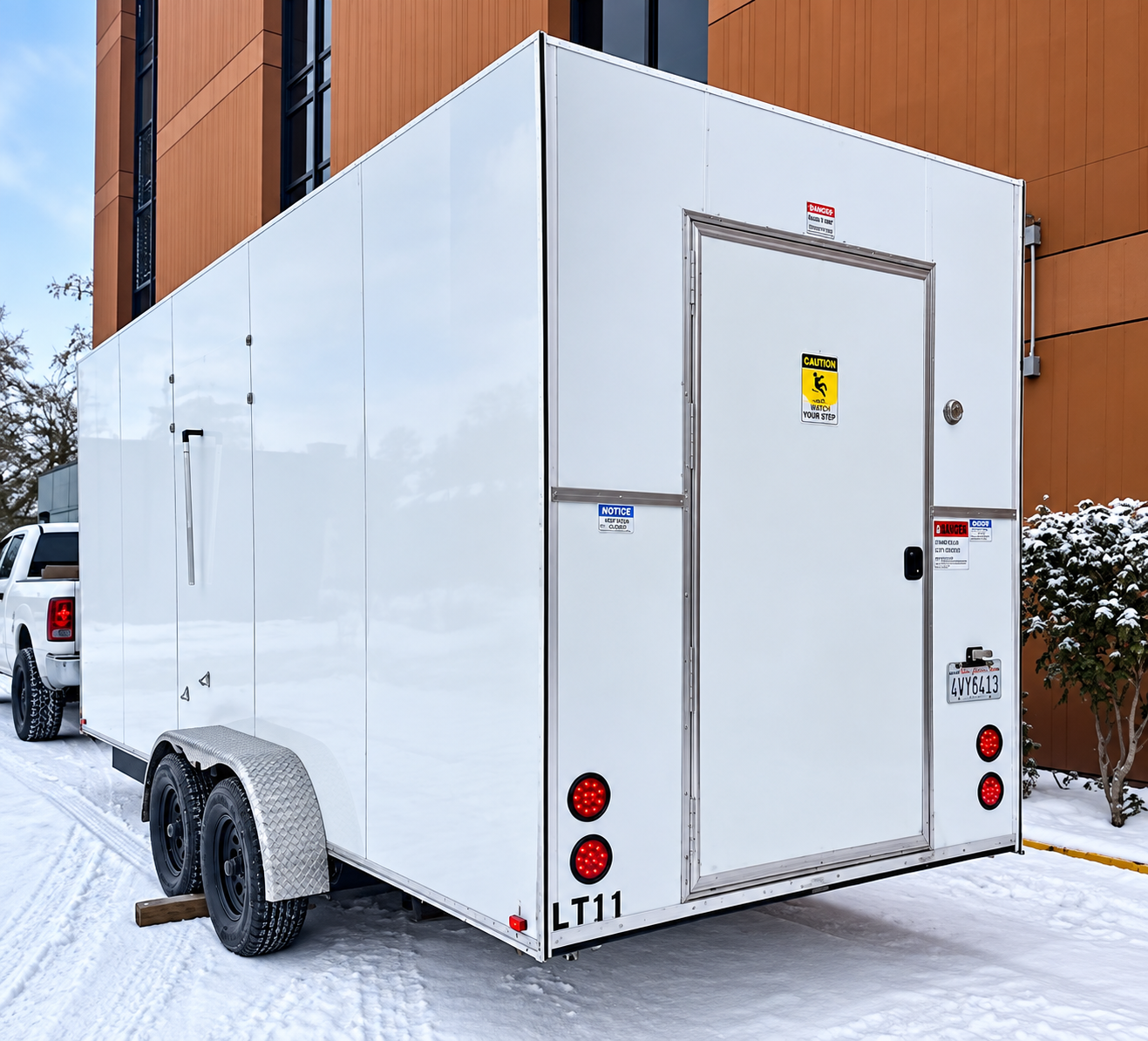
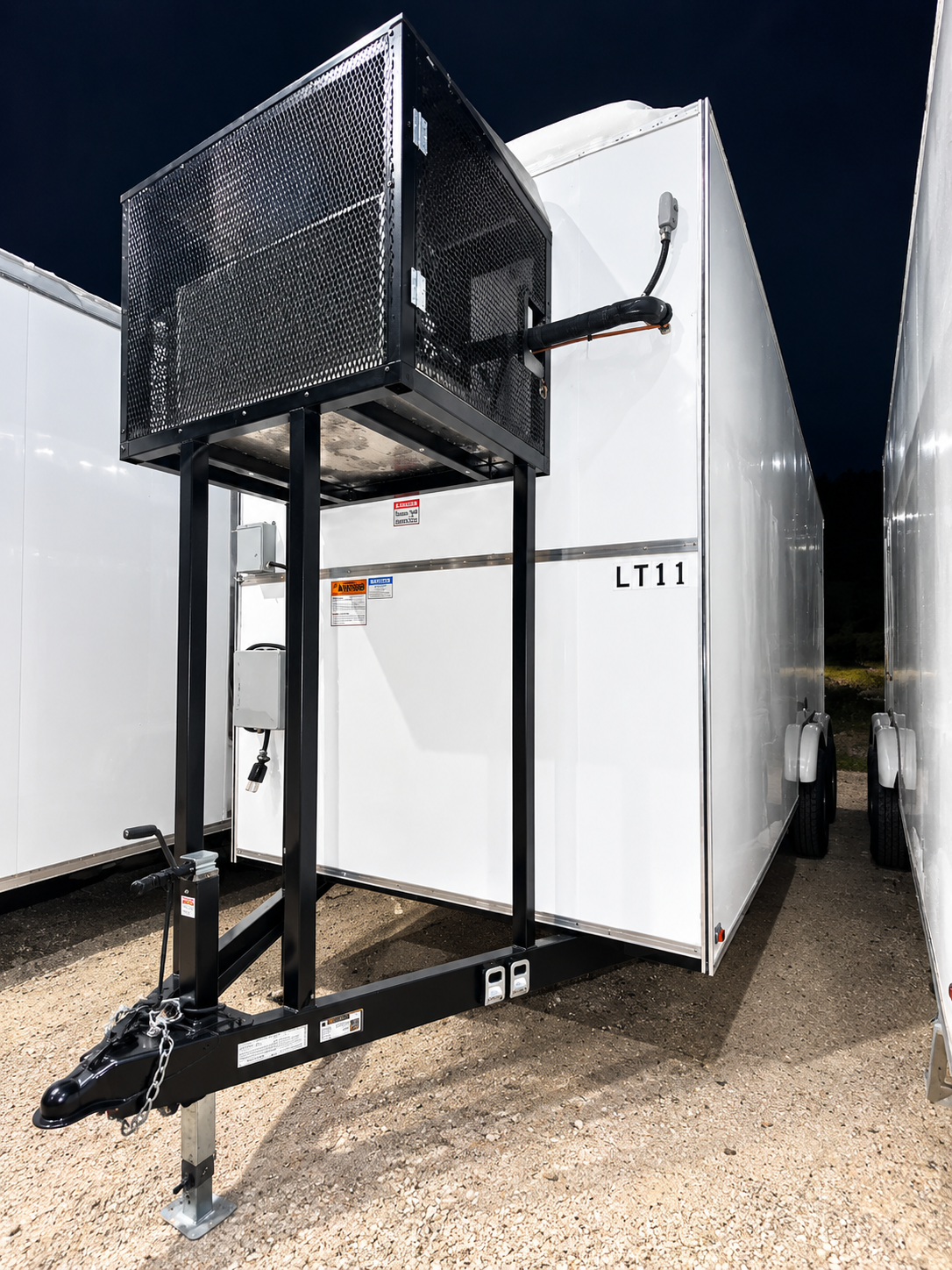
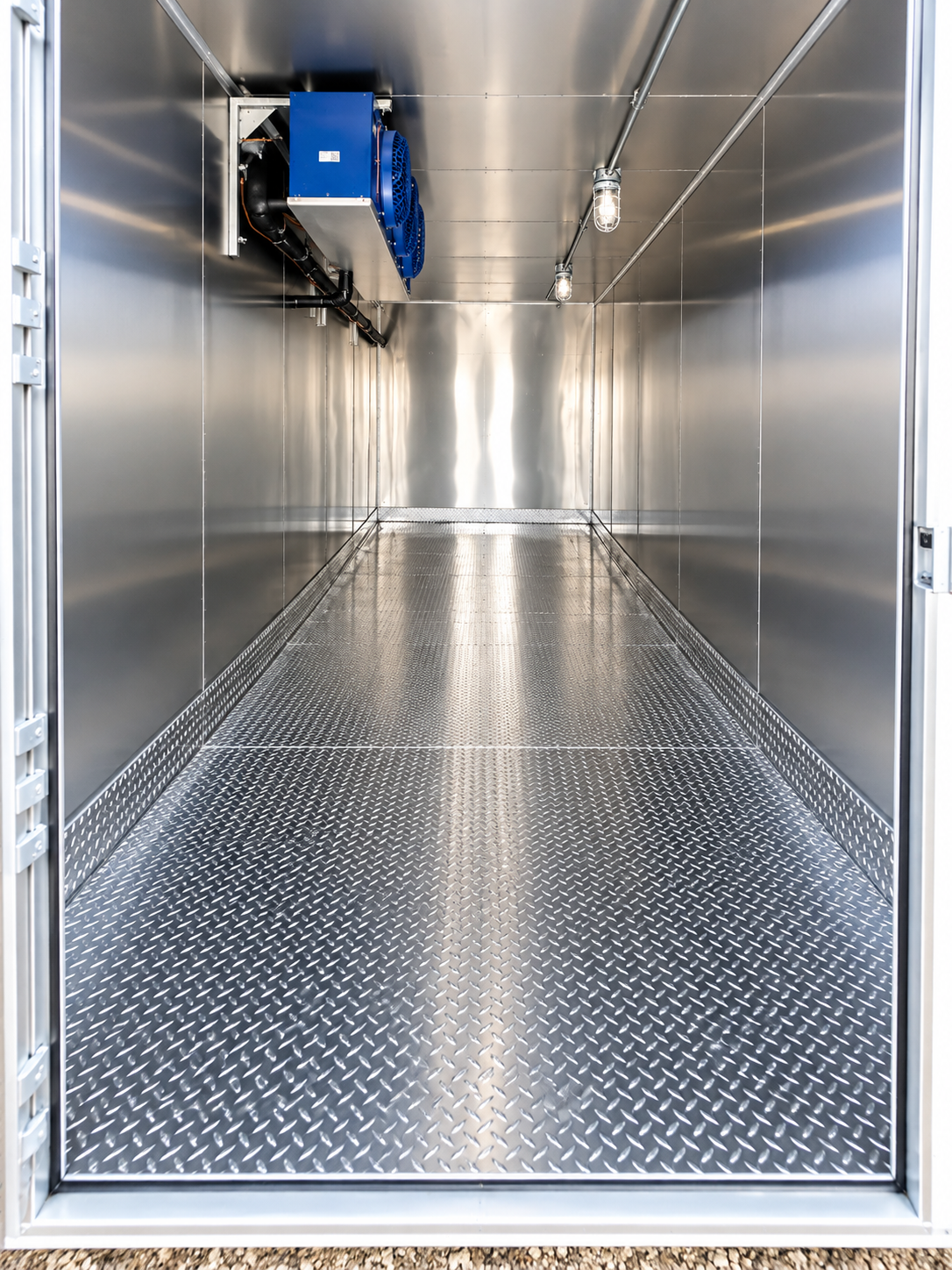
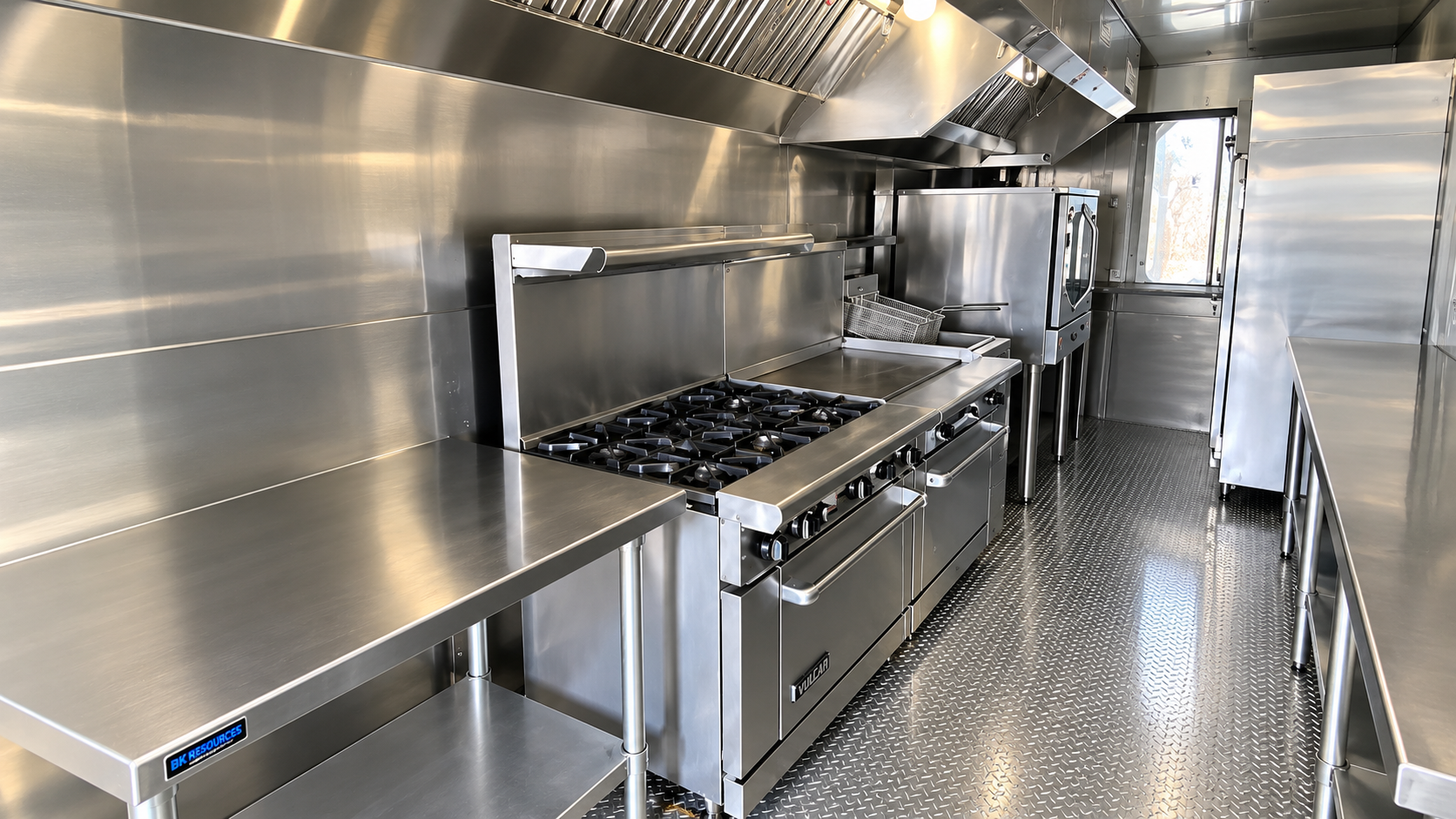
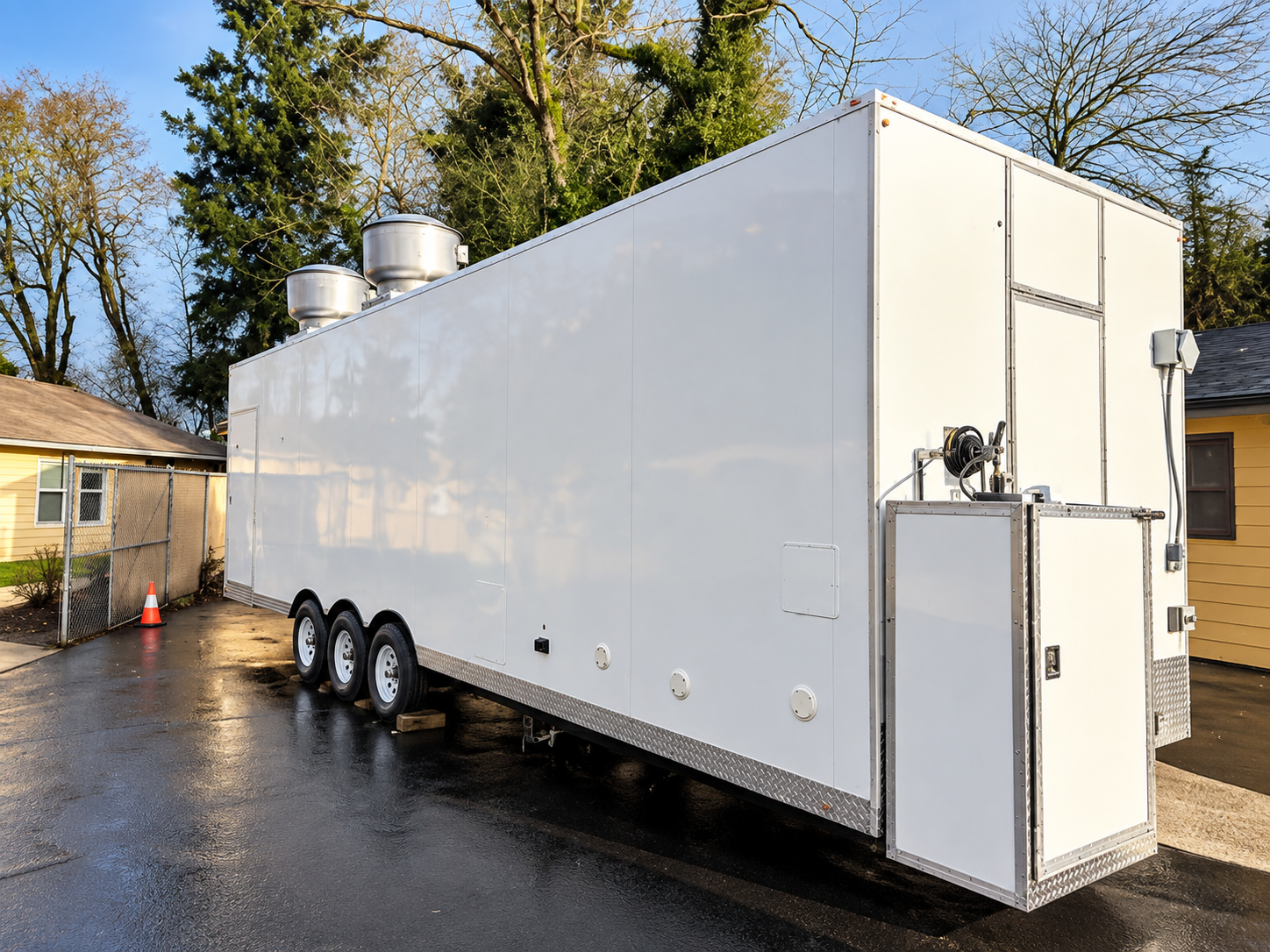
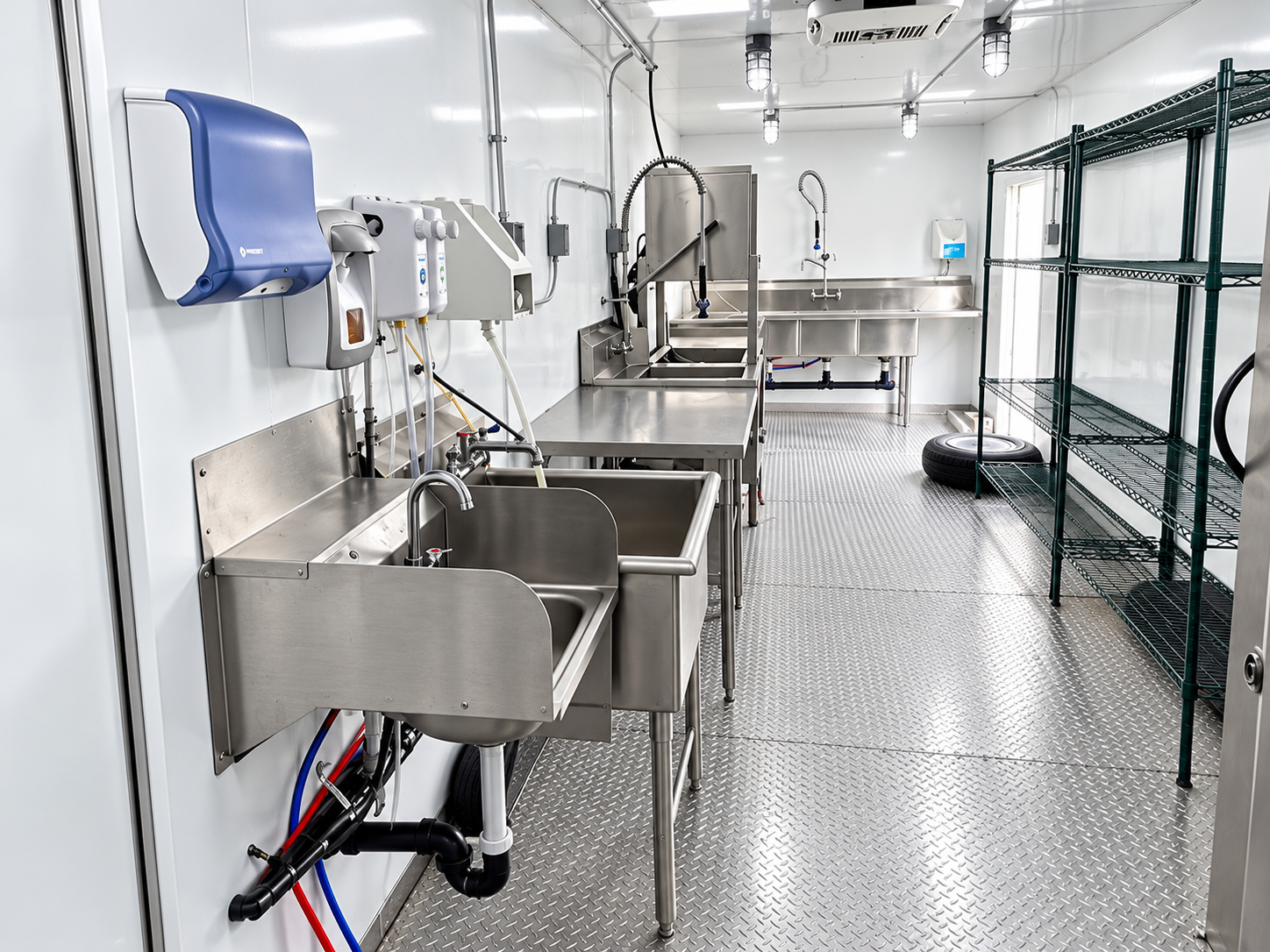
Reference photographs. Equipment and layouts vary by rental.
A clear plan for your site
Match the selected refrigeration unit's voltage, phase, amperage and connector to the supply at its working position. The tables above show why: a refrigeration trailer lists 40–60A, while the kitchen examples list 200A or more. Cable routing and the distance from the supply belong in the responsible site professional's review.
Keep the delivery approach, door opening, staff loading route and eventual collection route usable together. A refrigerated unit that fits an empty space still needs to work after stock and other equipment arrive. Any supporting kitchen or dishwashing facility has its own water, wastewater and electrical requirements; those services need separate preparation.
From the first question to your quote
The setup and delivery figure starts from a national amount, not a price for this address, so collection and every journey need confirmation. A complete project quote sets the selected equipment, rental term, transport, collection and applicable charges, with responsibilities and extension terms if repairs run late.
Published rate ranges · USD
Walk-In Cooler / Refrigeration Trailer
These are national rate ranges. Your location and assigned equipment need their own quote; container rates are quoted separately.
Final rental-period pricing requires a quote. Base rates include pre-delivery sanitization, entry steps, leveling and shore power cable hookup assistance. Freight and mileage over 100 miles, fuel, greywater pumping and local health permits are billed separately. Taxes, collection, site preparation, utilities and servicing also need confirmation. Prices are subject to change without prior notice.
Estimate your rental in the calculatorRates and terms
Rate ranges for the three rental families, with setup and delivery estimates and minimum lease terms.
| Rental family | Daily rate | Weekly rate | Monthly rate | Est. setup & delivery | Min. lease |
|---|---|---|---|---|---|
| Mobile Kitchen Trailer (24'–44') | $1,250 – $2,400 | $4,500 – $8,500 | $12,500 – $22,000 | From $850 (distance-based) | 1 week |
| Commercial Dishwashing Trailer | $750 – $1,200 | $2,800 – $4,200 | $7,500 – $11,500 | From $650 | 3 days |
| Walk-In Cooler / Refrigeration Trailer | $350 – $650 | $1,400 – $2,200 | $3,800 – $5,900 | From $450 | 3 days |
Base rates include pre-delivery sanitization, entry steps, leveling and shore power cable hookup assistance. Freight and mileage over 100 miles, fuel, greywater pumping and local health permits are billed separately.
These are rate ranges, not location quotes, and they are subject to change without prior notice. Container rates are quoted separately. Your quote confirms the rate, equipment, delivery and terms for your project.
A little clarity before you book
Both are options for temporary cold storage, but they have different delivery, placement and access arrangements. Compare the proposed unit's usable interior, doors, loading layout and electrical requirements. Confirm capacity, temperature capability and the space needed at the property for the specific unit, not from the container or trailer label.
The comparison includes temperature labels from named 20ft trailer inventory records. They distinguish individual equipment examples; they are not a tested operating range or proof that a unit provides separate temperature zones. The selected unit’s documented capability must match the products and required storage conditions.
Usable cold-storage space depends on internal dimensions, shelves, packaging, access and the room needed to move stock. A model's length is not a pallet count. Compare the busiest delivery with the working layout, leaving space for staff instead of filling a floor-area estimate.
Refrigeration holds ingredients before preparation. Cooking-equipped kitchen trailers provide a cooking space; prep-only examples serve preparation, sinks and cold storage. Dishwashing trailers support the return and cleaning of service items. Compare the named appliance and machine lists, then connect receiving, preparation, serving and clean-item return with utilities for each selected unit.