BXRT20–1Refrigerated trailer
- Nominal length
- 20ft
- Listed electrical supply
- 220V · single-phase · 40–60A
- Inventory temperature label
- 32°F
Temporary cold storage in Huntsville, Alabama
Huntsville refrigerated container rentals help commercial operators plan another place for ingredients when a walk-in cooler or freezer breaks down. Refrigeration trailers and portable cold storage can also support a scheduled refurbishment, with mobile kitchen and dishwashing requirements considered alongside the displaced storage. Worldwide Refrigerated Container Rental Facilities serves Alabama inquiries from hospitals, restaurants, schools, caterers and industrial food-service teams. Short-term rentals and longer lease arrangements need to follow the actual stock transfer and repair schedule. Tell us your Huntsville address, required conditions, products and preferred dates so we can discuss delivery coordination, equipment availability and a project quote.
Emergency cooler or freezer failure in Huntsville? A person answers rental inquiries 24/7. Availability and delivery timing are confirmed in your quote.
Plan your rental budget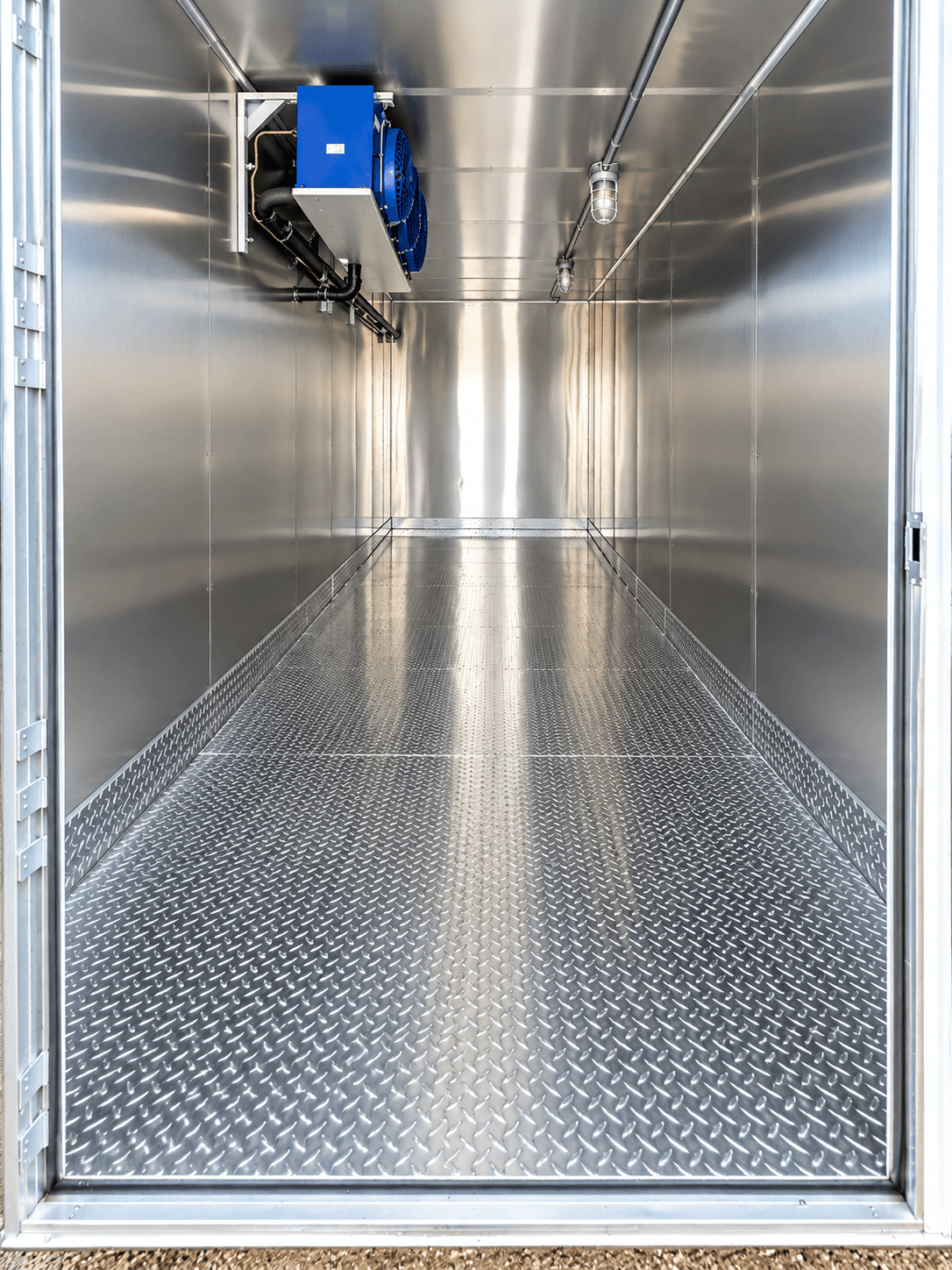
Compare the equipment
These published examples describe named company units. The supplied equipment, configuration and availability are confirmed for your project address.
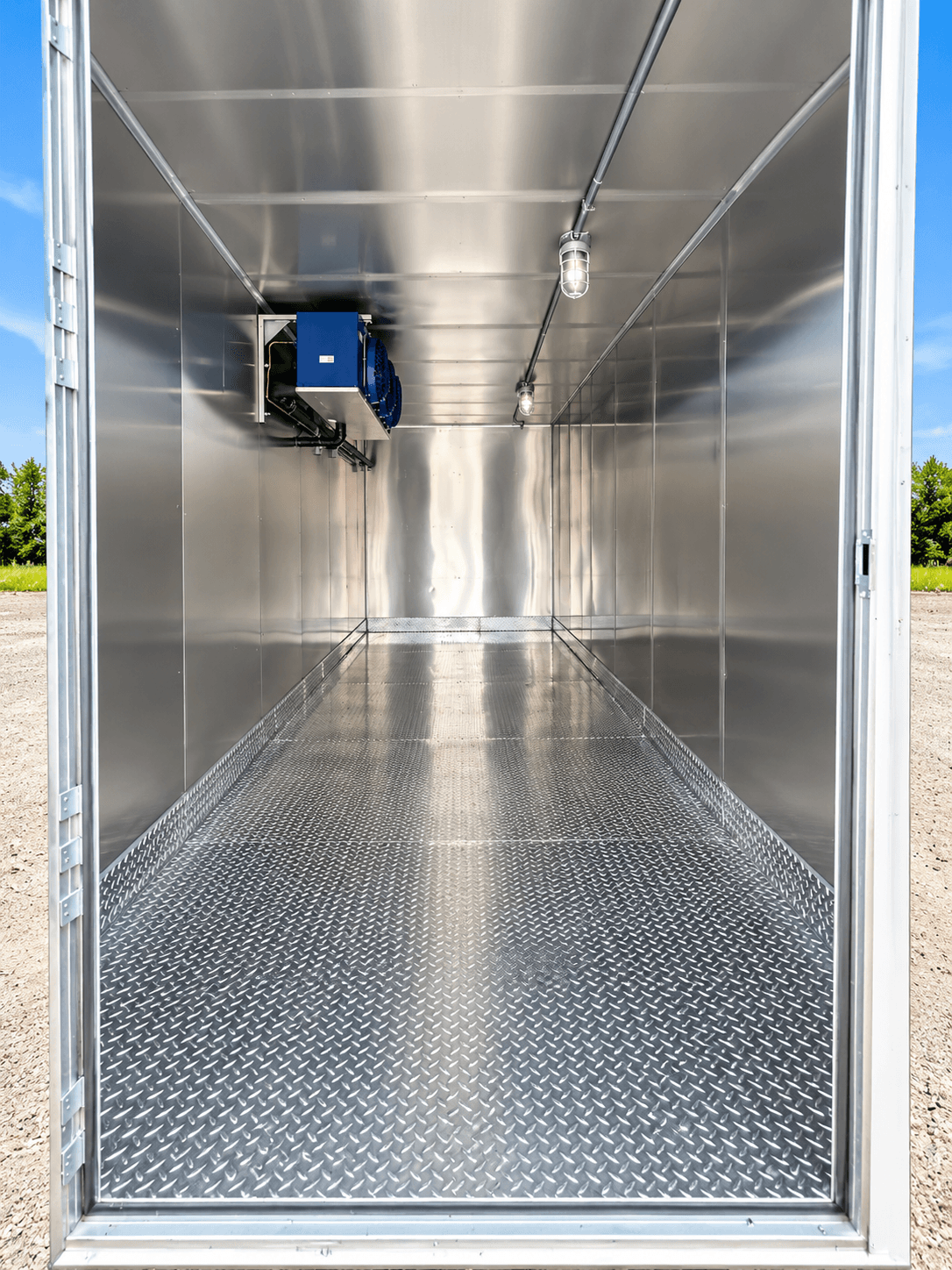
Listed refrigeration trailer equipment: condensing unit, amps panel, lighting.
Equipment records reviewed October 19, 2026. Temperature labels are inventory labels, not verified operating ranges. Nominal length is a model label, not a measure of usable space or site footprint.
A Huntsville walk-in failure can leave receiving and cooking intact while ingredients lose their usual storage space. Separate chilled goods from frozen stock and include the next supplier delivery when comparing refrigeration options. A person answers rental inquiries 24/7.
The National Weather Service records the November 15, 1989 tornado damaging businesses along Airport Road and Jones Valley. The county emergency-management agency also describes extended power loss during the April 27, 2011 outbreak, while a separate NWS survey records damage to industrial buildings in Decatur. These historical records explain why safe access and usable utilities belong in an emergency cold-storage plan. The immediate decision is whether the storage equipment failed alone or site access and power also need attention.
Compare a 20ft Refrigerated Container for storage-only work; add cooking or washing equipment when those functions also move.
The City opened the John Hunt Park Recreation Center on June 15, 2026. Its announcement identifies concessions and multipurpose rooms alongside tournament facilities. Concessions make receiving, ingredient holding and service part of the venue’s operation.
For a tournament-catering operation, the storage peak can arrive before spectators: routine concession stock and event ingredients may overlap while suppliers unload. A refrigeration plan needs to distinguish products reserved for later service from ingredients retrieved repeatedly during preparation. That operating difference helps compare the actual unit’s internal arrangement and access, without deriving capacity from attendance.
A temporary kitchen or dishwashing arrangement needs its own connections and operating period. For refrigeration, the first ingredient delivery is a useful start milestone even when spectator access begins later.
Huntsville Hospital’s visitor information identifies a first-floor cafeteria and food-retail locations across its campus. Its separate Madison Street Tower notice described changed public emergency-department access beginning January 11, 2025, expected to last at least 18 months. The notice concerns public access, not an approved freight entrance or proof of current field conditions.
For a healthcare food-service interruption in Huntsville or Madison, Alabama, ingredient receiving and staff collection from the refrigerated unit need a route separate from patient arrivals. The facility’s dining team sets the product-handling requirements for its operation.
The City’s July 15, 2022 announcement for the former National Guard armory near John Hunt Park included HVAC, plumbing and electrical upgrades as part of its conversion to the Raymond W. Jones Community Center. That published scope illustrates how several building systems can change within one refurbishment.
For a comparable commercial project, an outdoor position alone does not provide a usable electrical supply. Compare the offered refrigerated store and any separate cooking or washing equipment with the services available during each work stage.
Huntsville’s roadwork page provides an official resource for checking the approach before transport is arranged. Its August 11, 2026 Martin Road update described completed east-side bridge work and remaining work to the west. That published timetable does not confirm today’s lane or gate conditions. The operator’s approved receiving entrance remains separate from a route shown on a public project map.
For an event requiring City special-event approval, a detailed site plan is a published requirement. The proposed refrigerated container position, working access and any separate kitchen or dishwashing arrangement belong on that venue plan. Property representatives and the relevant authorities need to review exits, pedestrian movement and service access together.
For another address in Madison, Triana or Owens Cross Roads, use that property’s receiving details and authorized contact.
The final return indoors can happen in stages: ingredients needed for the next meal may move before reserve stock. Keep the temporary cold store’s supply and employee approach available until its remaining goods clear.
Contact our team to request Huntsville availability and a quote for the equipment period and address-specific transport.
Before you book
Send the delivery address, stock details, required conditions and earliest needed date. Explain the state of site access and power, and distinguish a kitchen interruption from a storage-only repair. Add dishwashing requirements when that operation is affected. Equipment and timing require confirmation for the property.
Yes, describe each address and its refrigeration load separately. Receiving frequency, remaining permanent storage and the proposed position may differ. A combined conversation can coordinate those facts without assuming that one cooler configuration or transport arrangement fits both properties.
Not necessarily. Allow for the operator to accept the permanent refrigeration, move products back and handle deliveries during the changeover. Ask how the quoted refrigerated rental period, extension notice and collection arrangements would support that sequence before agreeing to the plan.
These public references inform the planning examples; equipment availability and delivery arrangements are confirmed for your address.
Temporary refrigeration, kitchens and dishwashing can support many kinds of food-service operations. Each setting below starts with its own schedule, stock and site questions, and every project is reviewed individually.
Hotels, restaurants and resorts can plan temporary refrigeration around breakfast, banquet and dinner service when a walk-in cooler fails or a kitchen is refurbished.
Hospital, nursing home and care-facility kitchens can describe meal schedules, delivery times and displaced stock so temporary storage follows the food-service routine.
Municipal, county and public-building food-service teams can outline receiving arrangements, responsible contacts and project dates before a quote is prepared.
Dining facility managers can explain the products displaced, the receiving arrangements and the proposed period, then review availability and terms with our team.
Schools, colleges and universities can plan around term dates, serving windows and campus kitchen renovations so meal service can continue during repairs or construction.
Plant cafeterias and employee dining areas can describe shift patterns and staged building work so temporary cold storage can be reviewed against the working schedule.
Caterers and venues can plan preparation windows, event days and overflow ingredients, and describe how stock moves between storage, the kitchen and service.
Producers, wholesalers and distributors can describe loading, staging and storage needs when a cooler breaks down or demand temporarily exceeds capacity.
These examples describe planning situations. Equipment, availability and terms are confirmed in a project quote.
Cold storage is only one part of a project. These are the questions we work through with you before anything is booked.
Start with refrigerated containers and refrigeration trailers, then add a temporary kitchen or dishwashing trailer when the project needs one, all in a single conversation.
Access, utilities and the intended position are reviewed before delivery is arranged, so the equipment is matched to your site rather than the other way around.
Whether a walk-in cooler failed this morning or a renovation is months away, describe the real situation and plan around the stock, dates and people involved.
Planning guides cover all 50 states and more than 700 cities. Your address is then confirmed for equipment and delivery.
Use the rental calculator for a rate-range estimate and setup amount, then request a project quote that confirms availability, transport and the rental period.