BXRT20–1Refrigerated trailer
- Nominal length
- 20ft
- Listed electrical supply
- 220V · single-phase · 40–60A
- Inventory temperature label
- 32°F
Temporary cold storage in Houston, Texas
Houston portable cold storage rentals help commercial kitchens find an alternative after a walk-in cooler or freezer fails. Refrigerated containers, trailers and temporary coolers or freezers can also support planned renovations, with mobile kitchen and dishwashing trailers considered for connected work. Restaurants, schools, hospitals, hotels and industrial food operations can discuss short-term rental or longer lease requirements. Worldwide Refrigerated Container Rental Facilities serves Houston, coordinating equipment and delivery around the actual property and dates. Describe the products needing storage, required conditions and proposed position to request availability and a current project quote.
Emergency cooler or freezer failure in Houston? A person answers rental inquiries 24/7. Availability and delivery timing are confirmed in your quote.
Plan your rental budget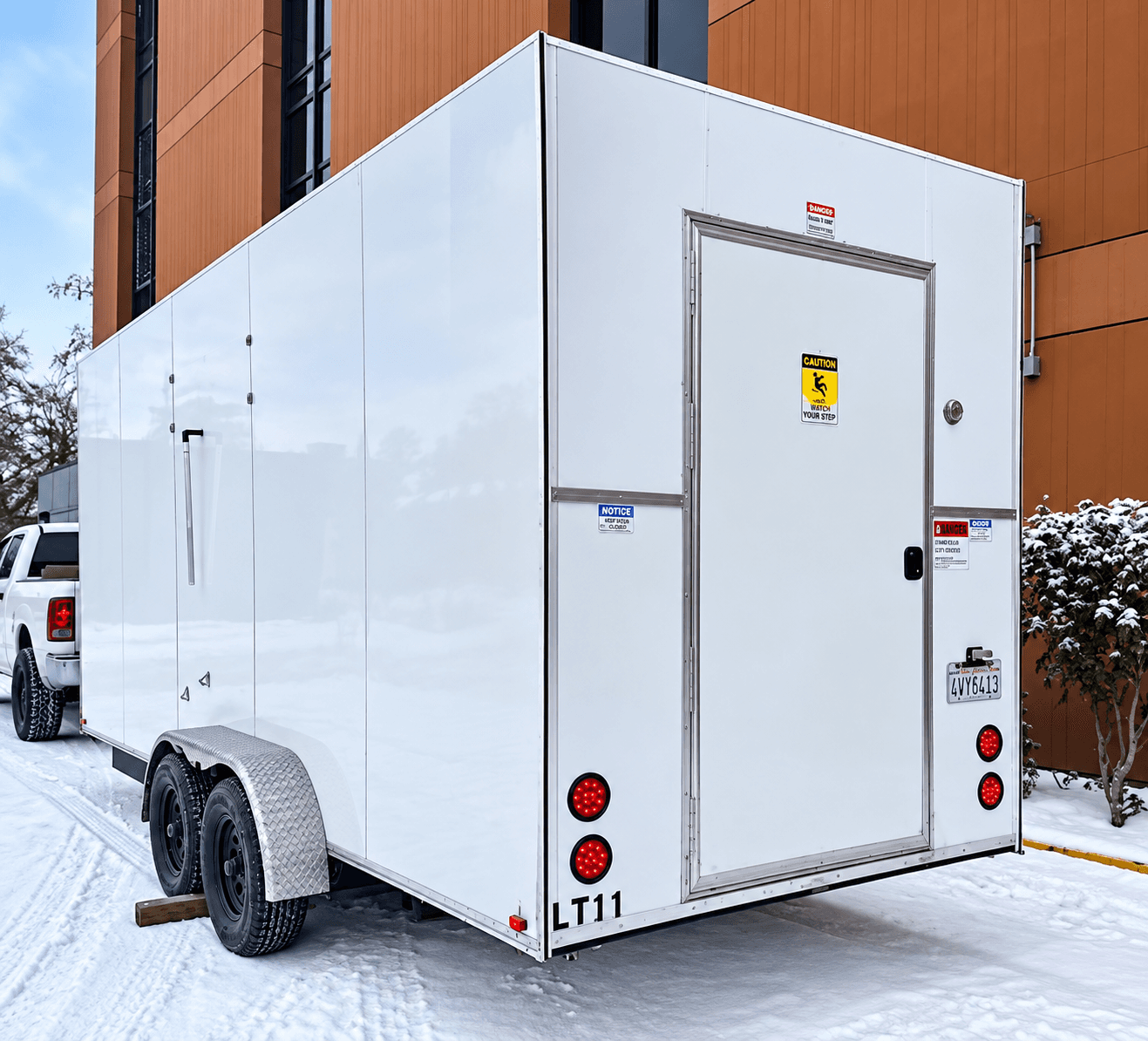
Compare the equipment
These published examples describe named company units. The supplied equipment, configuration and availability are confirmed for your project address.
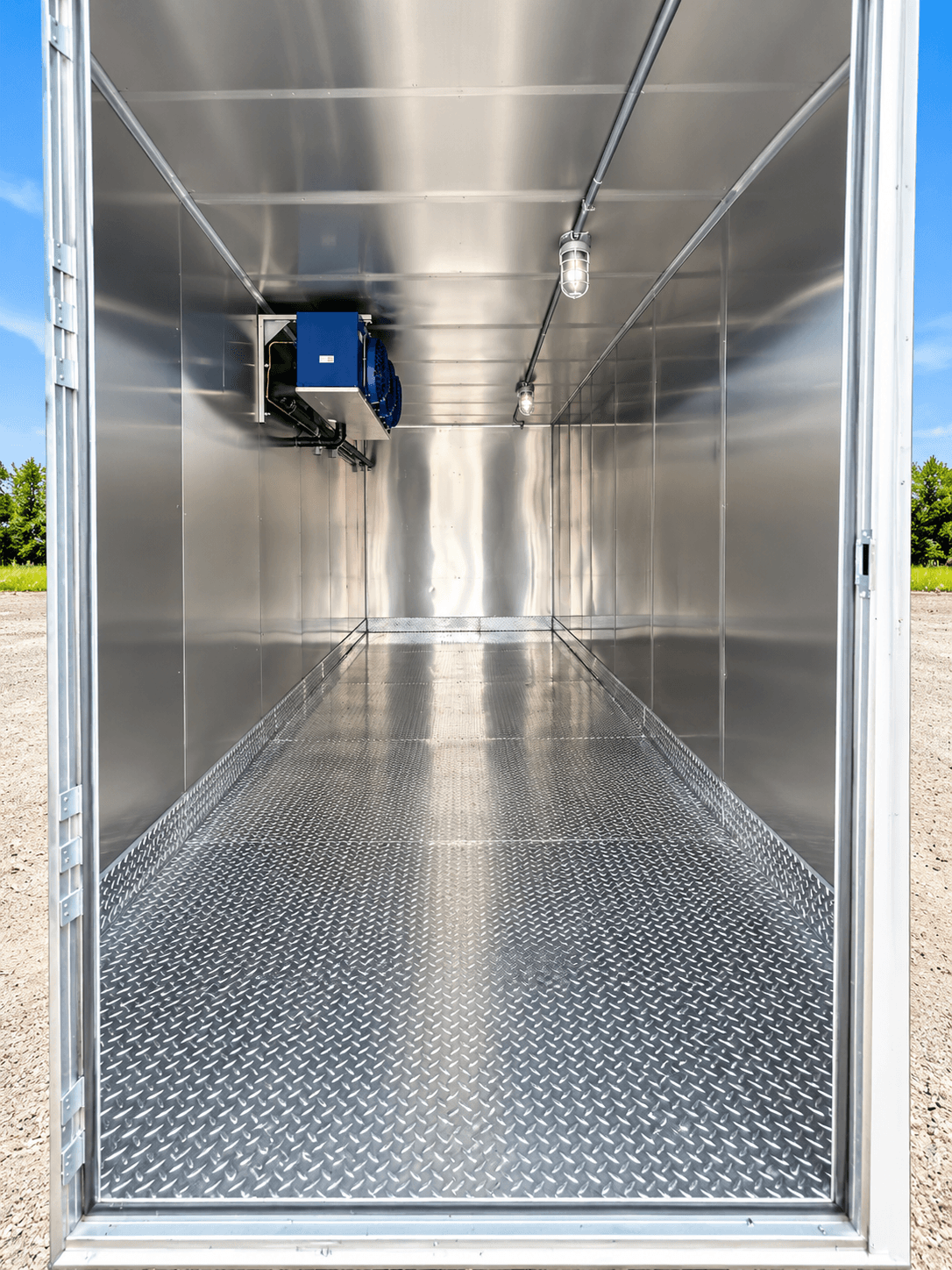
Listed refrigeration trailer equipment: condensing unit, amps panel, lighting.
Equipment records reviewed October 19, 2026. Temperature labels are inventory labels, not verified operating ranges. Nominal length is a model label, not a measure of usable space or site footprint.
Renting a refrigeration container in Houston gives a grocery distributor somewhere to put chilled and frozen stock while a failed compressor, door or walk-in is repaired. The same equipment can be rented for a few days or leased for several months, depending on how long the permanent storage will be out of service. Cold storage is the usual starting point, and the same team can discuss a mobile kitchen rental or a dishwashing trailer lease if the interruption is wider.
Trailers for rent and trailer leasing cover emergency, short-term and long-term needs, from portable walk-in coolers to outdoor walk-in refrigeration for commercial sites. Commercial kitchens, care facilities, school districts and industrial food operations can start an emergency rental request at any hour, since a person answers inquiries 24/7. A site in League City, Conroe and Beaumont follows the same steps as one in Houston: describe the stock, give the address and dates, and compare a short-term rental with a longer lease in the quote.
The State Fair of Texas in Dallas says on its own site that it recorded more than 2.5 million people in attendance for its 2022 exposition, and the same 2022 ranking lists the Houston Livestock Show and Rodeo at more than 2.4 million. Food producers in Highland Park, University Park and Mesquite can ask about leasing a refrigerated container for seasonal stock or a temporary overflow. Stadium concessions in Garland and venues in Irving may need temporary facilities for a season, so a trailer lease can fit better than repeated short rentals. Temporary kitchen trailer rentals, a dishwashing trailer and refrigerated trailers for rent can be quoted together as temporary facilities for a multi-day event. Outdoor walk-in refrigeration needs level ground and power nearby, so a long-term lease starts with a site conversation. The context above comes from public sources and does not describe a completed job; availability and delivery are confirmed in the quote.
NPR reported on February 17, 2021, during Winter Storm Uri, that nearly three million Texas homes and businesses were still without power, ERCOT had ordered load shedding of about 14,000 megawatts, and rolling outages forced Fort Worth to extend a boil-water notice for roughly 212,000 residents. Caterers in River Oaks and Sansom Park often need cold storage rental for a single event, while a commissary in Haltom City may need a longer lease through a busy season. Schools and care facilities in Arlington and Forest Hill can ask for an emergency walk-in cooler or freezer rental when a compressor fails. A failed commercial walk-in freezer after an outage is an emergency call, and walk-in coolers, walk-in freezers and refrigerated trailers are the first rentals discussed. A short-term emergency rental can become a long-term lease at the same address, as long as the quote says so. When cooking and dish washing stop together, a mobile kitchen, a dishwashing trailer and portable refrigeration can be one request. Mobile kitchens, dishwashing trailers and refrigerated trailers for rent can be quoted together as temporary facilities. A mobile dishwashing trailer and a mobile kitchen trailer are often requested together, with a refrigerated trailer for the stock. These are public facts about the area, not a record of company jobs; equipment, availability and delivery are confirmed in the quote.
A Texas Health Harris Methodist hospital in Fort Worth filed plans for a $38.5 million expansion of its central utility plant running from October 2026 to February 2029, and TxDOT reports a $312 million expansion of I-27 to six lanes between Amarillo and Canyon on track for completion in 2028. Renovation projects in Grand Prairie, Kennedale and Euless can use a rented refrigeration trailer while permanent coolers are rebuilt, with a mobile kitchen trailer added if the cooking line is closed too. Facility teams in Lewisville can lease portable refrigeration as temporary facilities while a permanent cold room is rebuilt. Trailer leasing covers the length of a project: a refrigerated trailer for supplies and a refrigeration container for bulk stock, short-term or long-term. Refrigeration is an emergency need: every call about a failed commercial walk-in freezer or refrigeration unit is an emergency call. A dishwashing trailer lease can be added to the same quote when returned dishes also need washing. Dishwashing trailer rentals and warewashing capacity are quoted beside the kitchen and refrigeration when the whole food-service area is affected. This is published public context, not company work; each request is quoted for its own address and dates. Walk-in coolers, walk-in freezers and refrigerated trailers cover most requests. Cold storage rental is often the first step, since frozen and chilled stock cannot wait for a repair. Commercial refrigeration trailers and cooler or freezer rentals are the core of the service.
Emergency refrigeration can be arranged as a refrigerated trailer, a refrigeration container or a portable walk-in cooler, depending on the stock and the site. A commercial walk-in freezer failure in Houston is an emergency call, and onsite temporary refrigeration is how most such calls begin. Portable refrigeration is not a permanent fix; it is a set of temporary facilities for the weeks between a failure and a repaired walk-in freezer. Emergency refrigeration for commercial kitchens often starts with a portable refrigerated trailer and ends with a longer lease if repairs take time.
A mobile dishwashing trailer and a mobile kitchen trailer are often requested together, with a refrigerated trailer for the stock. Dishwashing and kitchen outages often arrive together, so dishwashing trailer rentals and a mobile kitchen for rent are quoted beside emergency refrigeration. Kitchen, dishwashing and refrigeration rentals are separate equipment, and each can be rented short-term or leased long-term. Emergency refrigeration rental covers walk-in coolers, walk-in freezers and refrigerated trailers for commercial kitchens, warehouses and plants.
A mobile, modular or portable refrigeration setup in Houston is chosen to match the walk-in cooler or freezer that failed. Portable refrigerated trailers, refrigeration containers and outdoor walk-in refrigeration units can all be discussed for the same emergency. Emergency refrigeration in Houston can be rented for a few days or leased long-term, depending on how long the commercial walk-in is down. A portable refrigerated trailer suits most emergency calls, while a refrigeration container fits a longer, more stationary need.
Emergency refrigeration, onsite and temporary, is meant to bridge the gap until the commercial walk-in freezer is repaired or replaced. When cooking and dish washing stop with the walk-in freezer, a mobile kitchen, a dishwashing trailer and portable refrigeration can be one request. Onsite temporary facilities can include portable refrigeration, a mobile kitchen trailer and, if dishes are affected, a dishwashing trailer. Modular and portable cold storage can be discussed in stages when a site needs more space than one refrigerated trailer provides.
Dishwashing trailer rentals and kitchen trailer rentals can be quoted alongside refrigerated trailers for rent when the whole kitchen is down. Outdoor walk-in refrigeration can be set up beside the building as temporary facilities, so staff keep working while the permanent walk-in cooler or walk-in freezer is repaired. A mobile kitchen trailer for rent can sit beside onsite refrigeration, so cooking and cold storage are planned together. Short-term or long-term, the same refrigerated trailer rental starts from the address, the stock and the dates.
Emergency refrigeration rental, trailer rentals and trailer leasing are all handled through one inquiry, so one call can cover every option. Mobile kitchens, dishwashing trailers and refrigerated trailers for rent can be quoted together as temporary facilities.
Houston Food Bank describes warehouse distribution separately from its Keegan Kitchen, which prepares, cooks and packages meals. Its published facilities overview makes those two food roles clear. For a comparable interruption, a refrigerated store can hold ingredients awaiting production or products waiting for onward distribution; a lost cooking area has a different equipment requirement.
A walk-in cooler or freezer failure can displace the first load while supplier orders continue. Temporary refrigeration needs to support the largest overlap, with chilled and frozen conditions separated. For a West University Place restaurant, the accessible stock for the next service can differ from unopened reserves for later meals. Compare that working pattern with the actual doorway, interior and agreed fittings.
LT2 in the 20ft Refrigerated Trailer guide lists a condensing unit, amps panel and lighting, with 220V single-phase power at 40–60A. Its -5°F inventory label is not a tested operating range. Exact connector, usable capacity and product suitability require confirmation for the offered unit. A container has its own configuration and placement requirements, even when its nominal length matches a trailer.
Houston First’s April 1, 2026 update described GRB South as an expansion connected to the George R. Brown Convention Center, including ground-level restaurant and retail space with a May 2028 opening target. That is a published construction program. A nearby hospitality or event operation needs its own receiving and cold-storage plan for the work that actually affects its property.
The University of Houston’s August 26, 2026 dining update described scheduled meal-period service at Moody Dining Commons, with preparation breaks, alongside continuous dining at Cougar Woods. That dated comparison shows why stock access cannot be planned from one campus-wide mealtime. For a comparable refurbishment, refrigeration may need to remain accessible between services as ingredients arrive and staff prepare the next menu.
K27 in the 40ft Bulk Kitchen Trailer guide lists a double-stack convection oven, deep fryer, tilting skillet, griddle/oven and six-burner range/oven combinations, sinks, prep table, reach-in refrigerator and freezer and a walk-in cooler. Its electrical entry is 220V single-phase at 200–220A. Those are one named cooking configuration’s features; the included cooler does not establish space for every delivery or replace a stock-layout comparison.
D4 in the 24ft Dishwashing Trailer guide lists a low-temperature push-through dishwasher, soil tray, scraping table, three-compartment sink and handwashing sink, with 220V single-phase power at 150A. Dishwashing trailers handle returned reusable service items separately from ingredient storage. Water, drainage and clean-item collection need their own positions within the working layout.
For a Hunters Creek Village refurbishment, identify which storage and preparation functions remain inside during each stage. A Houston preparation site supporting service in Pearland or Pasadena also needs a distinct food destination at each address. Shared menus do not establish a combined stock quantity, utility supply or equipment period.
Food production teams in Houston or Spring Valley Village, Texas, may need temporary equipment while incoming ingredients continue to arrive during repairs to their normal holding area. Identify who checks product quantities on arrival, resolves discrepancies and updates stock locations when an order moves to another working area.
Houston First’s October 2026 construction update lists Polk Street closed to vehicles and pedestrians between Chartres and Jackson streets. It also records the Avenida South Garage demolition as completed in July and identifies other nearby work. These changes make current receiving instructions important for a convention-district operation; a visitor-parking map does not authorize a refrigeration delivery or an equipment standing position.
For an event within Houston’s special-event process, the City’s application asks for a logistical-layout map. It separates setup parking, production and vendor vehicles, and attendee parking, then records utilities such as electricity and water. The cold-storage footprint, service connection and staff route should be coordinated with those distinct uses instead of taking a guest parking space as an assumed installation area. Dishwashing returns and clean-item collection need their own route when those functions share the event site.
A Sugar Land storage property and a Houston preparation site each need their own receiving details. NOAA’s Texas climate summary also describes hot summers and severe-weather contexts including heavy precipitation. The intended season and actual ground drainage belong in an outdoor refrigeration review, alongside a usable power supply and access throughout the period. Site conditions and the assigned unit’s requirements govern the final arrangement.
A person answers rental inquiries 24/7 after a commercial refrigeration failure. Identify the products displaced now and any permanent store still usable. The selected equipment and actual property determine the availability, supply and transport arrangements offered; the urgent first transfer and the last return indoors both belong in the intended period. Setup and delivery is shown as a starting amount only; transport for the actual address, collection and other trips are confirmed in the quote.
A Houston project quote sets the full rental term, transport, collection, site preparation and connection responsibilities. Include extension terms if repair dates change, then request availability and a quote for the actual equipment, receiving address and working stock load.
Before you book
Identify the goods requiring an alternative now and deliveries due before permanent refrigeration returns. Separate required conditions and handling needs, with packaging and access details. Comparing the offered configuration with that full next-service load gives a more useful capacity discussion than the first transfer alone.
Normal meals may return before permanent storage is ready, increasing the quantity held outside. Include that later peak and the staff route available then. A longer arrangement should be assessed against the busiest operating stage rather than simply extending the dates of a smaller initial reduced-service setup.
The permanent room may need testing and operational handover after repair or building completion, with goods returning in stages. Include those tasks when discussing the dates and confirm extensions and collection in the quote. This keeps the rental connected to staff readiness rather than one early estimated finish.
Both short-term rentals and longer leases of a refrigeration container can be discussed for Houston. Send the address, the product and its temperature, and your dates. Delivery timing, availability and the rental period are confirmed once the details are reviewed.
Portable refrigerated trailers, refrigeration containers, outdoor walk-in refrigeration, and portable walk-in coolers or walk-in freezers can be discussed for onsite, short-term or long-term use. Refrigeration containers are often chosen for long-term storage, while refrigerated trailers are chosen for short-term emergencies; both can be rented. A dishwashing trailer lease can be added to the same quote when returned dishes also need washing. Every call about a failed commercial walk-in freezer or refrigeration unit is an emergency call, and a person answers rental inquiries 24/7. Equipment, availability and delivery timing are confirmed in the quote.
These public references inform the planning examples; equipment availability and delivery arrangements are confirmed for your address.
Temporary refrigeration, kitchens and dishwashing can support many kinds of food-service operations. Each setting below starts with its own schedule, stock and site questions, and every project is reviewed individually.
Hotels, restaurants and resorts can plan temporary refrigeration around breakfast, banquet and dinner service when a walk-in cooler fails or a kitchen is refurbished.
Hospital, nursing home and care-facility kitchens can describe meal schedules, delivery times and displaced stock so temporary storage follows the food-service routine.
Municipal, county and public-building food-service teams can outline receiving arrangements, responsible contacts and project dates before a quote is prepared.
Dining facility managers can explain the products displaced, the receiving arrangements and the proposed period, then review availability and terms with our team.
Schools, colleges and universities can plan around term dates, serving windows and campus kitchen renovations so meal service can continue during repairs or construction.
Plant cafeterias and employee dining areas can describe shift patterns and staged building work so temporary cold storage can be reviewed against the working schedule.
Caterers and venues can plan preparation windows, event days and overflow ingredients, and describe how stock moves between storage, the kitchen and service.
Producers, wholesalers and distributors can describe loading, staging and storage needs when a cooler breaks down or demand temporarily exceeds capacity.
These examples describe planning situations. Equipment, availability and terms are confirmed in a project quote.
Cold storage is only one part of a project. These are the questions we work through with you before anything is booked.
Start with refrigerated containers and refrigeration trailers, then add a temporary kitchen or dishwashing trailer when the project needs one, all in a single conversation.
Access, utilities and the intended position are reviewed before delivery is arranged, so the equipment is matched to your site rather than the other way around.
Whether a walk-in cooler failed this morning or a renovation is months away, describe the real situation and plan around the stock, dates and people involved.
Planning guides cover all 50 states and more than 700 cities. Your address is then confirmed for equipment and delivery.
Use the rental calculator for a rate-range estimate and setup amount, then request a project quote that confirms availability, transport and the rental period.