BXRT20–1Refrigerated trailer
- Nominal length
- 20ft
- Listed electrical supply
- 220V · single-phase · 40–60A
- Inventory temperature label
- 32°F
Temporary cold storage in Laredo, Texas
Laredo refrigeration rentals give commercial and industrial teams a way to discuss emergency space after a walk-in breakdown and planned storage during facility improvements. Worldwide Refrigerated Container Rental Facilities reviews cooler and freezer requirements with related kitchen and dishwashing inquiries. Describe the refrigerated products, receiving cycle and work stages before comparing short rental cover with a longer lease. Equipment, connections and delivery coordination are confirmed for the actual property and dates. Send your Laredo address and operational brief to request availability and a written quotation for the complete project.
Emergency cooler or freezer failure in Laredo? A person answers rental inquiries 24/7. Availability and delivery timing are confirmed in your quote.
Plan your rental budget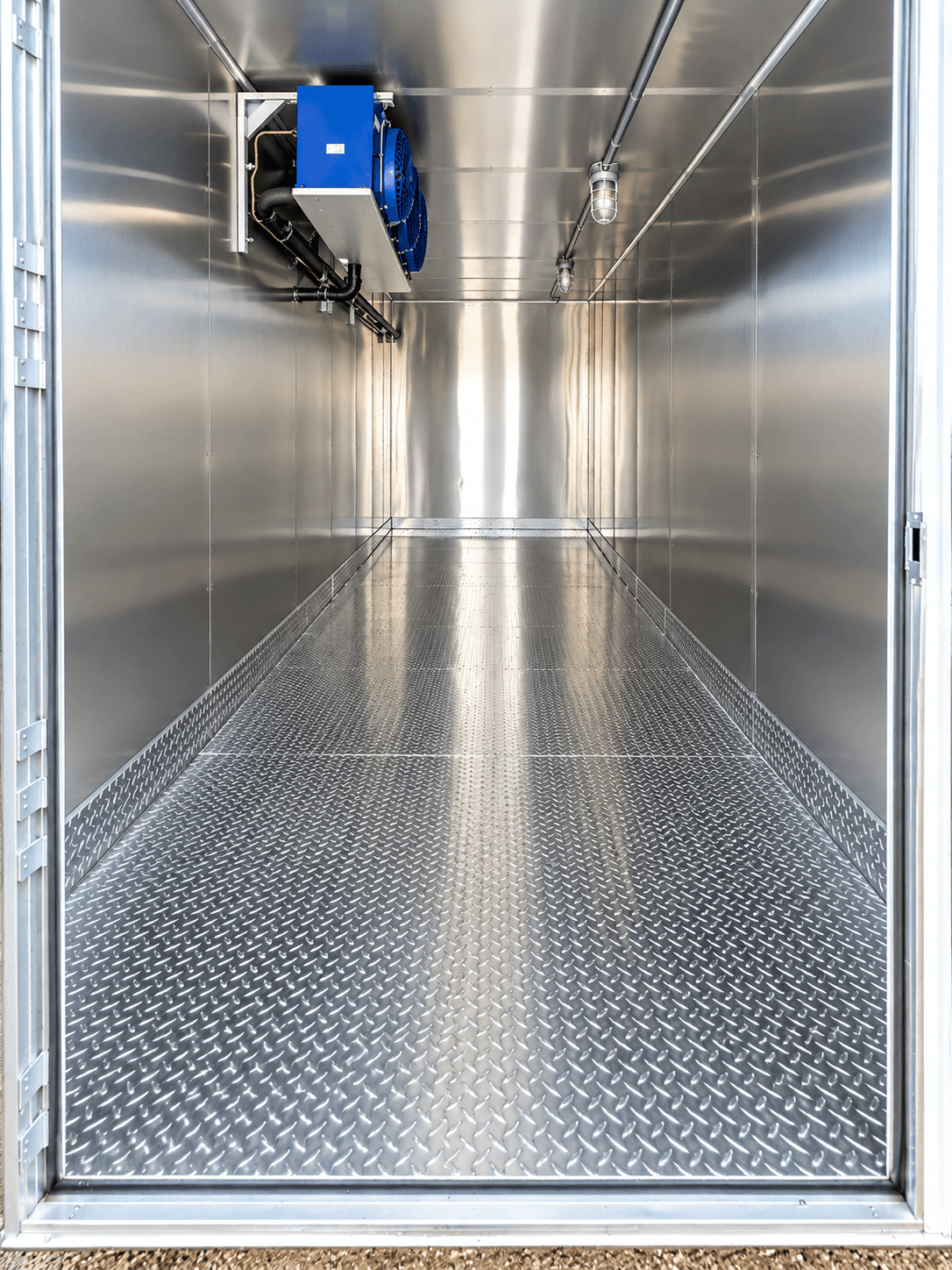
Compare the equipment
These published examples describe named company units. The supplied equipment, configuration and availability are confirmed for your project address.
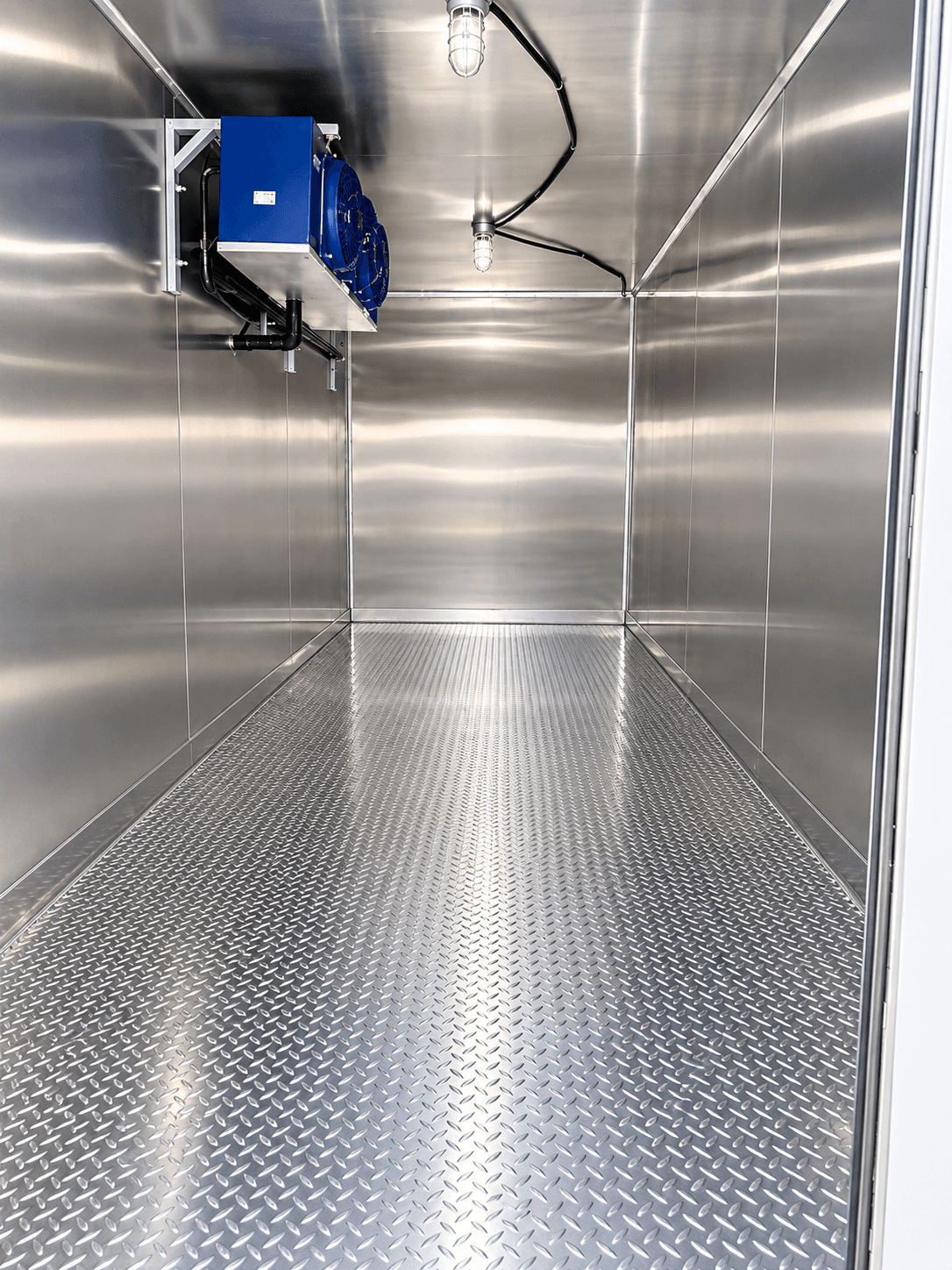
Listed refrigeration trailer equipment: condensing unit, amps panel, lighting.
Equipment records reviewed October 19, 2026. Temperature labels are inventory labels, not verified operating ranges. Nominal length is a model label, not a measure of usable space or site footprint.
A refrigeration fault can occur while one supplier order is being used and another is due. Describe those loads separately, including what remains in usable permanent stores. Texas’s NOAA summary records drought and extreme weather. The property’s own safety procedures govern the actual interruption; the rental request should identify refrigerated products that still need accommodation and the operating activity retained.
South Texas Food Bank’s facility history describes its 2019 relocation with food holding, processing and repacking space, walk-in coolers and freezers, and an industrial kitchen. These are distinct roles within a food operation. For a comparable receiving interruption, identify consignments waiting intact, goods being repacked and ingredients moving to cooking; a temporary cold store replaces only the holding function selected for it.
BXRT20–1 in the 20ft Refrigerated Trailer guide carries a 32°F inventory label and lists a condensing unit, amps panel and lighting. Its electrical entry is 220V single-phase at 40–60A. The label does not establish a temperature range, and the unit’s usable capacity and exact electrical connector need confirmation for the proposed stock.
The 12ft Refrigerated Trailer guide identifies another catalog model whose detailed configuration remains unconfirmed because its length descriptions conflict. BXRT20–1’s power and temperature label cannot be assigned to it. Compare the offered unit with package sizes, required conditions and the space for staff to retrieve incoming goods.
Laredo’s January–March 2025 capital-project update includes airport terminal improvements, new fire-station work and bridge-related projects. It is a dated city status register, not proof of present site conditions or a company rental relationship. Public project entries provide local context without establishing food-service equipment demand.
TAMIU’s 2026–27 academic catalog distinguishes Dusty’s Diner buffet, the Food Court and event catering. These formats can involve different receiving and collection patterns. For a comparable commercial project, distinguish ingredients repeatedly retrieved for daily cooking from orders assembled for one event; a public program or construction date does not establish when the permanent store becomes usable.
Read the Eagle Pass and Edinburg rental guides for a project in either city. Keep the Laredo receiving address, required product conditions and intended equipment position attached to its own request, even when the same facilities team coordinates work across the region.
During government building works in Laredo or Los Altos, Texas, a food receiving entrance may change while employees continue using the property for their ordinary working day. Record who can approve the equipment position and who manages food receiving, keeping their responsibilities visible in the written rental inquiry.
The same quarterly register identifies Plaza Theater renovation and Southern Hotel rehabilitation among its building work. These public adaptation examples distinguish existing-building renewal from a new shell. A private refrigeration request should explain its own room closures and working routes, without borrowing the public projects’ scope or assuming a comparable completion date.
Mobile kitchens address production when the cooking room also closes. K1 in the 24ft Mobile Kitchen Trailer guide lists a single-stack convection oven, griddle/oven combination, six-burner range/oven combination, deep fryers, sinks, prep table and a reach-in refrigerator and freezer. These working stores are part of the named cooking example; their presence does not establish capacity for an entire incoming consignment.
K1 lists 220V single-phase power at 200A, compared with BXRT20–1’s 40–60A. Review the electrical connections separately, alongside the cooking unit’s water and drainage. Allocate ingredient retrieval so incoming cases do not block staff carrying smaller quantities to preparation during service.
Dishwashing trailers handle reusable pans and service items after meals. Give used-item receiving and clean-item collection separate routes before comparing DTC3 in the 30ft Conveyor Dishwashing Trailer guide. This named high-temperature conveyor example includes a soil tray, prep table, racks, sinks, water heater and mop sink. Its equipment list supplies no documented racks-per-hour capacity.
DTC3 lists 220V three-phase power at 200A. That phase differs from both BXRT20–1 and K1; review each supply without treating a shared voltage as compatibility. The washing unit also needs its own water, drainage and return routes, distinct from the space for ingredients awaiting use.
Read the McAllen rental guide for a project there. For Rio Bravo, Los Corralitos or Los Altos, use the actual working address and receiving entrance. Keep each property’s stock load and required conditions separate rather than let a regional office address stand in for the place where food must be held.
Use the rental calculator as a starting-cost reference, then compare the selected configuration, term, transport, collection and extension provisions. Include goods still held temporarily while permanent storage resumes receiving. Send the Laredo stock groups, required conditions, working address and intended dates to request availability and a written project quote.
Before you book
Describe the refrigerated products already present and the incoming packages together, with dates and retrieval needs. That overlap may be more useful to the equipment discussion than the size of either order on its own.
Keep each delivery address, receiving contact and access plan distinct. A cooler or freezer proposal for one property does not establish suitability or transport terms for another.
They are dated local construction context only. Company involvement and equipment demand have not been established. Your enquiry is assessed separately using its stock, site, dates and proposed scope.
These public references inform the planning examples; equipment availability and delivery arrangements are confirmed for your address.
Temporary refrigeration, kitchens and dishwashing can support many kinds of food-service operations. Each setting below starts with its own schedule, stock and site questions, and every project is reviewed individually.
Hotels, restaurants and resorts can plan temporary refrigeration around breakfast, banquet and dinner service when a walk-in cooler fails or a kitchen is refurbished.
Hospital, nursing home and care-facility kitchens can describe meal schedules, delivery times and displaced stock so temporary storage follows the food-service routine.
Municipal, county and public-building food-service teams can outline receiving arrangements, responsible contacts and project dates before a quote is prepared.
Dining facility managers can explain the products displaced, the receiving arrangements and the proposed period, then review availability and terms with our team.
Schools, colleges and universities can plan around term dates, serving windows and campus kitchen renovations so meal service can continue during repairs or construction.
Plant cafeterias and employee dining areas can describe shift patterns and staged building work so temporary cold storage can be reviewed against the working schedule.
Caterers and venues can plan preparation windows, event days and overflow ingredients, and describe how stock moves between storage, the kitchen and service.
Producers, wholesalers and distributors can describe loading, staging and storage needs when a cooler breaks down or demand temporarily exceeds capacity.
These examples describe planning situations. Equipment, availability and terms are confirmed in a project quote.
Cold storage is only one part of a project. These are the questions we work through with you before anything is booked.
Start with refrigerated containers and refrigeration trailers, then add a temporary kitchen or dishwashing trailer when the project needs one, all in a single conversation.
Access, utilities and the intended position are reviewed before delivery is arranged, so the equipment is matched to your site rather than the other way around.
Whether a walk-in cooler failed this morning or a renovation is months away, describe the real situation and plan around the stock, dates and people involved.
Planning guides cover all 50 states and more than 700 cities. Your address is then confirmed for equipment and delivery.
Use the rental calculator for a rate-range estimate and setup amount, then request a project quote that confirms availability, transport and the rental period.