BXRT20–1Refrigerated trailer
- Nominal length
- 20ft
- Listed electrical supply
- 220V · single-phase · 40–60A
- Inventory temperature label
- 32°F
Temporary cold storage in Georgetown, Texas
Georgetown cold storage rentals can be considered when a commercial walk-in cooler fails or planned work takes a freezer out of service. Refrigerated containers and trailers may offer different operating arrangements, with kitchen and dishwashing needs reviewed where the wider food-service process is affected. Worldwide Refrigerated Container Rental Facilities handles short rental requests and longer leasing discussions for commercial restaurants, venues, institutions and industrial operators. Explain the products, the largest quantity held and the period without permanent storage. Provide the actual address for delivery coordination, then request availability and a quote for your Georgetown project.
Emergency cooler or freezer failure in Georgetown? A person answers rental inquiries 24/7. Availability and delivery timing are confirmed in your quote.
Plan your rental budget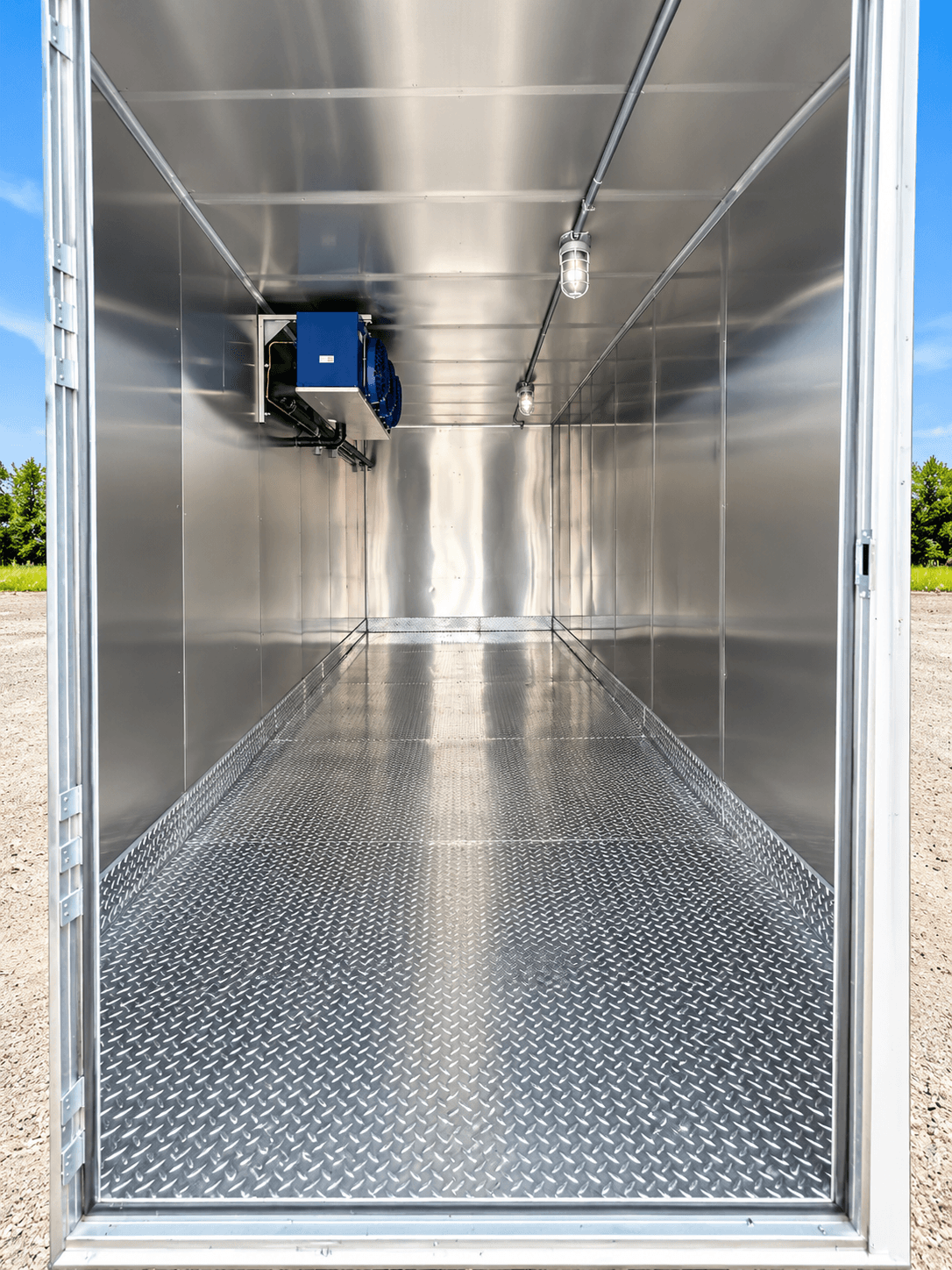
Compare the equipment
These published examples describe named company units. The supplied equipment, configuration and availability are confirmed for your project address.
Listed refrigeration trailer equipment: condensing unit, amps panel, lighting.
Equipment records reviewed October 19, 2026. Temperature labels are inventory labels, not verified operating ranges. Nominal length is a model label, not a measure of usable space or site footprint.
Emergency refrigeration container rentals in Georgetown are used for breakdowns first, but the same equipment can be leased for renovations, events and seasonal storage. Emergency rentals and planned leases are quoted from the same details: the product, the temperature it must hold, the address and the dates. Kitchen outages often bring more than one need: a mobile kitchen for rent for cooking, a dishwashing trailer lease for warewashing and refrigerated storage for the ingredients.
Portable, mobile and modular refrigeration can be arranged onsite as temporary facilities for commercial kitchens, warehouses and food plants, for short-term or long-term use. Tell the team what must stay cold and for how long; that decides whether a rental or a lease fits. Portable refrigerated units can stand beside a building as extra cold storage for an event, a renovation or a seasonal peak. Commercial refrigeration trailers and cooler or freezer rentals are the core of the service. Cold storage rental is often the first step, since frozen and chilled stock cannot wait for a repair. Food-service managers, facility teams and plant supervisors can report a refrigeration failure at any time, since rental inquiries are answered by a person 24/7. Facilities in Waco, New Braunfels, College Station and San Antonio often ask the same questions as Georgetown operators: how long the rental will last, whether a lease makes sense and what the site needs for power and truck access.
The State Fair of Texas in Dallas says on its own site that it recorded more than 2.5 million people in attendance for its 2022 exposition, and the same 2022 ranking lists the Houston Livestock Show and Rodeo at more than 2.4 million. Festivals and sports events in Highland Park, University Park and Mesquite sometimes rent portable cold storage for a weekend, with a mobile kitchen trailer considered for larger menus. Food producers in Garland and Irving can ask about trailers for rent when production outgrows permanent cold storage for a few weeks. Refrigerated trailers for rent and portable walk-in coolers hold drinks, produce and prepared food at crowded events, and a refrigeration container suits a longer festival run. Modular, mobile or portable, the equipment is chosen to fit the work that continues at the site. This is published public context, not company work; each request is quoted for its own address and dates.

NPR reported on February 17, 2021, during Winter Storm Uri, that nearly three million Texas homes and businesses were still without power, ERCOT had ordered load shedding of about 14,000 megawatts, and rolling outages forced Fort Worth to extend a boil-water notice for roughly 212,000 residents. A produce packer in River Oaks, a meat processor in Sansom Park or a convenience-store chain in Haltom City may need cold storage the same week a compressor fails, so the inquiry starts with product and temperature. A restaurant in Arlington or a food distributor in Forest Hill can call about emergency refrigeration rental as soon as a walk-in stops holding temperature. A failed commercial walk-in freezer after an outage is an emergency call, and walk-in coolers, walk-in freezers and refrigerated trailers are the first rentals discussed. Portable refrigerated trailers, refrigeration containers and outdoor walk-in refrigeration units can all be discussed for the same job. A dishwashing trailer lease can be added to the same quote when returned dishes also need washing. A mobile dishwashing trailer and a mobile kitchen trailer are often requested together, with a refrigerated trailer for the stock. Dishwashing trailer rentals and warewashing capacity are quoted beside the kitchen and refrigeration when the whole food-service area is affected. The context above comes from public sources and does not describe a completed job; availability and delivery are confirmed in the quote.
A Texas Health Harris Methodist hospital in Fort Worth filed plans for a $38.5 million expansion of its central utility plant running from October 2026 to February 2029, and TxDOT reports a $312 million expansion of I-27 to six lanes between Amarillo and Canyon on track for completion in 2028. Construction crews and facility managers near Grand Prairie, Kennedale and Euless may lease refrigerated containers to hold food for a work site or a temporary dining area. Facility teams in Lewisville can lease portable refrigeration as temporary facilities while a permanent cold room is rebuilt. On long projects, contractors compare a refrigerated trailer lease with a refrigeration container for bulk crew supplies. A walk-in cooler and a walk-in freezer can be rented together when a commercial site needs both. Mobile kitchens, dishwashing trailers and refrigerated trailers for rent can be quoted together as temporary facilities. These are public facts about the area, not a record of company jobs; equipment, availability and delivery are confirmed in the quote.
Short-term or long-term, trailers for rent in Georgetown are quoted for the address, the stock and the dates. Trailer rentals, refrigerated trailers for rent and trailer leasing are all discussed with the address and the dates in hand. For Georgetown kitchens, plants and warehouses, trailer leasing and trailer rentals are two ways to get the same portable refrigerated storage. Emergency refrigeration can be arranged as a refrigerated trailer, a refrigeration container or a portable walk-in cooler, depending on the stock and the site.
A commercial walk-in freezer failure in Georgetown is an emergency call, and onsite temporary refrigeration is how most such calls begin. Emergency refrigeration for commercial kitchens often starts with a portable refrigerated trailer and ends with a longer lease if repairs take time. In Georgetown, emergency refrigeration usually means a refrigerated trailer, a refrigeration container or a portable walk-in cooler matched to the stock. A dishwashing trailer lease can be added to the same quote when returned dishes also need washing.
A dishwashing trailer, a mobile kitchen trailer and a refrigerated trailer for rent can each be short-term or long-term, depending on the repair. Onsite temporary facilities can include portable refrigeration, a mobile kitchen trailer and, if dishes are affected, a dishwashing trailer. Short-term or long-term, the same refrigerated trailer rental starts from the address, the stock and the dates. Outdoor walk-in refrigeration can be set up beside the building as temporary facilities, so staff keep working while the permanent walk-in cooler or walk-in freezer is repaired.
A mobile kitchen trailer for rent can sit beside onsite refrigeration, so cooking and cold storage are planned together. Mobile kitchens, dishwashing trailers and refrigerated trailers for rent can be quoted together as temporary facilities. Emergency refrigeration, onsite and temporary, is meant to bridge the gap until the commercial walk-in freezer is repaired or replaced. Kitchen, dishwashing and refrigeration rentals are separate equipment, and each can be rented short-term or leased long-term.
Emergency refrigeration rental covers walk-in coolers, walk-in freezers and refrigerated trailers for commercial kitchens, warehouses and plants. Modular, mobile or portable, the equipment is chosen to fit the work that continues at the site. A mobile dishwashing trailer and a mobile kitchen trailer are often requested together, with a refrigerated trailer for the stock. Dishwashing and kitchen outages often arrive together, so dishwashing trailer rentals and a mobile kitchen for rent are quoted beside emergency refrigeration.
Outdoor walk-in refrigeration needs level ground and power nearby, so a long-term lease starts with a site conversation. Refrigeration is an emergency need: every call about a failed commercial walk-in freezer or refrigeration unit is an emergency call.
Texas's 2011 heat and drought and its notably wet May 2015 are described in NOAA's state summary. They provide historical regional context, not a weather report for a Georgetown property. A refrigeration contingency is more useful when it identifies the failed equipment, remaining usable space and people responsible for incoming goods.
For a Round Rock site, explain whether the cooler interruption affects daily ingredients, bulk reserve stock or both. Record supplier deliveries that will overlap while goods are being transferred. The request can then describe the actual temporary cold-storage job instead of relying on a general estimate that overlooks the busiest receiving period.
If the inquiry concerns repairs and phased facility work, compare the plan with the 20ft Refrigerated Container guide, which explains the ground and drainage beneath the unit and after-hours access to the unit.
The Texas licensing department registered Donegal Park improvements in Georgetown on March 19, 2025. The filing describes new park construction elements and lists a September 2025 to February 2026 program. Those are dates in a public project record, not independent confirmation of today's site status, a refrigeration requirement or participation by this rental business.
For comparison, read what nearby cities emphasize. In Austin, the guide covers planning during food-service work; in Killeen, it covers its own planning questions, citing the City of Killeen entry “park-improvement status register”. Each reflects its own property and schedule, so confirm your Georgetown details separately.
For a commercial facility with its own program, identify which construction stage removes usable storage and which permits normal receiving to resume. Keep kitchen commissioning and dishwashing readiness distinct where they affect the same opening. An equipment inquiry needs those operating milestones rather than an assumed rental period copied from a public filing.
Industrial shift patterns in Georgetown or Leander, Texas, can leave employee meal preparation and supplier receiving competing for access during a constrained facilities project. Provide a practical receiving brief covering delivery windows, staff handovers and ingredient movement, rather than treating the workplace as an empty site.
A Jarrell food-service operation could refurbish one room while continuing service from another. Describe the ingredient groups affected at each stage and the staff who retrieve them. A temporary freezer holding reserve goods can perform a different role from a cooler used throughout preparation, so explain the change in access frequency when the work moves.
If the kitchen retains part of its capacity, identify what stays inside and when the transferred stock is needed. Give dishwashing movements their own explanation if the return route changes. These examples illustrate questions for your project team; they do not establish a local customer's history or a standard equipment layout.
Provide entrance and placement photographs, property restrictions and the contact authorized to approve the location. Ask for the actual refrigerated equipment's connection requirements and usable layout. Review the staff path between the unit and the building as well as vehicle arrival, since holding capacity alone does not explain whether daily operation is practical.
A related Leander address requires separate receiving instructions. Tell us how supplier cases reach cold storage, whether access is shared and who can answer questions during the proposed arrival period. Nearby-city geography helps identify the inquiry, but it does not establish a delivery radius, transport price or available time slot.
Send the required conditions, peak load, packaging and expected period with the Georgetown refrigeration inquiry. Explain whether the repaired cooler or freezer will accept everything at once or whether stock returns in stages. The rental end should follow the last transfer you need, with any changed dates confirmed through the project discussion.
Ask the proposal to identify the equipment, rental basis, transport arrangements and any quoted extra charges. Explain related preparation or washing facilities as separate jobs when they are needed. Current rates, configurations and availability are confirmed for the property; a public construction program supplies context rather than commercial equipment terms.
Before you book
Explain when the final goods can return to usable permanent refrigeration. A general contractor milestone may not establish that point, so include the stock-transfer sequence and any expected overlap.
Describe packaging, peak quantities and how often staff retrieve ingredients. Keep cooler and freezer requirements separate, with photographs of the proposed position and the path to the working building.
Yes. Identify kitchen and dishwashing interruptions alongside refrigeration, with the work periods and responsibilities for each. The project review can then consider connected needs without assuming one standard arrangement solves every part of the refurbishment.
The team can discuss a refrigeration container rental or lease for a Georgetown address, from a few days to several months. Useful details are the address, the quantity of stock, the required temperature and the expected dates. The quote confirms the equipment, the delivery timing and the rental terms for your site.
Emergency refrigeration can include portable refrigerated trailers, a refrigeration container, outdoor walk-in refrigeration or a walk-in cooler or walk-in freezer rental. Onsite refrigeration keeps product close to the kitchen door, so a temporary unit can be used the way the permanent walk-in was. A commercial walk-in freezer or refrigeration breakdown is an emergency, so call at any hour; a person answers rental inquiries 24/7, and the quote confirms the equipment and delivery for your address.
These public references inform the planning examples; equipment availability and delivery arrangements are confirmed for your address.
Temporary refrigeration, kitchens and dishwashing can support many kinds of food-service operations. Each setting below starts with its own schedule, stock and site questions, and every project is reviewed individually.
Hotels, restaurants and resorts can plan temporary refrigeration around breakfast, banquet and dinner service when a walk-in cooler fails or a kitchen is refurbished.
Hospital, nursing home and care-facility kitchens can describe meal schedules, delivery times and displaced stock so temporary storage follows the food-service routine.
Municipal, county and public-building food-service teams can outline receiving arrangements, responsible contacts and project dates before a quote is prepared.
Dining facility managers can explain the products displaced, the receiving arrangements and the proposed period, then review availability and terms with our team.
Schools, colleges and universities can plan around term dates, serving windows and campus kitchen renovations so meal service can continue during repairs or construction.
Plant cafeterias and employee dining areas can describe shift patterns and staged building work so temporary cold storage can be reviewed against the working schedule.
Caterers and venues can plan preparation windows, event days and overflow ingredients, and describe how stock moves between storage, the kitchen and service.
Producers, wholesalers and distributors can describe loading, staging and storage needs when a cooler breaks down or demand temporarily exceeds capacity.
These examples describe planning situations. Equipment, availability and terms are confirmed in a project quote.
Cold storage is only one part of a project. These are the questions we work through with you before anything is booked.
Start with refrigerated containers and refrigeration trailers, then add a temporary kitchen or dishwashing trailer when the project needs one, all in a single conversation.
Access, utilities and the intended position are reviewed before delivery is arranged, so the equipment is matched to your site rather than the other way around.
Whether a walk-in cooler failed this morning or a renovation is months away, describe the real situation and plan around the stock, dates and people involved.
Planning guides cover all 50 states and more than 700 cities. Your address is then confirmed for equipment and delivery.
Use the rental calculator for a rate-range estimate and setup amount, then request a project quote that confirms availability, transport and the rental period.