BXRT20–1Refrigerated trailer
- Nominal length
- 20ft
- Listed electrical supply
- 220V · single-phase · 40–60A
- Inventory temperature label
- 32°F
Temporary cold storage in Los Angeles, California
When a walk-in cooler or freezer fails in Los Angeles, the food inside has a limited safe window. Worldwide Refrigerated Container Rental Facilities offers refrigerated containers and trailers for emergency breakdowns and planned renovations at restaurants, institutional kitchens, caterers and distributors, alongside related kitchen and dishwashing inquiries. A person answers rental inquiries 24/7. Short rentals can cover a repair and longer leases can cover a remodel. Send your Los Angeles delivery address, access details, product conditions and dates to discuss equipment, delivery coordination, current availability and a project quote.
Emergency cooler or freezer failure in Los Angeles? A person answers rental inquiries 24/7. Availability and delivery timing are confirmed in your quote.
Plan your rental budget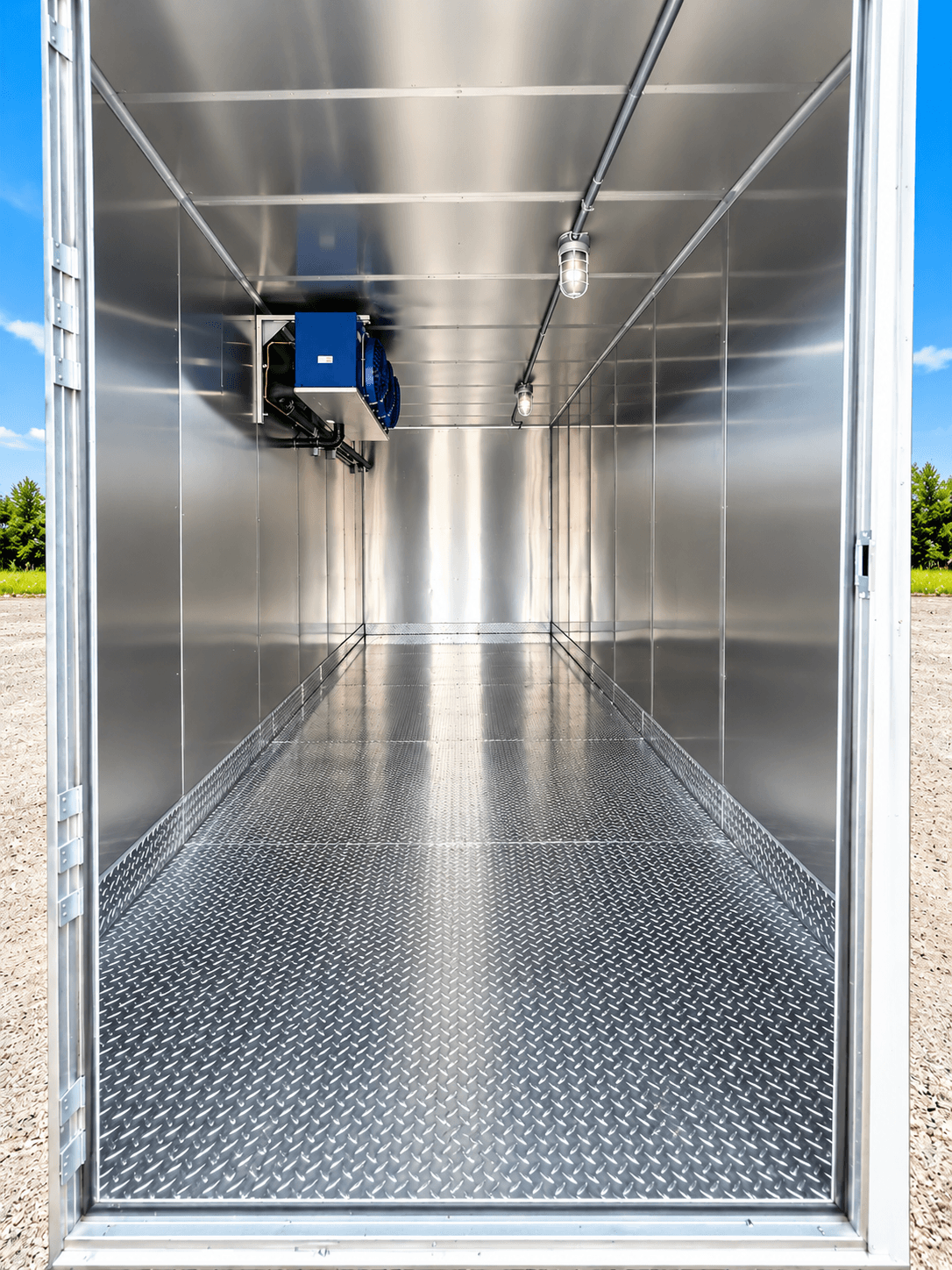
Compare the equipment
These published examples describe named company units. The supplied equipment, configuration and availability are confirmed for your project address.
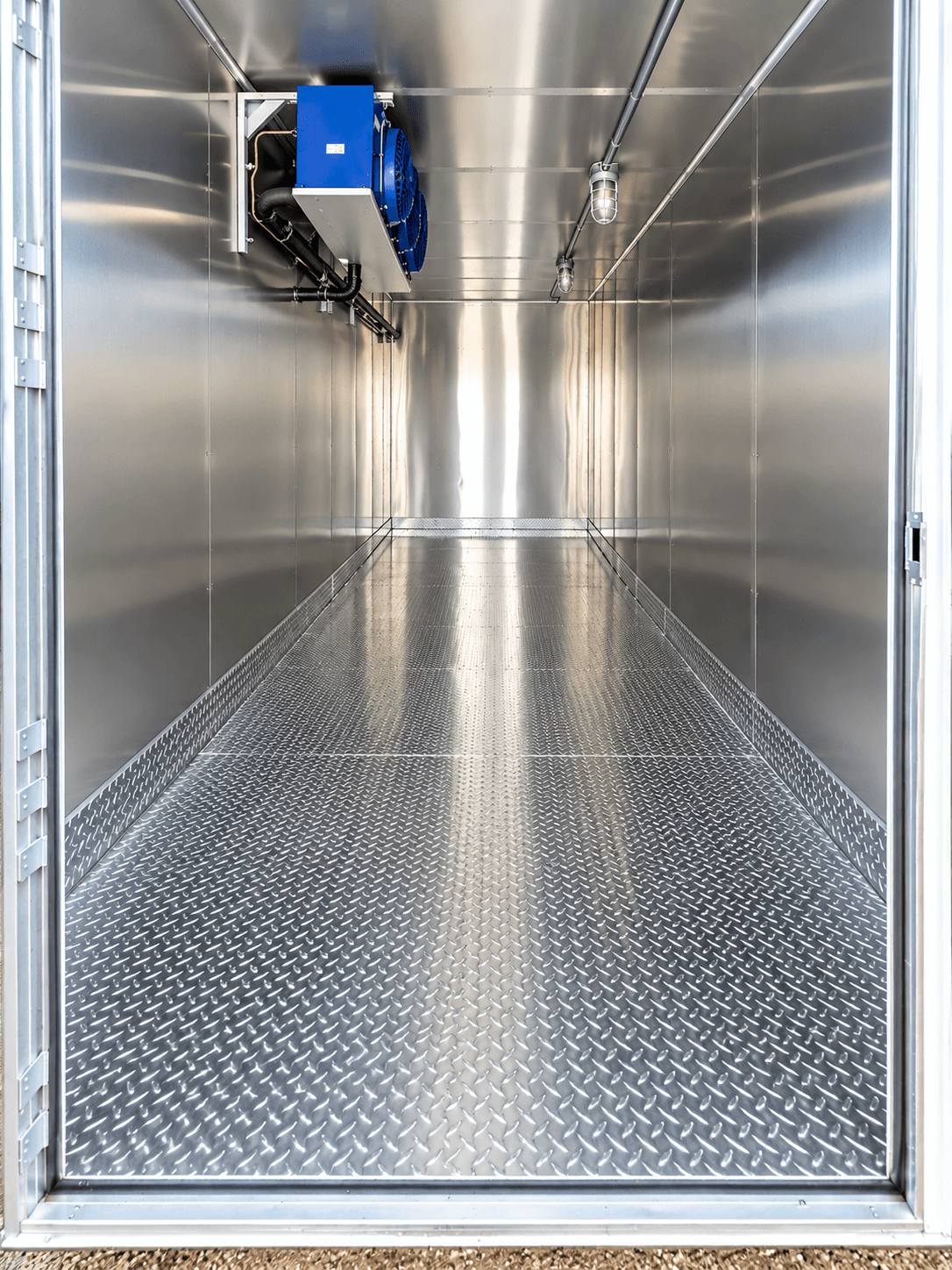
Listed refrigeration trailer equipment: condensing unit, amps panel, lighting.
Equipment records reviewed October 19, 2026. Temperature labels are inventory labels, not verified operating ranges. Nominal length is a model label, not a measure of usable space or site footprint.
If a food-processing plant in Los Angeles loses refrigeration, a refrigeration container for rent can keep products cold while the permanent system is fixed or replaced. Short-term rentals usually fit a repair measured in days, while a longer-term lease fits a remodel, a phased construction project or a seasonal peak. Cold storage is the usual starting point, and the same team can discuss a mobile kitchen rental or a dishwashing trailer lease if the interruption is wider.
Refrigeration is an emergency need: when a commercial walk-in freezer or refrigeration unit breaks down, the call is an emergency, and a person answers rental inquiries 24/7. Hotels, grocers, hospitals and commissaries can reach a person at any hour, because rental inquiries are answered 24/7. Facilities in Glendale, Downey and Pasadena often ask the same questions as Los Angeles operators: how long the rental will last, whether a lease makes sense and what the site needs for power and truck access.
An events-industry report puts Coachella attendance in Indio at about 750,000 for 2023 and the Rose Parade in Pasadena at roughly 250,000 in-person spectators, figures it attributes to other sources. Seasonal growers and packers in San Marino, South Pasadena and La Cañada Flintridge can compare a short-term refrigerated trailer rental with a long-term container lease for harvest and holiday peaks. Food producers in El Monte and Temple City can ask about trailer leasing for seasonal stock or a temporary overflow. Refrigerated trailers for rent and portable walk-in coolers hold drinks, produce and prepared food at crowded events, and a refrigeration container suits a longer festival run. Refrigerated trailers for rent, refrigeration containers for lease and walk-in coolers for short-term use are the three questions most callers start with. Kitchen, dishwashing and refrigeration rentals are separate equipment, and each can be rented short-term or leased long-term. These are public facts about the area, not a record of company jobs; equipment, availability and delivery are confirmed in the quote.
CAL FIRE’s retrospective on the November 8, 2018 Camp Fire in Butte County records at least 85 civilian deaths, 153,336 acres burned and more than 18,000 structures destroyed, with most of the damage in Paradise and Concow. Teams in Chico, Orland and Corning can describe a failed walk-in cooler at any hour to a person who answers rental inquiries 24/7, then compare a short rental with a lease in the quote. Hospitals and hotels in Tehama and Yuba City sometimes need portable refrigerated trailers when a commercial walk-in breaks down during a busy week. A failed commercial walk-in freezer after an outage is an emergency call, and walk-in coolers, walk-in freezers and refrigerated trailers are the first rentals discussed. Outdoor walk-in refrigeration needs level ground and power nearby, so a long-term lease starts with a site conversation. Dishwashing trailer rentals and warewashing capacity are quoted beside the kitchen and refrigeration when the whole food-service area is affected. This is published public context, not company work; each request is quoted for its own address and dates.
A California state Senate budget document gives 2032 as the updated completion date for the Merced–Bakersfield early operating segment of high-speed rail, with fare service beginning in 2033. Temporary facilities for a remodel in Shafter, Arvin or McFarland usually combine refrigeration, a mobile kitchen for rent and, if dishes are affected, a dishwashing trailer lease. Facility teams in Lancaster can lease portable refrigeration as temporary facilities while a permanent cold room is rebuilt. Trailer leasing covers the length of a project: a refrigerated trailer for supplies and a refrigeration container for bulk stock, short-term or long-term. Trailer rentals, trailers for rent and trailer leasing are all discussed with the address and the dates in hand. Mobile kitchens, dishwashing trailers and refrigerated trailers for rent can be quoted together as temporary facilities. A dishwashing trailer lease can be added to the same quote when returned dishes also need washing. Nothing here assumes available equipment or a delivery time; a person answers rental inquiries 24/7 and the quote confirms the details.
Short-term or long-term, trailers for rent in Los Angeles are quoted for the address, the stock and the dates. Emergency refrigeration, onsite and temporary, is meant to bridge the gap until the commercial walk-in freezer is repaired or replaced. When cooking and dish washing stop with the walk-in freezer, a mobile kitchen, a dishwashing trailer and portable refrigeration can be one request. Dishwashing trailer rentals and kitchen trailer rentals can be quoted alongside refrigerated trailers for rent when the whole kitchen is down.
Emergency refrigeration for commercial kitchens often starts with a portable refrigerated trailer and ends with a longer lease if repairs take time. A commercial kitchen closed for repairs may need a mobile kitchen trailer lease, a dishwashing trailer and emergency refrigeration at the same time. A dishwashing trailer, a mobile kitchen trailer and a refrigerated trailer for rent can each be short-term or long-term, depending on the repair. Dishwashing and kitchen outages often arrive together, so dishwashing trailer rentals and a mobile kitchen for rent are quoted beside emergency refrigeration.
Emergency refrigeration can be arranged as a refrigerated trailer, a refrigeration container or a portable walk-in cooler, depending on the stock and the site. Emergency refrigeration rental covers walk-in coolers, walk-in freezers and refrigerated trailers for commercial kitchens, warehouses and plants. Portable refrigerated trailers, refrigeration containers and outdoor walk-in refrigeration units can all be discussed for the same emergency. Onsite temporary facilities can include portable refrigeration, a mobile kitchen trailer and, if dishes are affected, a dishwashing trailer.
Mobile kitchens, dishwashing trailers and refrigerated trailers for rent can be quoted together as temporary facilities. Emergency refrigeration in Los Angeles can be rented for a few days or leased long-term, depending on how long the commercial walk-in is down. All calls about a failed commercial walk-in freezer or refrigeration system are emergency calls, and a person answers rental inquiries 24/7. Temporary facilities can be arranged onsite for an event, a renovation or an emergency, and collected when the permanent kitchen is ready.
Trailer rentals, refrigerated trailers for rent and trailer leasing are all discussed with the address and the dates in hand. Trailer rentals for emergencies are usually short-term, while trailer leasing for construction or seasonal work can run for months. Modular, mobile or portable, the equipment is chosen to fit the work that continues at the site. Outdoor walk-in refrigeration can be set up beside the building as temporary facilities, so staff keep working while the permanent walk-in cooler or walk-in freezer is repaired.
Short-term rental suits a repair, and long-term leasing suits a renovation, so ask the quote to say which applies. Portable refrigeration is not a permanent fix; it is a set of temporary facilities for the weeks between a failure and a repaired walk-in freezer.
The Los Angeles Regional Food Bank describes separate dry, refrigerated and freezer storage in its countywide distribution process. Its published account also distinguishes scheduled agency collections from refrigerated-truck deliveries. That regional example connects the holding condition with the next movement of food: dry goods, chilled ingredients and frozen reserves do not all belong in one undifferentiated cold-storage load.
For a comparable commercial store interruption, temporary refrigeration replaces the holding function that closes. Include goods already displaced and supplier orders due before permanent storage returns. Frequently retrieved ingredients need accessible positions alongside cartons reserved for another service; the busiest overlap can be larger than the first urgent transfer.
MT1 in the 20ft Refrigerated Trailer guide lists a condensing unit, amps panel and lighting, with 220V single-phase power at 40–60A. Its 15°F inventory label is not a tested operating range. Compare the offered configuration with the products’ required conditions, usable interior and exact connector. A refrigerated container has its own delivery and connection requirements; nominal length alone does not show its capacity.
USC Hospitality describes its Choose to Reuse dining-hall container program as launched in Fall 2026. Its account separates taking away a meal from returning an empty container, which the dining team washes and sanitizes for reuse. For a comparable campus interruption, ingredient refrigeration, meal preparation and the return of used service items therefore have different jobs within the temporary layout.
P2 in the 26ft Bulk Kitchen Trailer guide is a named prep example with sinks, a prep table, reach-in refrigerator and freezer and water heater, using 220V single-phase power at 200A. Its published list does not document cooking appliances. Preparation space and working reach-ins can support one part of the operation while a separate refrigerated store holds larger reserves.
DTC1 in the 38ft Conveyor Dishwashing Trailer guide lists a high-temperature conveyor dishwasher, sinks, soil tray, prep table, racks and water heater, with 220V single-phase power at 300A. Dishwashing trailers need water, wastewater and a dirty-to-clean working route as well as electricity. The actual service items and required throughput still need comparison with the selected machine.
A Culver City preparation site and an event venue in Los Angeles can hold food at different times. Keep Inglewood and Burbank inquiries tied to their own receiving addresses, and include the final stock transfers for Beverly Hills or Santa Monica projects. Shared purchasing does not mean separate properties have the same products, equipment position or rental period.
A food distribution operator in Los Angeles or Santa Monica, California, may need to separate newly received products from orders already allocated to customers during a facilities transition. Ask the operator to distinguish ingredient holding, finished product handling and order collection requirements before discussing the proposed temporary arrangement.
The Los Angeles Convention Center’s expansion FAQ says the venue plans to remain operational during construction. It also lists a planned closure of West Pico Boulevard between Figueroa Street and LA Live Way from December 4, 2025 through March 31, 2028. For an event operation arranging temporary refrigeration near the convention district, the approved receiving approach therefore needs current venue instructions, not an old visitor-parking route.
The Center’s planner FAQ calls for floor plans to be submitted to the event manager for fire review, and written permission for exhibitors offering food or drink samples. Its visitor information also identifies an exclusive in-house dining provider. A temporary refrigeration arrangement needs the authorized operator’s agreed role and location; access to a public event does not settle where ingredient holding or washing may occur.
For an event that falls within the City’s Temporary Special Event process, LADBS describes an event-layout safety plan reviewed by LAFD. A refrigeration footprint, staff access and any separate cooking or dishwashing equipment should be considered with that approved event arrangement. The exact scope remains with the event and property contacts. A Torrance receiving site needs its own plan even when it supports a Los Angeles event. Clean-item collection after dishwashing also needs a route that keeps returned utensils away from ingredient receiving.
NOAA’s 1991–2020 monthly normals for the Downtown Los Angeles (USC campus) weather station list a July high of 82.0°F and a low of 64.7°F. That is mild beside inland California, but one station does not describe every Los Angeles block, and a normal says nothing about sun on the unit, hot pavement or how often staff open the door. State the season and the surface and shade at the proposed position so the offered unit and its power can be reviewed for that site. NOAA’s statewide summary adds that the ocean moderates the coast while inland areas vary more.
Longer projects can change both the approach and the staff route to ingredients. Keep the proposed supply connection, door access and any surrounding construction visible through each phase, including collection. The actual unit’s dimensions and operating requirements are needed before accepting a position; a reference photograph or nominal container length cannot confirm that fit.
Los Angeles County Public Health publishes power outage guidelines for food facilities. They say an outage of two hours or less is not considered hazardous to food that was held safely when it began. They tell operators to write down the start time, check food temperatures regularly and, when an outage will run longer, take steps such as having a generator, probe thermometers, block ice and ice chests. They also say to identify an alternative approved cold-storage facility, such as one not affected by outages or a refrigeration truck.
A rented trailer or container is one way to plan for that cold-storage need, but the guidance says approved, and approval is the county’s decision, not a rental company’s. A facility that cannot meet the requirements is told to close voluntarily, and one that stays open can be directed to close. The guidance also warns against dry ice in enclosed spaces such as walk-in units because of carbon dioxide. When you request a rental, say how long the outage has lasted, which products are at risk and what electrical service the site can offer.
A person answers rental inquiries 24/7 when a commercial cooler or freezer failure interrupts service. The equipment arrangement follows the goods needing another store, the required conditions and the working property. Availability, compatible supply and arrival timing are reviewed for that project.
Permanent refrigeration can accept new orders while remaining stock still moves back from outside. Include that final transfer in the operating period, with agreed extension and collection terms. Setup and delivery is shown as a starting amount only; transport for the actual address, collection and other trips are confirmed in the quote. Request availability and a complete Los Angeles project quote covering the selected equipment, full rental term, transport, collection and site responsibilities.
Before you book
Describe the operation continuing during repairs, including adjusted orders and ingredients still needed. Those decisions can change the load and retrieval pattern. This gives equipment selection a practical job rather than simply matching the unavailable room’s usual contents, dimensions or overall capacity without explaining their current use.
Ingredients can be received and held at a kitchen different from the function venue. Describe where products actually remain and for how long. The equipment and transport proposal should follow that working address rather than assuming the public event location automatically identifies the property needing storage.
Include what returns first, supplies remaining temporarily and orders arriving during the changeover. This connects the expected period with actual storage use. The proposal should set the period and change terms rather than assuming one repaired room or installation milestone ends every temporary requirement.
The county’s guidance asks operators to identify an alternative approved cold-storage facility, such as a refrigeration truck. Whether a specific rented trailer or container is acceptable is decided by Los Angeles County Public Health, so contact its Environmental Health staff before relying on one. A rental request can include the unit’s listed power and conditions to support that conversation, but it cannot promise approval.
A mobile kitchen trailer rental can be discussed in the same inquiry as a refrigeration container, with a dishwashing trailer added when dishes also need washing. Send the address, the product and its temperature, and your dates. Delivery timing, availability and the rental period are confirmed once the details are reviewed.
Emergency refrigeration can include portable refrigerated trailers, a refrigeration container, outdoor walk-in refrigeration or a walk-in cooler or walk-in freezer rental. A commercial walk-in freezer that fails overnight is an emergency, and so is a commercial refrigeration system that stops holding temperature. Modular and portable cold storage can be discussed in stages when a site needs more space than one refrigerated trailer provides. Every call about a failed commercial walk-in freezer or refrigeration unit is an emergency call, and a person answers rental inquiries 24/7. Equipment, availability and delivery timing are confirmed in the quote.
These public references inform the planning examples; equipment availability and delivery arrangements are confirmed for your address.
Temporary refrigeration, kitchens and dishwashing can support many kinds of food-service operations. Each setting below starts with its own schedule, stock and site questions, and every project is reviewed individually.
Hotels, restaurants and resorts can plan temporary refrigeration around breakfast, banquet and dinner service when a walk-in cooler fails or a kitchen is refurbished.
Hospital, nursing home and care-facility kitchens can describe meal schedules, delivery times and displaced stock so temporary storage follows the food-service routine.
Municipal, county and public-building food-service teams can outline receiving arrangements, responsible contacts and project dates before a quote is prepared.
Dining facility managers can explain the products displaced, the receiving arrangements and the proposed period, then review availability and terms with our team.
Schools, colleges and universities can plan around term dates, serving windows and campus kitchen renovations so meal service can continue during repairs or construction.
Plant cafeterias and employee dining areas can describe shift patterns and staged building work so temporary cold storage can be reviewed against the working schedule.
Caterers and venues can plan preparation windows, event days and overflow ingredients, and describe how stock moves between storage, the kitchen and service.
Producers, wholesalers and distributors can describe loading, staging and storage needs when a cooler breaks down or demand temporarily exceeds capacity.
These examples describe planning situations. Equipment, availability and terms are confirmed in a project quote.
Cold storage is only one part of a project. These are the questions we work through with you before anything is booked.
Start with refrigerated containers and refrigeration trailers, then add a temporary kitchen or dishwashing trailer when the project needs one, all in a single conversation.
Access, utilities and the intended position are reviewed before delivery is arranged, so the equipment is matched to your site rather than the other way around.
Whether a walk-in cooler failed this morning or a renovation is months away, describe the real situation and plan around the stock, dates and people involved.
Planning guides cover all 50 states and more than 700 cities. Your address is then confirmed for equipment and delivery.
Use the rental calculator for a rate-range estimate and setup amount, then request a project quote that confirms availability, transport and the rental period.