BXRT20–1Refrigerated trailer
- Nominal length
- 20ft
- Listed electrical supply
- 220V · single-phase · 40–60A
- Inventory temperature label
- 32°F
Temporary cold storage in Hanford, California
Hanford cold-storage rentals can support an inquiry when a commercial walk-in or refrigeration unit breaks down and ingredients need another approved place. For planned renovations, consider refrigerated containers together with mobile kitchen and dishwashing needs rather than waiting until storage is disconnected. Commercial dining businesses, schools and industrial food-service teams can discuss short rentals or longer leasing around the work sequence. Delivery coordination requires confirmation of the property entrance, placement permission and utilities for the proposed equipment. Share the interruption, stock requirements and decision dates, then request availability and a Hanford site quote from Worldwide Refrigerated Container Rental Facilities.
Emergency cooler or freezer failure in Hanford? A person answers rental inquiries 24/7. Availability and delivery timing are confirmed in your quote.
Plan your rental budget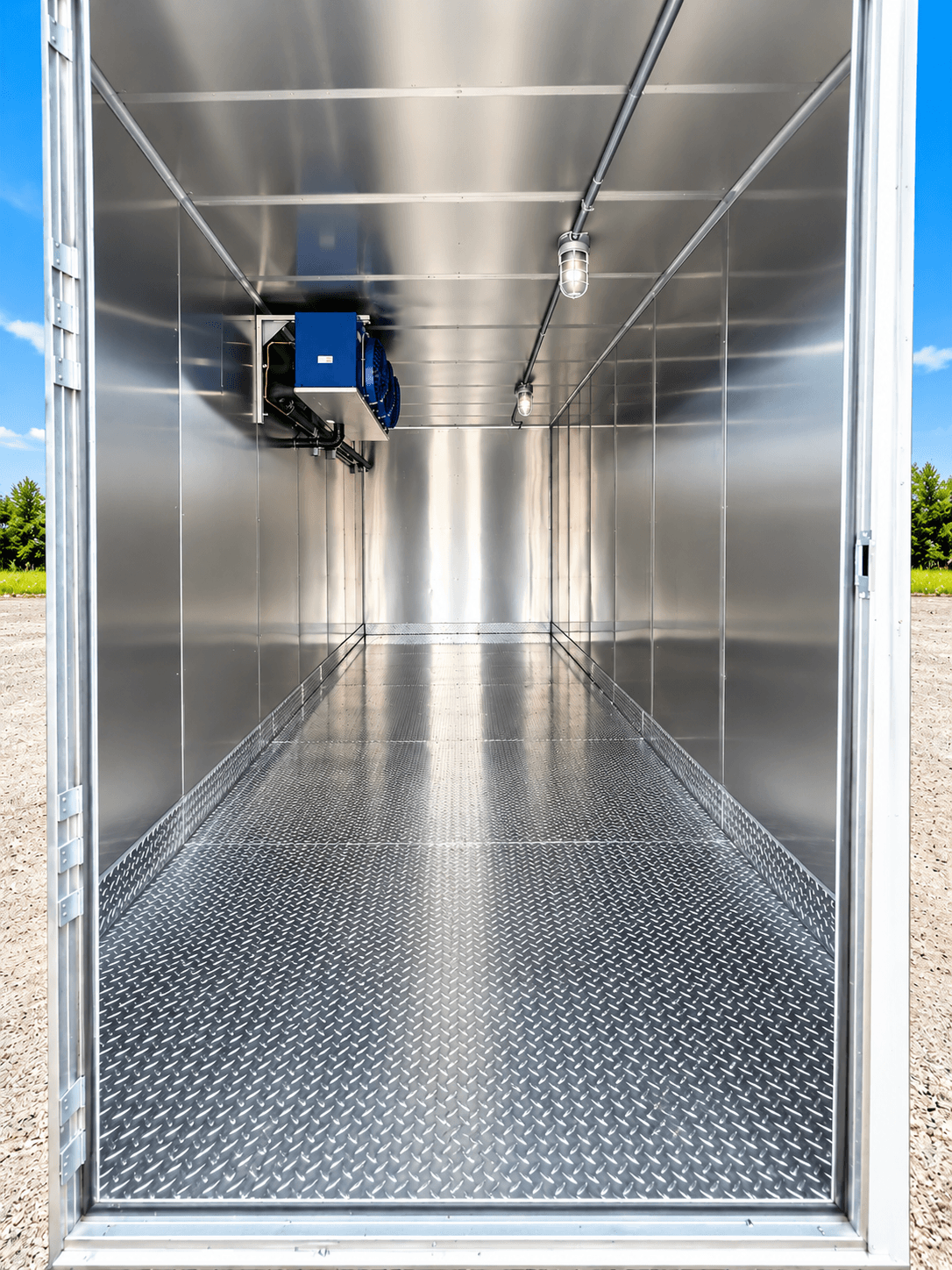
Compare the equipment
These published examples describe named company units. The supplied equipment, configuration and availability are confirmed for your project address.
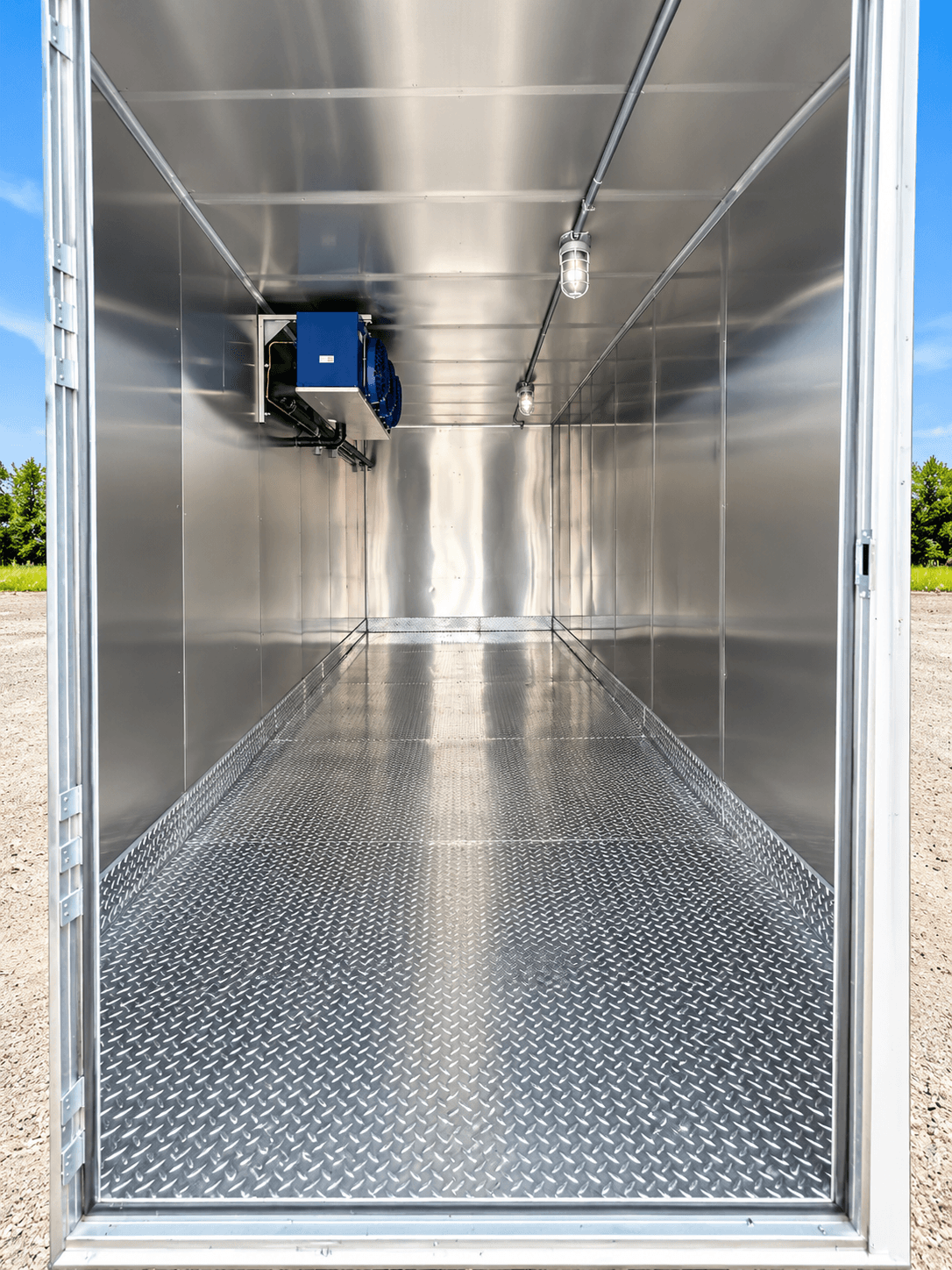
Listed refrigeration trailer equipment: condensing unit, amps panel, lighting.
Equipment records reviewed October 19, 2026. Temperature labels are inventory labels, not verified operating ranges. Nominal length is a model label, not a measure of usable space or site footprint.
When the commercial walk-in freezer or cooler fails at a grocery distributor in Hanford, an emergency outdoor walk-in refrigeration unit rental can hold the affected stock while the permanent unit is repaired. Emergency rentals and planned leases are quoted from the same details: the product, the temperature it must hold, the address and the dates. Kitchen outages often bring more than one need: a mobile kitchen for rent for cooking, a dishwashing trailer lease for warewashing and refrigerated storage for the ingredients.
Every call about a failed commercial walk-in freezer or refrigeration system is an emergency call, and a person answers rental inquiries 24/7 so the problem can be described at any hour. Restaurants, hospitals, schools, hotels, caterers and food producers can describe the problem to a person who answers rental inquiries 24/7. A walk-in failure in Bakersfield, a renovation in Merced or an event in San Luis Obispo can use the same inquiry as a Hanford project: the address, the stock, the dates and the choice between renting and leasing.
An events-industry report puts Coachella attendance in Indio at about 750,000 for 2023 and the Rose Parade in Pasadena at roughly 250,000 in-person spectators, figures it attributes to other sources. Operators in San Marino, South Pasadena and Glendale use rentals, leases and trailers for rent in different ways, from one-night events to months of temporary facilities. Food producers in La Cañada Flintridge and El Monte can ask about trailer leasing for seasonal stock or a temporary overflow. Portable refrigerated trailers and walk-in coolers are usually the first equipment discussed for event stock, with onsite power and access reviewed early. Portable refrigerated trailers, refrigeration containers and outdoor walk-in refrigeration units can all be discussed for the same job. When cooking and dish washing stop together, a mobile kitchen, a dishwashing trailer and portable refrigeration can be one request. A dishwashing trailer lease can be added to the same quote when returned dishes also need washing. This is published public context, not company work; each request is quoted for its own address and dates.
CAL FIRE’s retrospective on the November 8, 2018 Camp Fire in Butte County records at least 85 civilian deaths, 153,336 acres burned and more than 18,000 structures destroyed, with most of the damage in Paradise and Concow. Grocers in Chico, hotels in Orland and commissaries in Corning often face the same emergency, a walk-in that stops cooling, and ask first about a refrigerated trailer for rent. Schools in Tehama and a distributor in Yuba City can ask the same question: what equipment fits this address, and what will the quote confirm about delivery? After an outage or storm, refrigerated trailers for rent and walk-in freezers protect frozen stock first, and the quote confirms equipment and delivery. Walk-in coolers hold chilled stock and walk-in freezers hold frozen stock, so the rental should match whichever one is needed. Nothing here assumes available equipment or a delivery time; a person answers rental inquiries 24/7 and the quote confirms the details.
A California state Senate budget document gives 2032 as the updated completion date for the Merced–Bakersfield early operating segment of high-speed rail, with fare service beginning in 2033. A phased renovation in Shafter, a new kitchen build-out in Arvin or a campus dining upgrade in McFarland can use a leased refrigeration trailer so food service continues while permanent cold rooms are rebuilt. Facility teams in Lancaster can lease portable refrigeration as temporary facilities while a permanent cold room is rebuilt. A long-term refrigeration trailer lease keeps supplies cold on site for the whole project, with power and access reviewed before delivery. The context above comes from public sources and does not describe a completed job; availability and delivery are confirmed in the quote.
A mobile, modular or portable refrigeration setup in Hanford is chosen to match the walk-in cooler or freezer that failed. Short-term or long-term, the same refrigerated trailer rental starts from the address, the stock and the dates. Outdoor walk-in refrigeration can be set up beside the building as temporary facilities, so staff keep working while the permanent walk-in cooler or walk-in freezer is repaired. A portable refrigerated trailer suits most emergency calls, while a refrigeration container fits a longer, more stationary need.
Emergency refrigeration, onsite and temporary, is meant to bridge the gap until the commercial walk-in freezer is repaired or replaced. A mobile dishwashing trailer and a mobile kitchen trailer are often requested together, with a refrigerated trailer for the stock. Short-term rental suits a repair, and long-term leasing suits a renovation, so ask the quote to say which applies. Emergency refrigeration can be arranged as a refrigerated trailer, a refrigeration container or a portable walk-in cooler, depending on the stock and the site.
In Hanford, emergency refrigeration usually means a refrigerated trailer, a refrigeration container or a portable walk-in cooler matched to the stock. Emergency refrigeration for commercial kitchens often starts with a portable refrigerated trailer and ends with a longer lease if repairs take time. Emergency refrigeration rental covers walk-in coolers, walk-in freezers and refrigerated trailers for commercial kitchens, warehouses and plants. Short-term or long-term, trailers for rent in Hanford are quoted for the address, the stock and the dates.
Kitchen, dishwashing and refrigeration rentals are separate equipment, and each can be rented short-term or leased long-term. Trailer rentals for emergencies are usually short-term, while trailer leasing for construction or seasonal work can run for months. Emergency refrigeration rental, trailer rentals and trailer leasing are all handled through one inquiry, so one call can cover every option. Dishwashing trailer rentals and kitchen trailer rentals can be quoted alongside refrigerated trailers for rent when the whole kitchen is down.
Onsite temporary facilities can include portable refrigeration, a mobile kitchen trailer and, if dishes are affected, a dishwashing trailer. A dishwashing trailer lease can be added to the same quote when returned dishes also need washing. Dishwashing and kitchen outages often arrive together, so dishwashing trailer rentals and a mobile kitchen for rent are quoted beside emergency refrigeration. Temporary facilities for a commercial site usually mean refrigeration first, then a mobile kitchen or dishwashing trailer if cooking or washing is also interrupted.
Temporary facilities can be arranged onsite for an event, a renovation or an emergency, and collected when the permanent kitchen is ready.
Past repair notes often reveal more than the equipment’s nominal capacity: a supplier arriving early, an inaccessible rack or a change of shift that left quantities uncertain. Ask the Hanford supervisor to reconstruct the last interruption before selecting temporary refrigeration. The immediate objective is a verified stock picture, including material that remains in working storage and goods that have not yet arrived.
NOAA’s California history describes alternating wet and dry periods; it does not establish the cause of an individual equipment failure. Build the contingency around observable site conditions. If a related operation in Lemoore can offer space, verify its actual room, transport arrangements and acceptance process before reducing the requested cold-storage capacity. An informal offer should not silently become the basis of the refrigeration plan.
Read the 20ft Refrigerated Container guide alongside this page when planning repairs and changing projects; it looks at the ground and drainage beneath the unit and at one resting place for the whole project.
Hanford’s January 2025 Downtown Improvements update explains that high bids and the funding deadline made the earlier scheme unfeasible, with bid rejection recommended on December 17. The city separately reports a 2025 RAISE award for Fast Track Hanford. These are different dated project records; neither supports telling a customer that the earlier downtown design is currently under construction.
For comparison, read what nearby cities emphasize. In Visalia, the guide covers commercial projects; in Fresno, it covers commercial receiving peaks. Those are separate sites with separate requirements, so use them only as prompts for your Hanford request.
That distinction matters to rental planning when your own renovation changes after procurement. Keep the cold-storage reservation discussion tied to a confirmed shutdown instruction, not an outdated tender drawing. Record who releases the work, which access assumptions survive the redesign and whether refrigeration is displaced for the whole job or only during a defined electrical or flooring stage.
For catering teams in Hanford or Lemoore, California, supplier arrivals can overlap with venue preparation before staff have an agreed place to receive ingredients. Match ingredient deliveries to the proposed menu and serving timetable, then flag access questions before committing to the temporary equipment position.
A phased food-storage refurbishment can stall when products from the next work area are mixed with supplies needed today. Mark each transfer batch by its original location and planned use. Ask how the proposed refrigerated unit would accommodate that organization without committing to an unverified shelving layout. The operator should retain responsibility for stock acceptance, handling instructions and daily reconciliation.
A further point of reference is Clovis’s guide, which covers commercial meal programs. Check your own site details separately before relying on any comparison.
Consider kitchen downtime and dishwashing downtime independently when preparing the sequence. A facility coordinating supplies from Kingsburg may still need washing after cooking returns indoors, while a Selma purchasing team might continue placing orders for the entire site. Name those roles explicitly. A good temporary arrangement follows who receives, prepares and releases each batch rather than the date attached to the largest building contract.
Give the Hanford site coordinator a placement sketch that survives a contractor handover: the entrance, normal unloading position, pedestrian route and area kept clear. A revised fence line can invalidate an otherwise useful photograph. Request a fresh access check when site boundaries change, especially if refrigeration will remain outside while contractors move to the next internal phase.
Related equipment may introduce separate delivery movements, connection reviews and staff routes. Discuss those movements against the whole site calendar before proposing a shared loading area. Confirm who can authorize access on the agreed day and who will resolve a blocked gate. Neither a municipal streetscape plan nor a nearby transit stop proves that a private yard can accept the proposed unit.
For a Hanford refrigeration quote, explain the expected interruption and identify the next reliable project decision. A staged request might distinguish the initial transfer period, normal daily access and the eventual return inside. Share chilled or frozen requirements and peak stock in quantities your team uses. Any uncertainty should remain visible so the quotation can be reviewed when the work scope becomes firm.
Ask how the rental period, delivery, collection and changes will be priced for the address. If kitchen or dishwashing support is required, show its start and release dates beside the storage schedule. Request written confirmation of proposed equipment and availability before making commitments to suppliers; an estimate or calculator result does not establish current stock, exact site suitability or the final contract.
Before you book
You can discuss requirements while procurement continues. Clearly label the start as provisional and identify the decision that will confirm it. Ask what the proposal says about changes before treating an inquiry as an equipment reservation.
Use the quantities you can verify, such as rack contents, cases received per day and the stock retained over a closure. Ask how those figures should be translated into a refrigeration proposal rather than guessing usable capacity.
Name the responsible facility operator and the person confirming that the permanent system can receive goods. Record their acceptance step, arrange the stock transfer and then confirm collection. Construction completion alone does not complete that handover.
Both short-term rentals and longer leases of an outdoor walk-in refrigeration unit can be discussed for Hanford. Share the location, the products to be held and how long you expect to need the equipment, including whether dates may change. The quote confirms the equipment, the delivery timing and the rental terms for your site.
Mobile and modular refrigeration, from refrigerated trailers for rent to a refrigeration container lease, can be discussed for short-term or long-term needs. A short-term emergency rental can become a long-term lease at the same address, as long as the quote says so. All calls about a failed commercial walk-in freezer or refrigeration system are emergency calls, and a person answers rental inquiries 24/7. Every call about a failed commercial walk-in freezer or refrigeration unit is an emergency call, and a person answers rental inquiries 24/7. Equipment, availability and delivery timing are confirmed in the quote.
These public references inform the planning examples; equipment availability and delivery arrangements are confirmed for your address.
Temporary refrigeration, kitchens and dishwashing can support many kinds of food-service operations. Each setting below starts with its own schedule, stock and site questions, and every project is reviewed individually.
Hotels, restaurants and resorts can plan temporary refrigeration around breakfast, banquet and dinner service when a walk-in cooler fails or a kitchen is refurbished.
Hospital, nursing home and care-facility kitchens can describe meal schedules, delivery times and displaced stock so temporary storage follows the food-service routine.
Municipal, county and public-building food-service teams can outline receiving arrangements, responsible contacts and project dates before a quote is prepared.
Dining facility managers can explain the products displaced, the receiving arrangements and the proposed period, then review availability and terms with our team.
Schools, colleges and universities can plan around term dates, serving windows and campus kitchen renovations so meal service can continue during repairs or construction.
Plant cafeterias and employee dining areas can describe shift patterns and staged building work so temporary cold storage can be reviewed against the working schedule.
Caterers and venues can plan preparation windows, event days and overflow ingredients, and describe how stock moves between storage, the kitchen and service.
Producers, wholesalers and distributors can describe loading, staging and storage needs when a cooler breaks down or demand temporarily exceeds capacity.
These examples describe planning situations. Equipment, availability and terms are confirmed in a project quote.
Cold storage is only one part of a project. These are the questions we work through with you before anything is booked.
Start with refrigerated containers and refrigeration trailers, then add a temporary kitchen or dishwashing trailer when the project needs one, all in a single conversation.
Access, utilities and the intended position are reviewed before delivery is arranged, so the equipment is matched to your site rather than the other way around.
Whether a walk-in cooler failed this morning or a renovation is months away, describe the real situation and plan around the stock, dates and people involved.
Planning guides cover all 50 states and more than 700 cities. Your address is then confirmed for equipment and delivery.
Use the rental calculator for a rate-range estimate and setup amount, then request a project quote that confirms availability, transport and the rental period.