BXRT20–1Refrigerated trailer
- Nominal length
- 20ft
- Listed electrical supply
- 220V · single-phase · 40–60A
- Inventory temperature label
- 32°F
Temporary cold storage in Honolulu, Hawaii
An emergency walk-in cooler or freezer failure can interrupt Honolulu food service before the next delivery arrives. Worldwide Refrigerated Container Rental Facilities helps commercial kitchens in Hawaii plan refrigerated containers, trailers and portable cold storage for breakdowns and planned renovations. Related kitchen and dishwashing trailers can be considered if preparation or cleaning also moves. Restaurants, caterers, schools and institutional dining teams can discuss short-term rentals or longer leases. Equipment selection and delivery coordination depend on the actual property, products and operating dates. Request availability and a current project quote.
Emergency cooler or freezer failure in Honolulu? A person answers rental inquiries 24/7. Availability and delivery timing are confirmed in your quote.
Plan your rental budget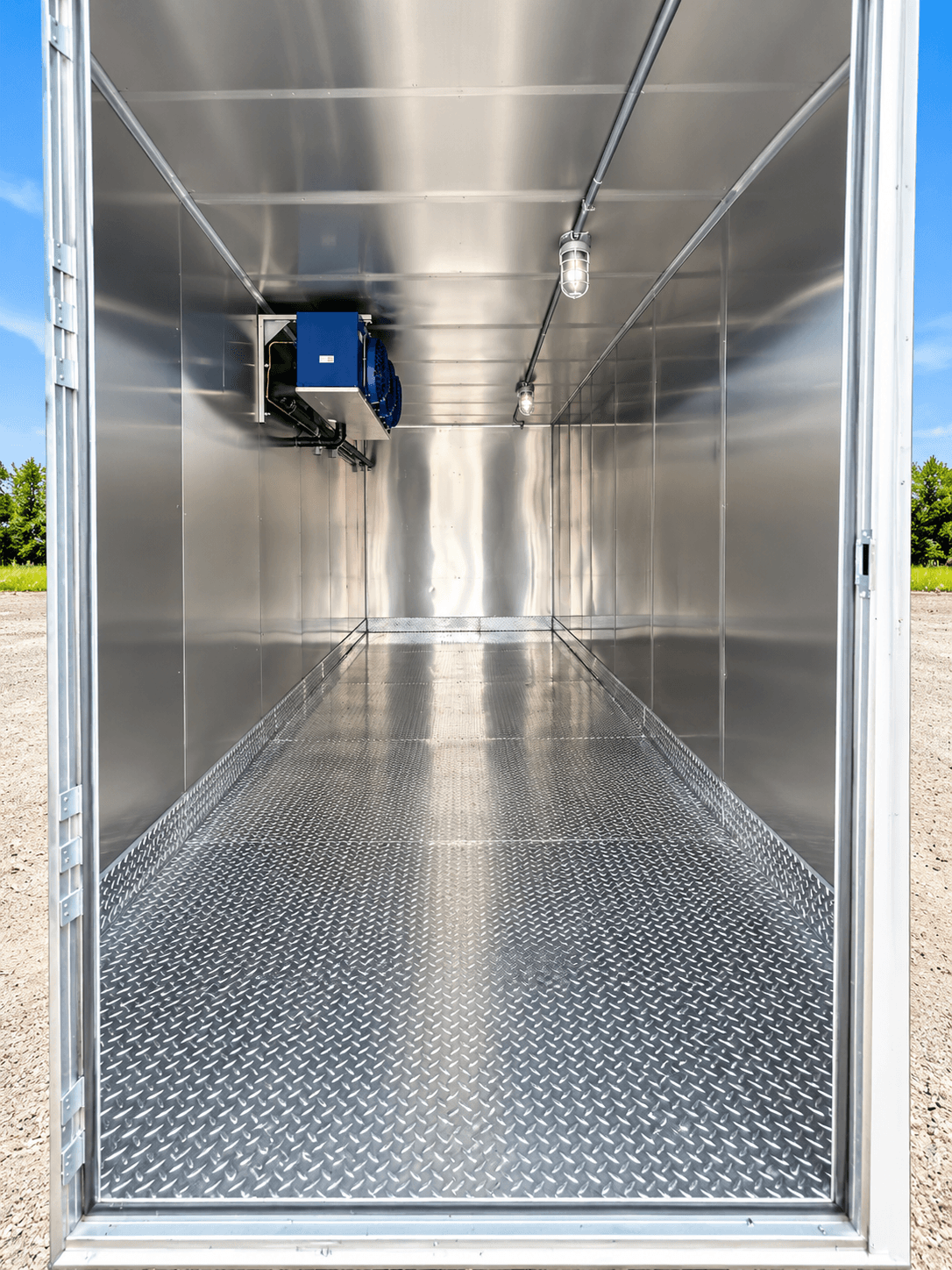
Compare the equipment
These published examples describe named company units. The supplied equipment, configuration and availability are confirmed for your project address.
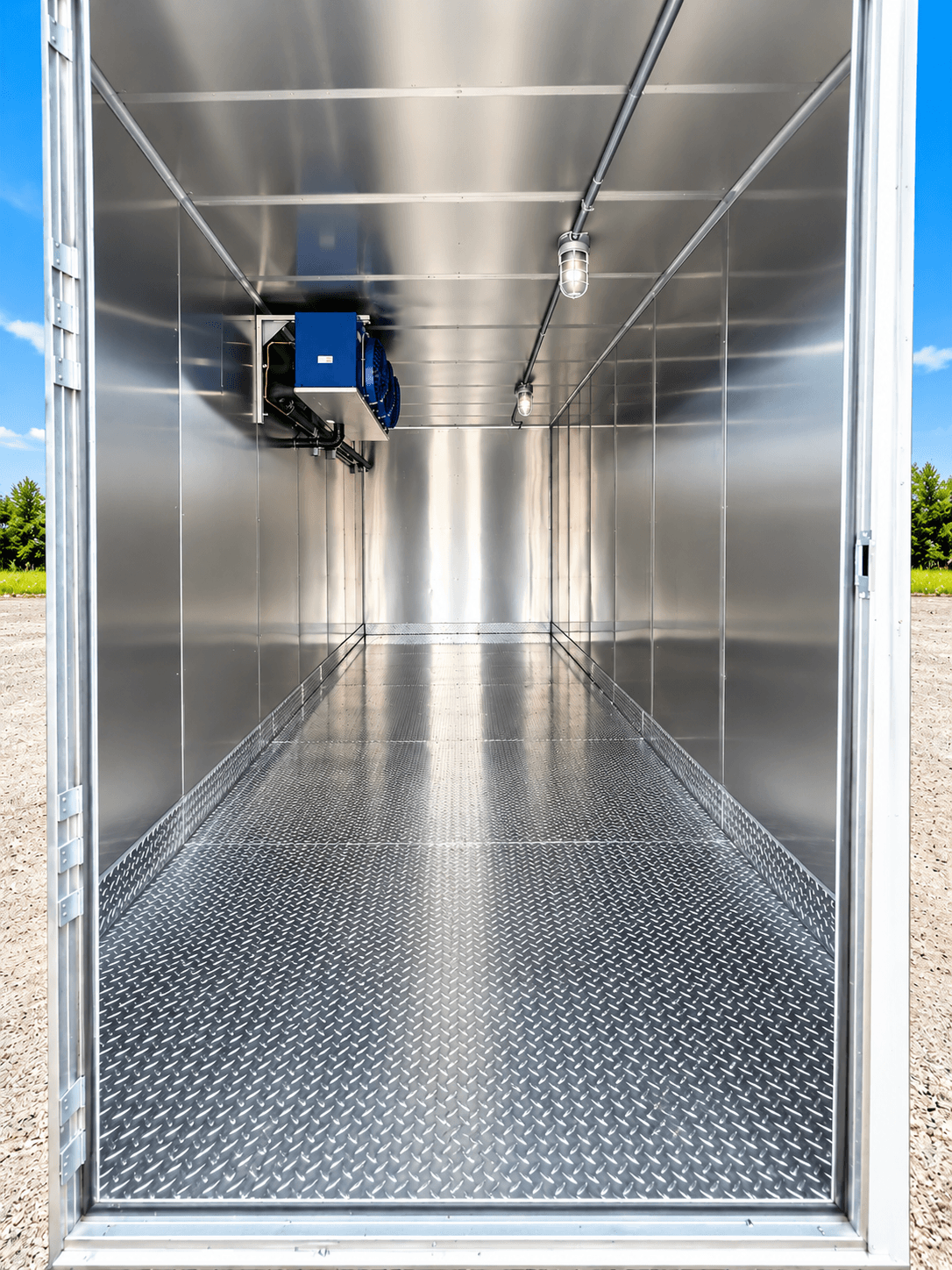
Listed refrigeration trailer equipment: condensing unit, amps panel, lighting.
Equipment records reviewed October 19, 2026. Temperature labels are inventory labels, not verified operating ranges. Nominal length is a model label, not a measure of usable space or site footprint.
Emergency mobile refrigeration trailer rentals in Honolulu are used for breakdowns first, but the same equipment can be leased for renovations, events and seasonal storage. Short-term rentals usually fit a repair measured in days, while a longer-term lease fits a remodel, a phased construction project or a seasonal peak. Kitchen outages often bring more than one need: a mobile kitchen for rent for cooking, a dishwashing trailer lease for warewashing and refrigerated storage for the ingredients.
Refrigeration is an emergency need: when a commercial walk-in freezer or refrigeration unit breaks down, the call is an emergency, and a person answers rental inquiries 24/7. Food-service managers, facility teams and plant supervisors can report a refrigeration failure at any time, since rental inquiries are answered by a person 24/7. A site in Waipahu, Mililani Town and Kapolei follows the same steps as one in Honolulu: describe the stock, give the address and dates, and compare a short-term rental with a longer lease in the quote. Cold storage rental is often the first step, since frozen and chilled stock cannot wait for a repair.
The Merrie Monarch Festival is a week-long hula festival held in Hilo each year after Easter, centered on the Edith Kanakaʻole Multi-Purpose Stadium, and a 2019 Civil Beat report described its economic impact on the Big Island as a roughly $6 million bonanza. Stadium concessions in Kihei and venues in Kahului may need temporary facilities for a season, so a trailer lease can fit better than repeated short rentals. Event refrigeration is quoted by the day or the week: portable refrigerated trailers for a weekend, trailer leasing for a full season. A dishwashing trailer lease can be added to the same quote when returned dishes also need washing. When cooking and dish washing stop together, a mobile kitchen, a dishwashing trailer and portable refrigeration can be one request. This is published public context, not company work; each request is quoted for its own address and dates.
The 2018 Kīlauea lower Puna eruption began on May 3, 2018, and lava destroyed 716 dwellings, according to a USGS Hawaiian Volcano Observatory summary based on Hawaiʻi County counts, covering 13.7 square miles of land and about 30 miles of road. Emergency refrigeration comes first after a storm or outage: a portable refrigerated trailer, a refrigeration container or outdoor walk-in refrigeration can hold stock while power and repairs catch up. Refrigeration is an emergency need: every call about a failed commercial walk-in freezer or refrigeration unit is an emergency call. The context above comes from public sources and does not describe a completed job; availability and delivery are confirmed in the quote.
Segment 3 of Honolulu’s Skyline rail is a $1.66 billion design-build contract with Tutor Perini, and a September 2026 report said the first column and cap along Nimitz Highway marked the project’s move into the urban core, with major construction expected to finish in 2030. On long projects, contractors compare a refrigerated trailer lease with a refrigeration container for bulk crew supplies. Trailer rentals, trailers for rent and trailer leasing are all discussed with the address and the dates in hand. Dishwashing trailer rentals and warewashing capacity are quoted beside the kitchen and refrigeration when the whole food-service area is affected. Kitchen, dishwashing and refrigeration rentals are separate equipment, and each can be rented short-term or leased long-term. These are public facts about the area, not a record of company jobs; equipment, availability and delivery are confirmed in the quote. Most calls are about refrigeration: a failed cooler, a warm freezer or a compressor that will not restart.
Kitchen, dishwashing and refrigeration rentals are separate equipment, and each can be rented short-term or leased long-term. A dishwashing trailer, a mobile kitchen trailer and a refrigerated trailer for rent can each be short-term or long-term, depending on the repair. A mobile kitchen trailer for rent can sit beside onsite refrigeration, so cooking and cold storage are planned together. A commercial walk-in freezer that fails overnight is an emergency, and so is a commercial refrigeration system that stops holding temperature.
Short-term or long-term, the same refrigerated trailer rental starts from the address, the stock and the dates. Emergency refrigeration, onsite and temporary, is meant to bridge the gap until the commercial walk-in freezer is repaired or replaced. Emergency refrigeration in Honolulu can be rented for a few days or leased long-term, depending on how long the commercial walk-in is down. Outdoor walk-in refrigeration needs level ground and power nearby, so a long-term lease starts with a site conversation.
Mobile kitchens, dishwashing trailers and refrigerated trailers for rent can be quoted together as temporary facilities. Emergency refrigeration for commercial kitchens often starts with a portable refrigerated trailer and ends with a longer lease if repairs take time. A mobile, modular or portable refrigeration setup in Honolulu is chosen to match the walk-in cooler or freezer that failed. A mobile dishwashing trailer and a mobile kitchen trailer are often requested together, with a refrigerated trailer for the stock.
A dishwashing trailer lease can be added to the same quote when returned dishes also need washing. Outdoor walk-in refrigeration can be set up beside the building as temporary facilities, so staff keep working while the permanent walk-in cooler or walk-in freezer is repaired. Modular and portable cold storage can be discussed in stages when a site needs more space than one refrigerated trailer provides. Portable refrigerated trailers, refrigeration containers and outdoor walk-in refrigeration units can all be discussed for the same emergency.
In Honolulu, emergency refrigeration usually means a refrigerated trailer, a refrigeration container or a portable walk-in cooler matched to the stock. Temporary facilities can be arranged onsite for an event, a renovation or an emergency, and collected when the permanent kitchen is ready. A commercial kitchen closed for repairs may need a mobile kitchen trailer lease, a dishwashing trailer and emergency refrigeration at the same time. A commercial walk-in freezer failure in Honolulu is an emergency call, and onsite temporary refrigeration is how most such calls begin.
A portable refrigerated trailer suits most emergency calls, while a refrigeration container fits a longer, more stationary need. Emergency refrigeration can be arranged as a refrigerated trailer, a refrigeration container or a portable walk-in cooler, depending on the stock and the site.
Aloha Harvest’s food-donation page describes refrigerated vehicles collecting fresh, frozen, prepared and dry foods from businesses including restaurants, hotels and wholesale distributors. Its FAQ explains that rescued food goes to partner agencies the same day and that the organization does not operate a warehouse for long-term food storage. This local example distinguishes food moving through a collection route from reserves held at a property through a longer interruption.
For a commercial kitchen replacing a cold room, the temporary load may include today’s ingredients, tomorrow’s preparation and a supplier order arriving before either has cleared. Separate products needed repeatedly from sealed reserves. Keep room for staff to check labels, select cases and move ingredients back to preparation after the first unloading.
A caterer preparing in Honolulu and serving a Maunawili function may need different storage at the preparation address and event site. A Halawa facility replacing a permanent cooler or an Aiea operation handling an unusual order has its own product load and dates. Use the actual equipment address for each job.
The 20ft Refrigerated Container guide covers ground-placed holding and site questions. Nominal exterior length does not establish usable capacity, temperature capability or connection requirements. Compare the offered interior with the cases and carts staff will actually use.
Keep chilled ingredients and frozen reserves attached to their required conditions. Cases arriving for later services have a different retrieval pattern from items staff collect throughout preparation. A refrigeration trailer, refrigerated container or portable walk-in cooler should be compared using the offered entrance, interior arrangement and operating details, rather than an empty-room photograph alone.
LT2 is a named example in the 20ft Refrigerated Trailer guide. Its inventory listing shows a −5°F label, a condensing unit, amps panel and lighting, with 220V single-phase power at 40–60A. The inventory label is not a complete verified operating range. Exact NEMA connector configuration and usable capacity remain unconfirmed, so the final equipment choice must follow the required product conditions.
The Kaneohe and Kailua rental guides cover other communities for teams coordinating several food-service properties. Keep the storage period, product quantities and site arrangements attached to each equipment address.
For military food-service planning in Honolulu or Maunawili, Hawaii, a change in the menu can alter ingredient packaging or retrieval while the proposed rental dates stay unchanged. Describe how food supplies arrive and reach preparation staff, with the dining lead available to clarify the busiest receiving and retrieval periods.
The University of Hawaiʻi at Mānoa’s dining directory distinguishes Gateway Café residential dining, the Campus Center food court, Food Truck Row and The Market at Hale Noelani. Those different service formats illustrate why one campus can contain meal preparation, retail collection and separate mobile vendors. Temporary holding should be tied to the food-service function that is actually displaced.
If a dining room stays open during a refit, trace ingredients from receiving into cold storage and then to the working preparation area. Keep the return route for reusable pans or service items separate. A position close to one door may still add repeated handling if suppliers, staff and contractors share the same narrow approach.
Read the Pearl City rental guide for a separate food-service property there. Record that site’s own receiving point and products instead of combining different addresses into one storage quantity.
NOAA describes Hawaii's climate as strongly influenced by the ocean, elevation, terrain and persistent winds, with substantial rainfall differences across the state. Those statewide contrasts make it useful to describe the actual Honolulu placement rather than rely on a general island-weather assumption. Discuss surface drainage, exposure and the available electrical service with the equipment provider. Have the appropriate qualified person verify any required connection before the installation date.
K14 in the 38ft Mobile Kitchen Trailer guide is a named cooking example with a convection oven, griddle/oven combination, six-burner range/oven combination, fryers, prep table, sinks and reach-in refrigerator/freezer. Its listing shows 220V single-phase power at 200–220A. The built-in reach-ins support the working line; bulk refrigerated storage should still be compared separately for reserves held between deliveries.
Dishwashing trailers provide another distinct function. DTC3, in the 30ft Conveyor Dishwashing Trailer guide, is a high-temperature conveyor example with 220V three-phase power at 200A. It lists a soil tray, three-compartment sink, handwashing sink, prep table, storage racks and water heater. Its three-phase requirement differs from K14’s listed single-phase supply; the project’s electrical arrangement needs to accommodate the actual selected units.
A planned transfer needs labeled product groups, a place for new deliveries and a clear person responsible for normal product checks. During a breakdown, the facility’s responsible staff assess affected food while the equipment discussion addresses future holding. Temporary refrigeration does not determine whether previously exposed products can be retained.
A person answers rental inquiries 24/7. For urgent Honolulu cooler or freezer needs, provide the products affected, proposed address and next operating deadline. The project review establishes current equipment availability and delivery arrangements.
Include receiving before the first meal and the final transfer back to permanent refrigeration in the requested period. For a longer lease, keep staff access and recurring deliveries practical as construction stages change. The calculator estimates a range from published rates and adds a setup and delivery starting amount, while collection, taxes and site charges stay separate.
Before you book
Yes, an operating kitchen can discuss temporary storage for a repair or planned improvement. Explain the meal schedule, supplier deliveries and route between the rental and preparation area. Those details help compare equipment and placement options without assuming that the smallest available parking space will support the working routine.
Include expected deliveries and preparation batches throughout the rental. The peak amount in storage can exceed the inventory present on the first day. Explain which goods leave quickly, which remain for later service and whether chilled and frozen products require separate arrangements.
It can introduce the overall project, but identify each intended equipment address and its stock load. A preparation kitchen and an event site may need different storage periods or configurations. Keep the proposed locations separate so placement, transport and electrical arrangements can be discussed accurately.
The team can discuss a mobile refrigeration trailer rental or lease for a Honolulu address, from a few days to several months. Include the address, how a truck can reach the site, the power available and the temperature the product must hold. The quote confirms the equipment, the delivery timing and the rental terms for your site.
Mobile and modular refrigeration, from refrigerated trailers for rent to a refrigeration container lease, can be discussed for short-term or long-term needs. Mobile refrigeration, mobile kitchens and mobile dishwashing trailers are different equipment, and each can be rented separately or together. Onsite refrigeration keeps product close to the kitchen door, so a temporary unit can be used the way the permanent walk-in was. Refrigeration is an emergency need, so describe the failed commercial unit and the stock at risk. The quote confirms availability, delivery and the rental period for the site.
These public references inform the planning examples; equipment availability and delivery arrangements are confirmed for your address.
Temporary refrigeration, kitchens and dishwashing can support many kinds of food-service operations. Each setting below starts with its own schedule, stock and site questions, and every project is reviewed individually.
Hotels, restaurants and resorts can plan temporary refrigeration around breakfast, banquet and dinner service when a walk-in cooler fails or a kitchen is refurbished.
Hospital, nursing home and care-facility kitchens can describe meal schedules, delivery times and displaced stock so temporary storage follows the food-service routine.
Municipal, county and public-building food-service teams can outline receiving arrangements, responsible contacts and project dates before a quote is prepared.
Dining facility managers can explain the products displaced, the receiving arrangements and the proposed period, then review availability and terms with our team.
Schools, colleges and universities can plan around term dates, serving windows and campus kitchen renovations so meal service can continue during repairs or construction.
Plant cafeterias and employee dining areas can describe shift patterns and staged building work so temporary cold storage can be reviewed against the working schedule.
Caterers and venues can plan preparation windows, event days and overflow ingredients, and describe how stock moves between storage, the kitchen and service.
Producers, wholesalers and distributors can describe loading, staging and storage needs when a cooler breaks down or demand temporarily exceeds capacity.
These examples describe planning situations. Equipment, availability and terms are confirmed in a project quote.
Cold storage is only one part of a project. These are the questions we work through with you before anything is booked.
Start with refrigerated containers and refrigeration trailers, then add a temporary kitchen or dishwashing trailer when the project needs one, all in a single conversation.
Access, utilities and the intended position are reviewed before delivery is arranged, so the equipment is matched to your site rather than the other way around.
Whether a walk-in cooler failed this morning or a renovation is months away, describe the real situation and plan around the stock, dates and people involved.
Planning guides cover all 50 states and more than 700 cities. Your address is then confirmed for equipment and delivery.
Use the rental calculator for a rate-range estimate and setup amount, then request a project quote that confirms availability, transport and the rental period.