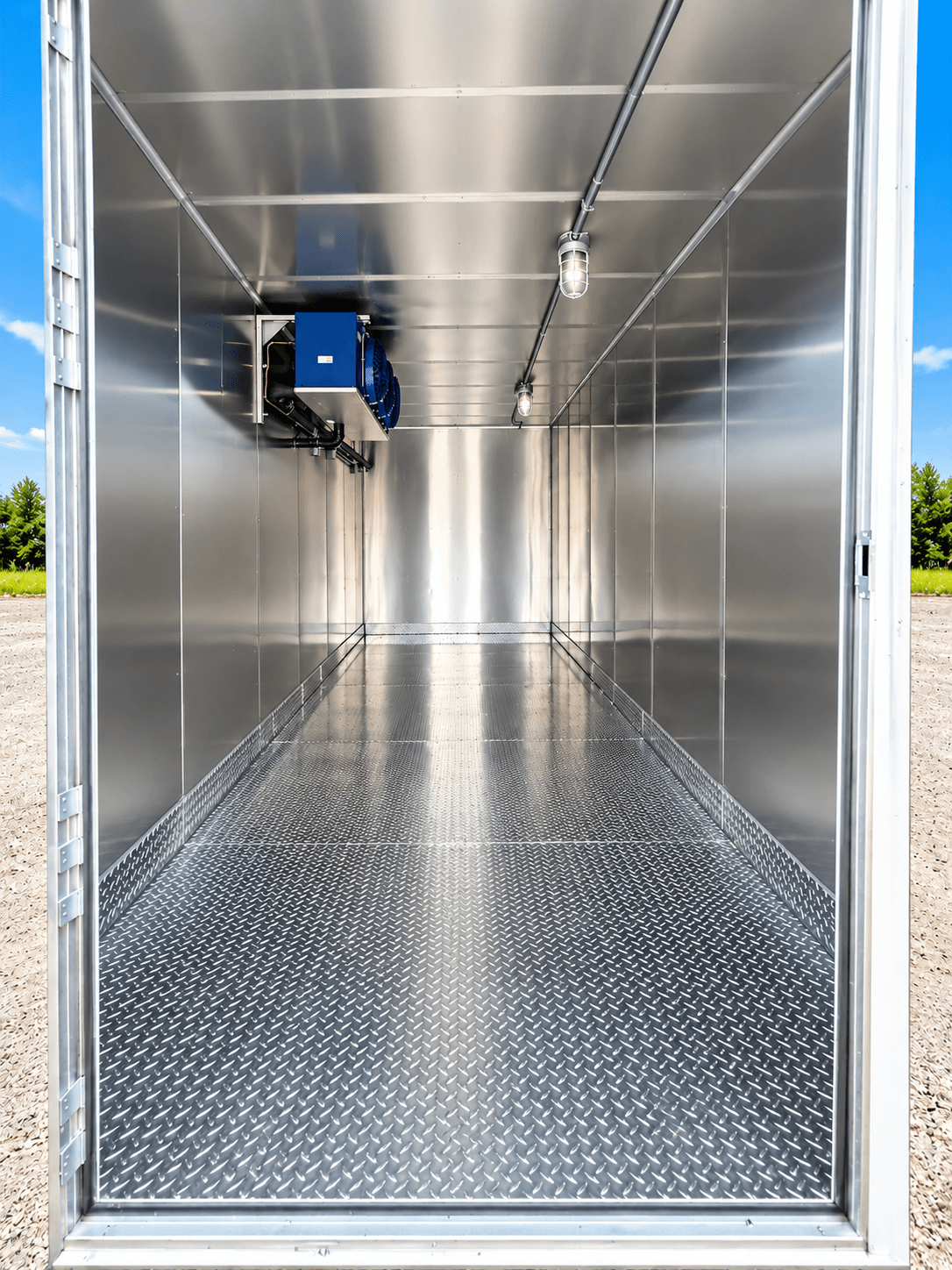
Compare the equipment
Specifications for your rental planning
These published examples describe named company units. The supplied equipment, configuration and availability are confirmed for your project address.
BXRT20–1Refrigerated trailer
- Nominal length
- 20ft
- Listed electrical supply
- 220V · single-phase · 40–60A
- Inventory temperature label
- 32°F
MT1Refrigerated trailer
- Nominal length
- 20ft
- Listed electrical supply
- 220V · single-phase · 40–60A
- Inventory temperature label
- 15°F
LT2Refrigerated trailer
- Nominal length
- 20ft
- Listed electrical supply
- 220V · single-phase · 40–60A
- Inventory temperature label
- -5°F
Listed refrigeration trailer equipment: condensing unit, amps panel, lighting.
Other cold-storage model details
- 12FT Refrigerated TrailerBXRT12–1 and BXRT12–2 list 220V · single-phase · 40–60A and a 32°F inventory label. Both are named as 12ft models, but their records also mention 20ft, so your quote confirms the length.
- 20FT Refrigerated ContainerYour quote confirms this container’s power, temperature and storage space for your project.
- 40FT Refrigerated ContainerYour quote confirms this container’s power, temperature and storage space for your project.
Equipment records reviewed October 19, 2026. Temperature labels are inventory labels, not verified operating ranges. Nominal length is a model label, not a measure of usable space or site footprint.
Find the starting point that matches your situation
An urgent breakdown and a planned renovation need different first conversations. With a failure, explain the affected storage function, the immediate requirement and what is known about repairs. With planned work, explain when permanent storage becomes unavailable and how temporary refrigeration fits the program. Both inquiries need a clear address and someone who can answer site questions.
Choose the equipment information that helps you describe the task. The container and trailer pages cover different planning questions, while the equipment details guide helps organize a specification. You do not need to settle every choice alone before contacting the team; identify the requirements that are clear and the questions that need review.
Use the container page for storage and placement questions
A refrigerated container inquiry should connect the quantity and packaging of products with the usable space and daily access needed. Read the container page when you are considering a position for temporary storage and want to prepare questions about capacity, access and connections. Ask about the actual equipment proposed rather than assuming that every pictured container has the same interior.
Bring the site into that discussion early. Describe the approach for delivery, the proposed position and the route staff will use with products. Confirm responsibilities for preparation and collection. A container may be a useful option to discuss, but the website alone does not establish suitability or availability for a particular project.
Connect industrial meal shifts with your rental plan
An industrial site in Colorado or Utah may need temporary meal service arrangements while an occupied staff dining area undergoes repairs or planned refurbishment. Ask facilities staff to mark the proposed ingredient route and explain any restrictions affecting shared doors, vehicle access or pedestrian crossings.
Use the trailer page for working routes and event timing
The refrigerated trailer page is a starting point for questions about staff access, product movement and transport arrangements. For catering or events, include preparation days, delivery windows and the period needed to clear stock afterwards. The public event date may describe only part of the storage requirement.
For a commercial breakdown or renovation, explain how a trailer would fit the normal working route. Mention shared receiving areas and any restrictions at the property. Ask which equipment and arrangements can be proposed for the location. Do not assume a trailer can be moved by site staff or that its electrical requirements match another unit.
Use the details guide to prepare an equipment specification
The equipment planning page helps turn a broad request into a clearer brief. It separates storage conditions, working capacity, usable layout and site requirements so each can be discussed. That is useful when several people are involved, such as a kitchen manager defining the load and a facilities contact reviewing the position.
Record the information you know and mark anything still awaiting confirmation. Ask for the proposed unit's details before arranging connections or designing a working route around it. The guide is not a set of drawings or a promise of particular specifications. The current proposal needs to supply the equipment information on which the project will rely.
Prepare a current pricing request
Start a pricing conversation with the equipment requirement, address and expected dates. Ask for a current proposal that explains what is included and what your team needs to arrange separately. The price page offers questions to help review the scope, while the quote sets out the arrangement proposed for your project. Keep those details together when deciding how to proceed.
When reviewing that quote, look at the complete arrangement. Compare the equipment description, period, delivery, collection and customer responsibilities together. Ask how minimum terms or extensions apply to the offered rental. An old table should not be used to calculate a current project total or replace clarification of the proposed commercial terms.
Use location information alongside the actual address
The location directory helps you find existing pages relevant to the area of an inquiry. A city name is not confirmation that a property can receive equipment, nor does it establish current availability. Give the delivery address and receiving entrance when contacting the team, with any restrictions the site contact already knows about.
Include the proposed position, electrical information and access needed by staff. For a construction or renovation project, explain whether those conditions will change as work progresses. The useful question is whether an arrangement can be proposed for the actual site and schedule, rather than whether a place name appears in a list.
Build the rental period around the whole operation
Think about the first product transfer, the main period of use and the point when permanent storage or another arrangement will be ready. Repairs, building works and events all have preparation and closing stages. Describe those stages so a short rental or longer-term lease discussion reflects the work instead of only a headline date.
Ask what happens if the program changes. Confirm how an extension is requested, which notice applies and how collection would be rearranged. Keep the current equipment and commercial details with the project brief. Share the agreed information with the people receiving and using the unit so an early estimate is not mistaken for the final arrangement.
Contact the team with a focused inquiry
A useful inquiry brings together the products, storage conditions, capacity, address, access, electrical information and expected dates. Add the name or role of someone who can answer practical questions about the site. If the request is urgent, explain the situation plainly while asking for availability and timing to be confirmed.
Use the contact details on this site to discuss the next step and request a current quote. Sending a message is not a reservation. Before relying on an arrangement, confirm the equipment, availability, charges and responsibilities. If an online contact attempt cannot be completed, use the displayed telephone contact rather than assuming the inquiry has been received.
Follow a reading path that matches the interruption
For an unexpected walk-in failure, start by identifying the storage function that has been lost. The container and trailer guides explain the equipment questions, while the details guide helps collect the facts needed for an inquiry. You can contact the team while some information is still being checked; make the immediate requirement and the remaining uncertainties clear.
For an illustrative planned renovation, begin with the stages of work instead. Mark when permanent refrigeration is unavailable, when the access route changes and when stock can move back. Use the equipment guides to examine the temporary arrangement at each stage. This reading path helps explain a project with several dependencies without assuming that every milestone is already settled.
Distinguish extra storage from a wider kitchen interruption
If cooking and washing continue normally, the inquiry may focus on temporary cold storage and the route staff will use. If those functions are also affected, read the kitchen and dishwashing guides to prepare separate questions. Describe what must be replaced temporarily and what can remain in the existing building.
In a worked planning example, a catering operation might need more refrigerated space while retaining its established cooking area. Another operation may be losing the entire work area during construction. Those situations should not produce the same brief. Explain the actual interruption first, then ask which proposed equipment can be reviewed for that need.
Discuss your cold storage rental.
Confirm the equipment, delivery location, and rental period that fit your project.
Request availability