Compare the equipment
Specifications for your rental planning
These published examples describe named company units. The supplied equipment, configuration and availability are confirmed for your project address.
BXRT20–1Refrigerated trailer
- Nominal length
- 20ft
- Listed electrical supply
- 220V · single-phase · 40–60A
- Inventory temperature label
- 32°F
MT1Refrigerated trailer
- Nominal length
- 20ft
- Listed electrical supply
- 220V · single-phase · 40–60A
- Inventory temperature label
- 15°F
LT2Refrigerated trailer
- Nominal length
- 20ft
- Listed electrical supply
- 220V · single-phase · 40–60A
- Inventory temperature label
- -5°F
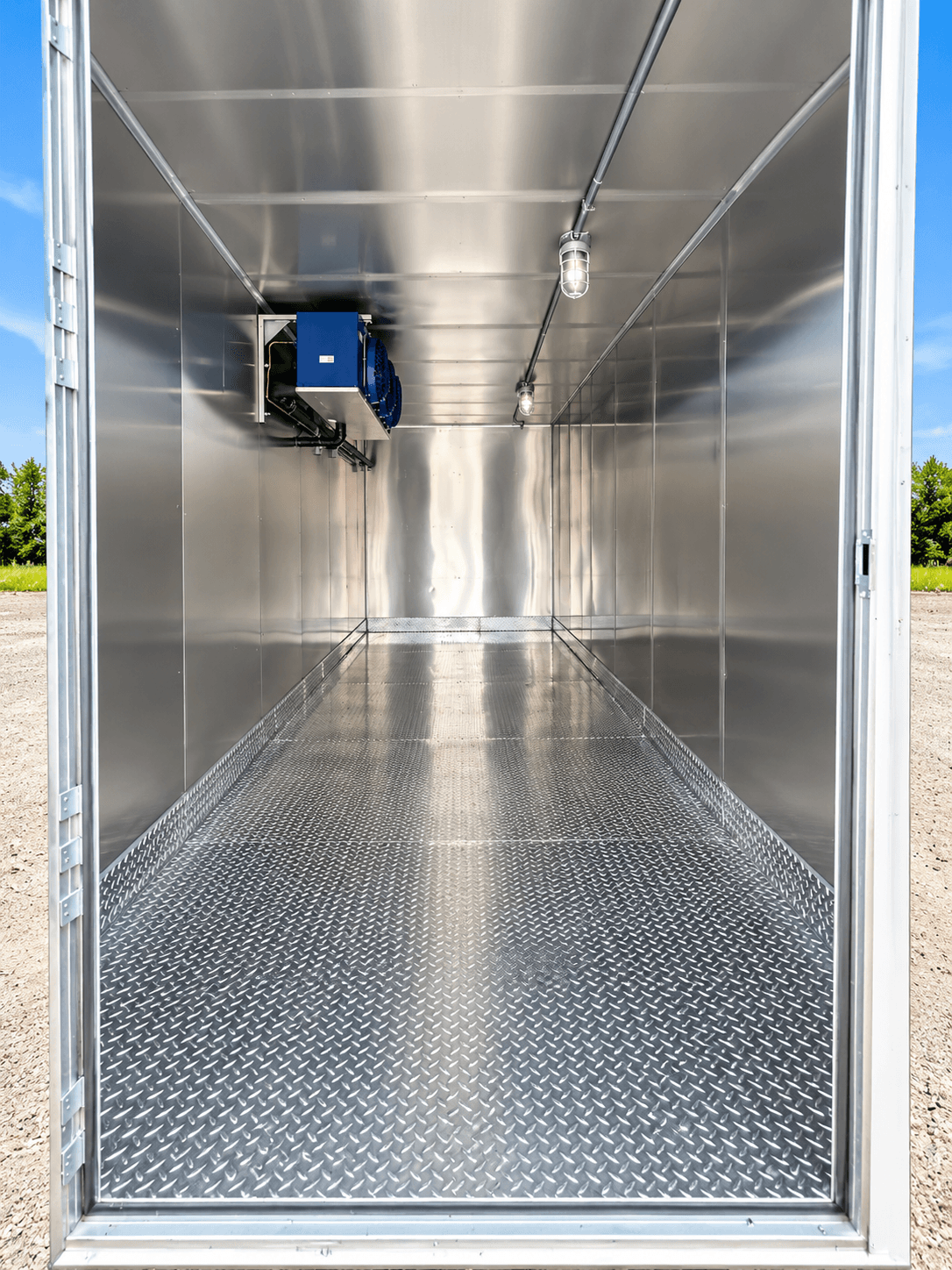
Listed refrigeration trailer equipment: condensing unit, amps panel, lighting.
Other cold-storage model details
- 12FT Refrigerated TrailerBXRT12–1 and BXRT12–2 list 220V · single-phase · 40–60A and a 32°F inventory label. Both are named as 12ft models, but their records also mention 20ft, so your quote confirms the length.
- 20FT Refrigerated ContainerYour quote confirms this container’s power, temperature and storage space for your project.
- 40FT Refrigerated ContainerYour quote confirms this container’s power, temperature and storage space for your project.
Equipment records reviewed October 19, 2026. Temperature labels are inventory labels, not verified operating ranges. Nominal length is a model label, not a measure of usable space or site footprint.
Keep prepared components tied to the order using them
A commissary's prepared components may look similar after the normal storage positions disappear. Identify which ingredients support the next preparation task and which remain reserved for later catering orders. A change to one customer schedule should update the affected stock allocation, rather than automatically move every commitment in the temporary refrigeration plan. Keep the changed instruction visible to purchasing, preparation and dispatch.
Compare the named trailer with a separate reserve container
MT1 in the 20FT Refrigerated Trailer guide lists a condensing unit, amps panel and lighting, with a 15°F inventory label. The complete operating range and suitability for the intended holding condition need confirmation; the label does not establish a cooling process for newly prepared components.
A refrigerated container provides another storage comparison, with nominal 20ft and 40ft options whose usable capacity, power and temperature capabilities remain unconfirmed. Match the offered refrigeration trailer or container to the actual components, packaging and order sequence, including incoming supplies that overlap with goods still awaiting preparation.
Keep healthcare meal service in the rental plan
Healthcare food-service teams comparing Memphis with a separate Georgia facility may find that meal rounds and supplier receiving windows place different demands on ingredient supplies. Record who receives food supplies and who approves their movement, then include those responsibilities in the temporary equipment and rental discussion.
Separate storage requirements in the brief
Products with different handling requirements should be identified before an equipment request becomes a booking. State whether goods are chilled, frozen or subject to another documented storage condition, and describe any segregation your own procedures require. Explain which product groups can be considered together and which need a separate review. Explain which products arrive already conditioned and whether any incoming load presents a different requirement. Ask the rental team to review those details and discuss the equipment options that can be considered. Your product owner should decide the conditions and records required for the goods being stored.
Separate the work dates from the storage dates
The period requiring cold storage may start before repair or construction work and end after the permanent equipment returns. Build the inquiry around the stock transfer, site preparation and return-to-normal activities as well as the contractor's dates. Explain whether the program is fixed or may change after an inspection. Ask about the rental periods that can be considered, how an extension would be requested and what notice applies to collection. A short-term rental inquiry and a longer-term lease discussion may require different decisions. Request the current terms for your equipment and dates, and keep them with the latest version of the project brief.
Distinguish holding from other temperature tasks
Explain what the equipment is expected to do with the goods after they enter. Holding already chilled stock is a different request from asking whether a particular load can be cooled from another starting condition. Describe the arrival condition and intended use, then ask which requirements should be considered in the equipment review. Include frozen goods separately where relevant. The operation's product owner should supply the handling requirements and decide what checks are needed. Request the relevant specifications for the equipment being considered, then compare them with the actual task before approving a rental arrangement.
Review phase as well as the listed load
MT1 lists 220V single-phase at 40–60A. The named Bulk Combo example lists 220V single-phase at 200–220A, while DTC3 lists 220V three-phase at 200A. Matching voltage is insufficient to establish compatible electrical requirements. Have the responsible site professional review exact connectors, supply and the working positions for each selected unit.
Keep collection access in the plan
A project can change a site substantially between equipment arrival and collection. Describe the expected works sequence, including barriers, parked materials or temporary layouts that could affect the route later. Identify who will keep the access information current and who can approve changes when contractors are present. Ask the rental contact what details are needed for both movements and how collection should be requested. This is especially useful when the initial position is selected before the construction program is final. Keep arrival and collection access information together, and give the team a current version when the project moves into its next stage.
Distinguish the production kitchen from the dishwashing line
The 40ft Bulk Combo example A in the 40FT Bulk Combo Kitchen Trailer guide lists a double-stack convection oven, deep fryer, tilting skillet, griddle/oven, six-burner range/oven, reach-in refrigerator/freezer and walk-in cooler. Its cooking and included holding functions support a different kitchen arrangement from a separate reserve store.
DTC3 in the 30FT Conveyor Dishwashing Trailer guide lists a high-temperature conveyor dishwasher, soil tray, prep table, racks and sinks. Returned utensils and containers have a washing sequence after production; they should not share the incoming-ingredient handover as though they were another food order.
Use the reconciled orders to review the complete quote
Confirm current equipment availability and the rental period against the prepared components still needing temporary holding. Review delivery, collection and separate preparation responsibilities together, including how an accepted change to the period would be handled.
Contact Worldwide Refrigerated Container Rental Facilities at +1 877-804-5153. Share your stock, site and dates, then ask about current equipment availability, rental or lease terms, delivery arrangements and a quote.
Link prepared components to the order using them
In the commissary example, ingredients prepared for separate catering orders can look interchangeable when their original storage positions disappear. Use the order reference and intended preparation stage to explain why one group will be retrieved before another. Ask the commissary supervisor which decisions depend on the repair findings and which are already settled by booked production work.
A useful handover follows one changed order through purchasing, preparation and dispatch. If the customer-facing schedule changes, identify the prepared components affected and the person authorized to revise their planned use. Check that the team assembling the order sees the same revision as the stock team. The rental inquiry can then describe the changed storage task without assuming that every catering commitment has moved with it.
Discuss your cold storage rental.
Confirm the equipment, delivery location, and rental period that fit your project.
Request availability