Compare the equipment
Specifications for your rental planning
These published examples describe named company units. The supplied equipment, configuration and availability are confirmed for your project address.
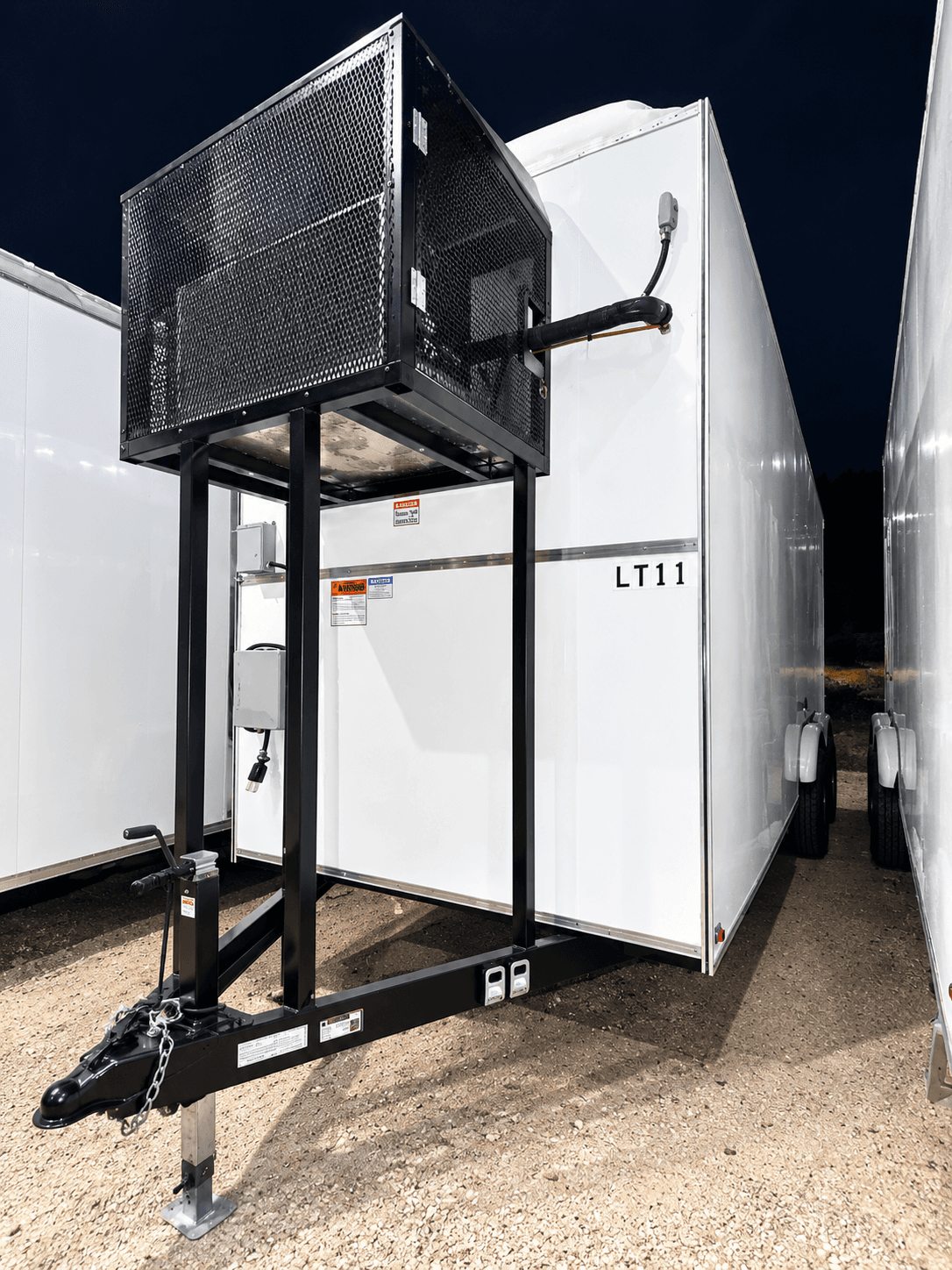
BXRT20–1Refrigerated trailer
- Nominal length
- 20ft
- Listed electrical supply
- 220V · single-phase · 40–60A
- Inventory temperature label
- 32°F
MT1Refrigerated trailer
- Nominal length
- 20ft
- Listed electrical supply
- 220V · single-phase · 40–60A
- Inventory temperature label
- 15°F
LT2Refrigerated trailer
- Nominal length
- 20ft
- Listed electrical supply
- 220V · single-phase · 40–60A
- Inventory temperature label
- -5°F
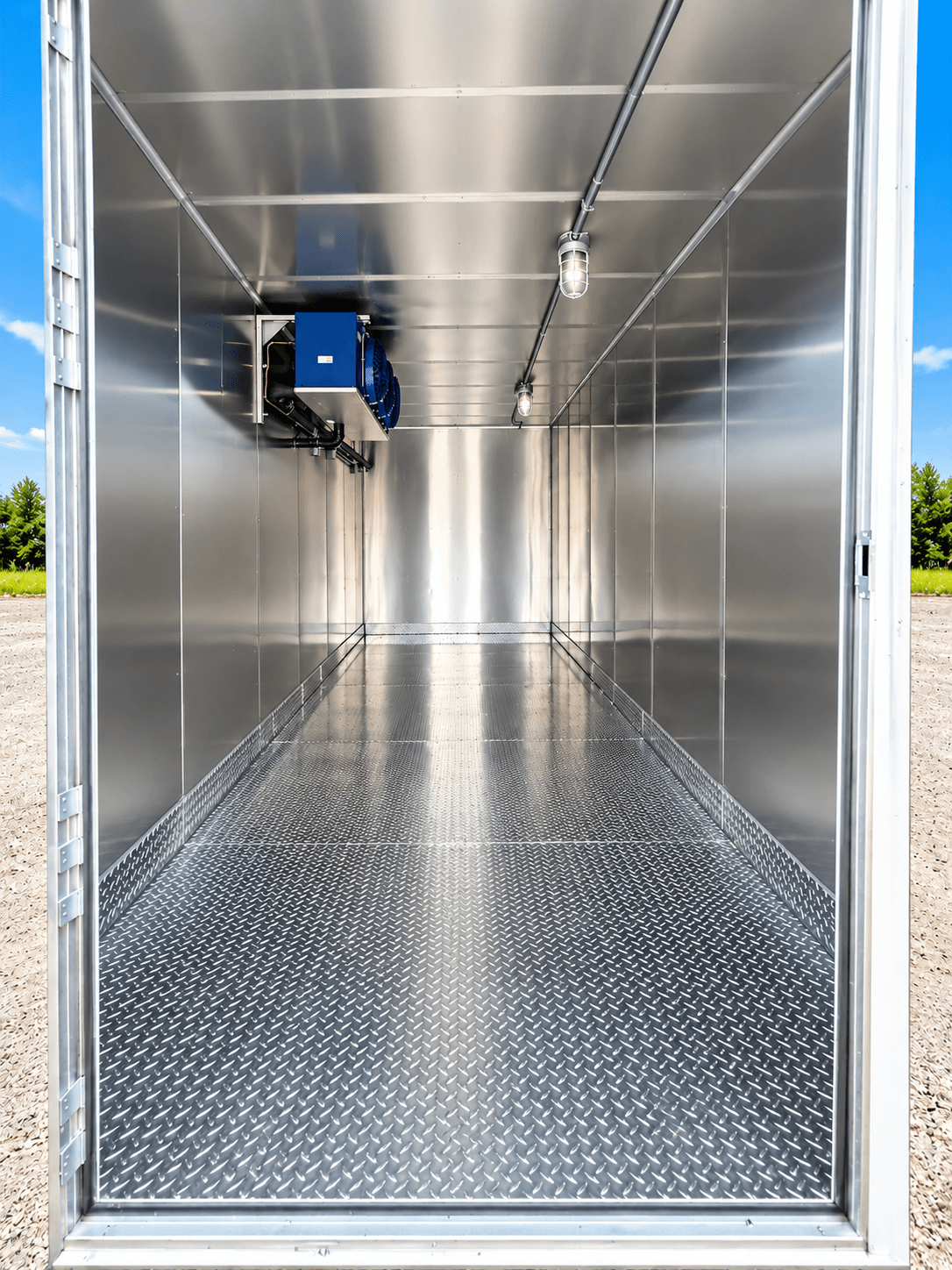
Listed refrigeration trailer equipment: condensing unit, amps panel, lighting.
Other cold-storage model details
- 12FT Refrigerated TrailerBXRT12–1 and BXRT12–2 list 220V · single-phase · 40–60A and a 32°F inventory label. Both are named as 12ft models, but their records also mention 20ft, so your quote confirms the length.
- 20FT Refrigerated ContainerYour quote confirms this container’s power, temperature and storage space for your project.
- 40FT Refrigerated ContainerYour quote confirms this container’s power, temperature and storage space for your project.
Equipment records reviewed October 19, 2026. Temperature labels are inventory labels, not verified operating ranges. Nominal length is a model label, not a measure of usable space or site footprint.
Keep the venue’s ingredient route usable through refurbishment
The venue facilities lead needs to connect each contractor boundary with the food operation that continues beside it. An ingredient order still needs a receiving point, a place in temporary holding and a route to preparation. Keep the acknowledged route revision available to facilities and service staff, including who controls the work area. An early outside position should not be treated as approval for every later refurbishment phase.
Compare a holding example with stock retained for service
MT1 in the 20FT Refrigerated Trailer guide lists a condensing unit, amps panel and lighting, with a 15°F inventory label. The label is not a verified operating range or evidence that every product retained for a venue service belongs at the same condition. The product owner supplies the actual holding requirements.
A refrigerated container provides nominal 20ft and 40ft alternatives whose usable capacity, power and temperature capabilities remain unconfirmed. Compare the offered refrigeration trailer or container with supplier cases and the quantities collected repeatedly for service, including the route that remains after the next work boundary changes.
Keep healthcare meal service in the rental plan
During healthcare dining refurbishments in Santa Barbara or at a separate Montana facility, receiving entrances may change while meals follow the established timetable. Explain the planned transfer back to permanent rooms and identify who can confirm when ordinary food receiving is ready to resume.
Review the three connections before works alter the supply route
MT1 lists 220V single-phase at 40–60A. The 40ft Combo example A lists 220V single-phase at 200–220A, while D7 lists 220V single-phase at 220A. Matching voltage does not settle the electrical requirements or exact connector. The responsible site professional needs the selected units’ information, including any changed supply route or service interruption during refurbishment.
Keep collection access in the plan
A project can change a site substantially between equipment arrival and collection. Describe the expected works sequence, including barriers, parked materials or temporary layouts that could affect the route later. Identify who will keep the access information current and who can approve changes when contractors are present. Ask the rental contact what details are needed for both movements and how collection should be requested. This is especially useful when the initial position is selected before the construction program is final. Keep arrival and collection access information together, and give the team a current version when the project moves into its next stage.
Plan around the busiest storage point
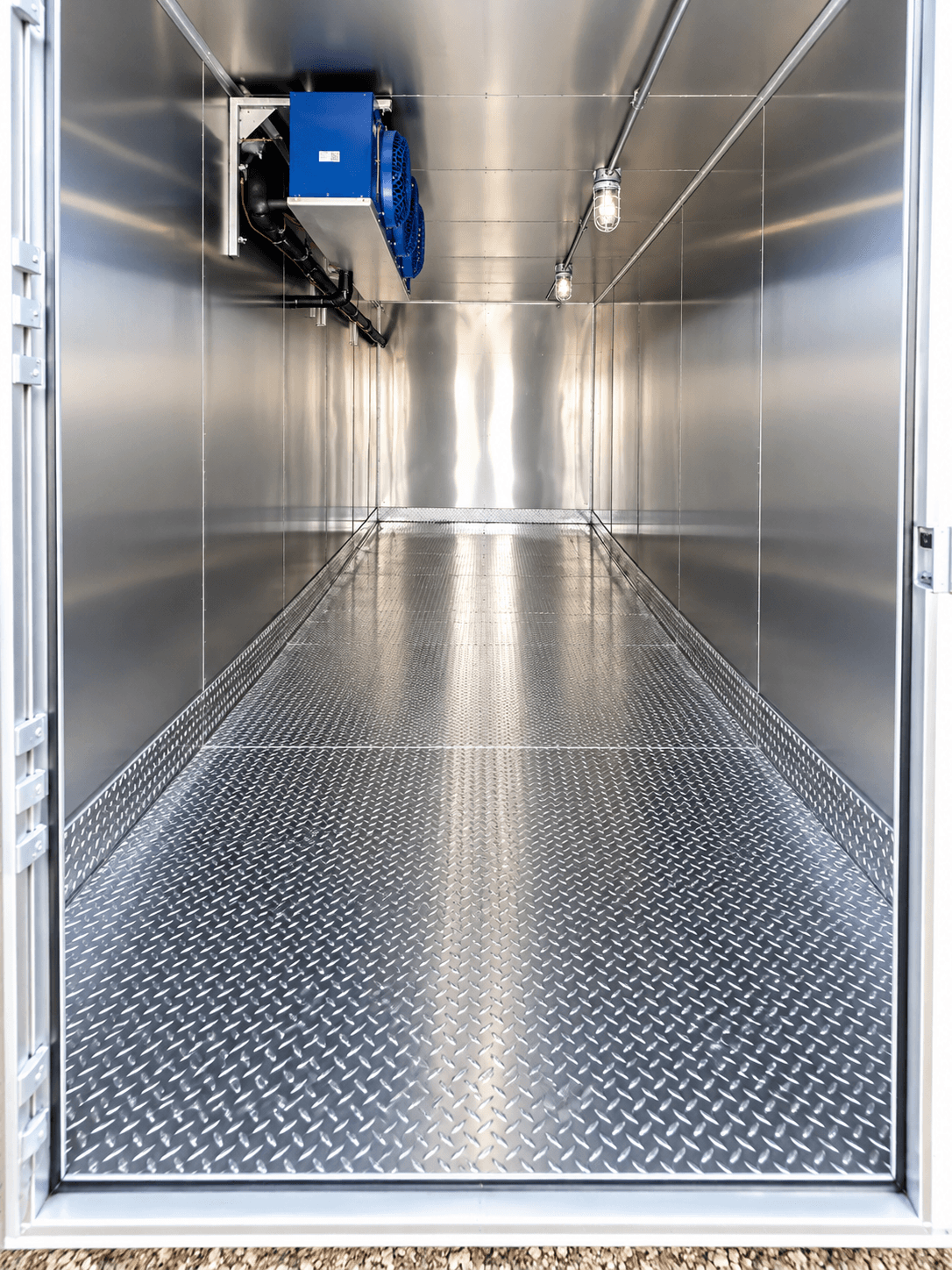
The useful starting figure is the greatest amount of stock expected at one time, including incoming orders that might arrive before older goods leave. Sketch that peak and note how it differs from an average operating day. Separate items that can remain packed from ingredients staff will retrieve frequently, and explain whether bulky containers or wheeled carts affect the layout. Include the supplier delivery pattern in the discussion. These details help frame a capacity inquiry without treating a nominal container size as a complete storage plan. Request a review of the expected load and the proposed working arrangement before reserving equipment.
Treat specialist products as a separate review
Some commercial inventories come with handling instructions that require a more detailed equipment discussion. Give the responsible product or quality contact an opportunity to explain those requirements, including any separation, recording or access procedures. Request unit information that your quality contact can compare with the products’ specified storage and handling requirements. If different stock groups have conflicting needs, say so clearly and request a review of the arrangement. Keep your own acceptance criteria and decision process documented. Use the discussion to create a current record of the stock requirements, equipment information and decisions your responsible contacts need to make.
Separate a cooking-and-cooler example from machine washing
The 40ft Combo example A in the 40FT Combo Kitchen Trailer Rental guide lists a single-stack convection oven, griddle/oven, six-burner range/oven, deep fryers, reach-in refrigerator/freezer and walk-in cooler. A machine dishwasher is not documented in that example. Its cooler also does not establish the usable capacity of a separate container.
D7 in the 38FT Low Temp Dishwashing Trailer guide is identified as low-temperature and lists a soil tray, prep table, racks, sinks and water heater. Its records disagree about the loading mechanism, so push-through or conveyor operation remains unconfirmed. Keep the offered washing arrangement and clean-item destination separate from ingredient holding, with current instructions available to each shift.
Use decision points rather than an assumed deadline
When the end of an interruption depends on another contractor, describe the milestones that will determine your storage requirement. These might include completion of repair work, a site-services review or the operation's decision to transfer stock back. Give an expected schedule while making the uncertainty clear. Ask how the rental period could be extended and what steps are needed to request collection. Keep the contact responsible for updates identified throughout the inquiry. This gives the team a current description of the requirement and period, while keeping the operational milestones visible during the equipment and quotation discussion.
Keep the current venue route and final stock in the quote
Request current availability and a quote covering the offered equipment, rental period, delivery, collection and additional items. Include stock remaining after service and changes that affect the collection route. The proposal should follow the current acknowledged arrangement, rather than an early refurbishment plan.
Contact Worldwide Refrigerated Container Rental Facilities at +1 877-804-5153. Share your stock, site and dates, then ask about current equipment availability, rental or lease terms, delivery arrangements and a quote.
Review venue stock against the changing work boundary
A venue facilities lead can compare the commercial food operation's routine with each planned work boundary. Choose a real stock task, such as moving an ingredient order from receiving to preparation, and record where the proposed refurbishment interrupts it. Ask the kitchen contact which parts of that movement remain necessary while the venue continues operating, without presuming that the original route can be retained.
Before a boundary changes, circulate a short note showing the current route under review, the person controlling the work area and any question awaiting an answer. An event or service manager should see the same instruction as facilities. Use the acknowledged revision when discussing temporary equipment, rather than an early plan that no longer reflects the venue's activities or the contractor's proposed working area.
Discuss your cold storage rental.
Confirm the equipment, delivery location, and rental period that fit your project.
Request availability