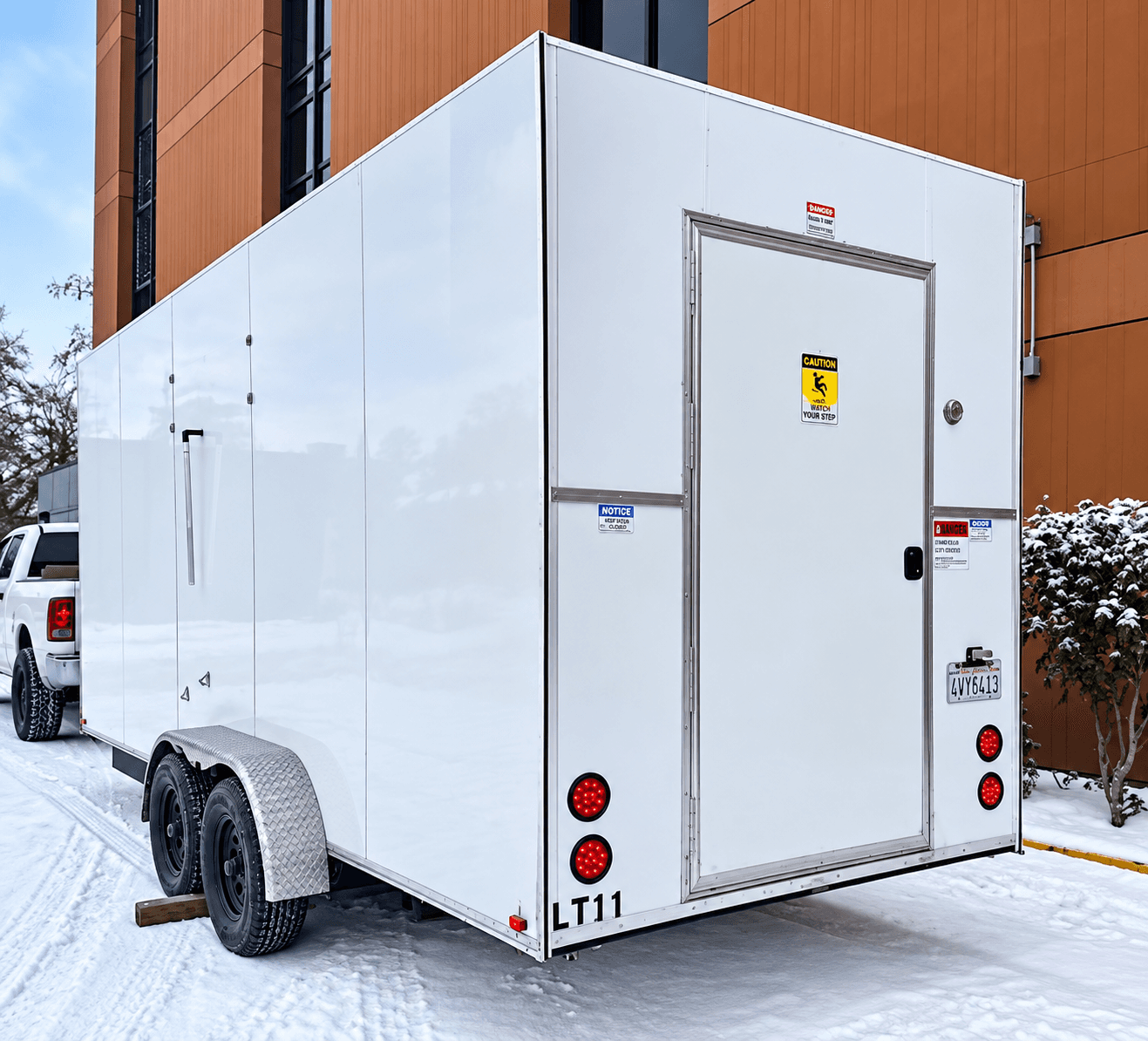
Compare the equipment
Specifications for your rental planning
These published examples describe named company units. The supplied equipment, configuration and availability are confirmed for your project address.
BXRT20–1Refrigerated trailer
- Nominal length
- 20ft
- Listed electrical supply
- 220V · single-phase · 40–60A
- Inventory temperature label
- 32°F
MT1Refrigerated trailer
- Nominal length
- 20ft
- Listed electrical supply
- 220V · single-phase · 40–60A
- Inventory temperature label
- 15°F
LT2Refrigerated trailer
- Nominal length
- 20ft
- Listed electrical supply
- 220V · single-phase · 40–60A
- Inventory temperature label
- -5°F
Listed refrigeration trailer equipment: condensing unit, amps panel, lighting.
Other cold-storage model details
- 12FT Refrigerated TrailerBXRT12–1 and BXRT12–2 list 220V · single-phase · 40–60A and a 32°F inventory label. Both are named as 12ft models, but their records also mention 20ft, so your quote confirms the length.
- 20FT Refrigerated ContainerYour quote confirms this container’s power, temperature and storage space for your project.
- 40FT Refrigerated ContainerYour quote confirms this container’s power, temperature and storage space for your project.
Equipment records reviewed October 19, 2026. Temperature labels are inventory labels, not verified operating ranges. Nominal length is a model label, not a measure of usable space or site footprint.
Make the storage handover usable across shifts
An incoming shift needs to know which stock remains in temporary refrigeration, which supplier changes were accepted and which product decisions are unresolved. Separate an instruction already agreed by the responsible supervisor from a request still awaiting an answer. The equipment arrangement should support that continuing retrieval pattern, while the operating handover records the actual changes made during each shift.
Emergency refrigeration rental and lease options in San Francisco
Leasing a mobile refrigeration trailer in San Francisco is one way to protect inventory during an emergency outage, a planned shutdown or a busy season. Short-term rentals usually fit a repair measured in days, while a longer-term lease fits a remodel, a phased construction project or a seasonal peak. A mobile kitchen trailer for rent and a refrigerated trailer can be quoted together, so cooking, cold storage and the dish room are planned as one temporary setup.
Onsite temporary refrigeration facilities can be rented short term or leased long term, whether the need is an emergency breakdown, a mobile cold room for an event or commercial storage during construction. Photos of the failed unit or the available space can help the team understand the request. Calls about a failed walk-in cooler or freezer are answered by a person around the clock, and delivery timing and equipment availability are confirmed once the details are reviewed.
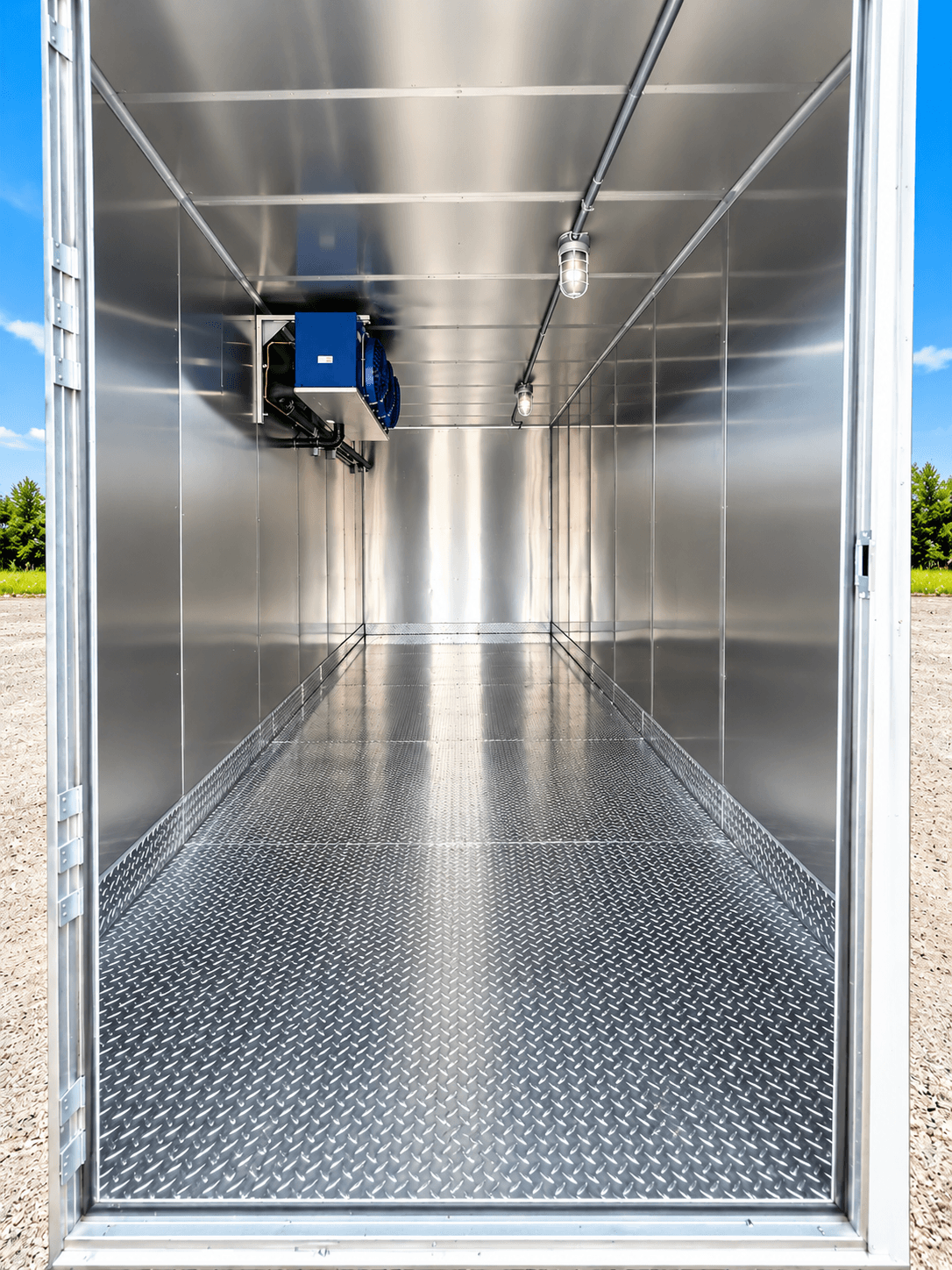
Compare the holding examples before combining stock
The MT1 example in the 20FT Refrigerated Trailer guide lists a condensing unit, amps panel and lighting, with a 15°F inventory label. That label does not establish a complete operating range or a common storage condition for every product handled by the two shifts.
For a refrigerated container, nominal 20ft and 40ft options still need confirmation of usable capacity, power and temperature capabilities. Compare the offered refrigeration trailer or container with the products' requirements and retrieval order. A new shift taking over the same space does not make differently conditioned stock interchangeable.
Coordinate your rental with events and catering
Events at a San Francisco venue or a separate Minnesota site may need temporary equipment when permanent facilities cannot support the proposed menu and service. Separate supplier receiving tasks from guest service responsibilities, naming the person who can resolve a missed delivery or changed ingredient order.
Keep receiving and dispatch needs visible
Cold storage planning involves movement as well as space. List the deliveries expected during the rental, the staff responsible for checking them, and how goods will travel from receiving to storage and back into use. Describe any need to keep outgoing orders separate from newly received products. If several departments share the equipment, explain their different retrieval times and packaging. A clear flow diagram can be more useful than an unsupported capacity estimate. Ask which proposed unit and access arrangement should be reviewed for that pattern, and confirm the final loading plan with the people handling the products.

Make the return to permanent storage explicit
A rental inquiry should explain what must happen before temporary refrigeration is no longer needed. The permanent store may require a separate handover, equipment review or stock-transfer decision by your own team. Identify who makes that decision and how it will be communicated to the rental contact. Ask about collection notice and any term that applies if the program changes. Keep incoming orders and stock movement in the same schedule so the final working day fits the operation’s return to permanent storage. Confirm the final rental and collection arrangements when the operation can give a reliable update on its requirements.
Distinguish holding from other temperature tasks
Explain what the equipment is expected to do with the goods after they enter. Holding already chilled stock is a different request from asking whether a particular load can be cooled from another starting condition. Describe the arrival condition and intended use, then ask which requirements should be considered in the equipment review. Include frozen goods separately where relevant. The operation's product owner should supply the handling requirements and decide what checks are needed. Request the relevant specifications for the equipment being considered, then compare them with the actual task before approving a rental arrangement.
Keep the different electrical loads in the shift record
MT1 lists 220V single-phase at 40–60A; K14 lists 220V single-phase at 200–220A; DTC1 lists 220V single-phase at 300A. The selected units' electrical requirements and exact connectors need review by the responsible site professional. Keep the approved connection arrangement available to both shifts, especially when contractor work changes the approach to a supply point.
Review the full route for stock movement
Look beyond the final storage footprint and describe the complete movement of goods. Staff may need to pass through doors, use carts, cross a delivery area or work around construction activity before reaching the temporary refrigerator. Give the relevant site contact a chance to assess that route and identify restrictions. Ask for the entry details of the equipment being considered, including any loading aids that would need a separate discussion. Measurements should relate to the real carriers and products your team uses. Confirm how the arrangement will work during normal activity and during the busiest replenishment periods before committing to a position.
Hand over kitchen and dishwashing tasks separately
If cooking moves as well, K14 in the 38FT Mobile Kitchen Trailer Rental guide lists a single-stack convection oven, griddle/oven, six-burner range/oven, deep fryers and reach-in refrigerator/freezer. The temporary kitchen has a meal-production role alongside the reserve cold store.
DTC1 in the 38FT Conveyor Dishwashing Trailer Rental guide lists a high-temperature conveyor dishwasher, soil tray, prep table, racks and sinks. A washing handover therefore needs to identify used items still waiting and clean items ready to return to service, rather than reuse the ingredient-stock list.
Match the quote to the arrangement each shift will use
Review the offered unit, current availability, rental period and delivery/collection scope together. Keep the final stock transfer in the schedule so one shift's completion is not mistaken for an empty temporary store.
Contact Worldwide Refrigerated Container Rental Facilities at +1 877-804-5153. Share your stock, site and dates, then ask about current equipment availability, rental or lease terms, delivery arrangements and a quote.
Hand over exceptions as well as the normal stock plan
Alternating shifts need more than a copy of the original temporary-storage inquiry. The outgoing supervisor can identify stock movements completed during the shift, supplier changes not yet confirmed and questions passed to the equipment or site contact. Keep those exceptions alongside the current plan so the incoming team can distinguish a new decision from a familiar routine.
Use an acknowledgment step for a material change, such as an order reassigned to a later preparation period. The incoming lead should be able to identify the affected stock, the revised instruction and the person who authorized it. If two records disagree, mark that discrepancy for resolution instead of silently choosing one. This gives the next shift a checkable operating handover without assuming that everyone attended the original rental conversation.
Discuss your cold storage rental.
Confirm the equipment, delivery location, and rental period that fit your project.
Request availability