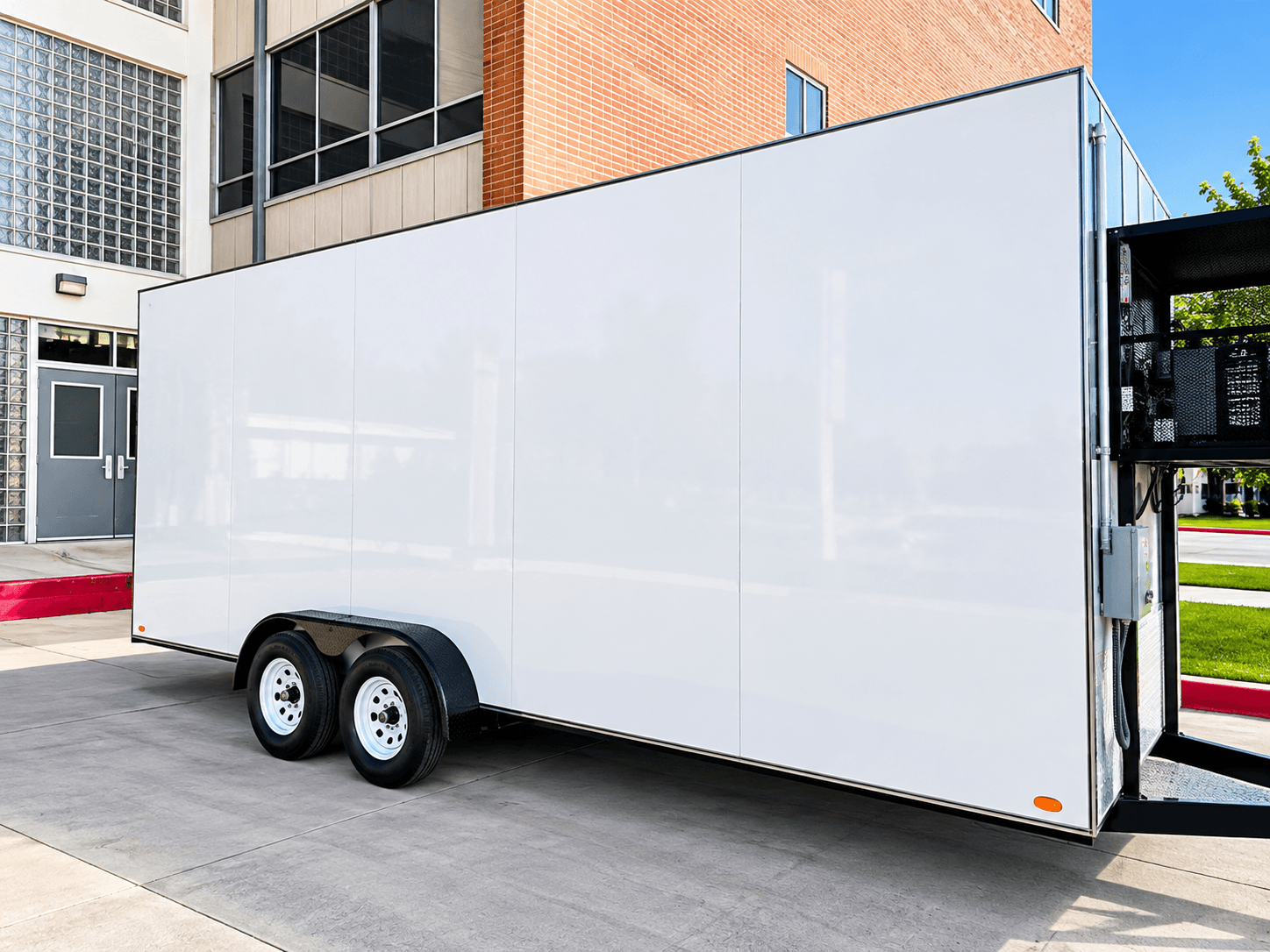
Compare the equipment
Specifications for your rental planning
These published examples describe named company units. The supplied equipment, configuration and availability are confirmed for your project address.
BXRT20–1Refrigerated trailer
- Nominal length
- 20ft
- Listed electrical supply
- 220V · single-phase · 40–60A
- Inventory temperature label
- 32°F
MT1Refrigerated trailer
- Nominal length
- 20ft
- Listed electrical supply
- 220V · single-phase · 40–60A
- Inventory temperature label
- 15°F
LT2Refrigerated trailer
- Nominal length
- 20ft
- Listed electrical supply
- 220V · single-phase · 40–60A
- Inventory temperature label
- -5°F
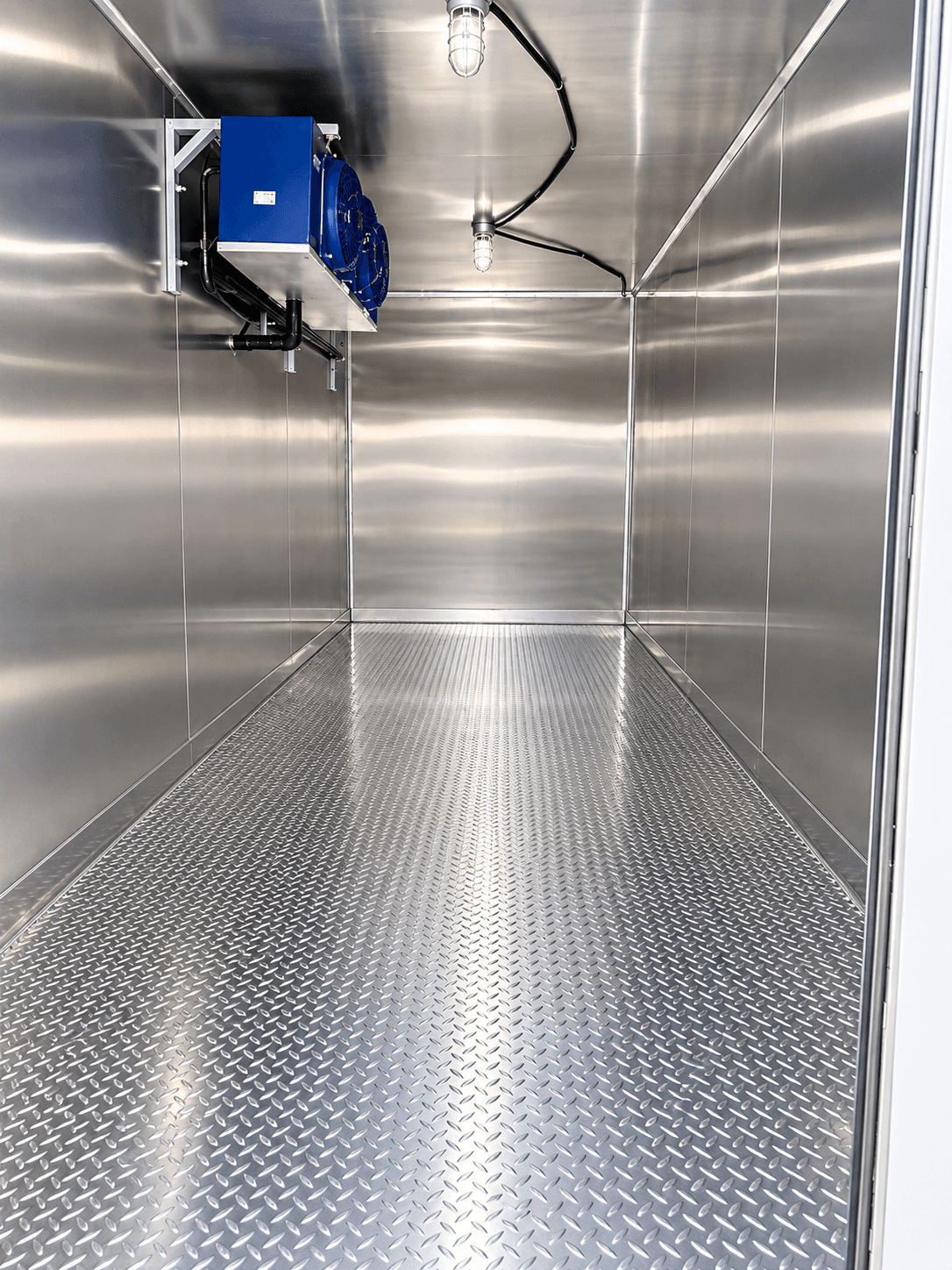
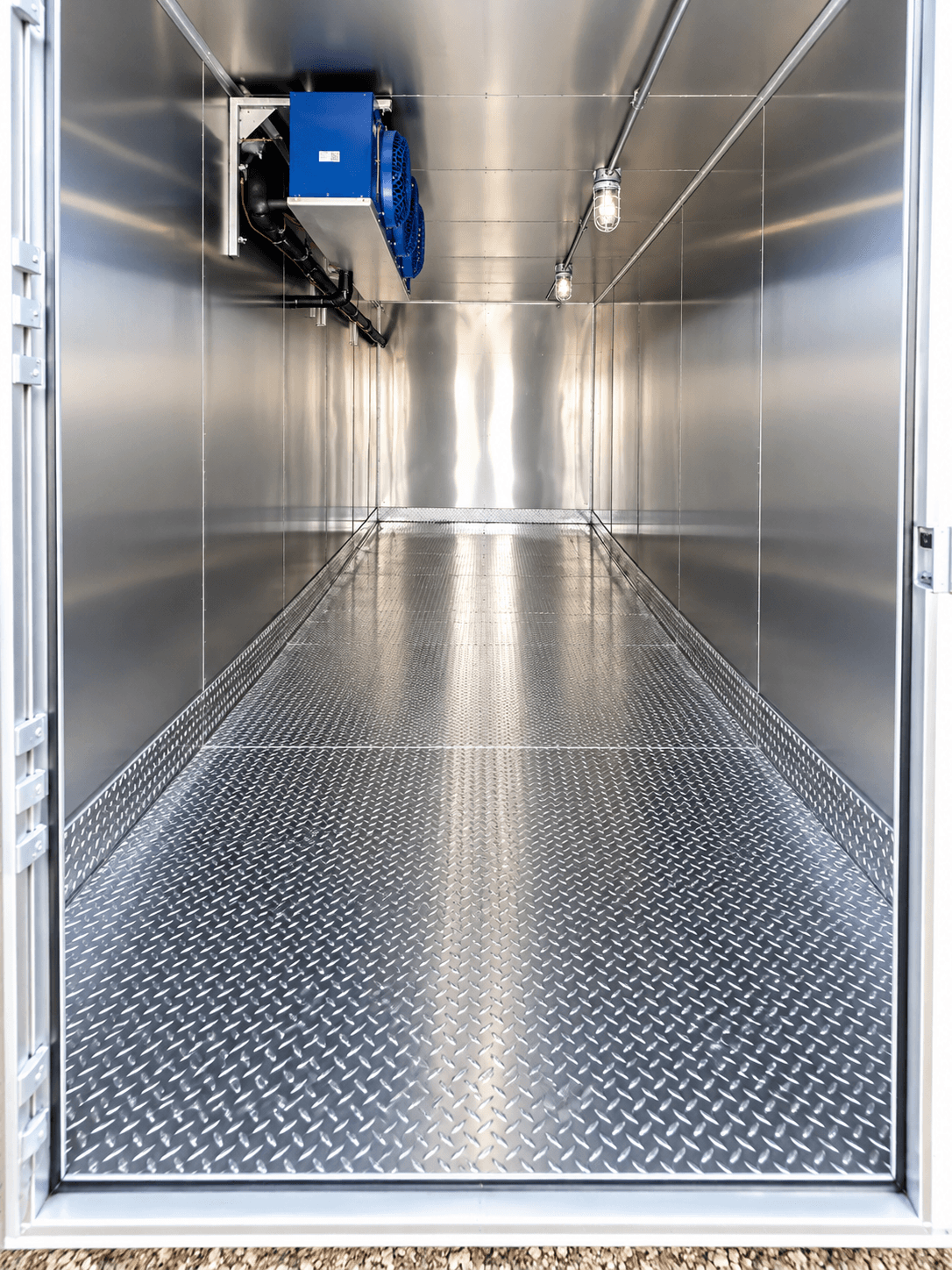
Listed refrigeration trailer equipment: condensing unit, amps panel, lighting.
Other cold-storage model details
- 12FT Refrigerated TrailerBXRT12–1 and BXRT12–2 list 220V · single-phase · 40–60A and a 32°F inventory label. Both are named as 12ft models, but their records also mention 20ft, so your quote confirms the length.
- 20FT Refrigerated ContainerYour quote confirms this container’s power, temperature and storage space for your project.
- 40FT Refrigerated ContainerYour quote confirms this container’s power, temperature and storage space for your project.
Equipment records reviewed October 19, 2026. Temperature labels are inventory labels, not verified operating ranges. Nominal length is a model label, not a measure of usable space or site footprint.
Keep each catering order identifiable through the refit
For catering during the refit, preparation may begin for one order while another waits for dispatch. Group the ingredients by the task and order they support, keeping supplies needed repeatedly distinct from unopened reserve cases. A moved preparation session can change the load in temporary refrigeration without changing the supplier's committed delivery, so both movements belong in the operating schedule.
Compare the holding label with the actual product requirement
LT2 in the 20FT Refrigerated Trailer guide lists a condensing unit, amps panel and lighting, with a −5°F inventory label. A full operating range and suitability for the intended load remain unconfirmed. The label does not establish production-freezing performance for newly prepared food.
For a refrigerated container, nominal 20ft and 40ft options require confirmation of usable capacity, power and temperature capabilities. Compare the offered refrigeration trailer or container with the packages assigned to each catering order and the route staff use to retrieve them. Keep product-handling decisions with the responsible food operator.
Keep healthcare meal service in the rental plan
A healthcare dining manager preparing an inquiry for Philadelphia and another for a Louisiana facility can describe how ingredients arrive before preparation and move between working areas. Include staff collection routes and ingredient destinations in the inquiry so the facility can review the temporary arrangement against its meal service.
Review the plan with the people using it
Before the proposed arrangement is finalized, invite the staff handling products to review the storage position and movement plan. They can explain package sizes, retrieval patterns and practical access needs that may not appear in the original inquiry. Ask the equipment contact which details require confirmation for the unit under discussion. Keep the final instructions and responsibilities available to the people working each shift. Use the review to connect the current product brief with the specific equipment information and working arrangement being discussed. Any change to the products or intended use should be discussed with the appropriate contacts before the revised arrangement is accepted.
Keep receiving and dispatch needs visible
Cold storage planning involves movement as well as space. List the deliveries expected during the rental, the staff responsible for checking them, and how goods will travel from receiving to storage and back into use. Describe any need to keep outgoing orders separate from newly received products. If several departments share the equipment, explain their different retrieval times and packaging. A clear flow diagram can be more useful than an unsupported capacity estimate. Ask which proposed unit and access arrangement should be reviewed for that pattern, and confirm the final loading plan with the people handling the products.
Choose kitchen appliances and washing equipment for separate jobs
K2 in the 28FT Mobile Kitchen Trailer Rental guide lists a single-stack convection oven, griddle/oven, six-burner range/oven, deep fryers and reach-in refrigerator/freezer. If cooking also moves, this kitchen supports preparation and meal production alongside reserve ingredient holding.
D1 in the 22FT Dishwashing Trailer Rental guide lists a low-temperature push-through dishwasher, soil tray, scraping table and sinks. Dishwashing equipment serves returned dishes and utensils, rather than adding refrigerated space for an order still waiting to leave. Its actual throughput and clean-item layout need review against those returns.
Plan the handover between storage arrangements
Describe how the operation expects to move from its existing refrigeration into a temporary arrangement and back again. Include the people responsible for authorizing each move, the products affected and any receiving commitments during the transition. Ask what needs confirmation before the temporary unit is brought into use. Where the repair program is uncertain, explain the decision points and who will provide an updated schedule as the work develops. Discuss the process for extending the rental and requesting collection once the operation is ready. The schedule should support a controlled handover, with the required equipment and commercial terms confirmed separately for the proposed booking.
Coordinate loading access with everyday activity
Temporary refrigeration can affect a receiving area that already serves staff, suppliers and other contractors. Explain that existing activity when discussing a location for the unit. Include the periods when deliveries arrive, where stock handling takes place and who can authorize temporary changes to the working area. Ask how the proposed loading arrangement should be assessed and whether additional site information is required. Use that review to align stock handling, daily activity and the proposed equipment position before the working arrangement is finalized. Keep the agreed access information with the rental inquiry and project schedule.
Check the supply for each temporary function
LT2 lists 220V single-phase at 40–60A; K2 lists 220V single-phase at 200A; D1 lists 220V single-phase at 150A. The selected equipment's electrical requirements, exact connectors and supply routes need review by the responsible site professional. Treat any movement caused by the next refit stage as a change to that connection arrangement.
Allow the catering commitment to determine the remaining period
Review the quote against the orders that still rely on temporary storage and any changed refit dates. Confirm current equipment availability, rental and extension terms, transport, collection notice and separate preparation responsibilities before approving the arrangement.
Contact Worldwide Refrigerated Container Rental Facilities at +1 877-804-5153. Share your stock, site and dates, then ask about current equipment availability, rental or lease terms, delivery arrangements and a quote.
Connect each catering commitment to the refit schedule
For catering during a kitchen refit, the production manager can group ingredients by the preparation and dispatch tasks they support. Identify the orders that must be assembled while the normal cold room is inaccessible and those whose stock arrives later. This makes a contractor date useful only when its effect on an actual catering task is understood.
Try a handover example in which a preparation session moves but its supplier delivery remains unchanged. Record the resulting stock overlap, the contact deciding whether to amend the order and the instruction the dispatch team should follow. Check that the project coordinator receives the same revision as production. The updated requirement can then be reviewed with the equipment contact without treating the whole catering program as one undifferentiated storage load.
Discuss your cold storage rental.
Confirm the equipment, delivery location, and rental period that fit your project.
Request availability