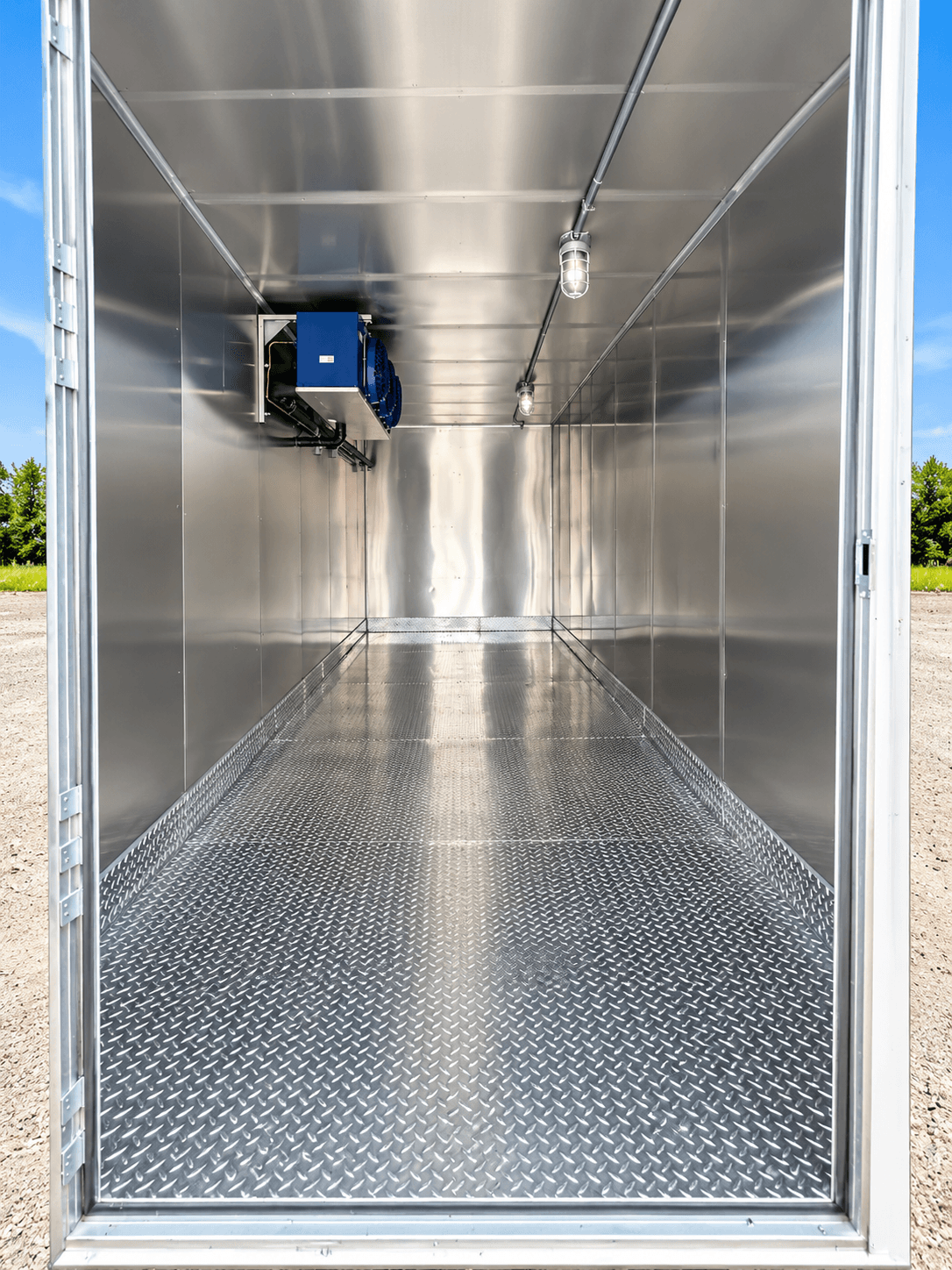
Compare the equipment
Specifications for your rental planning
These published examples describe named company units. The supplied equipment, configuration and availability are confirmed for your project address.
BXRT20–1Refrigerated trailer
- Nominal length
- 20ft
- Listed electrical supply
- 220V · single-phase · 40–60A
- Inventory temperature label
- 32°F
MT1Refrigerated trailer
- Nominal length
- 20ft
- Listed electrical supply
- 220V · single-phase · 40–60A
- Inventory temperature label
- 15°F
LT2Refrigerated trailer
- Nominal length
- 20ft
- Listed electrical supply
- 220V · single-phase · 40–60A
- Inventory temperature label
- -5°F
Listed refrigeration trailer equipment: condensing unit, amps panel, lighting.
Other cold-storage model details
- 12FT Refrigerated TrailerBXRT12–1 and BXRT12–2 list 220V · single-phase · 40–60A and a 32°F inventory label. Both are named as 12ft models, but their records also mention 20ft, so your quote confirms the length.
- 20FT Refrigerated ContainerYour quote confirms this container’s power, temperature and storage space for your project.
- 40FT Refrigerated ContainerYour quote confirms this container’s power, temperature and storage space for your project.
Equipment records reviewed October 19, 2026. Temperature labels are inventory labels, not verified operating ranges. Nominal length is a model label, not a measure of usable space or site footprint.
Review the next batch without losing the stock remaining
The operations planner needs a decision point for each batch entering temporary refrigeration, with the source stock and goods already transferred still identifiable. Reconcile both sides before using a revised quantity for the next move. An inspection update about the permanent area is separate from the product owner’s decision to move goods, and from any agreement to release temporary equipment.
Compare the holding example with each batch’s requirements
LT2 in the 20FT Refrigerated Trailer guide lists a condensing unit, amps panel and lighting, with a −5°F inventory label. That label is not a complete operating range or evidence that every batch belongs at the same condition. Keep the responsible product contact’s requirements with each stock group.
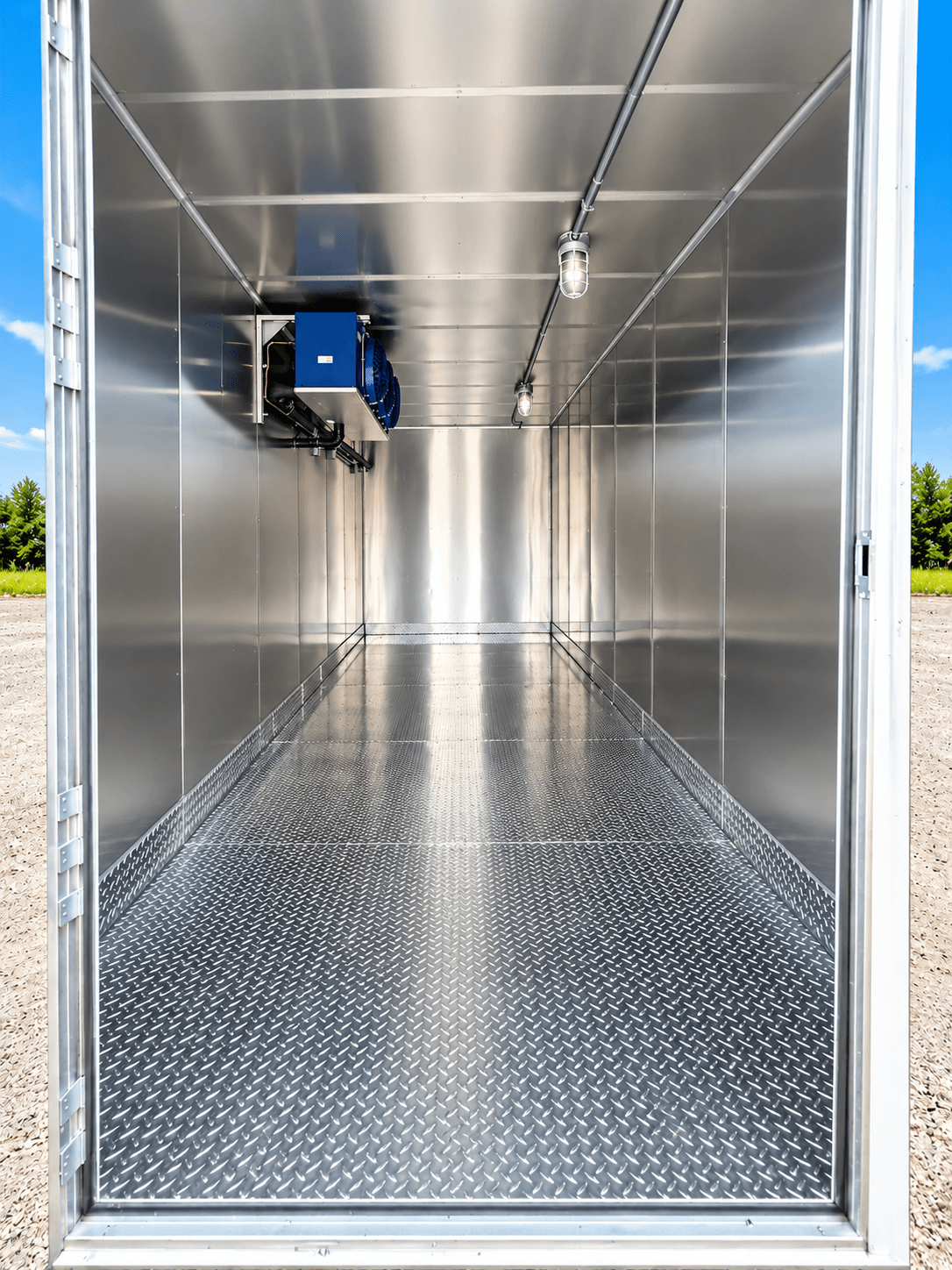
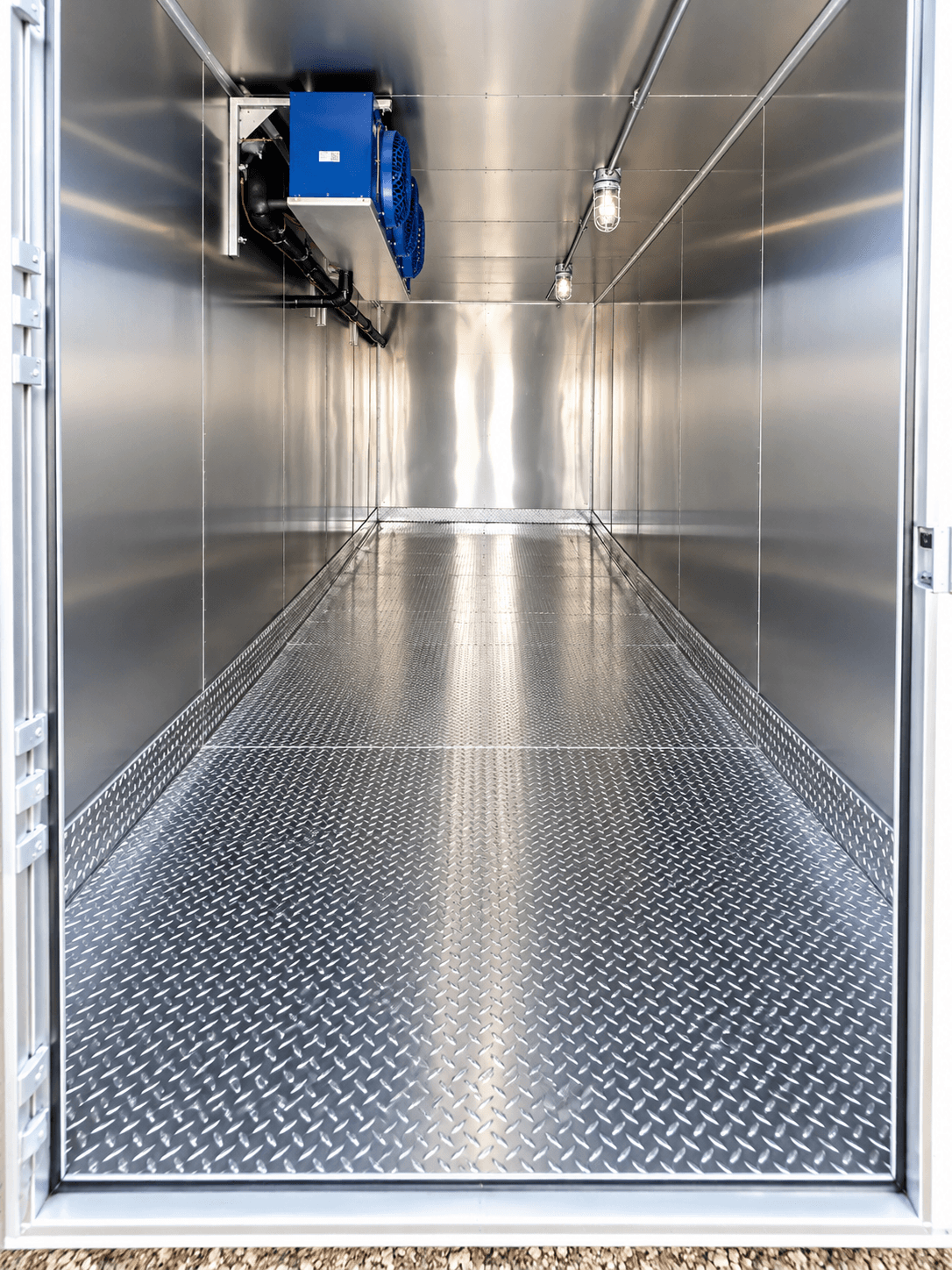
A refrigerated container provides nominal 20ft and 40ft alternatives whose usable capacity, temperature capabilities and electrical requirements remain unconfirmed. Compare the offered refrigeration trailer or container with the packages moved at each stage and the space needed to retrieve earlier batches afterward. A transfer sequence does not establish equipment suitability on its own.
Plan for food production and distribution handovers
Food production operators planning work in Aurora or at a separate New Mexico site may need alternative product routes between receiving, preparation and dispatch. Ask how the operator records returned goods and separates them from available stock before agreeing the proposed equipment position and product route.
Use decision points rather than an assumed deadline
When the end of an interruption depends on another contractor, describe the milestones that will determine your storage requirement. These might include completion of repair work, a site-services review or the operation's decision to transfer stock back. Give an expected schedule while making the uncertainty clear. Ask how the rental period could be extended and what steps are needed to request collection. Keep the contact responsible for updates identified throughout the inquiry. This gives the team a current description of the requirement and period, while keeping the operational milestones visible during the equipment and quotation discussion.
Connect the storage position to the work
Think through the route staff will use between the temporary store and the area where products are needed. Describe changes in level, doors, shared passageways and the equipment used to move stock. Identify where pedestrians, deliveries and other work might cross that route so the site team can review the arrangement. Ask about entry and loading details for the particular unit, including any access options that need discussion. A convenient parking position is only one part of the plan. The people managing the site and handling the products should understand the proposed working route before a location is finalized.
Separate storage requirements in the brief
Products with different handling requirements should be identified before an equipment request becomes a booking. State whether goods are chilled, frozen or subject to another documented storage condition, and describe any segregation your own procedures require. Explain which product groups can be considered together and which need a separate review. Explain which products arrive already conditioned and whether any incoming load presents a different requirement. Ask the rental team to review those details and discuss the equipment options that can be considered. Your product owner should decide the conditions and records required for the goods being stored.
Assign responsibilities before the stock moves
List the people responsible for the products, site access, electrical questions and communication with the rental team. These may be different roles, particularly when another contractor is handling the repair or refurbishment. Agree who approves the storage arrangement and who can authorize a change if the program moves. Ask what equipment instructions and contact details will be supplied for the proposed booking. Each person involved should be able to see which decisions belong to them and who to contact when the working arrangement needs review. Keep these responsibilities with the inquiry and update them when the project team changes.
Give preparation and washing their own transfer handovers
P1 in the 26FT Mobile Kitchen Trailer guide lists a prep table, sinks, reach-in refrigerator/freezer and water heater. Its published equipment does not document a cooking line. If preparation also moves, identify which batch supplies that task and where prepared work goes next, without treating a reserve cold store as preparation equipment.
DTC3 in the 30FT Conveyor Dishwashing Trailer guide lists a high-temperature conveyor dishwasher, soil tray, prep table, racks, sinks and water heater. Returned items and clean-item collection need a route separate from the stock transfers. Keep each selected unit’s controls, loading guidance and concern contact with the handover; a changed product condition requires its own review.
Compare phase and load before the next transfer stage
LT2 lists 220V single-phase at 40–60A, and P1 lists 220V single-phase at 200A. DTC3 lists 220V three-phase at 200A. Matching voltage does not settle phase, exact connector or a suitable supply. The responsible site professional needs the selected equipment’s requirements, including planned electrical work or an alternative arrangement that affects a later transfer stage.
Keep the remaining batches and decisions in the rental scope
Request current availability and a quote for the offered equipment, rental period, delivery, collection and additional items. Keep outstanding batch, site and product questions beside it. A provisional inspection date should not replace the separate decisions needed for the final stock movement and equipment collection.
Contact Worldwide Refrigerated Container Rental Facilities at +1 877-804-5153. Share your stock, site and dates, then ask about current equipment availability, rental or lease terms, delivery arrangements and a quote.
Give each transfer batch a recorded decision point
For a phased stock move, the operations planner can identify a named batch using the operation's own inventory references and describe what must be known before it moves. The record might distinguish goods already accounted for from those awaiting a product-owner decision. Keep that status separate from the permanent area's inspection progress so a construction update is not mistaken for permission to transfer stock.
After a batch movement, reconcile the source record with the stock remaining and the stock assigned to the interim arrangement. Identify discrepancies for the responsible supervisor before using the new total in the next step. Share any resulting change in the load or retrieval sequence with the equipment contact. This produces a traceable handover between batches without inventing a transfer procedure for the products themselves.
Discuss your cold storage rental.
Confirm the equipment, delivery location, and rental period that fit your project.
Request availability