Compare the equipment
Specifications for your rental planning
These published examples describe named company units. The supplied equipment, configuration and availability are confirmed for your project address.
BXRT20–1Refrigerated trailer
- Nominal length
- 20ft
- Listed electrical supply
- 220V · single-phase · 40–60A
- Inventory temperature label
- 32°F
MT1Refrigerated trailer
- Nominal length
- 20ft
- Listed electrical supply
- 220V · single-phase · 40–60A
- Inventory temperature label
- 15°F
LT2Refrigerated trailer
- Nominal length
- 20ft
- Listed electrical supply
- 220V · single-phase · 40–60A
- Inventory temperature label
- -5°F
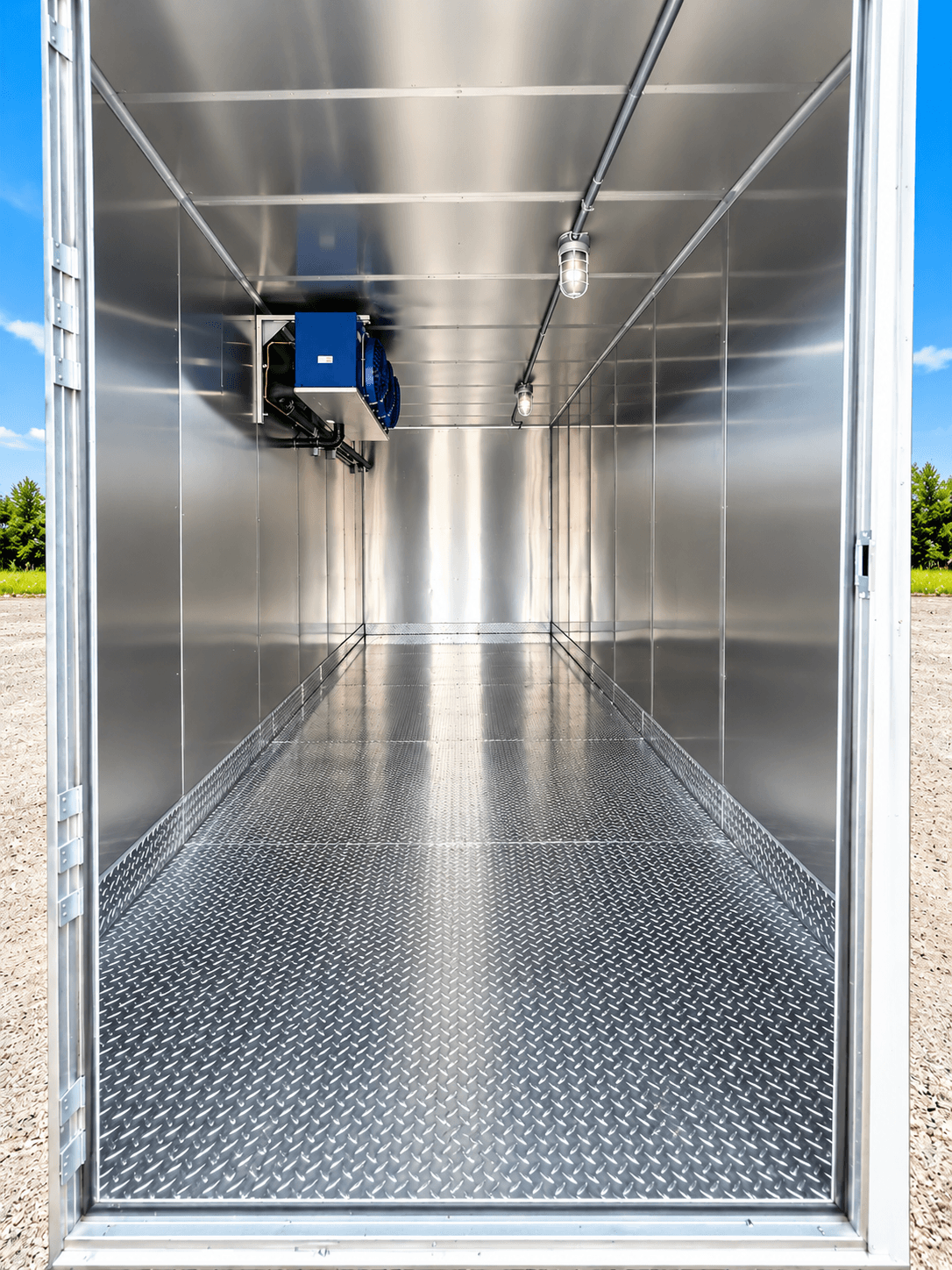
Listed refrigeration trailer equipment: condensing unit, amps panel, lighting.
Other cold-storage model details
- 12FT Refrigerated TrailerBXRT12–1 and BXRT12–2 list 220V · single-phase · 40–60A and a 32°F inventory label. Both are named as 12ft models, but their records also mention 20ft, so your quote confirms the length.
- 20FT Refrigerated ContainerYour quote confirms this container’s power, temperature and storage space for your project.
- 40FT Refrigerated ContainerYour quote confirms this container’s power, temperature and storage space for your project.
Equipment records reviewed October 19, 2026. Temperature labels are inventory labels, not verified operating ranges. Nominal length is a model label, not a measure of usable space or site footprint.
Follow the incoming order through each receiving-area change
The building services coordinator needs a current supplier handoff while receiving-area works continue. Identify the entrance under review, the person approving a revision and the instructions already issued to staff. A contractor’s proposed route should remain distinct from the acknowledged receiving plan. Keep the packaged-stock requirement for temporary refrigeration attached to that route so an incoming order is not directed to an earlier position.
Emergency walk-in cooler and freezer rental in Boise City: rent or lease
Commercial refrigeration problems in Boise City rarely wait, so a care-home kitchen may ask about a mobile refrigeration trailer rental as soon as a walk-in cooler or freezer breaks down. Emergency rentals and planned leases are quoted from the same details: the product, the temperature it must hold, the address and the dates. If cooking is also interrupted, a mobile kitchen trailer rental can sit beside the refrigeration, and a dishwashing trailer for rent can handle returned dishes.
Onsite temporary refrigeration facilities can be rented short term or leased long term, whether the need is an emergency breakdown, a mobile cold room for an event or commercial storage during construction. Tell the team what must stay cold and for how long; that decides whether a rental or a lease fits. Restaurants, hospitals, schools, hotels, caterers and food producers can describe the problem to a person who answers rental inquiries 24/7.

Compare holding equipment with the working receiving route
BXRT20–1 in the 20FT Refrigerated Trailer guide lists a condensing unit, amps panel and lighting, with a 32°F inventory label. That label is not a complete operating range or approval for all supplies displaced by the works. Product conditions and the offered unit’s usable capacity remain separate checks.
A refrigerated container provides nominal 20ft and 40ft alternatives whose temperature capabilities and electrical requirements also remain unconfirmed.
Compare the offered refrigeration trailer or container with cases arriving during each work phase and repeated collections for preparation. An early outside position does not establish a usable ingredient route after the next barrier is installed.
Keep healthcare meal service in the rental plan
Healthcare dining teams comparing Boise City with a separate North Carolina facility may need to review arrangements when incoming orders overlap with ingredients awaiting use. Explain which ingredients employees retrieve repeatedly and which remain reserved, using the handling requirements supplied by the facility's own responsible team.
Keep cooking and washing changes attached to their operating contacts
K21 in the 40FT Mobile Kitchen Trailer guide lists a double-stack convection oven, deep fryer, tilting skillet, griddle/oven, six-burner range/oven and reach-in refrigerator/freezer. Its published list does not document a walk-in cooler. If cooking also moves, relate those appliances to the ingredient handoff rather than import another unit’s cold-store features.
DTC1 in the 38FT Conveyor Dishwashing Trailer Rental guide lists a high-temperature conveyor dishwasher, soil tray, prep table, racks, sinks and water heater. Used items and clean-item collection need routes separate from receiving ingredients. Keep each selected unit’s instructions and concern contact available across shifts, and record who approves a changed arrangement or the final stock-transfer and collection request.

Build a practical load description
Prepare a short stock description that another person can understand without visiting the existing store. Include the main product groups, the largest package, the anticipated maximum load and the frequency of replenishment. Where stock must stay identifiable by order, batch or department, explain that requirement. A photograph or simple plan may help the discussion, but it should accompany measurements and a written brief. Ask what further information is needed to compare a refrigerated container or trailer with the work ahead. Use the written brief to compare the proposed unit with your packaging, stock movement and staff access needs.
Decide who checks conditions during use
Before the temporary store is put into use, identify who checks its conditions and who responds if something appears wrong. Explain any readings or records your operation needs, the expected working hours, and how staff communicate between shifts. Ask which controls or monitoring features belong to the particular equipment under discussion and which require a separate arrangement. Include any accessories or alert features you want to discuss in your request. A written handover can connect the equipment information with your existing product-handling procedures, making it clear who is responsible for observation, reporting and decisions about the goods throughout the rental period.
Plan the handover between storage arrangements
Describe how the operation expects to move from its existing refrigeration into a temporary arrangement and back again. Include the people responsible for authorizing each move, the products affected and any receiving commitments during the transition. Ask what needs confirmation before the temporary unit is brought into use. Where the repair program is uncertain, explain the decision points and who will provide an updated schedule as the work develops. Discuss the process for extending the rental and requesting collection once the operation is ready. The schedule should support a controlled handover, with the required equipment and commercial terms confirmed separately for the proposed booking.
Keep collection access in the plan
A project can change a site substantially between equipment arrival and collection. Describe the expected works sequence, including barriers, parked materials or temporary layouts that could affect the route later. Identify who will keep the access information current and who can approve changes when contractors are present. Ask the rental contact what details are needed for both movements and how collection should be requested. This is especially useful when the initial position is selected before the construction program is final. Keep arrival and collection access information together, and give the team a current version when the project moves into its next stage.
Review the electrical connections when the route changes
BXRT20–1 lists 220V single-phase at 40–60A; K21 lists 220V single-phase at 200–220A; DTC1 lists 220V single-phase at 300A. Shared voltage does not establish a common connector or supply. The responsible site professional needs selected-unit requirements and exact connections, with preparation responsibilities and any proposed alternative supply kept distinct from confirmed services.
Quote the current receiving arrangement and final movement
Request current availability and a quote for the offered equipment, rental period, delivery, collection and additional items. Keep the acknowledged receiving route and unresolved services questions beside that scope. Review a later position change with the relevant contacts instead of silently replacing the arrangement described in the proposal.
Contact Worldwide Refrigerated Container Rental Facilities at +1 877-804-5153. Share your stock, site and dates, then ask about current equipment availability, rental or lease terms, delivery arrangements and a quote.
Update supplier instructions when receiving works move
The building services coordinator can describe which part of the receiving-area refurbishment changes an ordinary supplier handoff. Identify the entrance or internal meeting point being discussed, the person reviewing access and the instructions staff have already issued. Keep unreviewed alternatives marked as proposals so a contractor sketch is not unintentionally passed to a supplier as the agreed receiving plan.
Test the communication record against a supplier that still holds the earlier instruction. Who will contact that supplier, who will acknowledge the correction and which team will receive the load? Record those answers alongside the stock brief. If the revised route changes the proposed temporary-storage position, send that change for equipment review. This connects the building works with an actual incoming order instead of leaving the coordination issue inside a facilities document.
Discuss your cold storage rental.
Confirm the equipment, delivery location, and rental period that fit your project.
Request availability