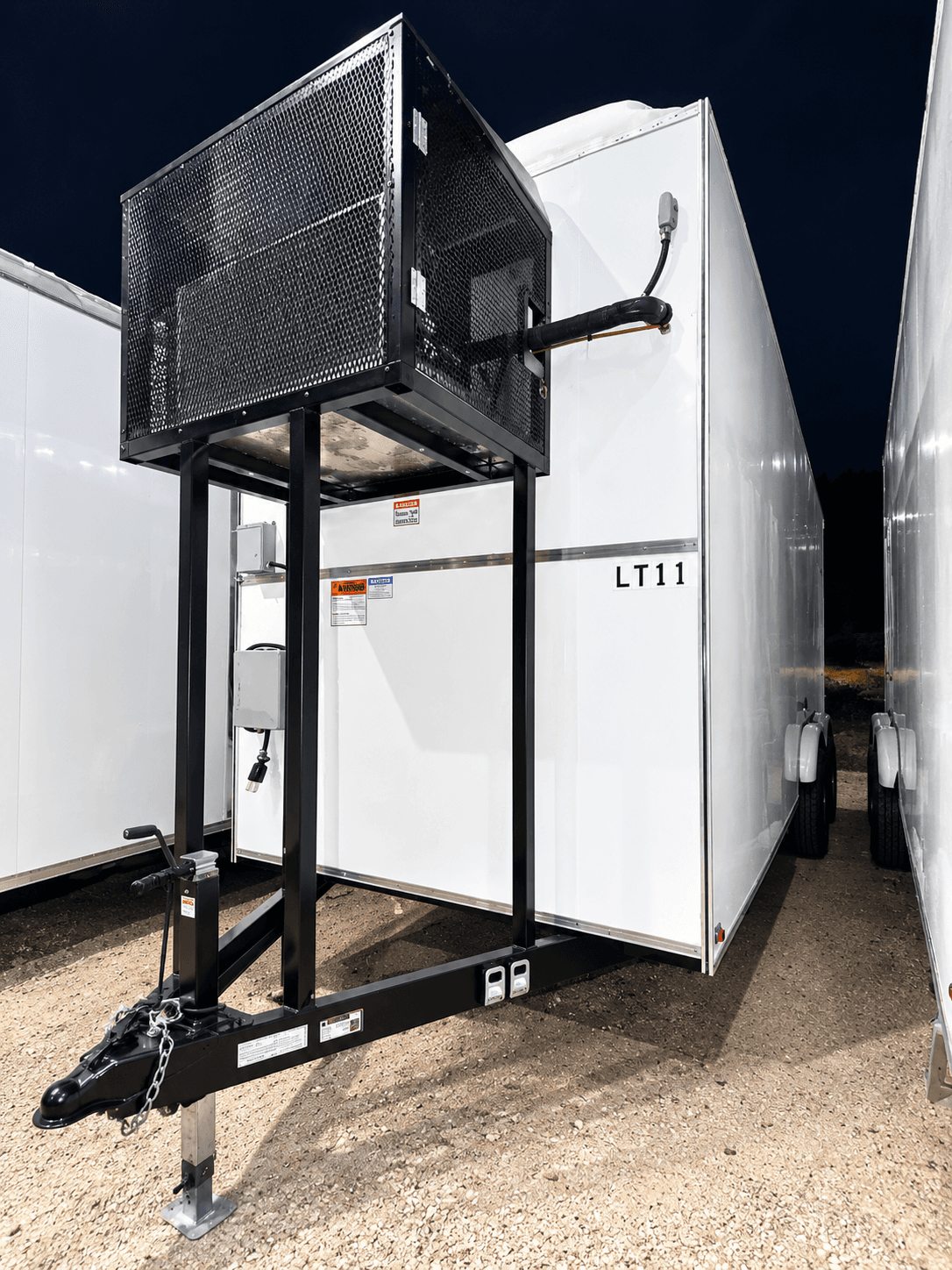
Compare the equipment
Specifications for your rental planning
These published examples describe named company units. The supplied equipment, configuration and availability are confirmed for your project address.
BXRT20–1Refrigerated trailer
- Nominal length
- 20ft
- Listed electrical supply
- 220V · single-phase · 40–60A
- Inventory temperature label
- 32°F
MT1Refrigerated trailer
- Nominal length
- 20ft
- Listed electrical supply
- 220V · single-phase · 40–60A
- Inventory temperature label
- 15°F
LT2Refrigerated trailer
- Nominal length
- 20ft
- Listed electrical supply
- 220V · single-phase · 40–60A
- Inventory temperature label
- -5°F
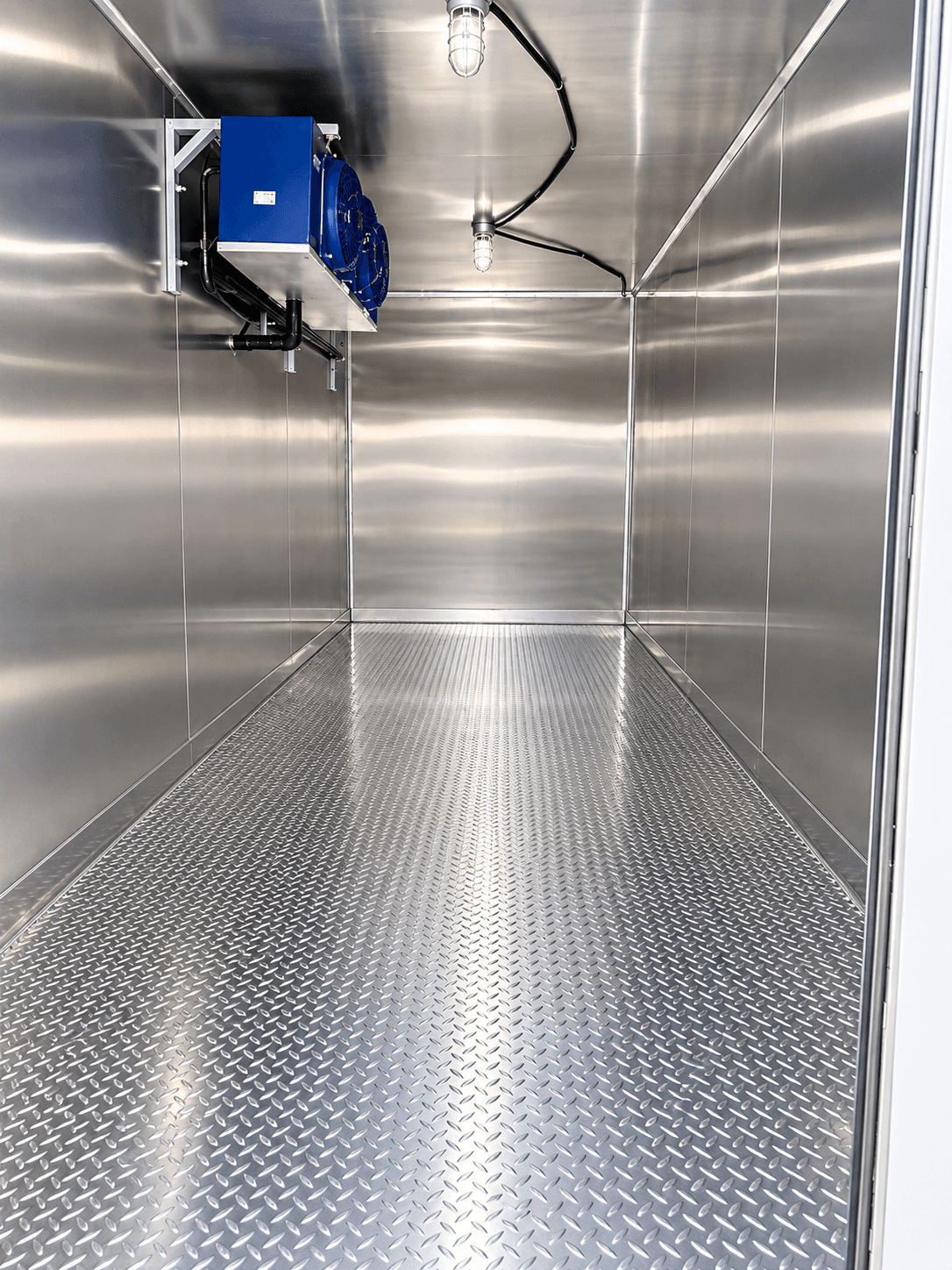
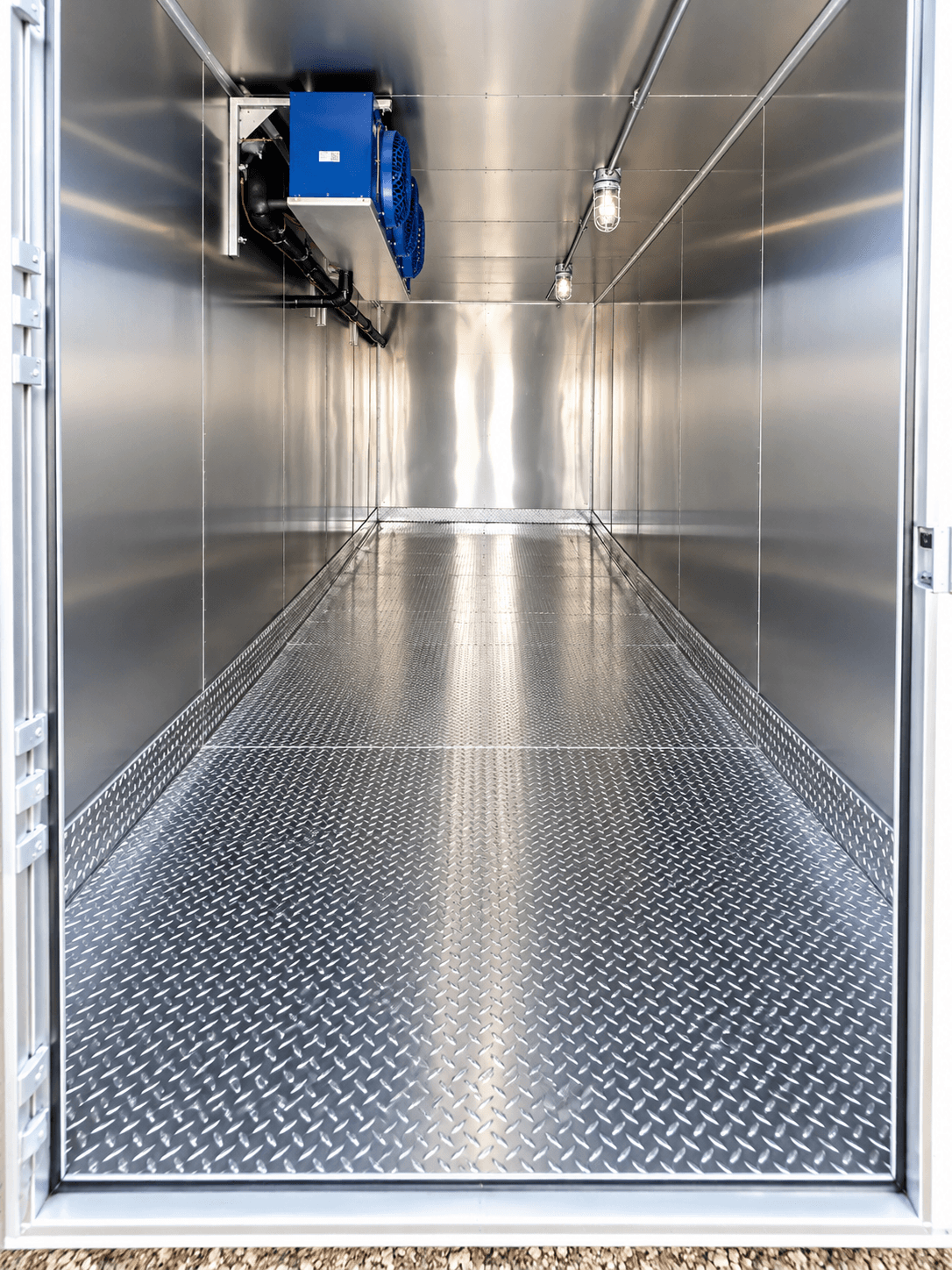
Listed refrigeration trailer equipment: condensing unit, amps panel, lighting.
Other cold-storage model details
- 12FT Refrigerated TrailerBXRT12–1 and BXRT12–2 list 220V · single-phase · 40–60A and a 32°F inventory label. Both are named as 12ft models, but their records also mention 20ft, so your quote confirms the length.
- 20FT Refrigerated ContainerYour quote confirms this container’s power, temperature and storage space for your project.
- 40FT Refrigerated ContainerYour quote confirms this container’s power, temperature and storage space for your project.
Equipment records reviewed October 19, 2026. Temperature labels are inventory labels, not verified operating ranges. Nominal length is a model label, not a measure of usable space or site footprint.
Distinguish the restart decision from the remaining stock task
The production coordinator needs to identify ingredients awaiting renewed production, finished packages awaiting dispatch and orders arriving before the restart is confirmed. Each group can have a different decision owner. When the operation receives its own return-to-service instruction, reconcile what still depends on temporary refrigeration. A restarted process does not by itself release goods awaiting another decision or confirm equipment collection.
Compare a holding example with inventory remaining after restart
MT1 in the 20FT Refrigerated Trailer guide lists a condensing unit, amps panel and lighting, with a 15°F inventory label. That label is not a complete operating range or approval for every ingredient and finished package awaiting the restart. Product conditions come from the responsible stock contact.
A refrigerated container offers nominal 20ft and 40ft alternatives whose usable capacity, temperature capabilities and electrical requirements remain unconfirmed.
Compare the offered refrigeration trailer or container with packages still held, incoming supplier cases and the route staff use after production resumes. An operating milestone does not establish that the remaining load fits a different unit or needs no further holding.
Plan your rental around hospitality service
A Knoxville hospitality property or a separate West Virginia site with several dining outlets can describe its shared receiving point and each outlet's collection pattern. Set out the expected stock movements from arrival through return to permanent rooms, including the person responsible for each service handover.
Keep different product tasks separate
Retain each group’s required conditions, arrival state and the product owner’s separation procedures. Identify which goods can share a reviewed arrangement. A restart decision does not combine incompatible requirements into one holding task.
Separate stock dates from repair dates
Include the first stock move, site preparation and final return alongside the works program. Keep uncertain inspections visible. Rental extensions and collection follow the offered terms and acknowledged requirement, rather than a contractor date alone.
Retain the selected unit’s operating information
Keep controls, loading guidance and the equipment identity with the stock owner’s requirements. Identify who approves use and receives the handover. Revisit unresolved conditions if a different product group or unit is proposed.
Review phase and load alongside the restart services
MT1 lists 220V single-phase at 40–60A; the 40ft Bulk Combo example A lists 220V single-phase at 200–220A. DTC3 lists 220V three-phase at 200A. Shared voltage does not settle phase, exact connector or supply suitability. The responsible site professional needs selected-unit requirements, including working-hour or access restrictions affecting services at the proposed position.
Keep collection access in the restart plan
Record barriers, stored materials and later work phases affecting the equipment route. Identify who approves changes and supplies the current information. Resuming production does not establish that the original arrival route remains available for collection.
Give cooking and washing separate restart handovers
The 40ft Bulk Combo example A in the 40FT Bulk Combo Kitchen Trailer guide lists a double-stack convection oven, deep fryer, tilting skillet, griddle/oven, six-burner range/oven, reach-in refrigerator/freezer and walk-in cooler. Its published list does not document a machine dishwasher. The included cooler does not specify the usable capacity of a separate container.
DTC3 in the 30FT Conveyor Dishwashing Trailer guide lists a high-temperature conveyor dishwasher, soil tray, prep table, racks, sinks and water heater. Keep used items and clean-item collection separate from ingredient retrieval. Give incoming shifts the selected units’ instructions, product responsibilities and contact for equipment questions, including the current instruction for stock still awaiting production or dispatch.
Keep remaining inventory with the offered rental period
Request current availability and a quote for the offered equipment, rental period, delivery, collection and additional items. Keep outstanding production and dispatch decisions alongside the scope. A restart announcement should lead to a review of the goods still held, rather than automatically become a request to end the rental.
Contact Worldwide Refrigerated Container Rental Facilities at +1 877-804-5153. Share your stock, site and dates, then ask about current equipment availability, rental or lease terms, delivery arrangements and a quote.
Connect a restart decision to the remaining inventory
The production coordinator can distinguish the decision to restart a process from the decision about stock still held in temporary refrigeration. Identify ingredients awaiting production, finished packages awaiting dispatch and orders that may arrive before the restart is confirmed. Ask which contact can authorize a change to each part of that inventory rather than treating the restart announcement as one instruction for all goods.
When the operation receives its own return-to-service decision, reconcile what remains dependent on the interim arrangement. For example, production may resume while a dispatch decision is still outstanding. Record the remaining task and communicate its effect on the proposed rental period or collection discussion. This gives the equipment contact an operational reason for the update without assuming that a restart automatically releases the temporary store.
Discuss your cold storage rental.
Confirm the equipment, delivery location, and rental period that fit your project.
Request availability