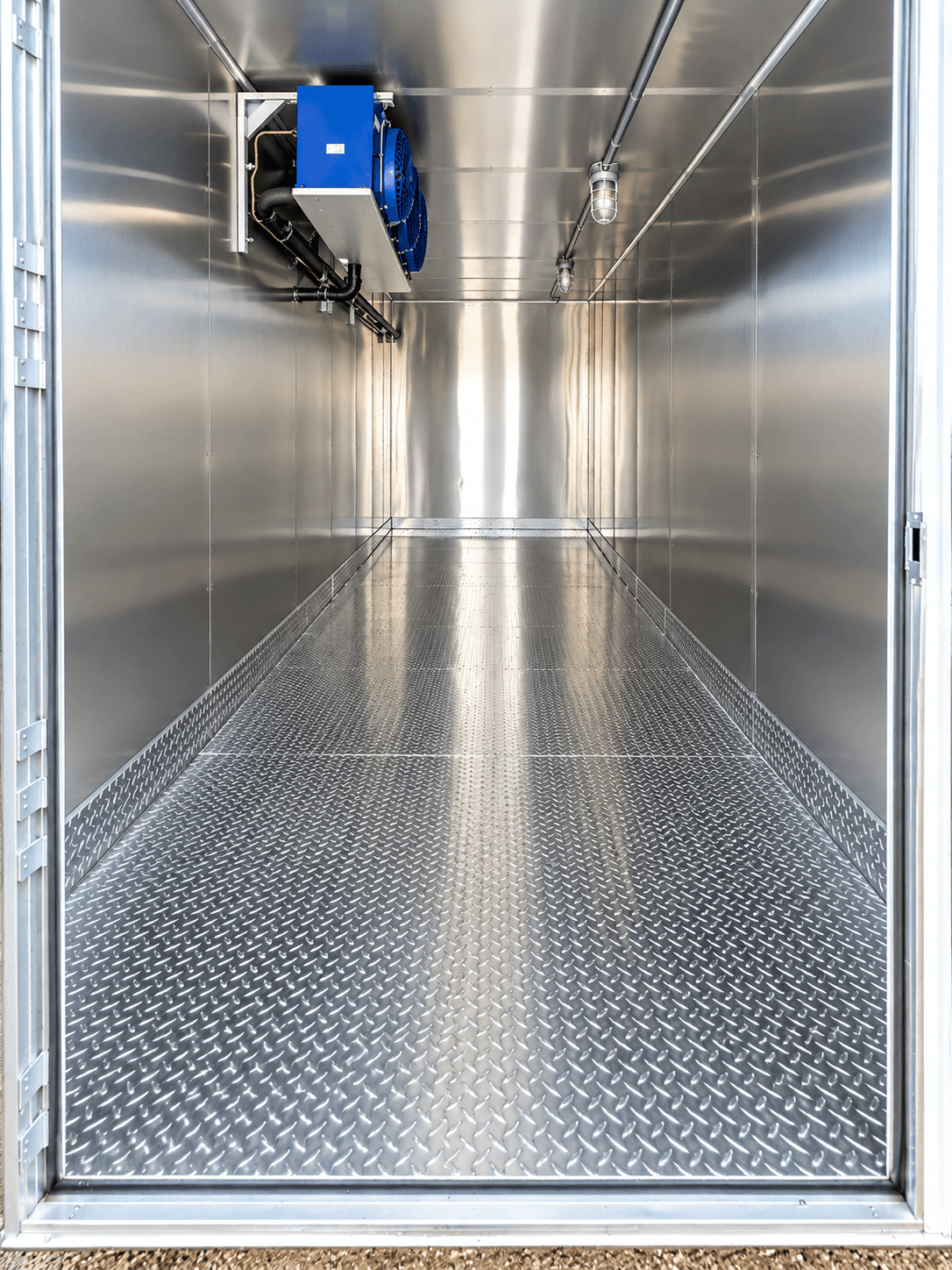
Compare the equipment
Specifications for your rental planning
These published examples describe named company units. The supplied equipment, configuration and availability are confirmed for your project address.
BXRT20–1Refrigerated trailer
- Nominal length
- 20ft
- Listed electrical supply
- 220V · single-phase · 40–60A
- Inventory temperature label
- 32°F
MT1Refrigerated trailer
- Nominal length
- 20ft
- Listed electrical supply
- 220V · single-phase · 40–60A
- Inventory temperature label
- 15°F
LT2Refrigerated trailer
- Nominal length
- 20ft
- Listed electrical supply
- 220V · single-phase · 40–60A
- Inventory temperature label
- -5°F
Listed refrigeration trailer equipment: condensing unit, amps panel, lighting.
Other cold-storage model details
- 12FT Refrigerated TrailerBXRT12–1 and BXRT12–2 list 220V · single-phase · 40–60A and a 32°F inventory label. Both are named as 12ft models, but their records also mention 20ft, so your quote confirms the length.
- 20FT Refrigerated ContainerYour quote confirms this container’s power, temperature and storage space for your project.
- 40FT Refrigerated ContainerYour quote confirms this container’s power, temperature and storage space for your project.
Equipment records reviewed October 19, 2026. Temperature labels are inventory labels, not verified operating ranges. Nominal length is a model label, not a measure of usable space or site footprint.
Leasing around a recurring stock cycle
For example, a business may be considering an extended lease discussion while permanent equipment remains under review. Its planning task would be to describe the recurring inventory and the decisions affecting duration, rather than request a long period without explaining how the store will be used. The working brief centers on chilled stock replenished at regular intervals and the decisions of the inventory planning manager. The next step is to put those operational details into the equipment inquiry. Identify the products, the people responsible and the dates under discussion. Share any site questions at the same time so the storage and access decisions can be considered together.
Compare the storage equipment with your task
Discuss a refrigerated container or refrigeration trailer in terms of the work it needs to support. Explain whether you need walk-in cooler conditions for chilled products or freezer conditions for frozen stock, along with the required product temperature and maximum load. Ask about the particular unit's internal capacity, door opening and loading access, then review its electrical requirements with your site contact. Describe whether goods arrive already cold and how often the door will be used. These questions help connect equipment choice with your products, staff movement and available site services.
Plan temporary equipment around education meal schedules
Colleges planning holiday maintenance in Montgomery or at a separate Alaska campus may still need meals for staff, residential students or continuing activities. Build a receiving calendar around meal periods, identify who checks incoming stock, and record where each delivery should wait.
Make room for the working load
An inventory count should include packaging, the way products are stacked, and the space staff need to handle them. Describe the storage carriers you actually use, including crates, trays, carts or pallets, and provide dimensions for the larger packages. Identify goods that must remain easy to find and any stock that cannot be moved repeatedly during the project. If the inventory changes by shift, provide that pattern too. Discuss the layout with the equipment contact and the person responsible for operations. Confirm the proposed interior layout and loading arrangement for the equipment being discussed with your team.
Confirm the operating information for the selected unit
Once a possible unit has been identified, ask for the information needed to operate that specific equipment. Review its stated purpose, the controls staff will use and any loading guidance with the people responsible for the stock. Check whether your application calls for more than one storage condition and raise that before a decision is made. Record who approves the arrangement and who will receive the operating handover. Ask which of those points should be confirmed before your team makes its decision. Keeping them in the written brief helps avoid confusion between the product requirements you provide and the equipment characteristics that still need confirmation.
Coordinate loading access with everyday activity
Temporary refrigeration can affect a receiving area that already serves staff, suppliers and other contractors. Explain that existing activity when discussing a location for the unit. Include the periods when deliveries arrive, where stock handling takes place and who can authorize temporary changes to the working area. Ask how the proposed loading arrangement should be assessed and whether additional site information is required. Use that review to align stock handling, daily activity and the proposed equipment position before the working arrangement is finalized. Keep the agreed access information with the rental inquiry and project schedule.
Document what the site can provide
A concise services note can make a refrigeration inquiry more useful. State the proposed location, identify the person responsible for electrical questions and record the information they can supply. Ask which specifications apply to the equipment being discussed and whether further site details are needed for review. Explain any restrictions on working hours or access that affect service preparation. Keep unanswered questions visible until the responsible contacts resolve them. This gives the site and equipment contacts a shared set of operating and connection details to review against the current project and proposed position.
Separate the work dates from the storage dates
The period requiring cold storage may start before repair or construction work and end after the permanent equipment returns. Build the inquiry around the stock transfer, site preparation and return-to-normal activities as well as the contractor's dates. Explain whether the program is fixed or may change after an inspection. Ask about the rental periods that can be considered, how an extension would be requested and what notice applies to collection. A short-term rental inquiry and a longer-term lease discussion may require different decisions. Request the current terms for your equipment and dates, and keep them with the latest version of the project brief.
Keep the project contacts connected
The person requesting a quote may not manage the site when equipment arrives or when the rental ends. Provide the relevant operational contacts and explain who can answer questions about stock, access and services. If a contractor's program affects the rental, identify how updates will reach the equipment contact. Ask what information should be confirmed before each planned stage. Keep a record of the agreed arrangement that another responsible person can use during a shift change. Agree how staff will receive updates, and keep the equipment information, operating contacts and current project dates available in one place throughout the rental.
Put the remaining questions in the inquiry
An initial equipment inquiry can include the questions your team is still working through. State which measurements, product conditions or project dates are still being confirmed, and identify who can supply the missing information. Ask what is needed before suitable equipment and current terms can be discussed. Include the proposed delivery location and any known access or services restrictions. Keep a short list of outstanding questions with the request so they remain visible when the proposal is reviewed. Use the next conversation to review your defined requirement, discuss current equipment options and terms, and identify the details needed to move the inquiry toward a booking.
Contact Worldwide Refrigerated Container Rental Facilities at +1 877-804-5153. Share your stock, site and dates, then ask about current equipment availability, rental or lease terms, delivery arrangements and a quote.
Review recurring stock before discussing a longer period
The inventory planning manager can use successive replenishment records to explain how the temporary store would be used over a longer period. Identify goods carried between cycles and additions that are merely anticipated. A lease inquiry is more informative when the recurring task is visible than when it contains only a requested end date and the quantity present on the day of the call.
Choose a review point tied to an actual decision, such as a supplier schedule change or a new finding about permanent equipment. Compare the current cycle with the one described previously and send the difference to the equipment contact where relevant. Ask for confirmation of any proposed rental change. An internal expectation that storage will still be needed should remain distinct from a confirmed agreement about the extended period.
Discuss your cold storage rental.
Confirm the equipment, delivery location, and rental period that fit your project.
Request availability