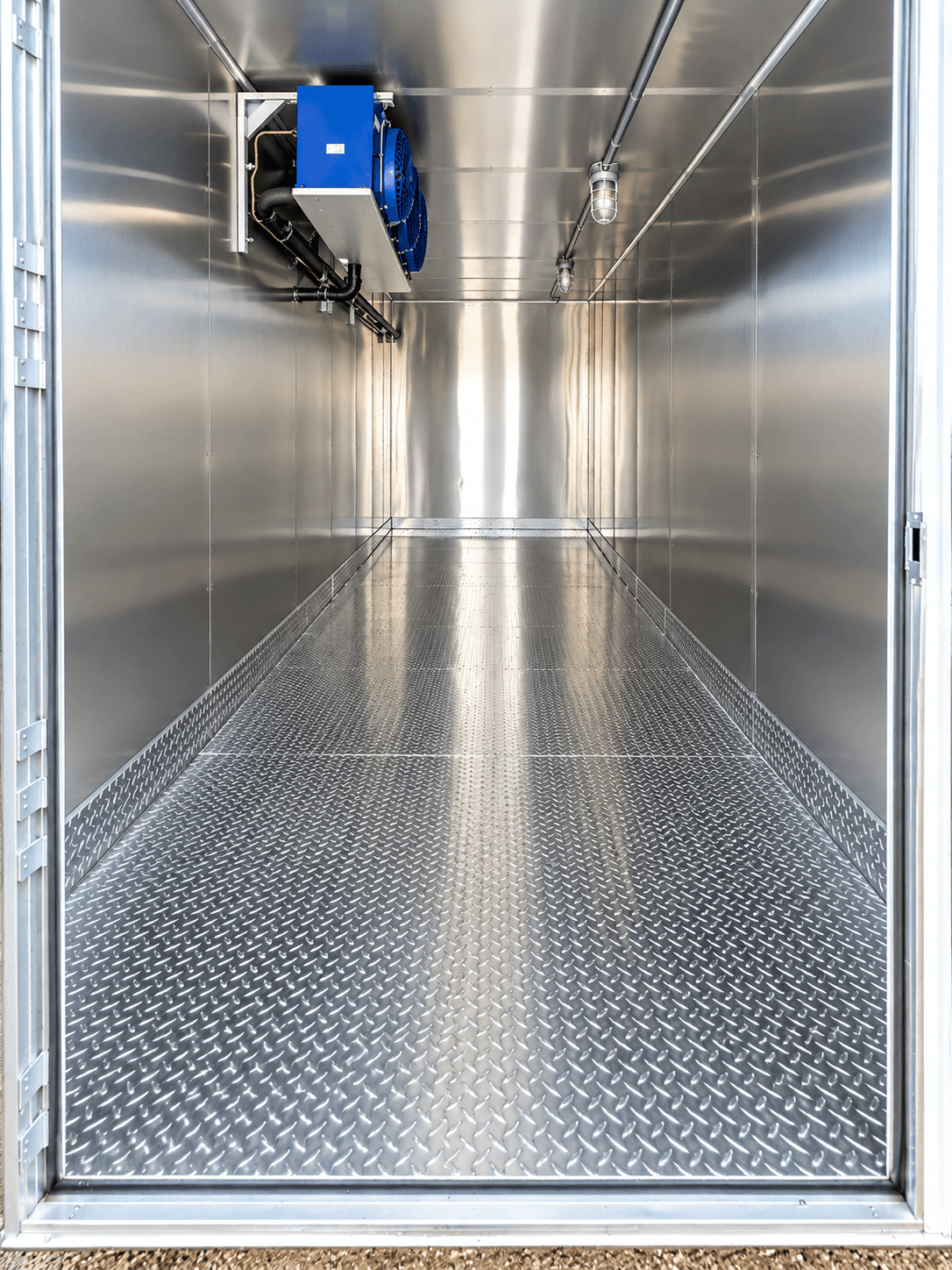
Compare the equipment
Specifications for your rental planning
These published examples describe named company units. The supplied equipment, configuration and availability are confirmed for your project address.
BXRT20–1Refrigerated trailer
- Nominal length
- 20ft
- Listed electrical supply
- 220V · single-phase · 40–60A
- Inventory temperature label
- 32°F
MT1Refrigerated trailer
- Nominal length
- 20ft
- Listed electrical supply
- 220V · single-phase · 40–60A
- Inventory temperature label
- 15°F
LT2Refrigerated trailer
- Nominal length
- 20ft
- Listed electrical supply
- 220V · single-phase · 40–60A
- Inventory temperature label
- -5°F
Listed refrigeration trailer equipment: condensing unit, amps panel, lighting.
Other cold-storage model details
- 12FT Refrigerated TrailerBXRT12–1 and BXRT12–2 list 220V · single-phase · 40–60A and a 32°F inventory label. Both are named as 12ft models, but their records also mention 20ft, so your quote confirms the length.
- 20FT Refrigerated ContainerYour quote confirms this container’s power, temperature and storage space for your project.
- 40FT Refrigerated ContainerYour quote confirms this container’s power, temperature and storage space for your project.
Equipment records reviewed October 19, 2026. Temperature labels are inventory labels, not verified operating ranges. Nominal length is a model label, not a measure of usable space or site footprint.
Container handover for changing project teams
Imagine a facility handing a project between operating managers during a temporary-storage period. Its example brief would retain one agreed version of the requirements and show who can approve revisions, rather than rely on an early conversation that incoming staff cannot verify. The working brief centers on chilled inventory managed across team changes and the decisions of the project handover lead. Give the people handling products an opportunity to explain their routine. Add the project dates and proposed position to that description, then use the combined information to review the temporary arrangement. Update the inquiry when the underlying requirement changes.
Ask equipment questions that affect everyday use
Compare refrigerated container and refrigeration trailer options with a clear description of the stock. Identify walk-in cooler needs separately from freezer needs, provide the required product temperature and explain the largest load expected. Ask about the specific unit's usable storage capacity, door opening, loading access and electrical requirements. Include the stock carriers used by your team and any frequent door activity. Those details give your product and site contacts something concrete to review together, helping the equipment discussion address daily operation as well as the space available for a temporary store.
Plan your rental around hospitality service
Hospitality teams planning extended works in Spokane or at a separate Michigan property can explain how changing contractor boundaries affect the daily ingredient collection route. Bring the dining and facilities contacts into the discussion so the stock requirements and practical property arrangements can be considered together.
Use decision points rather than an assumed deadline
When the end of an interruption depends on another contractor, describe the milestones that will determine your storage requirement. These might include completion of repair work, a site-services review or the operation's decision to transfer stock back. Give an expected schedule while making the uncertainty clear. Ask how the rental period could be extended and what steps are needed to request collection. Keep the contact responsible for updates identified throughout the inquiry. This gives the team a current description of the requirement and period, while keeping the operational milestones visible during the equipment and quotation discussion.
Provide a placement brief instead of guessing
A useful placement brief names the proposed position, available working space and any known restrictions, then leaves the equipment-specific review to the appropriate contacts. Include the route in, nearby activities, the intended loading side and who controls the area during installation and collection. Tell the team about changes expected during the project, such as a gate closure or contractor storage occupying part of the site. Ask what clearance and positioning information applies to the unit under discussion. Ask the site and equipment contacts to review the sketch together and identify the points needing further detail before the position is agreed.
Separate storage requirements in the brief
Products with different handling requirements should be identified before an equipment request becomes a booking. State whether goods are chilled, frozen or subject to another documented storage condition, and describe any segregation your own procedures require. Explain which product groups can be considered together and which need a separate review. Explain which products arrive already conditioned and whether any incoming load presents a different requirement. Ask the rental team to review those details and discuss the equipment options that can be considered. Your product owner should decide the conditions and records required for the goods being stored.
Review the plan with the people using it
Before the proposed arrangement is finalized, invite the staff handling products to review the storage position and movement plan. They can explain package sizes, retrieval patterns and practical access needs that may not appear in the original inquiry. Ask the equipment contact which details require confirmation for the unit under discussion. Keep the final instructions and responsibilities available to the people working each shift. Use the review to connect the current product brief with the specific equipment information and working arrangement being discussed. Any change to the products or intended use should be discussed with the appropriate contacts before the revised arrangement is accepted.
Confirm the operating information for the selected unit
Once a possible unit has been identified, ask for the information needed to operate that specific equipment. Review its stated purpose, the controls staff will use and any loading guidance with the people responsible for the stock. Check whether your application calls for more than one storage condition and raise that before a decision is made. Record who approves the arrangement and who will receive the operating handover. Ask which of those points should be confirmed before your team makes its decision. Keeping them in the written brief helps avoid confusion between the product requirements you provide and the equipment characteristics that still need confirmation.
Document what the site can provide
A concise services note can make a refrigeration inquiry more useful. State the proposed location, identify the person responsible for electrical questions and record the information they can supply. Ask which specifications apply to the equipment being discussed and whether further site details are needed for review. Explain any restrictions on working hours or access that affect service preparation. Keep unanswered questions visible until the responsible contacts resolve them. This gives the site and equipment contacts a shared set of operating and connection details to review against the current project and proposed position.
Give the team enough detail for a useful reply
Summarize the reason temporary refrigeration is needed, the products involved and the period you expect to use it. Add the proposed site, access information and the contact responsible for services. Where your plan has alternatives, describe each option with the operating details needed to review it. Ask what equipment can be considered for the brief and request current availability, rental terms and delivery arrangements. Keep collection and possible program changes in the conversation as well. A complete inquiry helps the next discussion focus on the actual storage task while leaving unconfirmed specifications and commercial details open for review.
Contact Worldwide Refrigerated Container Rental Facilities at +1 877-804-5153. Share your stock, site and dates, then ask about current equipment availability, rental or lease terms, delivery arrangements and a quote.
Give the incoming project lead a decision history
During a project management change, the handover lead can organize the refrigeration record around decisions already made and questions still open. Retain the version of the stock requirement sent to the equipment contact, the source of site information and the people authorized to revise them. An incoming manager should not need to reconstruct those facts from an informal recollection of the first call.
Use one outstanding question as a check of the handover. Can the incoming lead identify its owner, the next expected response and what part of the requirement might change? Record acknowledgment of the transfer of responsibility. When the new team issues a revision, identify what it replaces so operating staff and the equipment contact do not continue working from two equally plausible versions of the same project brief.
Discuss your cold storage rental.
Confirm the equipment, delivery location, and rental period that fit your project.
Request availability