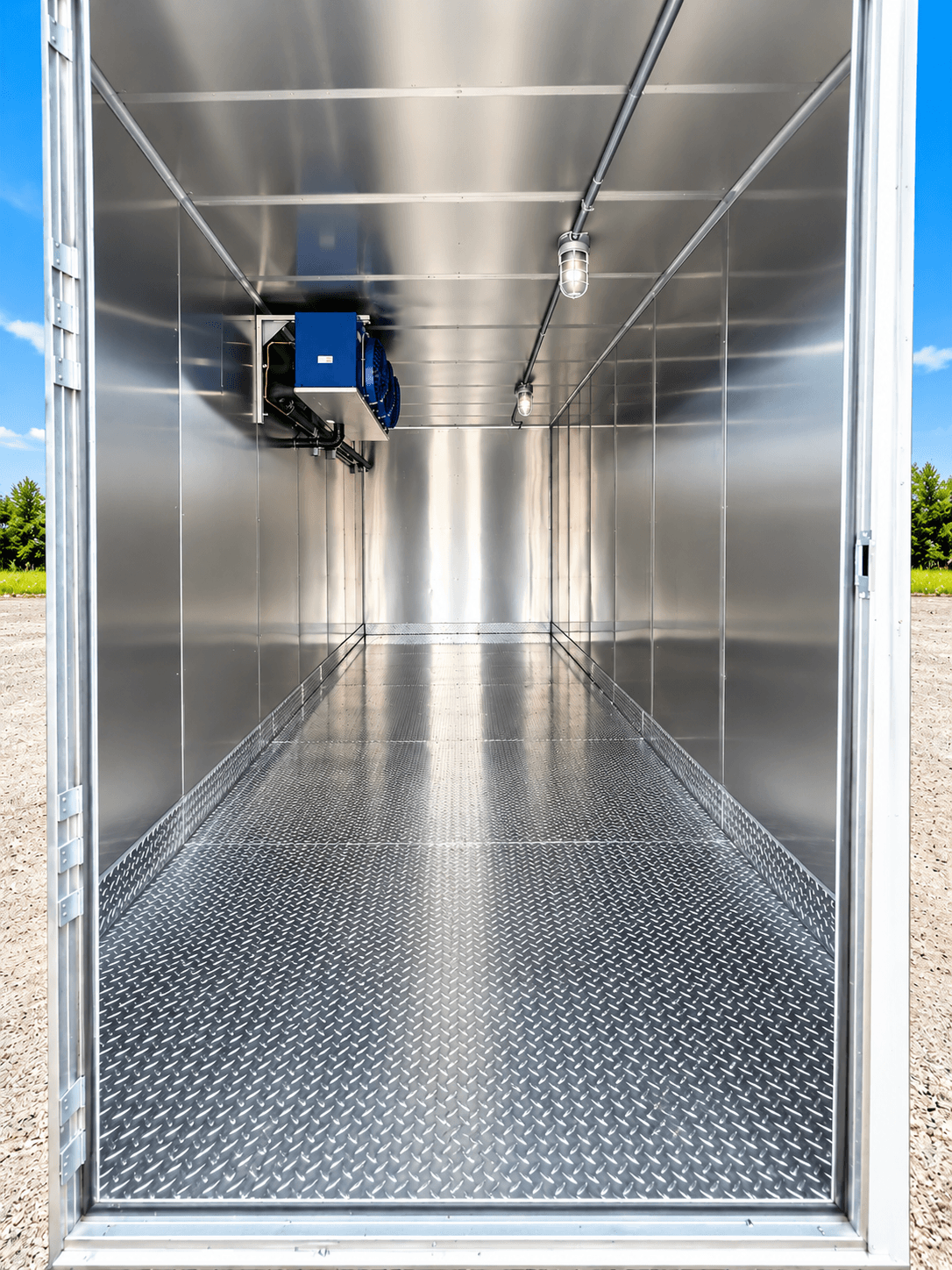
Compare the equipment
Specifications for your rental planning
These published examples describe named company units. The supplied equipment, configuration and availability are confirmed for your project address.
BXRT20–1Refrigerated trailer
- Nominal length
- 20ft
- Listed electrical supply
- 220V · single-phase · 40–60A
- Inventory temperature label
- 32°F
MT1Refrigerated trailer
- Nominal length
- 20ft
- Listed electrical supply
- 220V · single-phase · 40–60A
- Inventory temperature label
- 15°F
LT2Refrigerated trailer
- Nominal length
- 20ft
- Listed electrical supply
- 220V · single-phase · 40–60A
- Inventory temperature label
- -5°F
Listed refrigeration trailer equipment: condensing unit, amps panel, lighting.
Other cold-storage model details
- 12FT Refrigerated TrailerBXRT12–1 and BXRT12–2 list 220V · single-phase · 40–60A and a 32°F inventory label. Both are named as 12ft models, but their records also mention 20ft, so your quote confirms the length.
- 20FT Refrigerated ContainerYour quote confirms this container’s power, temperature and storage space for your project.
- 40FT Refrigerated ContainerYour quote confirms this container’s power, temperature and storage space for your project.
Equipment records reviewed October 19, 2026. Temperature labels are inventory labels, not verified operating ranges. Nominal length is a model label, not a measure of usable space or site footprint.
Cold storage with a documented stock owner
For a planning example, several supervisors could contribute to one equipment inquiry. The brief would bring their product and access information together while identifying the person authorized to approve a change, rather than leave conflicting instructions unresolved until stock is moved. The working brief centers on commercial supplies overseen by several supervisors and the decisions of the stock responsibility coordinator. Walk through the working sequence with the staff who know the stock. Record what they need to retrieve, what remains in storage and when the requirement changes. Use that information to discuss equipment, access and the rental period with our team.
Emergency refrigeration rental and lease options in Worcester
When the commercial walk-in freezer or cooler fails at a county jail kitchen in Worcester, an emergency refrigerated trailer rental can hold the affected stock while the permanent unit is repaired. Emergency rentals and planned leases are quoted from the same details: the product, the temperature it must hold, the address and the dates. A mobile kitchen trailer for rent and a refrigerated trailer can be quoted together, so cooking, cold storage and the dish room are planned as one temporary setup.
Trailers for rent and trailer leasing cover emergency, short-term and long-term needs, from portable walk-in coolers to outdoor walk-in refrigeration for commercial sites. Tell the team what must stay cold and for how long; that decides whether a rental or a lease fits. Food-service managers, facility teams and plant supervisors can report a refrigeration failure at any time, since rental inquiries are answered by a person 24/7.
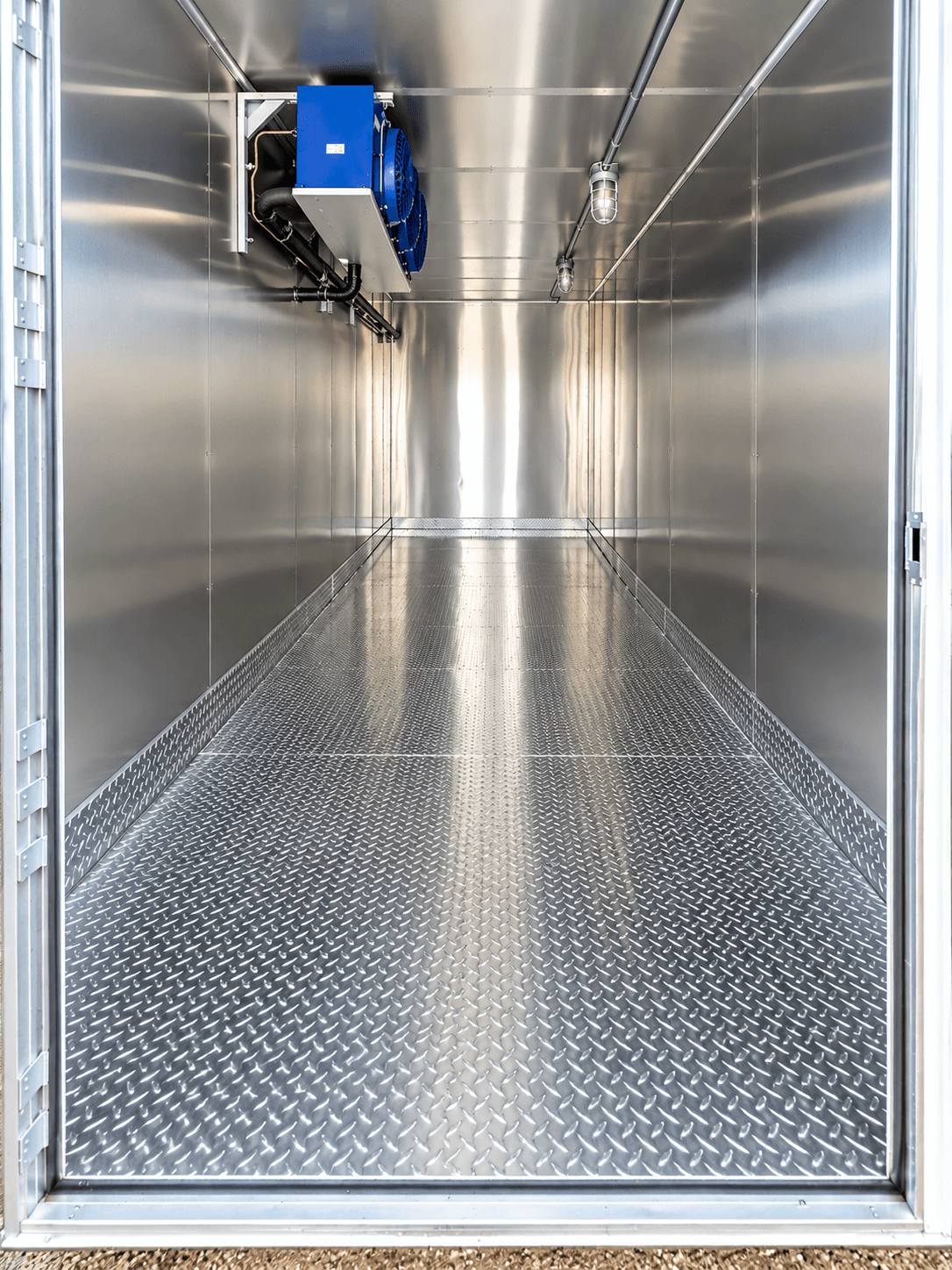
Match the unit to products and access
The choice of refrigerated container or refrigeration trailer should follow the stock and working layout. Explain the required product temperature and whether the request concerns walk-in cooler storage, freezer storage or separate requirements for different products. Describe the load's packaging, largest expected quantity and retrieval pattern. Ask which unit capacity, door opening and entry arrangement should be reviewed for that load. Bring its electrical requirements to your site contact as well. A practical comparison connects the equipment details with both the products you need to store and the people moving them.
Coordinate your rental with events and catering
Events in Worcester or at a separate Nebraska venue may have distinct preparation and serving areas, with ingredient routes managed by different venue contacts. Describe the intended setup and handback sequence in the rental inquiry, including ingredient receiving, preparation activity and responsibility for final collection.
Connect the storage position to the work
Think through the route staff will use between the temporary store and the area where products are needed. Describe changes in level, doors, shared passageways and the equipment used to move stock. Identify where pedestrians, deliveries and other work might cross that route so the site team can review the arrangement. Ask about entry and loading details for the particular unit, including any access options that need discussion. A convenient parking position is only one part of the plan. The people managing the site and handling the products should understand the proposed working route before a location is finalized.

Describe the stock before choosing capacity
Start with a usable inventory that describes the packages and how your team needs to handle them. Record the packages, crates, trays or pallets that need a place, their approximate footprint, and which goods must be reached first. Explain whether the load stays inside for most of the project or changes repeatedly during a working day. A unit that appears large enough on a floor plan still needs a workable loading arrangement. Ask the team to review the proposed inventory against the equipment being considered, and identify the information needed before a suitable size can be discussed.
Ask for an equipment-specific power review
Identify the person who can describe the electrical service at the proposed location, then request the requirements for the unit being considered. Share the connection position and the intended equipment position so the appropriate contacts can review the arrangement. Explain any planned shutdowns or site work that could affect the supply during use. Ask your site services contact to review the actual connection details supplied for the proposed equipment. Have the responsible site contact review the proposed supply and any separate power arrangements before booking. Record what has been confirmed and which points still need a decision.
Separate the work dates from the storage dates
The period requiring cold storage may start before repair or construction work and end after the permanent equipment returns. Build the inquiry around the stock transfer, site preparation and return-to-normal activities as well as the contractor's dates. Explain whether the program is fixed or may change after an inspection. Ask about the rental periods that can be considered, how an extension would be requested and what notice applies to collection. A short-term rental inquiry and a longer-term lease discussion may require different decisions. Request the current terms for your equipment and dates, and keep them with the latest version of the project brief.
Distinguish holding from other temperature tasks
Explain what the equipment is expected to do with the goods after they enter. Holding already chilled stock is a different request from asking whether a particular load can be cooled from another starting condition. Describe the arrival condition and intended use, then ask which requirements should be considered in the equipment review. Include frozen goods separately where relevant. The operation's product owner should supply the handling requirements and decide what checks are needed. Request the relevant specifications for the equipment being considered, then compare them with the actual task before approving a rental arrangement.
Assign responsibilities before the stock moves
List the people responsible for the products, site access, electrical questions and communication with the rental team. These may be different roles, particularly when another contractor is handling the repair or refurbishment. Agree who approves the storage arrangement and who can authorize a change if the program moves. Ask what equipment instructions and contact details will be supplied for the proposed booking. Each person involved should be able to see which decisions belong to them and who to contact when the working arrangement needs review. Keep these responsibilities with the inquiry and update them when the project team changes.
Put the remaining questions in the inquiry
An initial equipment inquiry can include the questions your team is still working through. State which measurements, product conditions or project dates are still being confirmed, and identify who can supply the missing information. Ask what is needed before suitable equipment and current terms can be discussed. Include the proposed delivery location and any known access or services restrictions. Keep a short list of outstanding questions with the request so they remain visible when the proposal is reviewed. Use the next conversation to review your defined requirement, discuss current equipment options and terms, and identify the details needed to move the inquiry toward a booking.
Contact Worldwide Refrigerated Container Rental Facilities at +1 877-804-5153. Share your stock, site and dates, then ask about current equipment availability, rental or lease terms, delivery arrangements and a quote.
Resolve conflicting stock instructions before issuing a revision
The stock responsibility coordinator can identify which supervisor owns each product decision and which person consolidates the inquiry. Keep an operating instruction traceable to its source instead of treating every contributor as authorized to change the whole plan. Where two supervisors describe the same goods differently, mark the disagreement and ask the relevant owners to resolve it.
For a handover test, follow one conflicting entry to an acknowledged resolution. Record which instruction was replaced, who agreed the change and which teams received the corrected version. Then check whether the equipment contact also needs an updated requirement. This creates a useful decision trail for the next coordinator without removing department accountability or leaving the stock team to choose between incompatible verbal directions while preparing a temporary move.
Discuss your cold storage rental.
Confirm the equipment, delivery location, and rental period that fit your project.
Request availability