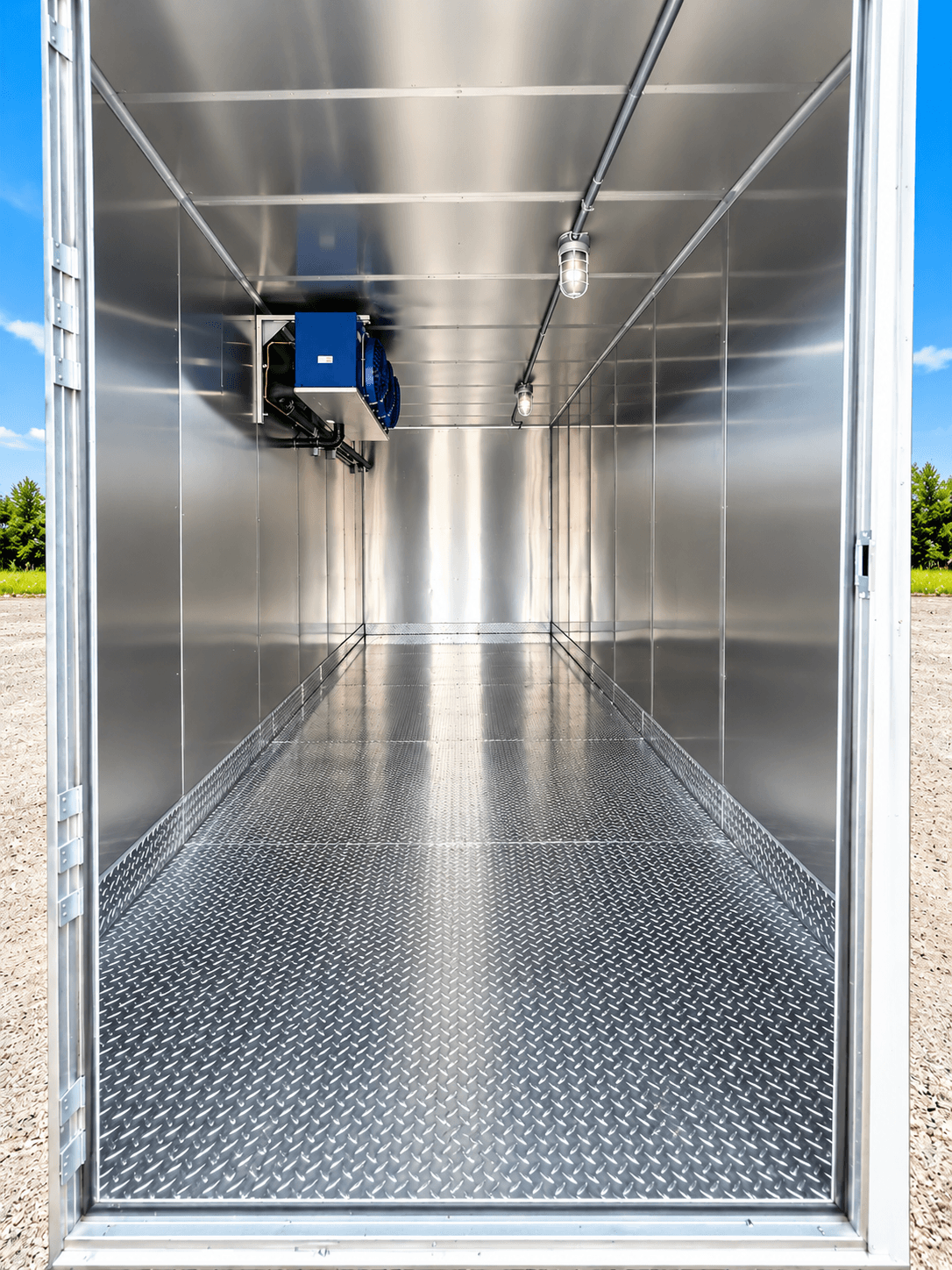
BXRT20–1Refrigerated trailer
- Nominal length
- 20ft
- Listed electrical supply
- 220V · single-phase · 40–60A
- Inventory temperature label
- 32°F
Temporary cold storage in St. Paul, Minnesota
St. Paul refrigeration leasing can support a phased commercial kitchen renovation or provide a bridge after an emergency walk-in failure. Refrigerated containers, trailers, coolers and freezers offer different storage arrangements, with kitchen and dishwashing facilities considered where additional functions move. Short-term rentals and longer leases can suit restaurants, schools, hospitals, hospitality businesses and industrial food-service teams. Worldwide Refrigerated Container Rental Facilities serves St. Paul and coordinates delivery discussions around the actual equipment and property. Explain what stays usable, the products needing another location and the intended period to request availability and a project-specific storage quote.
Emergency cooler or freezer failure in St. Paul? A person answers rental inquiries 24/7. Availability and delivery timing are confirmed in your quote.
Plan your rental budget
Compare the equipment
These published examples describe named company units. The supplied equipment, configuration and availability are confirmed for your project address.
Listed refrigeration trailer equipment: condensing unit, amps panel, lighting.
Equipment records reviewed October 19, 2026. Temperature labels are inventory labels, not verified operating ranges. Nominal length is a model label, not a measure of usable space or site footprint.
When the commercial walk-in freezer or cooler fails at a catering commissary in St. Paul, an emergency portable walk-in freezer rental can hold the affected stock while the permanent unit is repaired. Tell the team whether you expect to rent for one repair or lease for a longer project, and the options can be compared in the quote. Cold storage is the usual starting point, and the same team can discuss a mobile kitchen rental or a dishwashing trailer lease if the interruption is wider.
Commercial customers can ask about portable refrigerated trailers, refrigeration containers and walk-in coolers or freezers for emergency, modular or temporary onsite use. Restaurants, hospitals, schools, hotels, caterers and food producers can describe the problem to a person who answers rental inquiries 24/7. Many requests come from beyond a single city. A commercial kitchen in Brooklyn Park, Plymouth and Lakeville can ask for a refrigerated trailer rental or container lease with the same details as one in St. Paul: where the unit would sit, how a truck reaches it and what must stay cold.
The 12-day Minnesota State Fair in Falcon Heights drew more than 2.1 million visitors in 2019, and a 2026 report said 204,065 people came through the gates on Friday, August 28, a single-day record for the fair. Festivals and sports events in South St. Paul, Newport and Lake Elmo sometimes rent portable cold storage for a weekend, with a mobile kitchen trailer considered for larger menus. Packers and distributors in Richfield can compare a short rental with a longer lease for seasonal stock. Portable refrigerated trailers and walk-in coolers are usually the first equipment discussed for event stock, with onsite power and access reviewed early. These are public facts about the area, not a record of company jobs; equipment, availability and delivery are confirmed in the quote.
The June 19–20, 2012 storm dropped a preliminary 7.43 inches of rain on Duluth in 24 hours, according to the National Weather Service, and the flood damaged about 3,100 homes and businesses, with total damage estimated at $100 million. When a compressor fails at a grocery in Proctor, a school in Hermantown or a care facility in Rice Lake, an emergency walk-in cooler or freezer rental can protect the food while repairs are arranged. A hotel or grocery in St. Cloud with a failed cooler can ask about renting a refrigerated trailer. A failed commercial walk-in freezer after an outage is an emergency call, and walk-in coolers, walk-in freezers and refrigerated trailers are the first rentals discussed. Refrigeration is an emergency need: every call about a failed commercial walk-in freezer or refrigeration unit is an emergency call. This is published public context, not company work; each request is quoted for its own address and dates.
Hennepin Healthcare is pursuing a 10-year, $2.5 billion renovation of Hennepin County Medical Center in Minneapolis, including a new inpatient tower and a parking ramp the county plans to complete in 2027. Construction crews and facility managers near Golden Valley, St. Louis Park and Edina may lease refrigerated containers to hold food for a work site or a temporary dining area. On long projects, contractors compare a refrigerated trailer lease with a refrigeration container for bulk crew supplies. Outdoor walk-in refrigeration needs level ground and power nearby, so a long-term lease starts with a site conversation. Mobile kitchens, dishwashing trailers and refrigerated trailers for rent can be quoted together as temporary facilities. The context above comes from public sources and does not describe a completed job; availability and delivery are confirmed in the quote.
Mayo Clinic’s Bold.Forward.Unbound expansion in Rochester has four new parking ramps under construction, with North Arrival and Parking expected to open in fall 2026, and the Link transit line is expected to begin service in December 2026. Seasonal refits in Byron, Stewartville and Kasson can be covered by a lease that starts before demolition and ends after the stock moves back indoors. Trailer leasing covers the length of a project: a refrigerated trailer for supplies and a refrigeration container for bulk stock, short-term or long-term. Onsite temporary facilities can include portable refrigeration, trailers for rent and, if dishes are affected, a dishwashing trailer. A dishwashing trailer lease can be added to the same quote when returned dishes also need washing. Nothing here assumes available equipment or a delivery time; a person answers rental inquiries 24/7 and the quote confirms the details.
Refrigeration containers are often chosen for long-term storage, while refrigerated trailers are chosen for short-term emergencies; both can be rented. Portable refrigerated trailers, refrigeration containers and outdoor walk-in refrigeration units can all be discussed for the same emergency. Onsite temporary facilities can include portable refrigeration, a mobile kitchen trailer and, if dishes are affected, a dishwashing trailer. Emergency refrigeration can be arranged as a refrigerated trailer, a refrigeration container or a portable walk-in cooler, depending on the stock and the site.
Short-term or long-term, trailers for rent in St. Paul are quoted for the address, the stock and the dates. A commercial walk-in freezer failure in St. Paul is an emergency call, and onsite temporary refrigeration is how most such calls begin. Trailer rentals for emergencies are usually short-term, while trailer leasing for construction or seasonal work can run for months. Outdoor walk-in refrigeration needs level ground and power nearby, so a long-term lease starts with a site conversation.
Short-term or long-term, the same refrigerated trailer rental starts from the address, the stock and the dates. A dishwashing trailer lease can be added to the same quote when returned dishes also need washing. Modular, mobile or portable, the equipment is chosen to fit the work that continues at the site. Emergency refrigeration for commercial kitchens often starts with a portable refrigerated trailer and ends with a longer lease if repairs take time.
A commercial kitchen closed for repairs may need a mobile kitchen trailer lease, a dishwashing trailer and emergency refrigeration at the same time. Trailer leasing makes sense when a commercial kitchen will be closed for weeks, because one lease replaces repeated short-term rentals. A mobile kitchen trailer for rent can sit beside onsite refrigeration, so cooking and cold storage are planned together. Dishwashing and kitchen outages often arrive together, so dishwashing trailer rentals and a mobile kitchen for rent are quoted beside emergency refrigeration.
Trailer rentals, refrigerated trailers for rent and trailer leasing are all discussed with the address and the dates in hand. Mobile kitchens, dishwashing trailers and refrigerated trailers for rent can be quoted together as temporary facilities. In St. Paul, emergency refrigeration usually means a refrigerated trailer, a refrigeration container or a portable walk-in cooler matched to the stock. A dishwashing trailer, a mobile kitchen trailer and a refrigerated trailer for rent can each be short-term or long-term, depending on the repair.
Refrigeration is an emergency need: every call about a failed commercial walk-in freezer or refrigeration unit is an emergency call.
Saint Paul Public Schools describes homemade breads, specialty sauces and ingredients from local businesses in its Nutrition Center Kitchen. Its menu pages also distinguish breakfast and lunch groups, Good to Go offerings and afterschool snacks. These public food-service examples show why a phased renovation needs more than a total stock count: ingredients for preparation, food assigned to the next meal and ready-to-serve items can have different storage and collection patterns.
Temporary refrigeration may cover the first stage while cooking and washing stay inside. A later phase can interrupt those functions separately. Define which food task moves at each step so staff can keep collecting ingredients from the temporary store while the permanent rooms change. Include deliveries during the transition and the final transfer back; the first completed construction area may not release every product still held outside.
The 20ft Refrigerated Container has a confirmed nominal model length, but its usable capacity, temperature capability and electrical requirements need confirmation for the offered unit. Compare the actual doorway and interior with loaded carriers and the aisle staff need to retrieve them. Neither a room’s external footprint nor a program’s meal count establishes that working capacity.
MT1 is a named configuration in the 20ft Refrigerated Trailer guide. It lists a 15°F temperature label, condensing unit, lighting and an amps panel, with 220V single-phase power at 40–60A. The label is not a full operating range; usable capacity and the exact electrical connector are unconfirmed. Match the offered unit to the product conditions and connection available at the property.
Saint Paul RiverCentre currently identifies Morrissey Hospitality as its catering partner. The provider separately describes Headwaters Café in the lobby and offsite catering. These formats provide another useful contrast with school food production: supplies held for a banquet, everyday café ingredients and meals leaving a preparation site can create different refrigeration peaks. The operating format should define the load, not the public venue’s size.
For a different working location, read the Minneapolis and Woodbury rental guides or the Bloomington guide. Keep any storage address in West St. Paul, Falcon Heights or Mendota Heights attached to its own product load and dates. Several locations can be discussed together without treating them as one shared refrigeration space or assumed common transport arrangement.
A food production transition in St. Paul or Mendota Heights, Minnesota, may require incoming ingredients and prepared products to pass through working areas managed by different staff teams. Identify the operator's product handling requirements, then map how delivery records will remain linked to stock as its location changes.
An ingredient reserve and a preparation station perform different jobs. The reserve needs usable access to its chilled or frozen stock; preparation also needs a working surface and suitable fixtures. Decide which permanent functions remain available through each phase before assigning all food preparation to one temporary unit. This keeps the equipment comparison tied to the interruption rather than the building project’s label.
For preparation, P1 in the 26ft Mobile Kitchen Trailer guide lists a prep table, reach-in refrigerator and freezer, three-compartment and handwashing sinks, mop sink and water heater. It lists 220V single-phase power at 200A. The documented configuration is preparation-only, so a separate cooking-equipped model is needed if the displaced task includes a hot cooking line.
Reusable pans and service items need a route through washing and back into use. Leave space for that work outside the ingredient collection area. D1, in the 22ft Dishwashing Trailer guide, lists a low-temperature push-through dishwasher, soil tray, scraping table, three-compartment sink and handwashing sink, with 220V single-phase power at 150A. Review its water and drainage arrangements separately from the cold-store connection.
Minnesota’s NOAA summary describes marked seasonal temperature changes and regional differences, including colder winters in the north. Include the actual months for the St. Paul property, especially where work could extend. These state patterns are context rather than a forecast or technical rating for the rental.
Review the proposed surface, door approach and electrical connection alongside later construction stages and ordinary receiving. Staff still need access when the permanent operation begins reopening. A refrigeration position should remain useful through that return to service, not only while the building and delivery area are empty at the start of the work.
A permanent room can reopen while reserve stock and the next delivery still occupy temporary refrigeration. Identify which products move first and who transfers the remainder. Keep the final load reachable until it returns inside, then arrange equipment collection around that actual handover rather than a construction completion date alone.
Request a St. Paul quote for the full rental period, equipment roles, transport, collection and other project charges. Include extension or change terms when later construction stages remain uncertain.
Before you book
Describe when storage closes and which cooking or washing areas remain usable. A rental can be discussed for that defined gap, including stock transfers before and after. If later work interrupts other functions, consider their timing separately instead of assuming every temporary facility is needed throughout the project.
Explain when the role changes and how staff retrieve products in each stage. Daily access can require a different layout from occasional replenishment. Discuss the conditions, packaging and actual offered configuration before assuming one initial quantity describes the full period of usable storage.
Include the kitchen’s transfer back and the point when staff can release empty equipment for collection. That may differ from the building milestone. Review period, extension and collection terms so temporary refrigeration remains connected to actual use instead of an assumed end date.
The team can discuss a portable walk-in freezer rental or lease for a St. Paul address, from a few days to several months. Send the address, the product and its temperature, and your dates. Equipment availability, delivery arrangements and setup are confirmed in the quote, not assumed.
Emergency refrigeration can include portable refrigerated trailers, a refrigeration container, outdoor walk-in refrigeration or a walk-in cooler or walk-in freezer rental. Mobile refrigeration, mobile kitchens and mobile dishwashing trailers are different equipment, and each can be rented separately or together. Temporary facilities for a commercial site usually mean refrigeration first, then a mobile kitchen or dishwashing trailer if cooking or washing is also interrupted. Every call about a failed commercial walk-in freezer or refrigeration unit is an emergency call, and a person answers rental inquiries 24/7. Equipment, availability and delivery timing are confirmed in the quote.
These public references inform the planning examples; equipment availability and delivery arrangements are confirmed for your address.
Temporary refrigeration, kitchens and dishwashing can support many kinds of food-service operations. Each setting below starts with its own schedule, stock and site questions, and every project is reviewed individually.
Hotels, restaurants and resorts can plan temporary refrigeration around breakfast, banquet and dinner service when a walk-in cooler fails or a kitchen is refurbished.
Hospital, nursing home and care-facility kitchens can describe meal schedules, delivery times and displaced stock so temporary storage follows the food-service routine.
Municipal, county and public-building food-service teams can outline receiving arrangements, responsible contacts and project dates before a quote is prepared.
Dining facility managers can explain the products displaced, the receiving arrangements and the proposed period, then review availability and terms with our team.
Schools, colleges and universities can plan around term dates, serving windows and campus kitchen renovations so meal service can continue during repairs or construction.
Plant cafeterias and employee dining areas can describe shift patterns and staged building work so temporary cold storage can be reviewed against the working schedule.
Caterers and venues can plan preparation windows, event days and overflow ingredients, and describe how stock moves between storage, the kitchen and service.
Producers, wholesalers and distributors can describe loading, staging and storage needs when a cooler breaks down or demand temporarily exceeds capacity.
These examples describe planning situations. Equipment, availability and terms are confirmed in a project quote.
Cold storage is only one part of a project. These are the questions we work through with you before anything is booked.
Start with refrigerated containers and refrigeration trailers, then add a temporary kitchen or dishwashing trailer when the project needs one, all in a single conversation.
Access, utilities and the intended position are reviewed before delivery is arranged, so the equipment is matched to your site rather than the other way around.
Whether a walk-in cooler failed this morning or a renovation is months away, describe the real situation and plan around the stock, dates and people involved.
Planning guides cover all 50 states and more than 700 cities. Your address is then confirmed for equipment and delivery.
Use the rental calculator for a rate-range estimate and setup amount, then request a project quote that confirms availability, transport and the rental period.