BXRT20–1Refrigerated trailer
- Nominal length
- 20ft
- Listed electrical supply
- 220V · single-phase · 40–60A
- Inventory temperature label
- 32°F
Temporary cold storage in Cleveland, Ohio
Cleveland refrigeration trailer rentals provide temporary storage after a commercial walk-in cooler or freezer failure and during planned kitchen work. Refrigerated containers and portable coolers or freezers can be considered alongside mobile kitchen and dishwashing needs. Short-term rental and longer lease inquiries support restaurants, hotels, healthcare kitchens, schools and industrial food operations. Worldwide Refrigerated Container Rental Facilities serves Cleveland, with equipment and delivery coordination based on the actual property and project dates. Tell us which products need storage, their required conditions and the proposed position to request availability and a current quote.
Emergency cooler or freezer failure in Cleveland? A person answers rental inquiries 24/7. Availability and delivery timing are confirmed in your quote.
Plan your rental budget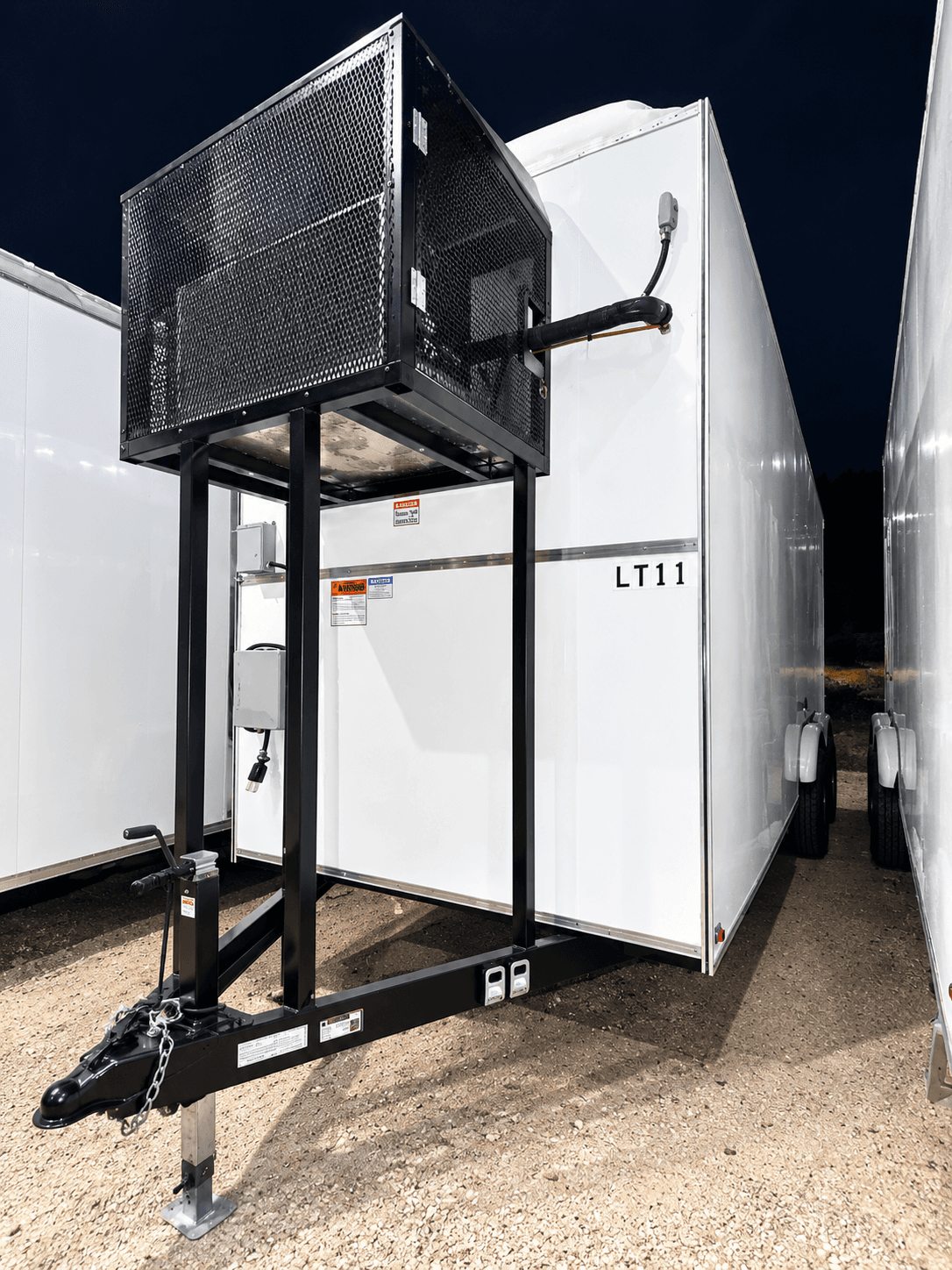
Compare the equipment
These published examples describe named company units. The supplied equipment, configuration and availability are confirmed for your project address.
Listed refrigeration trailer equipment: condensing unit, amps panel, lighting.
Equipment records reviewed October 19, 2026. Temperature labels are inventory labels, not verified operating ranges. Nominal length is a model label, not a measure of usable space or site footprint.
The Greater Cleveland Food Bank’s published production-service page describes complete meals prepared in its Partner Distribution Hub for agencies with limited preparation resources. It distinguishes meals heated and served at children’s nutrition sites from complete cold lunch boxes. Its senior program also separates meals heated before pickup from meals heated by partner sites. The location doing the preparation can therefore differ from the place of final service.
The same distinction helps a commercial operator whose preparation moves to Brooklyn while a Cleveland property is refurbished. Temporary cold storage follows the ingredients, finished chilled meals and freezer reserves that need it. A Garfield Heights operation and a separate East Cleveland property each need a stock picture tied to their own working address. Include the products kept at the busiest overlap rather than combining several sites into one assumed storage load.
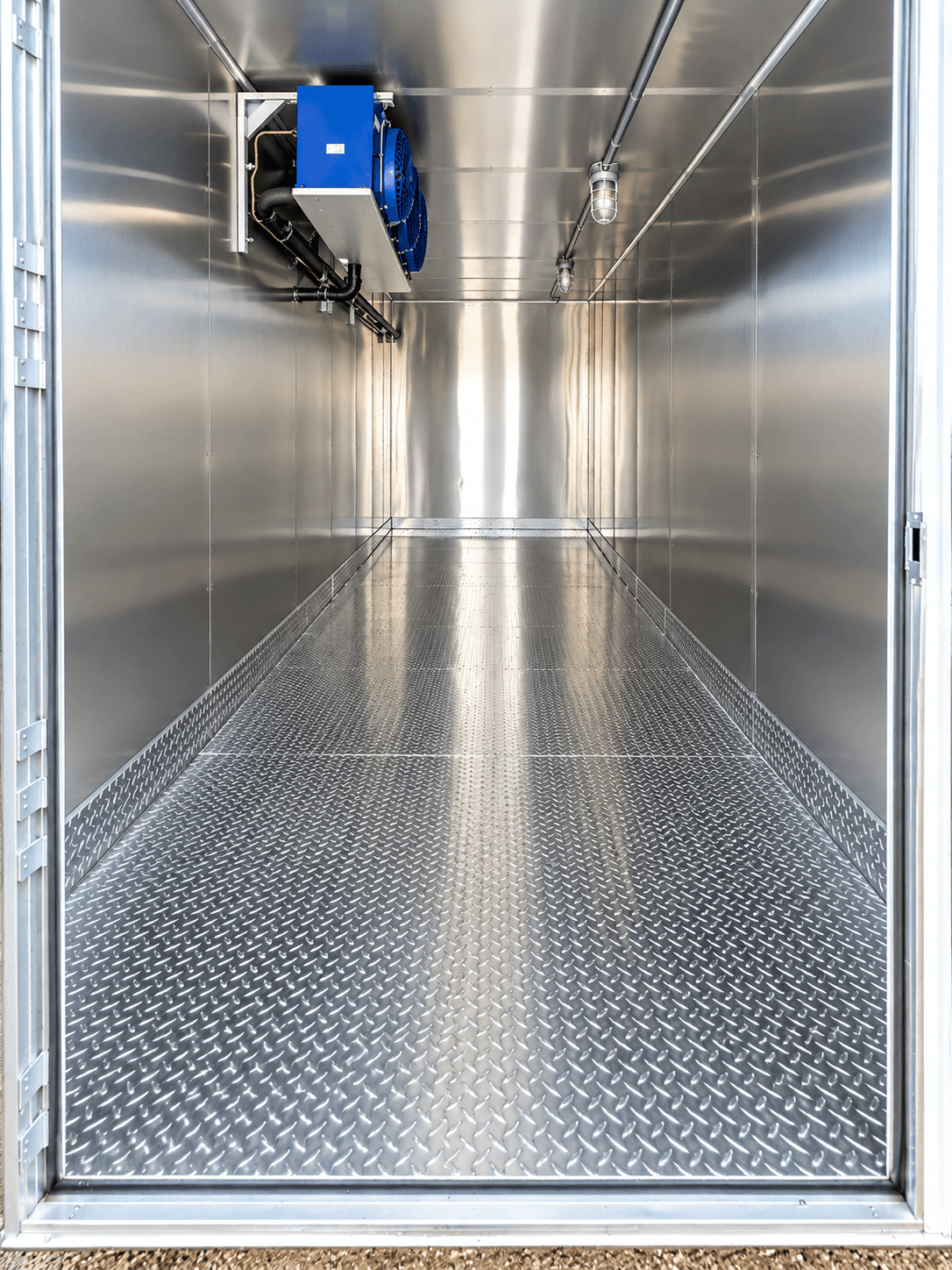
The 12ft Refrigerated Trailer guide provides another nominal model for comparison. Its actual configuration, power and temperature capability remain unverified. Neither the length label nor an empty interior photograph establishes how many packaged meals fit while leaving the retrieval route usable.
A commercial walk-in breakdown can interrupt the next breakfast service as well as reserves for later meals. A person answers rental inquiries 24/7; equipment availability and transport timing follow the actual project review. The food operator’s procedures govern decisions about affected goods while the remaining chilled and frozen loads are identified.
LT2 in the 20ft Refrigerated Trailer guide lists a condensing unit, amps panel and lighting, with 220V single-phase power at 40–60A. Its -5°F inventory label is not a verified operating range. The offered configuration still needs a usable-capacity and exact-connector check against the products and available electrical service.
For refurbishment in Parma or a food-service project in Lorain, read the corresponding city guide. Their working addresses and storage periods remain separate from a Cleveland request.
A temporary change to industrial site circulation in Cleveland or Garfield Heights, Ohio, can affect where meal supplies are accepted and how dining staff collect them. Ask facilities staff to mark the proposed ingredient route and explain any restrictions affecting shared doors, vehicle access or pedestrian crossings.
NOAA’s Ohio summary describes substantial seasonal contrasts, with cold winter conditions and warm, humid summer air. Include the entire expected period for an outside unit, especially if an initially short repair may become a longer replacement project. The property’s known access and drainage issues belong in the same discussion.
For a separate property in Akron, use that city’s guide while keeping its receiving arrangements attached to its own project. At the Cleveland site, the largest case, tray or cart has to pass through the offered doorway and reach its storage position. Frequent breakfast retrieval and a bulk reserve transfer can require different access patterns even when the product quantity is similar.
Review the outside unit’s connection requirements, contractor access, material deliveries and collection with the responsible site team. Those movements can change the approach after the first transfer.
K27 in the 40ft Bulk Kitchen Trailer guide combines cooking appliances with ingredient storage. Its listed equipment includes a double-stack convection oven, tilting skillet, griddle/oven combination, six-burner range/oven combination, deep fryer, sinks, prep table, reach-in refrigerator and freezer, and walk-in cooler. K27 lists 220V single-phase power at 200–220A. Its integrated cooler supports that named unit’s preparation work; bulk reserves elsewhere still need their own storage assessment.
Returned reusable pans and service ware need a washing route of their own. The 30ft Conveyor Dishwashing Trailer guide includes DTC3, a named high-temperature conveyor dishwasher with a soil tray, sinks, prep table, racks and water heater. DTC3 lists 220V three-phase power at 200A, distinct from the single-phase refrigeration example. Water, drainage and the route from dirty returns to clean items remain separate parts of the working layout.
The Huntington Convention Center’s published catering policies identify Levy as the exclusive food and beverage provider. They require prior written approval for outside food and beverages brought in or removed by clients or guests, with separate written approval for exhibit sampling. These rules concern food service; they do not grant permission to place a rental unit. Establish the authorized food arrangement before assigning the holding address for a venue project.
A staged return may restore meal production before every reserve moves back into permanent refrigeration. Keep the remaining goods accessible and maintain their required supply until the final transfer. Request availability and a complete project quote connecting the selected equipment, working period and address-specific transport with that return plan.
Before you book
Show the busiest overlap between deliveries and preparation, with the products and access pattern for each team. The proposed layout should be compared with that peak rather than several separate averages. Package sizes and the staff route also help establish how usable the temporary room will be during service.
Yes. Give each function its own scope and dates while showing how staff move between them. The facilities can be considered within one layout, but their configurations and connections need individual confirmation. This helps the team avoid choosing positions that fit separately and conflict when used together.
Update the rental contact and follow the extension process confirmed in the quote. Explain when stock can realistically move back and who approves the revised plan. A contractor’s estimate is useful context, while collection and any continued rental need an agreed arrangement for the actual project.
These public references inform the planning examples; equipment availability and delivery arrangements are confirmed for your address.
Temporary refrigeration, kitchens and dishwashing can support many kinds of food-service operations. Each setting below starts with its own schedule, stock and site questions, and every project is reviewed individually.
Hotels, restaurants and resorts can plan temporary refrigeration around breakfast, banquet and dinner service when a walk-in cooler fails or a kitchen is refurbished.
Hospital, nursing home and care-facility kitchens can describe meal schedules, delivery times and displaced stock so temporary storage follows the food-service routine.
Municipal, county and public-building food-service teams can outline receiving arrangements, responsible contacts and project dates before a quote is prepared.
Dining facility managers can explain the products displaced, the receiving arrangements and the proposed period, then review availability and terms with our team.
Schools, colleges and universities can plan around term dates, serving windows and campus kitchen renovations so meal service can continue during repairs or construction.
Plant cafeterias and employee dining areas can describe shift patterns and staged building work so temporary cold storage can be reviewed against the working schedule.
Caterers and venues can plan preparation windows, event days and overflow ingredients, and describe how stock moves between storage, the kitchen and service.
Producers, wholesalers and distributors can describe loading, staging and storage needs when a cooler breaks down or demand temporarily exceeds capacity.
These examples describe planning situations. Equipment, availability and terms are confirmed in a project quote.
Cold storage is only one part of a project. These are the questions we work through with you before anything is booked.
Start with refrigerated containers and refrigeration trailers, then add a temporary kitchen or dishwashing trailer when the project needs one, all in a single conversation.
Access, utilities and the intended position are reviewed before delivery is arranged, so the equipment is matched to your site rather than the other way around.
Whether a walk-in cooler failed this morning or a renovation is months away, describe the real situation and plan around the stock, dates and people involved.
Planning guides cover all 50 states and more than 700 cities. Your address is then confirmed for equipment and delivery.
Use the rental calculator for a rate-range estimate and setup amount, then request a project quote that confirms availability, transport and the rental period.