BXRT20–1Refrigerated trailer
- Nominal length
- 20ft
- Listed electrical supply
- 220V · single-phase · 40–60A
- Inventory temperature label
- 32°F
Temporary cold storage in Blacksburg, Virginia
Blacksburg refrigerated container rentals can be reviewed alongside kitchen and dishwashing rentals when a service-area transition needs temporary facilities. Emergency commercial freezer failures call for a stock decision, while planned building work allows receiving and reopening to be staged. Short-term rentals and longer leasing requests can be discussed for educational facilities, industrial businesses, restaurants, venues and other commercial users. Delivery coordination needs the approved equipment position, actual entrance and a contact who understands site changes. Explain your refrigeration conditions and the goods needed before and after the handover. Request availability and an address-specific quote from Worldwide Refrigerated Container Rental Facilities for the operating period you intend to maintain.
Emergency cooler or freezer failure in Blacksburg? A person answers rental inquiries 24/7. Availability and delivery timing are confirmed in your quote.
Plan your rental budget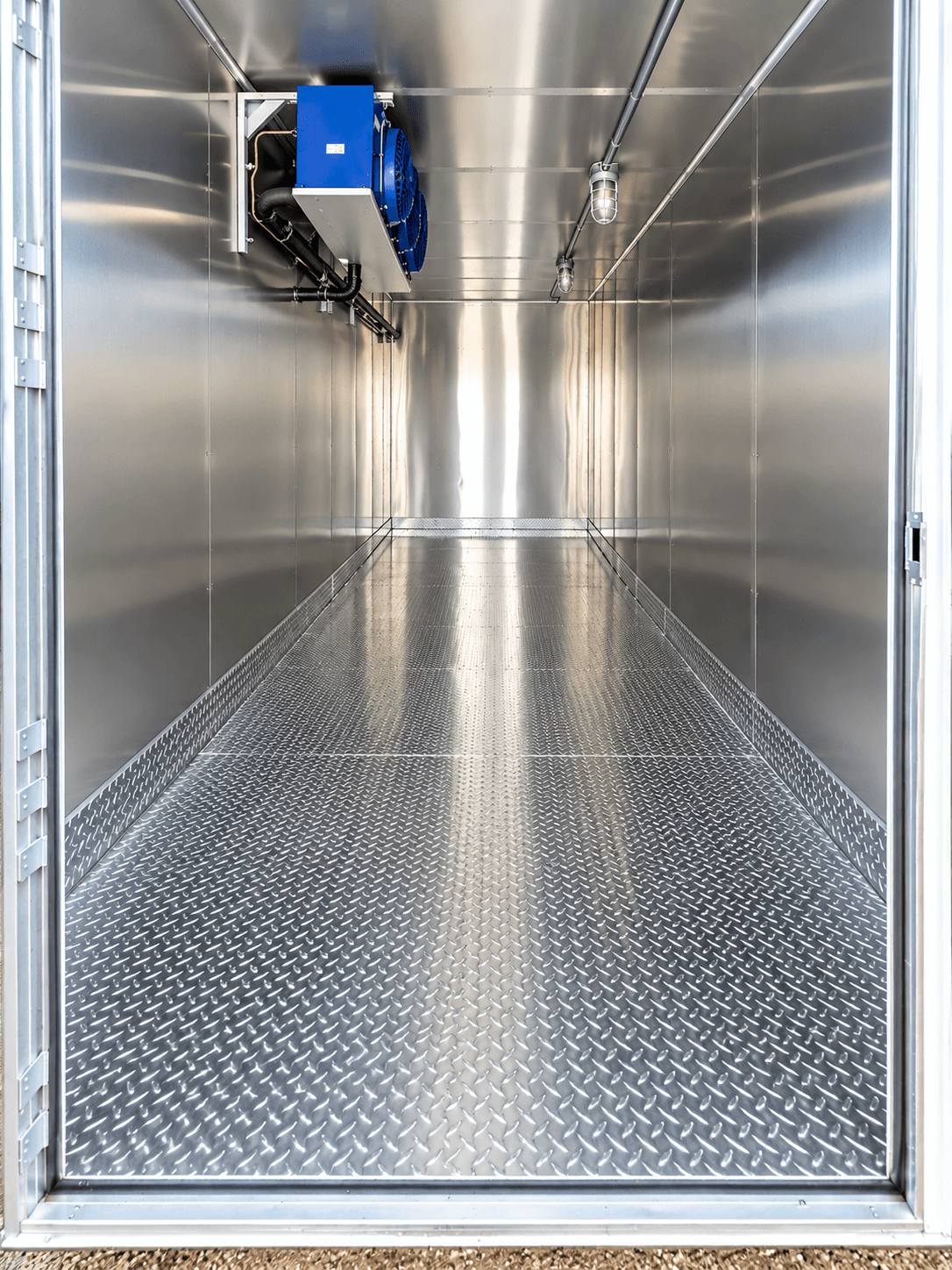
Compare the equipment
These published examples describe named company units. The supplied equipment, configuration and availability are confirmed for your project address.
Listed refrigeration trailer equipment: condensing unit, amps panel, lighting.
Equipment records reviewed October 19, 2026. Temperature labels are inventory labels, not verified operating ranges. Nominal length is a model label, not a measure of usable space or site footprint.
Commercial refrigeration problems in Blacksburg rarely wait, so a catering commissary may ask about a portable walk-in cooler rental as soon as a walk-in cooler or freezer breaks down. Emergency rentals and planned leases are quoted from the same details: the product, the temperature it must hold, the address and the dates. If cooking is also interrupted, a mobile kitchen trailer rental can sit beside the refrigeration, and a dishwashing trailer for rent can handle returned dishes.
Refrigeration is an emergency need: when a commercial walk-in freezer or refrigeration unit breaks down, the call is an emergency, and a person answers rental inquiries 24/7. Photos of the failed unit or the available space can help the team understand the request. Outdoor walk-in refrigeration and refrigerated trailers are discussed first when stock is at risk. Restaurants, hospitals, schools, hotels, caterers and food producers can describe the problem to a person who answers rental inquiries 24/7. Businesses near Blacksburg, including those in Harrisonburg, Charlottesville and New Castle, can ask about emergency rentals or longer leases using the same inquiry. Availability, delivery arrangements and the rental period are confirmed in the quote for each address.
The State Fair of Virginia reported 250,000 visitors over its 10-day run in 2018, its highest attendance since 2011. Hospitality groups in Richmond, Ashland and Colonial Heights may rent mobile refrigeration for a banquet season or lease modular cold storage during a hotel renovation. Caterers in Hopewell and Newport News can rent portable refrigeration for a single event and return it when the guests leave. Portable refrigerated trailers and walk-in coolers are usually the first equipment discussed for event stock, with onsite power and access reviewed early. A walk-in cooler and a walk-in freezer can be rented together when a commercial site needs both. A dishwashing trailer lease can be added to the same quote when returned dishes also need washing. The context above comes from public sources and does not describe a completed job; availability and delivery are confirmed in the quote.

After Hurricane Isabel in September 2003, Dominion Virginia Power still had about 758,000 customers without power the following Monday morning, the surge flooded the Midtown Tunnel between Norfolk and Portsmouth with 44 million gallons of water, and the tunnel stayed closed for nearly a month. Emergency refrigeration rental covers more than restaurants: senior living communities in Hampton, school kitchens in Virginia Beach and food processors in Chesapeake can all call about a failed walk-in freezer. Hotels in Poquoson and Suffolk often rent a refrigerated trailer for the days a walk-in cooler is down. Mobile kitchen trailers and emergency refrigeration are often requested together by facilities that must keep serving meals through repairs. These are public facts about the area, not a record of company jobs; equipment, availability and delivery are confirmed in the quote.
The $3.9 billion Hampton Roads Bridge-Tunnel expansion between Norfolk and Hampton employs about 2,400 workers building tunnels, bridges and support facilities and was reported in March 2026 as expected to be substantially complete by February 2027. Construction crews and facility managers near Smithfield, Franklin and Branchville may lease refrigerated containers to hold food for a work site or a temporary dining area. Renovation projects in Alexandria may use a rented refrigeration trailer, and a dishwashing trailer for rent if the dish room is affected. A long-term refrigeration trailer lease keeps supplies cold on site for the whole project, with power and access reviewed before delivery. A short-term emergency rental can become a long-term lease at the same address, as long as the quote says so. A mobile dishwashing trailer and a mobile kitchen trailer are often requested together, with a refrigerated trailer for the stock. Dishwashing trailer rentals and warewashing capacity are quoted beside the kitchen and refrigeration when the whole food-service area is affected. Kitchen, dishwashing and refrigeration rentals are separate equipment, and each can be rented short-term or leased long-term. This is published public context, not company work; each request is quoted for its own address and dates.
In Blacksburg, emergency refrigeration usually means a refrigerated trailer, a refrigeration container or a portable walk-in cooler matched to the stock. Emergency refrigeration for commercial kitchens often starts with a portable refrigerated trailer and ends with a longer lease if repairs take time. Trailer rentals, refrigerated trailers for rent and trailer leasing are all discussed with the address and the dates in hand. Emergency refrigeration can be arranged as a refrigerated trailer, a refrigeration container or a portable walk-in cooler, depending on the stock and the site.
A portable refrigerated trailer suits most emergency calls, while a refrigeration container fits a longer, more stationary need. Emergency refrigeration rental, trailer rentals and trailer leasing are all handled through one inquiry, so one call can cover every option. When cooking and dish washing stop with the walk-in freezer, a mobile kitchen, a dishwashing trailer and portable refrigeration can be one request. Emergency refrigeration, onsite and temporary, is meant to bridge the gap until the commercial walk-in freezer is repaired or replaced.
A commercial kitchen closed for repairs may need a mobile kitchen trailer lease, a dishwashing trailer and emergency refrigeration at the same time. A commercial walk-in freezer failure in Blacksburg is an emergency call, and onsite temporary refrigeration is how most such calls begin. Emergency refrigeration rental covers walk-in coolers, walk-in freezers and refrigerated trailers for commercial kitchens, warehouses and plants. Refrigeration containers are often chosen for long-term storage, while refrigerated trailers are chosen for short-term emergencies; both can be rented.
Dishwashing and kitchen outages often arrive together, so dishwashing trailer rentals and a mobile kitchen for rent are quoted beside emergency refrigeration. Onsite temporary facilities can include portable refrigeration, a mobile kitchen trailer and, if dishes are affected, a dishwashing trailer. A dishwashing trailer lease can be added to the same quote when returned dishes also need washing. A dishwashing trailer, a mobile kitchen trailer and a refrigerated trailer for rent can each be short-term or long-term, depending on the repair.
A mobile, modular or portable refrigeration setup in Blacksburg is chosen to match the walk-in cooler or freezer that failed. Portable refrigerated trailers, refrigeration containers and outdoor walk-in refrigeration units can all be discussed for the same emergency. Mobile kitchens, dishwashing trailers and refrigerated trailers for rent can be quoted together as temporary facilities. Short-term or long-term, the same refrigerated trailer rental starts from the address, the stock and the dates.
Outdoor walk-in refrigeration can be set up beside the building as temporary facilities, so staff keep working while the permanent walk-in cooler or walk-in freezer is repaired. Modular, mobile or portable, the equipment is chosen to fit the work that continues at the site.
NOAA’s 2022 Virginia climate summary reviews historical temperature and precipitation conditions across the state. It provides planning background, not evidence that a Blacksburg property has experienced an outage. When refrigeration fails during a change of term or staff, the immediate challenge can be finding the person who understands the remaining goods. Keep quantities, required conditions and committed orders accessible to the inquiry coordinator. Kitchen service may change before the incoming stock plan does, while dishwashing activity can continue for another department. Identify the goods needing a cooler or freezer rather than assuming the last normal shift’s purchasing figures remain accurate. A named stock owner helps reconcile those changes before temporary storage is assessed.
To turn this local picture of new-service stock handoffs into an equipment shortlist, start with the 20ft Refrigerated Container guide and its notes on the ground and drainage beneath the unit and how to organize stock for a longer stay.
Virginia Tech’s September 2024 executive update records that Hitt Hall had opened and included the Perry Place dining facility. This owner account is a useful local example of new academic and dining space entering use. It establishes no rental customer or equipment requirement. For a separate operator moving into new service rooms, the practical question is when goods should leave the old location and when the new receiving team can accept them. Temporary refrigerated storage may bridge that handover without covering the whole construction period. Identify who accepts each permanent room, who places the opening orders and how those decisions will be shared with the person arranging the rental.
Two nearby cities approach their projects differently. Roanoke’s guide addresses institutional food-service projects, while the guide for operators in Lynchburg addresses service-entrance and utility changes, citing the Lynchburg entry “downtown renewal notice, July 23, 2024”. Treat each as background for your own questions rather than a description of conditions in Blacksburg.
Events in Blacksburg or Christiansburg, Virginia, may require temporary equipment when the venue's permanent facilities cannot support the organizer's proposed meal preparation and serving arrangement. Confirm who checks stock at handover, who retains the delivery records, and how menu changes reach the staff receiving ingredients.
A hypothetical Blacksburg institution may hold existing goods while ordering a different mix for a refurbished service area. Separate the stock retained for normal use from the goods arriving for the new operation. Kitchen preparation can restart before every permanent storage location is accepted, and dishwashing functions may return on their own schedule. Identify which freezer goods must be retrieved throughout the transition and which can remain allocated to reserve. Show the temporary cold storage location on the operating plan used by staff, not only on a contractor drawing. The largest simultaneous load may occur before reopening when old inventory and opening orders overlap, so make that peak visible rather than estimating capacity from the final room layout.
For another comparison, the guide for operators in Staunton covers recovery and contractor coordination, citing the Staunton entry “August 13, 2020 flood damage assessment”. It describes a different property and is useful mainly for the questions it raises.
Christiansburg, Radford and Salem are nearby communities that may form part of a regional organization’s activity. An inquiry coordinated in Blacksburg should still identify the precise receiving address wherever the equipment is proposed. Show the gate, on-site approach and approved refrigerated position at that property, including routes shared with staff or visitors. If receiving responsibility changes as a new facility opens, give the contact details for both the placement period and later collection. Cold storage may stay in use after construction access controls disappear. The transport review needs those practical changes for the actual dates, rather than a general campus map or a geographic distance used as a delivery assumption.
Send the goods, packaging, required conditions and highest quantity expected at one time with the proposed rental dates. Describe what is retained, what is newly ordered and the point when permanent refrigeration should be accepted. Include placement photographs, relevant site electrical information and the authorized property contact. Ask the proposal to identify equipment suitability, rental period, transport and collection assumptions, with provisional items made explicit. If acceptance or opening orders change, update the inquiry so the reviewed load stays accurate. Availability and final charges require an address-specific assessment. A documented local opening provides context for careful handovers, but does not establish a specification, delivery promise or current equipment supply for another operation.
Before you book
Yes. Explain its quantity and arrival date alongside the goods already held. The largest refrigerated load can occur when those two inventories overlap. Ask the proposal to use that simultaneous peak rather than the amount expected after the new operation settles into normal purchasing.
Give the inquiry an accountable coordinating contact and identify who controls access at each stage. Share the stock-location plan with incoming staff before responsibilities change. The placement and collection arrangements should remain understandable even when the original project team is no longer on site.
Describe when goods actually lose permanent storage and when they can return. That interval can differ from the overall building programme. Ask the reviewed rental period to reflect those operating milestones, including any uncertainty around acceptance and final stock transfer.
Yes, a mobile kitchen for rent can be quoted alongside a portable walk-in cooler for Blacksburg, and a dishwashing trailer lease can be added if the dish room is affected. Tell the team the address, what is stored, the target temperature and when the permanent unit should be back. The quote confirms the equipment, the delivery timing and the rental terms for your site.
Portable refrigerated trailers, refrigeration containers, outdoor walk-in refrigeration, and portable walk-in coolers or walk-in freezers can be discussed for onsite, short-term or long-term use. Rent, lease and leasing describe contract shapes: a rental is short, a lease is longer, and trailer leasing can be discussed for more than one unit. A commercial walk-in freezer or refrigeration breakdown is an emergency, so call at any hour; a person answers rental inquiries 24/7, and the quote confirms the equipment and delivery for your address.
These public references inform the planning examples; equipment availability and delivery arrangements are confirmed for your address.
Temporary refrigeration, kitchens and dishwashing can support many kinds of food-service operations. Each setting below starts with its own schedule, stock and site questions, and every project is reviewed individually.
Hotels, restaurants and resorts can plan temporary refrigeration around breakfast, banquet and dinner service when a walk-in cooler fails or a kitchen is refurbished.
Hospital, nursing home and care-facility kitchens can describe meal schedules, delivery times and displaced stock so temporary storage follows the food-service routine.
Municipal, county and public-building food-service teams can outline receiving arrangements, responsible contacts and project dates before a quote is prepared.
Dining facility managers can explain the products displaced, the receiving arrangements and the proposed period, then review availability and terms with our team.
Schools, colleges and universities can plan around term dates, serving windows and campus kitchen renovations so meal service can continue during repairs or construction.
Plant cafeterias and employee dining areas can describe shift patterns and staged building work so temporary cold storage can be reviewed against the working schedule.
Caterers and venues can plan preparation windows, event days and overflow ingredients, and describe how stock moves between storage, the kitchen and service.
Producers, wholesalers and distributors can describe loading, staging and storage needs when a cooler breaks down or demand temporarily exceeds capacity.
These examples describe planning situations. Equipment, availability and terms are confirmed in a project quote.
Cold storage is only one part of a project. These are the questions we work through with you before anything is booked.
Start with refrigerated containers and refrigeration trailers, then add a temporary kitchen or dishwashing trailer when the project needs one, all in a single conversation.
Access, utilities and the intended position are reviewed before delivery is arranged, so the equipment is matched to your site rather than the other way around.
Whether a walk-in cooler failed this morning or a renovation is months away, describe the real situation and plan around the stock, dates and people involved.
Planning guides cover all 50 states and more than 700 cities. Your address is then confirmed for equipment and delivery.
Use the rental calculator for a rate-range estimate and setup amount, then request a project quote that confirms availability, transport and the rental period.