BXRT20–1Refrigerated trailer
- Nominal length
- 20ft
- Listed electrical supply
- 220V · single-phase · 40–60A
- Inventory temperature label
- 32°F
Temporary cold storage in New Haven, Connecticut
Refrigerated containers for rent in New Haven give commercial kitchens another storage option when a walk-in cooler or freezer fails. Worldwide Refrigerated Container Rental Facilities serves Connecticut with refrigeration trailers and portable cold storage, alongside related kitchen and dishwashing inquiries. The temporary arrangement should support the ingredients still used during repairs and supplies arriving while the permanent solution becomes clear. Short rentals and longer lease discussions can address different stages of that work. Share your delivery address, product conditions, available position and dates to explore equipment, delivery coordination, current availability and a project quote.
Emergency cooler or freezer failure in New Haven? A person answers rental inquiries 24/7. Availability and delivery timing are confirmed in your quote.
Plan your rental budget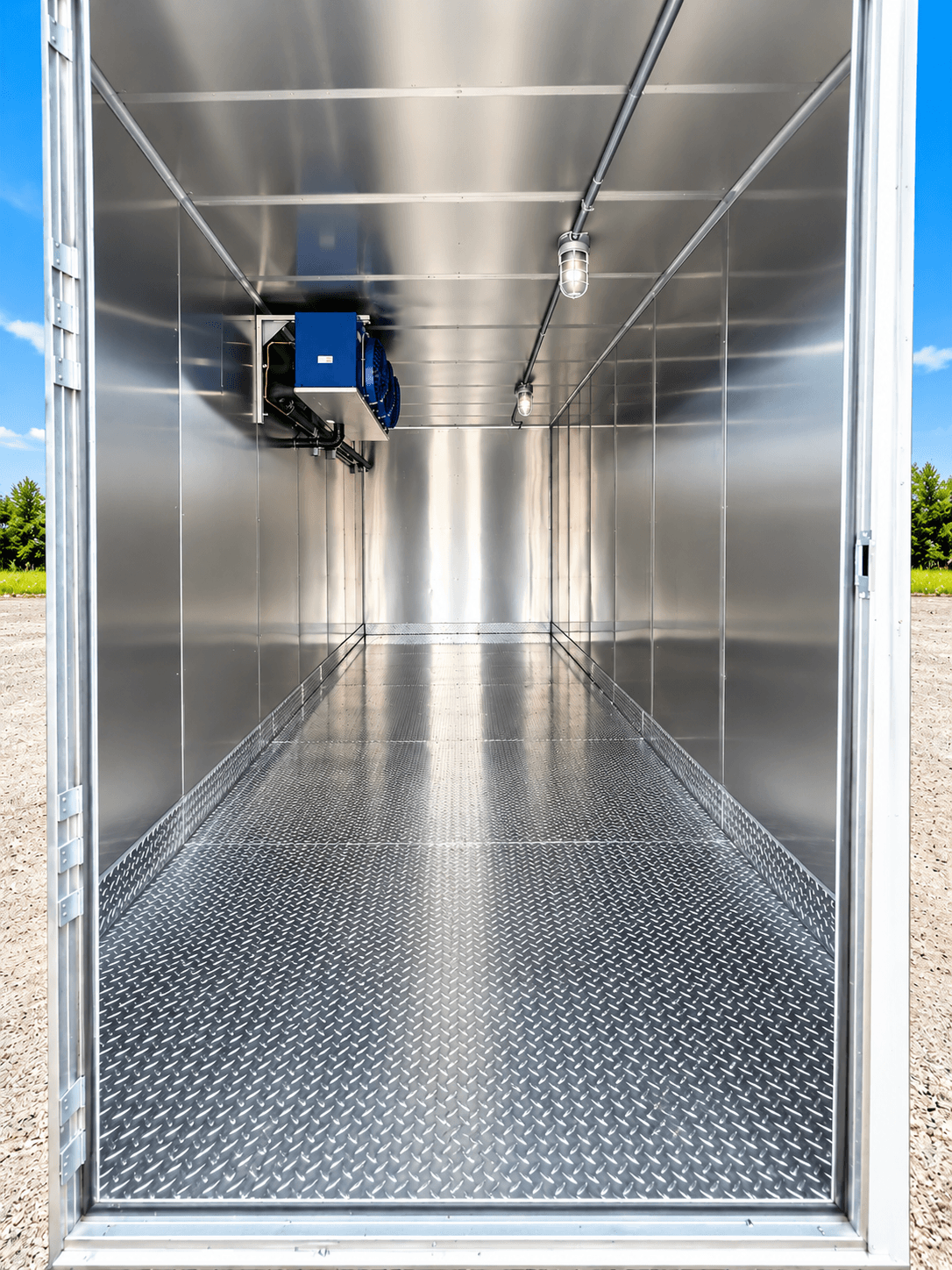
Compare the equipment
These published examples describe named company units. The supplied equipment, configuration and availability are confirmed for your project address.
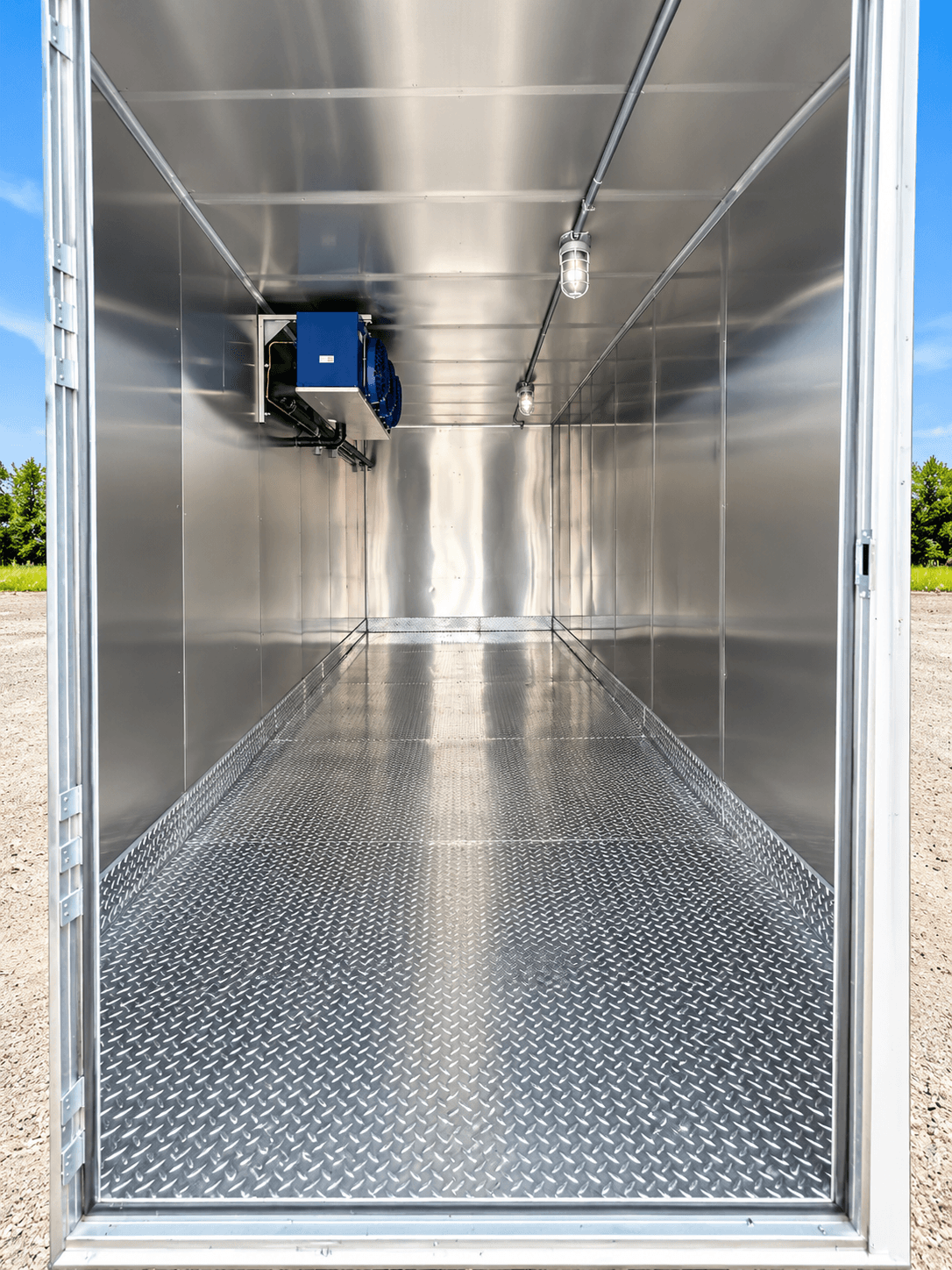
Listed refrigeration trailer equipment: condensing unit, amps panel, lighting.
Equipment records reviewed October 19, 2026. Temperature labels are inventory labels, not verified operating ranges. Nominal length is a model label, not a measure of usable space or site footprint.
For a food-processing plant in New Haven, emergency refrigeration covers the gap between a failed walk-in cooler and a repaired or replaced one. Short-term rentals usually fit a repair measured in days, while a longer-term lease fits a remodel, a phased construction project or a seasonal peak. Cold storage is the usual starting point, and the same team can discuss a mobile kitchen rental or a dishwashing trailer lease if the interruption is wider.
Commercial customers can ask about portable refrigerated trailers, refrigeration containers and walk-in coolers or freezers for emergency, modular or temporary onsite use. Calls about a failed walk-in cooler or freezer are answered by a person around the clock, and delivery timing and equipment availability are confirmed once the details are reviewed. The same rental and lease process applies to work outside New Haven. Operators in Bristol, New Britain and Danbury can send an address, access details and product temperatures, and delivery coordination and availability for that location are discussed from there.
A travel guide describes the St. Patrick’s Day Parade as the biggest annual event in New Haven, with up to 250,000 people converging on the city. Caterers and concession operators in Woodmont, Milford and Shelton often need onsite refrigeration for a few days, then release the trailer as soon as the event ends. Caterers in Naugatuck and Norwalk can rent portable refrigeration for a single event and return it when the guests leave. Event refrigeration is quoted by the day or the week: portable refrigerated trailers for a weekend, trailer leasing for a full season. Refrigeration is an emergency need: every call about a failed commercial walk-in freezer or refrigeration unit is an emergency call. The context above comes from public sources and does not describe a completed job; availability and delivery are confirmed in the quote.
Tropical Storm Isaias cut power to more than 680,000 Connecticut customers on August 4, 2020, and Eversource said the effect on its Connecticut customers was greater than Superstorm Sandy’s. A produce packer in Hartford, a meat processor in Middletown or a convenience-store chain in Norwich may need cold storage the same week a compressor fails, so the inquiry starts with product and temperature. A restaurant in Litchfield or a care home in Bantam can call about an emergency freezer rental as soon as the temperature alarm goes off. A failed commercial walk-in freezer after an outage is an emergency call, and walk-in coolers, walk-in freezers and refrigerated trailers are the first rentals discussed. A dishwashing trailer lease can be added to the same quote when returned dishes also need washing. A mobile dishwashing trailer and a mobile kitchen trailer are often requested together, with a refrigerated trailer for the stock. Nothing here assumes available equipment or a delivery time; a person answers rental inquiries 24/7 and the quote confirms the details.
Hartford HealthCare is planning a roughly $1 billion expansion described as the largest vertical construction project in Hartford, centered on a 14-story patient tower at Hartford Hospital with construction scheduled to begin in 2027, and an $850 million bond sale closed in April 2026 to help finance it. Renovation projects in Jewett City, Fenwick and Stamford can use a rented refrigeration trailer while permanent coolers are rebuilt, with a mobile kitchen trailer added if the cooking line is closed too. Renovation projects in Newtown may use a rented refrigeration trailer, and a dishwashing trailer for rent if the dish room is affected. Trailer leasing covers the length of a project: a refrigerated trailer for supplies and a refrigeration container for bulk stock, short-term or long-term. Walk-in coolers hold chilled stock and walk-in freezers hold frozen stock, so the rental should match whichever one is needed. Kitchen, dishwashing and refrigeration rentals are separate equipment, and each can be rented short-term or leased long-term. Mobile kitchens, dishwashing trailers and refrigerated trailers for rent can be quoted together as temporary facilities. This is published public context, not company work; each request is quoted for its own address and dates.
A mobile dishwashing trailer and a mobile kitchen trailer are often requested together, with a refrigerated trailer for the stock. Emergency refrigeration, onsite and temporary, is meant to bridge the gap until the commercial walk-in freezer is repaired or replaced. Emergency refrigeration in New Haven can be rented for a few days or leased long-term, depending on how long the commercial walk-in is down. Outdoor walk-in refrigeration can be set up beside the building as temporary facilities, so staff keep working while the permanent walk-in cooler or walk-in freezer is repaired.
Trailer rentals, refrigerated trailers for rent and trailer leasing are all discussed with the address and the dates in hand. Portable refrigeration is not a permanent fix; it is a set of temporary facilities for the weeks between a failure and a repaired walk-in freezer. A dishwashing trailer, a mobile kitchen trailer and a refrigerated trailer for rent can each be short-term or long-term, depending on the repair. A portable refrigerated trailer suits most emergency calls, while a refrigeration container fits a longer, more stationary need.
In New Haven, emergency refrigeration usually means a refrigerated trailer, a refrigeration container or a portable walk-in cooler matched to the stock. Dishwashing and kitchen outages often arrive together, so dishwashing trailer rentals and a mobile kitchen for rent are quoted beside emergency refrigeration. Short-term or long-term, trailers for rent in New Haven are quoted for the address, the stock and the dates. Short-term or long-term, the same refrigerated trailer rental starts from the address, the stock and the dates.
Refrigeration containers are often chosen for long-term storage, while refrigerated trailers are chosen for short-term emergencies; both can be rented. A commercial walk-in freezer that fails overnight is an emergency, and so is a commercial refrigeration system that stops holding temperature. A commercial walk-in freezer failure in New Haven is an emergency call, and onsite temporary refrigeration is how most such calls begin. Mobile kitchens, dishwashing trailers and refrigerated trailers for rent can be quoted together as temporary facilities.
Dishwashing trailer rentals and kitchen trailer rentals can be quoted alongside refrigerated trailers for rent when the whole kitchen is down. Emergency refrigeration for commercial kitchens often starts with a portable refrigerated trailer and ends with a longer lease if repairs take time. Trailer leasing makes sense when a commercial kitchen will be closed for weeks, because one lease replaces repeated short-term rentals. Onsite temporary facilities can include portable refrigeration, a mobile kitchen trailer and, if dishes are affected, a dishwashing trailer.
Outdoor walk-in refrigeration needs level ground and power nearby, so a long-term lease starts with a site conversation. Kitchen, dishwashing and refrigeration rentals are separate equipment, and each can be rented short-term or leased long-term.
Downtown Evening Soup Kitchen describes prepared outdoor dinners and an Olive Street pantry supplying groceries and whole foods. These New Haven public programs perform different food-service roles: a meal is prepared before service, while groceries leave for later use. For a comparable commercial interruption, distinguish ingredients awaiting preparation, products held for distribution and food already ready to serve before comparing temporary refrigeration.
A revised menu or supplier schedule can change the temporary load without changing the failed room's dimensions. Separate chilled ingredients from frozen reserves, and identify goods still held in usable permanent refrigeration. Include packages, frequent ingredient trips and the next supplier arrival before previous stock is used. Those details describe the working interior more usefully than an attendance figure or empty-floor photograph.
The 20ft Refrigerated Container guide confirms a nominal model length. Usable capacity, temperature capability and electrical requirements remain unverified for the offered container. Compare those requirements directly rather than infer a complete package from another piece of equipment with a similar exterior length.
LT2 in the 20ft Refrigerated Trailer guide lists a -5°F temperature label, condensing unit, amps panel and lighting, with 220V single-phase power at 40–60A. The label is not a complete operating range. Product conditions, usable interior and the exact electrical connector still need confirmation for the proposed unit.
Yale Hospitality describes ready-to-go sandwiches, salads and protein packs at The Bow Wow, while Commons includes in-house pasta, rotisserie and wok-fired formats. These New Haven outlets illustrate different preparation stages within food service. For a comparable repair, ingredients retrieved repeatedly during cooking need a different working arrangement from packaged products waiting to be put on display.
The Bridgeport and Meriden rental guides cover projects in those cities. For work in Waterbury, read its rental guide. A receiving address in West Haven, Ansonia or Derby needs its own stock, approach and operating period even when a wider project has one purchasing contact.
A staged renovation may leave cooking available while ingredient holding moves first. If preparation also leaves the building, P1 in the 26ft Mobile Kitchen Trailer guide lists a prep table, reach-in refrigerator and freezer, three-compartment, handwashing and mop sinks, and a water heater, with 220V single-phase power at 200A. It is a prep-only named example without a documented cooking line, so it should not be selected as a replacement for ovens or ranges.
School project teams in New Haven or Ansonia, Connecticut, may need a fallback receiving plan if the permanent dining facility is not ready for its anticipated handover. Discuss how staff will move ingredients from receiving to preparation while keeping contractor activity separate from the agreed meal service route.
Dishwashing trailers handle reusable pans and service items after preparation and meals. Allocate sorting and scraping before washing, then a clean-item destination away from employees retrieving ingredients. The route used to bring food toward service may be unsuitable for the volume of items returning afterward.
DTC3 in the 30ft Conveyor Dishwashing Trailer guide lists a high-temperature conveyor dishwasher, soil tray, prep table, sinks, racks and water heater. Its documented supply is 220V three-phase at 200A, unlike LT2 or P1. Review each electrical connection alongside the washing unit's separate water, drainage and returned-item routes.
After loading, the cold store should still allow later supplier cases to be put away without trapping the ingredients needed first. Compare the actual doorway and turning space with the carts or packages employees move. Those repeated movements matter through the whole interruption, rather than only during the first displaced load.
Connecticut’s NOAA summary describes cold snowy winters, warm humid summers and variable conditions with precipitation throughout the year. Coastal winters tend to be milder than those inland, with local differences associated with the setting. Include the intended season and actual proposed surroundings as background for the temporary position and period.
Later repair stages can change receiving while temporary refrigeration remains in place. Keep the staff approach and intended equipment position visible alongside those changes, including access for collection after surrounding materials or other facilities have moved. An unloading position should remain practical for ordinary daily retrieval.
Permanent refrigeration may become usable before every product returns inside. Keep remaining supplies and ordinary supplier arrivals in the expected period, then request a quote covering equipment, transport, collection, other charges and extension terms. The final stock transfer matters alongside the first move when setting the end of use.
Before you book
Describe the operation continuing during repairs, including revised supplies and ingredients still used. Those decisions can alter quantity and retrieval routines. This gives equipment selection a clearer task than simply matching the unavailable room’s ordinary contents, capacity or dimensions without explaining their temporary use.
They can overlap with products not yet used and create the busiest quantity held. Include timing, packaging and supplies reserved for later service. The equipment discussion should reflect that receiving cycle rather than only one stock count taken at the beginning of the interruption.
State when temporary storage is first needed and explain what determines the estimated end. Include how stock or access might change if work continues. The proposal should establish current availability and extension terms before the kitchen relies on an arrangement through an unresolved repair period.
Rent a refrigerated trailer for a breakdown that will be fixed in days; lease it when the permanent cooler or freezer will be out of service for months. Include the address, how a truck can reach the site, the power available and the temperature the product must hold. Equipment, availability and delivery timing are confirmed in the quote.
Emergency refrigeration can include portable refrigerated trailers, a refrigeration container, outdoor walk-in refrigeration or a walk-in cooler or walk-in freezer rental. Rent, lease and leasing describe contract shapes: a rental is short, a lease is longer, and trailer leasing can be discussed for more than one unit. Every call about a failed commercial walk-in freezer or refrigeration unit is an emergency call, and a person answers rental inquiries 24/7. Equipment, availability and delivery timing are confirmed in the quote.
These public references inform the planning examples; equipment availability and delivery arrangements are confirmed for your address.
Temporary refrigeration, kitchens and dishwashing can support many kinds of food-service operations. Each setting below starts with its own schedule, stock and site questions, and every project is reviewed individually.
Hotels, restaurants and resorts can plan temporary refrigeration around breakfast, banquet and dinner service when a walk-in cooler fails or a kitchen is refurbished.
Hospital, nursing home and care-facility kitchens can describe meal schedules, delivery times and displaced stock so temporary storage follows the food-service routine.
Municipal, county and public-building food-service teams can outline receiving arrangements, responsible contacts and project dates before a quote is prepared.
Dining facility managers can explain the products displaced, the receiving arrangements and the proposed period, then review availability and terms with our team.
Schools, colleges and universities can plan around term dates, serving windows and campus kitchen renovations so meal service can continue during repairs or construction.
Plant cafeterias and employee dining areas can describe shift patterns and staged building work so temporary cold storage can be reviewed against the working schedule.
Caterers and venues can plan preparation windows, event days and overflow ingredients, and describe how stock moves between storage, the kitchen and service.
Producers, wholesalers and distributors can describe loading, staging and storage needs when a cooler breaks down or demand temporarily exceeds capacity.
These examples describe planning situations. Equipment, availability and terms are confirmed in a project quote.
Cold storage is only one part of a project. These are the questions we work through with you before anything is booked.
Start with refrigerated containers and refrigeration trailers, then add a temporary kitchen or dishwashing trailer when the project needs one, all in a single conversation.
Access, utilities and the intended position are reviewed before delivery is arranged, so the equipment is matched to your site rather than the other way around.
Whether a walk-in cooler failed this morning or a renovation is months away, describe the real situation and plan around the stock, dates and people involved.
Planning guides cover all 50 states and more than 700 cities. Your address is then confirmed for equipment and delivery.
Use the rental calculator for a rate-range estimate and setup amount, then request a project quote that confirms availability, transport and the rental period.