BXRT20–1Refrigerated trailer
- Nominal length
- 20ft
- Listed electrical supply
- 220V · single-phase · 40–60A
- Inventory temperature label
- 32°F
Temporary cold storage in Richmond, Kentucky
Richmond refrigeration lease planning helps commercial kitchens arrange temporary storage while permanent facilities are renovated or a failed walk-in is repaired. Refrigerated containers, trailers, coolers and freezers offer options, with kitchen and dishwashing facilities considered when related work areas close. Worldwide Refrigerated Container Rental Facilities serves Kentucky food-service businesses, institutional kitchens and industrial customers. Short-term rentals and longer arrangements should reflect the products, handling needs and complete working period. Share your Richmond address, required storage conditions, expected quantities and dates to discuss equipment choices, delivery coordination, current availability and a project quote.
Emergency cooler or freezer failure in Richmond? A person answers rental inquiries 24/7. Availability and delivery timing are confirmed in your quote.
Plan your rental budget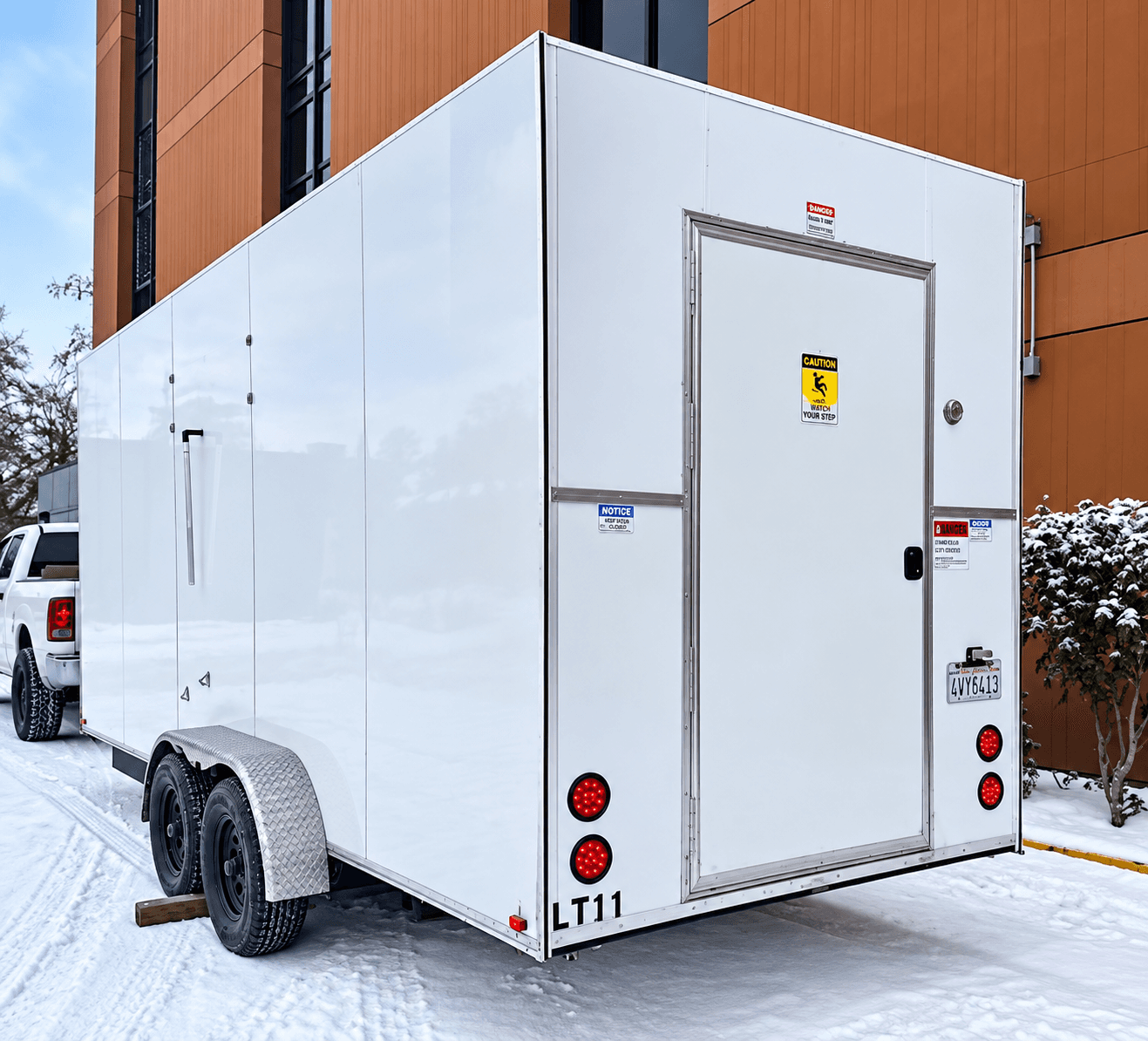
Compare the equipment
These published examples describe named company units. The supplied equipment, configuration and availability are confirmed for your project address.
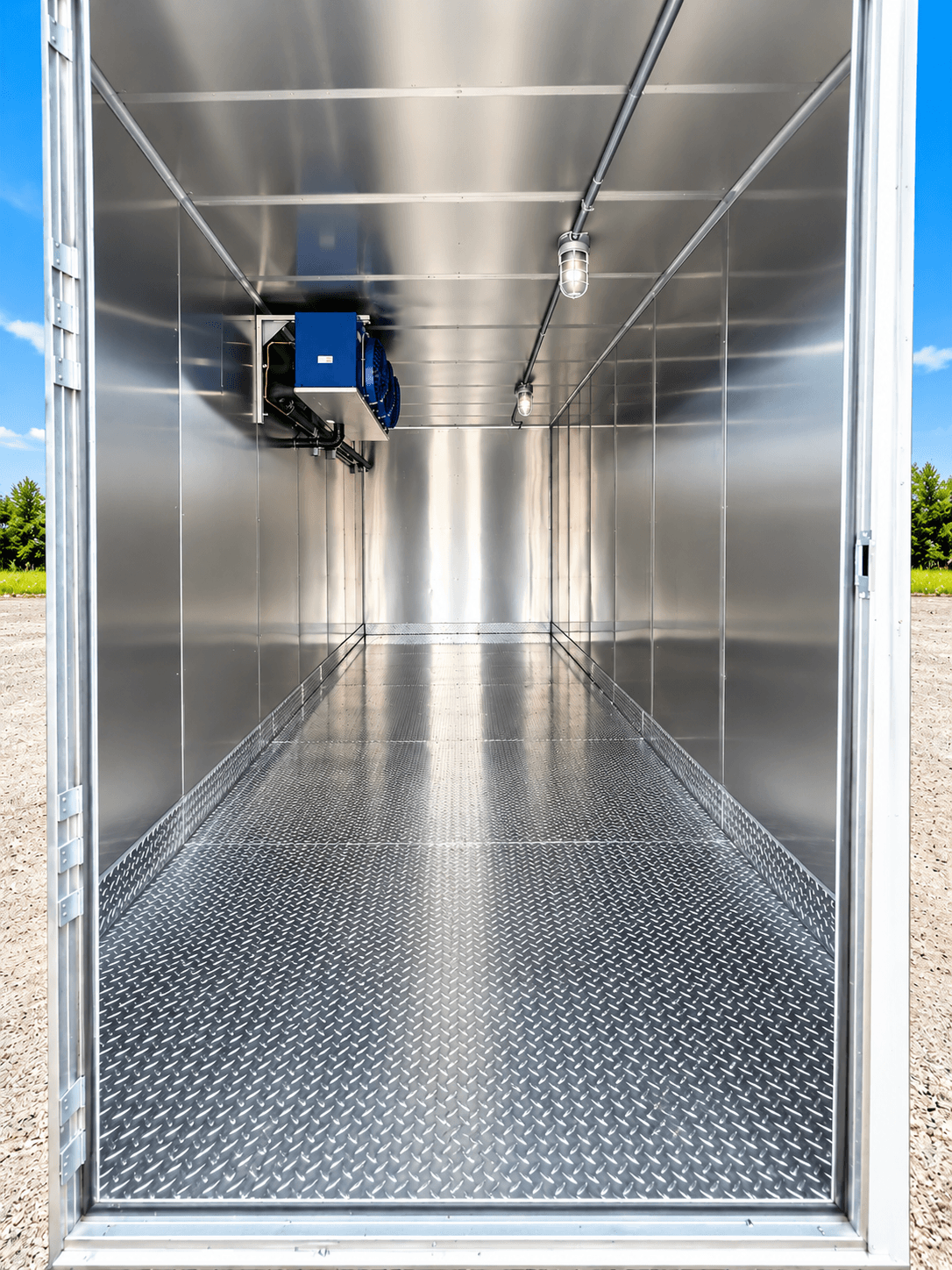
Listed refrigeration trailer equipment: condensing unit, amps panel, lighting.
Equipment records reviewed October 19, 2026. Temperature labels are inventory labels, not verified operating ranges. Nominal length is a model label, not a measure of usable space or site footprint.
When the commercial walk-in freezer or cooler fails at a catering commissary in Richmond, an emergency outdoor walk-in refrigeration unit rental can hold the affected stock while the permanent unit is repaired. Tell the team whether you expect to rent for one repair or lease for a longer project, and the options can be compared in the quote. Cold storage is the usual starting point, and the same team can discuss a mobile kitchen rental or a dishwashing trailer lease if the interruption is wider.
Trailers for rent and trailer leasing cover emergency, short-term and long-term needs, from portable walk-in coolers to outdoor walk-in refrigeration for commercial sites. Calls about a failed walk-in cooler or freezer are answered by a person around the clock, and delivery timing and equipment availability are confirmed once the details are reviewed. The same rental and lease process applies to work outside Richmond. Operators in Louisville, Elizabethtown, Florence and Covington can send an address, access details and product temperatures, and delivery coordination and availability for that location are discussed from there. Cold storage rental is often the first step, since frozen and chilled stock cannot wait for a repair.
The Kentucky Derby Festival in Louisville is described as drawing more than 1.5 million visitors across about 70 events, opening with Thunder Over Louisville, which is billed as the nation’s largest annual fireworks show. Hospitality groups in Jeffersontown, St. Matthews and Hurstbourne may rent mobile refrigeration for a banquet season or lease modular cold storage during a hotel renovation. Food producers in Ten Broeck and Radcliff can ask about trailer leasing for seasonal stock or a temporary overflow. Portable refrigerated trailers and walk-in coolers are usually the first equipment discussed for event stock, with onsite power and access reviewed early. A mobile dishwashing trailer and a mobile kitchen trailer are often requested together, with a refrigerated trailer for the stock. Nothing here assumes available equipment or a delivery time; a person answers rental inquiries 24/7 and the quote confirms the details.
The National Weather Service Paducah office reports that the January 26–28, 2009 ice storm caused record power outages in western Kentucky, with over 90 percent of southwestern Kentucky without power by late January 27, and a Kentucky Utilities filing puts the statewide peak at about 769,000 customers. A produce packer in Blandville, a meat processor in Benton or a convenience-store chain in Mayfield may need cold storage the same week a compressor fails, so the inquiry starts with product and temperature. Schools in Carrsville and a distributor in Owensboro can ask the same question: what equipment fits this address, and what will the quote confirm about delivery? A failed commercial walk-in freezer after an outage is an emergency call, and walk-in coolers, walk-in freezers and refrigerated trailers are the first rentals discussed. Onsite temporary facilities can include portable refrigeration, trailers for rent and, if dishes are affected, a dishwashing trailer. This is published public context, not company work; each request is quoted for its own address and dates.
The Kentucky Transportation Cabinet is rebuilding three Interstate 65 bridges in downtown Louisville in a $150 million project with closures scheduled for June and July 2026, and the governor’s 2026 highway plan sets aside $125 million for the Brent Spence Bridge Corridor in Covington. Temporary facilities for a remodel in Vine Grove, Hodgenville or Gratz usually combine refrigeration, a mobile kitchen for rent and, if dishes are affected, a dishwashing trailer lease. Renovation projects in Versailles may use a rented refrigeration trailer, and a dishwashing trailer for rent if the dish room is affected. A long-term refrigeration trailer lease keeps supplies cold on site for the whole project, with power and access reviewed before delivery. Outdoor walk-in refrigeration needs level ground and power nearby, so a long-term lease starts with a site conversation. When cooking and dish washing stop together, a mobile kitchen, a dishwashing trailer and portable refrigeration can be one request. The context above comes from public sources and does not describe a completed job; availability and delivery are confirmed in the quote. Cold storage rental for an event or a seasonal peak follows the same steps as an emergency refrigeration rental. Most calls are about refrigeration: a failed cooler, a warm freezer or a compressor that will not restart.
Dishwashing and kitchen outages often arrive together, so dishwashing trailer rentals and a mobile kitchen for rent are quoted beside emergency refrigeration. Modular and portable cold storage can be discussed in stages when a site needs more space than one refrigerated trailer provides. Trailer rentals, refrigerated trailers for rent and trailer leasing are all discussed with the address and the dates in hand. Dishwashing trailer rentals and kitchen trailer rentals can be quoted alongside refrigerated trailers for rent when the whole kitchen is down.
Emergency refrigeration, onsite and temporary, is meant to bridge the gap until the commercial walk-in freezer is repaired or replaced. Mobile kitchens, dishwashing trailers and refrigerated trailers for rent can be quoted together as temporary facilities. Onsite temporary facilities can include portable refrigeration, a mobile kitchen trailer and, if dishes are affected, a dishwashing trailer. A dishwashing trailer lease can be added to the same quote when returned dishes also need washing.
Mobile refrigeration, mobile kitchens and mobile dishwashing trailers are different equipment, and each can be rented separately or together. A commercial walk-in freezer failure in Richmond is an emergency call, and onsite temporary refrigeration is how most such calls begin. Emergency refrigeration can be arranged as a refrigerated trailer, a refrigeration container or a portable walk-in cooler, depending on the stock and the site. Outdoor walk-in refrigeration needs level ground and power nearby, so a long-term lease starts with a site conversation.
Short-term or long-term, the same refrigerated trailer rental starts from the address, the stock and the dates. In Richmond, emergency refrigeration usually means a refrigerated trailer, a refrigeration container or a portable walk-in cooler matched to the stock. A commercial kitchen closed for repairs may need a mobile kitchen trailer lease, a dishwashing trailer and emergency refrigeration at the same time. Portable refrigeration is not a permanent fix; it is a set of temporary facilities for the weeks between a failure and a repaired walk-in freezer.
Refrigeration is an emergency need: every call about a failed commercial walk-in freezer or refrigeration unit is an emergency call. Emergency refrigeration rental covers walk-in coolers, walk-in freezers and refrigerated trailers for commercial kitchens, warehouses and plants. Portable refrigerated trailers, refrigeration containers and outdoor walk-in refrigeration units can all be discussed for the same emergency. Refrigeration containers are often chosen for long-term storage, while refrigerated trailers are chosen for short-term emergencies; both can be rented.
Temporary facilities can be arranged onsite for an event, a renovation or an emergency, and collected when the permanent kitchen is ready. A mobile dishwashing trailer and a mobile kitchen trailer are often requested together, with a refrigerated trailer for the stock.
A Richmond kitchen project may begin with reduced meal service and return to its usual workload before permanent refrigeration is available. Describe the ingredients held during each stage and the supplier orders expected. The later receiving peak may be more demanding than the initial stock transfer. Include it before comparing equipment for the whole period. If the menu changes during construction, explain which ingredients are no longer held and which replace them. A different product mix can change the practical layout even when the total quantity looks similar.
For a Berea refit, show which permanent rooms remain usable and which products need another location. Cooking or cleanup can stay active while storage changes, making the staff route part of the temporary requirement. If other facilities are also needed, describe those functions separately alongside refrigeration. A phased account helps the proposal address the operation that will actually continue through construction.
The 20ft Refrigerated Container guide fits a project like this one, focused on refrigeration lease planning for staged kitchen work, and walks through one resting place for the whole project as well as the ground and drainage beneath the unit.
Separate chilled ingredients from frozen supplies and identify the required conditions for each. Explain packaging, carts or other handling equipment, and the frequency with which employees retrieve products. A reserve opened occasionally has a different working role from the main ingredient store. Discuss any intended shelving or fittings explicitly rather than assuming they come with every quoted unit.
Several neighboring guides cover situations that resemble parts of an inquiry from Richmond. Lexington’s guide is organized around planning during food-service renovation. A separate comparison is Georgetown’s guide, which covers its own planning questions. Treat each as background for your own questions rather than a description of conditions in Richmond.
For a Lancaster catering request, include routine ingredients alongside supplies reserved for the function. Show when those loads overlap and where preparation happens. The address needing refrigeration may differ from the public event location, so identify the actual storage task and period. Attendance provides context without establishing the capacity or configuration suitable for every menu and receiving cycle.
For government dining inquiries in Richmond or Nicholasville, Kentucky, shared supplier orders can contain goods reserved for different meal periods or separate food-service areas within a building. Have the property and food-service contacts review the receiving route together before the purchase representative treats a proposed position as agreed.
Review the approach, available surface and route to preparation with the property contact. Other users, deliveries or contractors may need the same area during busy periods. Confirm the actual equipment’s entrance, connections and any site preparation discussed. A position that permits arrival still needs to support employee access after the store has been filled.
A Nicholasville renovation can change its working routes in a different sequence from Richmond. Keep those property details distinct if a shared team coordinates both jobs. NOAA’s Kentucky climate summary offers statewide outdoor-planning background, while current site conditions and the selected equipment need review for each actual position. Equipment availability and transport are discussed for the proposed address and dates.
Permanent refrigeration may require testing and handover before ingredients can return. Staff also need to transfer stock while normal supplier receiving resumes. Include that operating overlap when discussing the finish, along with the person who can confirm the rental is cleared and accessible for collection. A construction milestone alone may not explain when temporary storage is no longer needed.
Before booking, compare the offered unit with the product groups and staff handling you described. Clarify equipment, rental-period and transport arrangements, including other services or charges discussed and the property’s responsibilities. Ask how revised dates are handled. Keep a site contact available for changes in construction, quantities or receiving so the proposal remains connected to the current working requirement throughout the job.
Before you book
Describe the storage load and working routes through the main phases, including the highest later quantity. State which permanent facilities remain available. Equipment and terms can then be reviewed against the complete sequence rather than only the reduced operation at the beginning.
Explain which products and functions each affects, with their expected dates and any overlap. Keep the actual storage job at each address identifiable. A combined inquiry should make the operating requirements clearer rather than merge different sites or periods into one unexplained quantity.
Update the date when permanent refrigeration can accept normal stock and explain any effect on receiving or the final transfer. Discuss the change under the proposed rental and collection terms. Do not assume the end of building work automatically clears the temporary storage requirement.
You can ask about a short rental for a repair or a longer lease for a renovation or seasonal need in Richmond. Give the address, the stock to be stored and any access limits for a delivery truck. Equipment availability, delivery arrangements and setup are confirmed in the quote, not assumed.
Mobile and modular refrigeration, from refrigerated trailers for rent to a refrigeration container lease, can be discussed for short-term or long-term needs. Portable walk-in coolers and portable walk-in freezers are chosen by the temperature the stock needs, not by the size of the building. Every call about a failed commercial walk-in freezer or refrigeration unit is an emergency call, and a person answers rental inquiries 24/7. Equipment, availability and delivery timing are confirmed in the quote.
These public references inform the planning examples; equipment availability and delivery arrangements are confirmed for your address.
Temporary refrigeration, kitchens and dishwashing can support many kinds of food-service operations. Each setting below starts with its own schedule, stock and site questions, and every project is reviewed individually.
Hotels, restaurants and resorts can plan temporary refrigeration around breakfast, banquet and dinner service when a walk-in cooler fails or a kitchen is refurbished.
Hospital, nursing home and care-facility kitchens can describe meal schedules, delivery times and displaced stock so temporary storage follows the food-service routine.
Municipal, county and public-building food-service teams can outline receiving arrangements, responsible contacts and project dates before a quote is prepared.
Dining facility managers can explain the products displaced, the receiving arrangements and the proposed period, then review availability and terms with our team.
Schools, colleges and universities can plan around term dates, serving windows and campus kitchen renovations so meal service can continue during repairs or construction.
Plant cafeterias and employee dining areas can describe shift patterns and staged building work so temporary cold storage can be reviewed against the working schedule.
Caterers and venues can plan preparation windows, event days and overflow ingredients, and describe how stock moves between storage, the kitchen and service.
Producers, wholesalers and distributors can describe loading, staging and storage needs when a cooler breaks down or demand temporarily exceeds capacity.
These examples describe planning situations. Equipment, availability and terms are confirmed in a project quote.
Cold storage is only one part of a project. These are the questions we work through with you before anything is booked.
Start with refrigerated containers and refrigeration trailers, then add a temporary kitchen or dishwashing trailer when the project needs one, all in a single conversation.
Access, utilities and the intended position are reviewed before delivery is arranged, so the equipment is matched to your site rather than the other way around.
Whether a walk-in cooler failed this morning or a renovation is months away, describe the real situation and plan around the stock, dates and people involved.
Planning guides cover all 50 states and more than 700 cities. Your address is then confirmed for equipment and delivery.
Use the rental calculator for a rate-range estimate and setup amount, then request a project quote that confirms availability, transport and the rental period.