BXRT20–1Refrigerated trailer
- Nominal length
- 20ft
- Listed electrical supply
- 220V · single-phase · 40–60A
- Inventory temperature label
- 32°F
Temporary cold storage in Boston, Massachusetts
Boston refrigerated container rentals can support a working commercial kitchen after a freezer failure or while a planned renovation removes permanent cold storage. Refrigeration trailers, coolers and freezers offer other arrangements, with kitchen and dishwashing facilities considered when more functions close. Short-term rentals and longer leases can suit restaurants, hospitals, schools, hotels and other commercial food-service operations. Worldwide Refrigerated Container Rental Facilities serves Boston and discusses delivery around the actual property and selected equipment. Describe your ingredients, daily handling and intended rental dates to request availability and a quote for temporary storage connected to the working kitchen.
Emergency cooler or freezer failure in Boston? A person answers rental inquiries 24/7. Availability and delivery timing are confirmed in your quote.
Plan your rental budget
Compare the equipment
These published examples describe named company units. The supplied equipment, configuration and availability are confirmed for your project address.
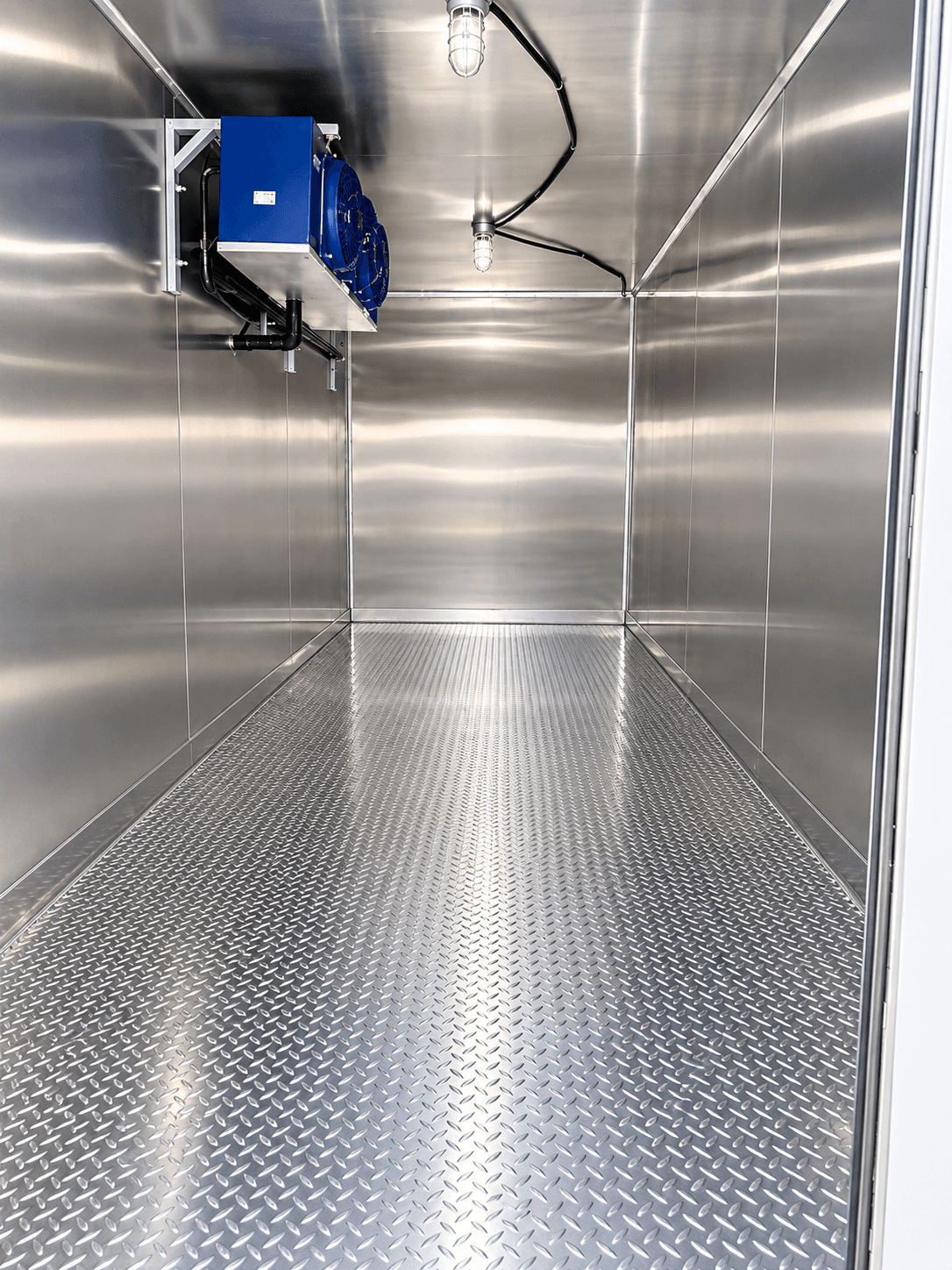
Listed refrigeration trailer equipment: condensing unit, amps panel, lighting.
Equipment records reviewed October 19, 2026. Temperature labels are inventory labels, not verified operating ranges. Nominal length is a model label, not a measure of usable space or site footprint.
The Greater Boston Food Bank’s November 10, 2023 account describes buying food and working with retailers, manufacturers, wholesalers and farmers, with an emphasis on produce, dairy and meat. It also identifies eggs and milk held in its cooler. The dated example shows why a distribution stock plan needs actual products and receiving patterns, rather than one undifferentiated grocery total.
A Boston caterer preparing for a Winthrop function can need refrigerated ingredients before the venue accepts deliveries. Guest-service holding is a separate task. A Chelsea production project and an Everett function likewise have different receiving peaks, even under one purchasing team. Assign chilled ingredients, frozen reserves and prepared batches to the property where each load is held.
For the 20ft Refrigerated Container, confirm usable capacity and connection requirements for the offered unit. Nominal length does not define the interior layout or electrical supply. Compare the actual doorway and arrangement with the product cases and handling method, including the fullest receiving overlap after the first transfer.
Boston University’s September 15, 2026 Warren Towers report says its fourth-floor dining hall reopened that fall after summer renovation, with new all-electric appliances. The same report describes later phases for the other towers and ground-floor work. The food operation’s return is a more useful reference for a comparable storage handover than the final date of every residential construction phase.
For a comparable campus or restaurant project, refrigeration can remain outside while staff test the permanent cold room and restart receiving. New orders can arrive before temporary stock is cleared. A Quincy preparation operation and Cambridge dining site need their own goods destinations, equipment periods and connections, even when one team coordinates the wider renovation.
A food distribution refurbishment in Boston or Chelsea, Massachusetts, can change the space available for incoming goods before the normal outbound collection timetable has been adjusted. Coordinate the temporary arrangement with receiving and dispatch leads, giving each team a clear method for reporting changed orders or product locations.
BXRT20–1 in the 20ft Refrigerated Trailer guide lists a 32°F inventory label, condensing unit, amps panel and lighting, with 220V single-phase power at 40–60A. The label does not establish a full operating range or make the unit suitable for every chilled product. The offered configuration, exact connector, usable capacity and required product conditions still need review.
K27 in the 40ft Bulk Kitchen Trailer guide lists a double-stack convection oven, tilting skillet, deep fryer, griddle/oven and six-burner range/oven combinations, sinks and preparation space. It also lists reach-in refrigeration and a walk-in cooler, with 220V single-phase power at 200–220A. Those cold-storage features belong to that named cooking configuration; they do not define capacity for a separate bulk reserve.
Boston University’s Choose to Reuse page separates takeout food collection from the later return of empty containers at designated campus collection points. A comparable service interruption therefore has more than an ingredient-storage task. Food awaiting service and reusable items coming back need their own paths, with washing considered separately from refrigeration.
DTC1 in the 38ft Conveyor Dishwashing Trailer guide is a high-temperature conveyor example listing 220V single-phase power at 300A. Its equipment includes a soil tray, sinks, prep table, storage and wire racks, water heater and mop sink. Dishwashing trailers handle returned service items; the machine label does not establish numeric wash/rinse temperatures, throughput or site water/drain connections.
For a Lynn food-service refurbishment, retain any permanent refrigeration still working in the stock plan. Its load can change when another room closes or reopens. A short rental or longer lease needs to follow the goods actually displaced, with frequent ingredient retrieval distinguished from reserve storage.
Boston’s Public Works guidance describes street-occupancy permits as reserving specified street or sidewalk space for a period and requests the job, duration and traffic arrangements. A cold store inside an approved private service yard and a proposal using public space raise different placement questions. The property team and transporter need the actual footprint and approach before the arrival is agreed.
NOAA describes Massachusetts’ cold, snowy winters, warm summers and precipitation throughout the year. For outdoor refrigeration, the project months, surface drainage and staff route belong beside the offered unit’s technical requirements. Statewide weather patterns do not establish its operating rating. Access and connections also need to remain usable when construction moves or ordinary suppliers return to the service area.
A person answers rental inquiries 24/7 for a Boston commercial cooler or freezer failure. Give the products affected, actual property and next service requirement so equipment options can be reviewed. Current availability and delivery arrangements are confirmed for that address.
A complete quotation should identify equipment, rental period, transport, collection and site responsibilities. The calculator gives a rental range for the chosen rate period plus a setup and delivery starting amount, not a final price for the project. Include changed dates, extension terms and the final return to permanent refrigeration. Request availability and a project quote for that complete working arrangement.
Before you book
Explain the storage lost and the preparation or washing areas that remain usable. A refrigeration-only arrangement may address that gap, with the ingredient route and actual equipment requirements considered. Other temporary facilities can be discussed separately if later phases also interrupt cooking or dishwashing.
Consider the footprint, entrance and staff route together before selecting a unit. Include receiving and other uses of the area, not only unloading access. The actual equipment’s layout and connections need review for the property so a temporary store supports daily work after it is stocked.
It turns a published daily, weekly or monthly range into an estimate for the number of periods you enter, with setup and delivery shown beside it. The setup and delivery figure starts from a national amount, not a price for this address, so collection and every journey need confirmation. Use the same storage role and expected dates to compare complete proposals before relying on an arrangement.
These public references inform the planning examples; equipment availability and delivery arrangements are confirmed for your address.
Temporary refrigeration, kitchens and dishwashing can support many kinds of food-service operations. Each setting below starts with its own schedule, stock and site questions, and every project is reviewed individually.
Hotels, restaurants and resorts can plan temporary refrigeration around breakfast, banquet and dinner service when a walk-in cooler fails or a kitchen is refurbished.
Hospital, nursing home and care-facility kitchens can describe meal schedules, delivery times and displaced stock so temporary storage follows the food-service routine.
Municipal, county and public-building food-service teams can outline receiving arrangements, responsible contacts and project dates before a quote is prepared.
Dining facility managers can explain the products displaced, the receiving arrangements and the proposed period, then review availability and terms with our team.
Schools, colleges and universities can plan around term dates, serving windows and campus kitchen renovations so meal service can continue during repairs or construction.
Plant cafeterias and employee dining areas can describe shift patterns and staged building work so temporary cold storage can be reviewed against the working schedule.
Caterers and venues can plan preparation windows, event days and overflow ingredients, and describe how stock moves between storage, the kitchen and service.
Producers, wholesalers and distributors can describe loading, staging and storage needs when a cooler breaks down or demand temporarily exceeds capacity.
These examples describe planning situations. Equipment, availability and terms are confirmed in a project quote.
Cold storage is only one part of a project. These are the questions we work through with you before anything is booked.
Start with refrigerated containers and refrigeration trailers, then add a temporary kitchen or dishwashing trailer when the project needs one, all in a single conversation.
Access, utilities and the intended position are reviewed before delivery is arranged, so the equipment is matched to your site rather than the other way around.
Whether a walk-in cooler failed this morning or a renovation is months away, describe the real situation and plan around the stock, dates and people involved.
Planning guides cover all 50 states and more than 700 cities. Your address is then confirmed for equipment and delivery.
Use the rental calculator for a rate-range estimate and setup amount, then request a project quote that confirms availability, transport and the rental period.