Compare the equipment
Specifications for your rental planning
These published examples describe named company units. The supplied equipment, configuration and availability are confirmed for your project address.
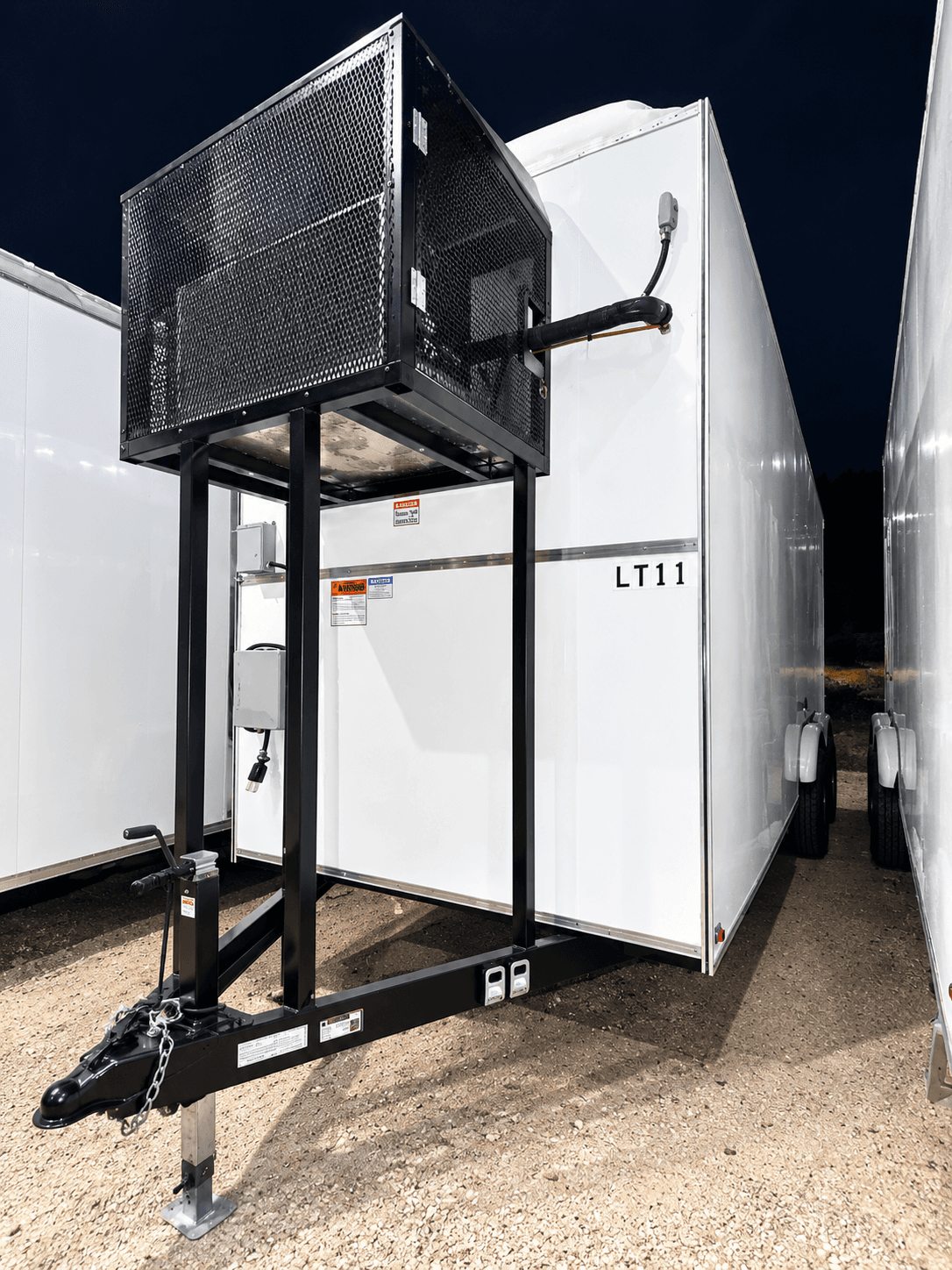
BXRT20–1Refrigerated trailer
- Nominal length
- 20ft
- Listed electrical supply
- 220V · single-phase · 40–60A
- Inventory temperature label
- 32°F
MT1Refrigerated trailer
- Nominal length
- 20ft
- Listed electrical supply
- 220V · single-phase · 40–60A
- Inventory temperature label
- 15°F
LT2Refrigerated trailer
- Nominal length
- 20ft
- Listed electrical supply
- 220V · single-phase · 40–60A
- Inventory temperature label
- -5°F
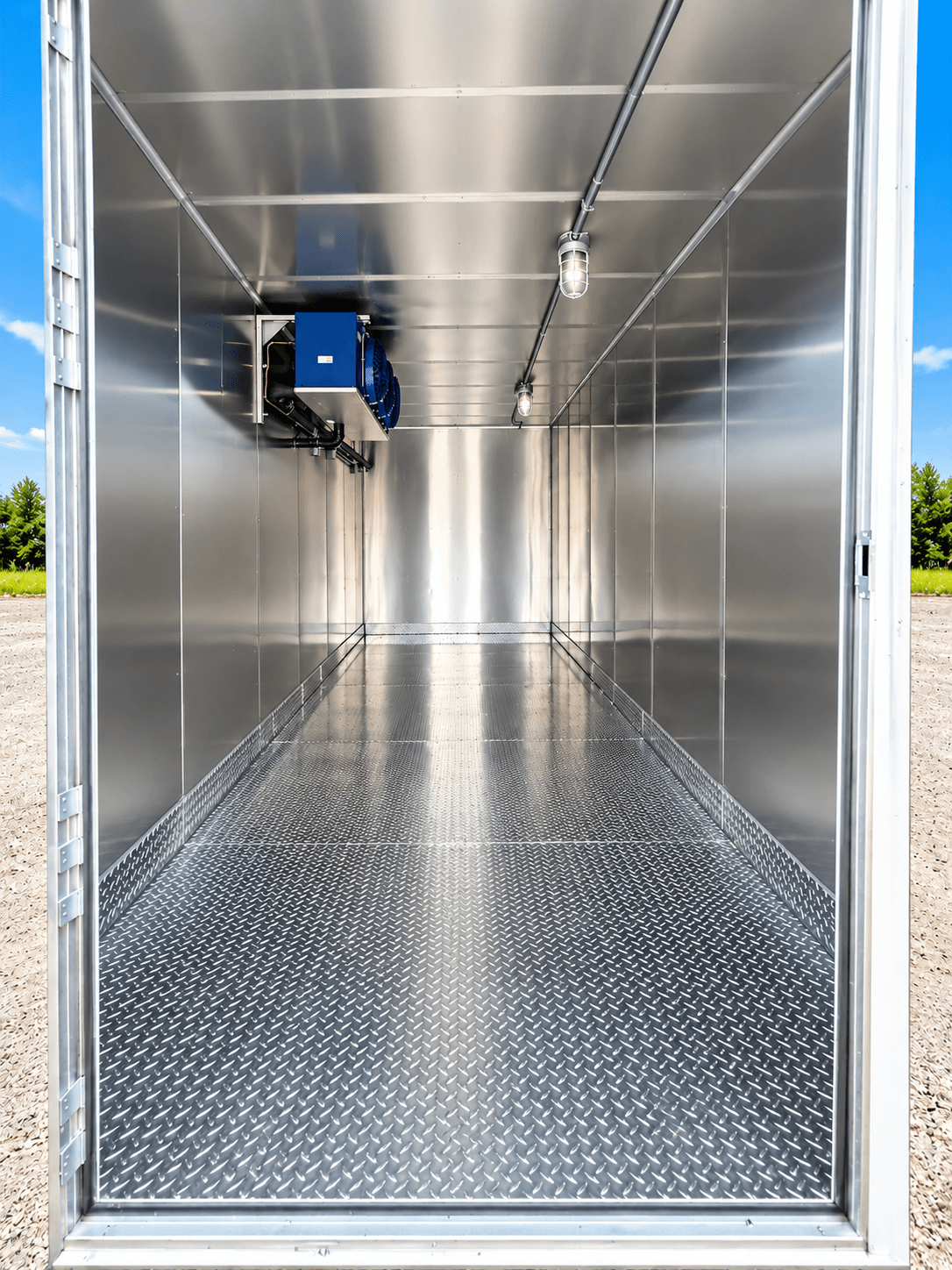
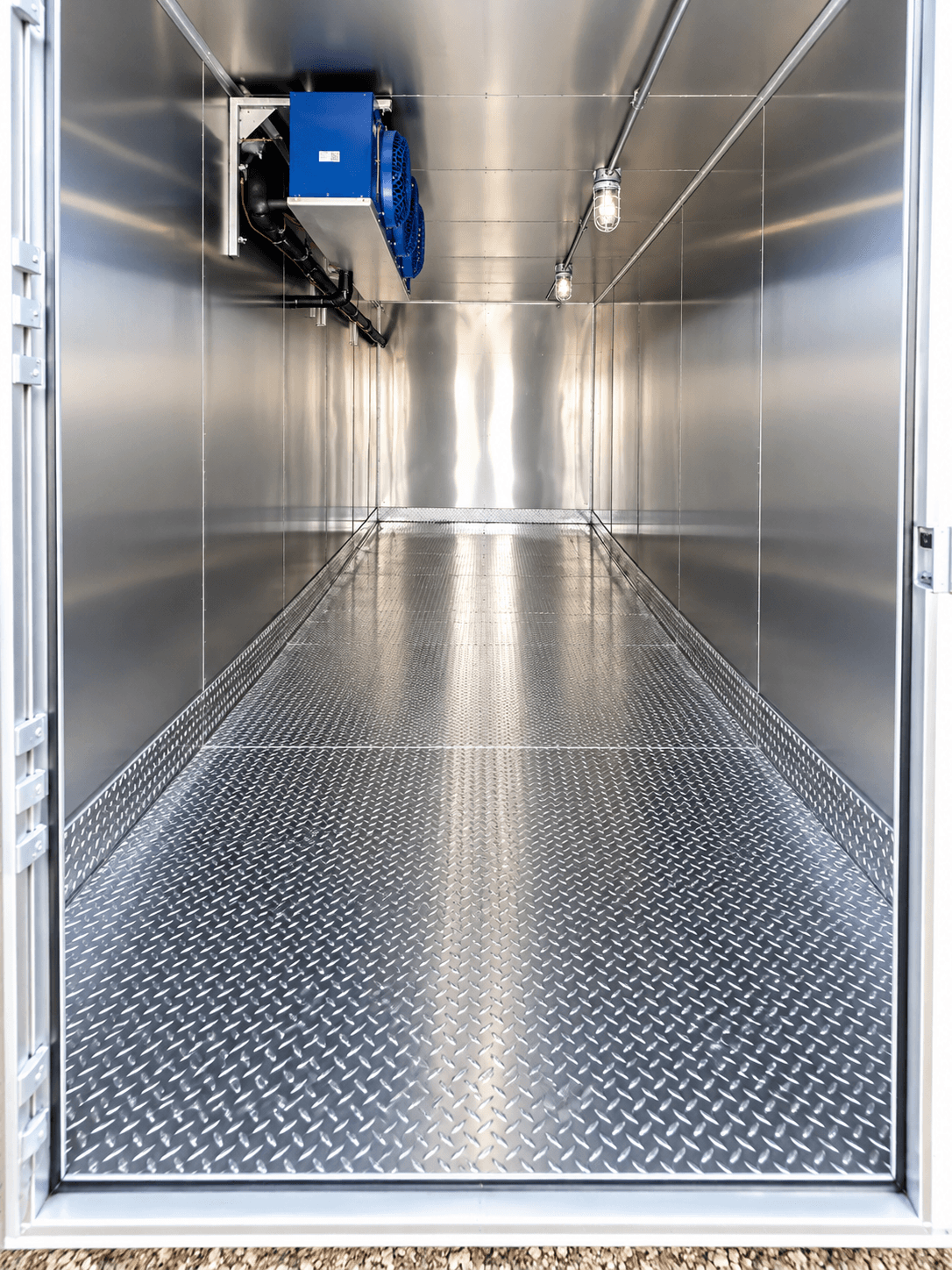
Listed refrigeration trailer equipment: condensing unit, amps panel, lighting.
Other cold-storage model details
- 12FT Refrigerated TrailerBXRT12–1 and BXRT12–2 list 220V · single-phase · 40–60A and a 32°F inventory label. Both are named as 12ft models, but their records also mention 20ft, so your quote confirms the length.
- 20FT Refrigerated ContainerYour quote confirms this container’s power, temperature and storage space for your project.
- 40FT Refrigerated ContainerYour quote confirms this container’s power, temperature and storage space for your project.
Equipment records reviewed October 19, 2026. Temperature labels are inventory labels, not verified operating ranges. Nominal length is a model label, not a measure of usable space or site footprint.
Compare the same packaged-stock task at each proposed position
The site operations coordinator needs a separate access and services record for each proposed storage position. Compare how the same packaged stock arrives and how staff retrieve it after loading. An answer about a supply point or route at one option should not be copied to the other without review. Keep the selected position identifiable when the operating plan changes.
Compare a named trailer with the actual working load
MT1 in the 20FT Refrigerated Trailer guide lists a condensing unit, amps panel and lighting, with a 15°F inventory label. The label does not establish a complete operating range or suitability for every product in the packaged load. Required conditions, usable capacity and the exact electrical connector still need review for the offered unit.
A refrigerated container provides nominal 20ft and 40ft alternatives without published usable-capacity, temperature or electrical figures for the inspected examples. Compare the offered refrigeration trailer or container with the packages and retrieval route at each proposed position. A nearby outlet or open approach is not evidence that either option is suitable.
Connect industrial meal shifts with your rental plan
An industrial team comparing Phoenix with a separate Nebraska workplace may need to accommodate meal supplies while normal receiving space is assigned to maintenance equipment. Identify who can approve changes to the equipment position, and record how dining staff will learn about revised receiving arrangements.
Describe the stock before choosing capacity
Start with a usable inventory that describes the packages and how your team needs to handle them. Record the packages, crates, trays or pallets that need a place, their approximate footprint, and which goods must be reached first. Explain whether the load stays inside for most of the project or changes repeatedly during a working day. A unit that appears large enough on a floor plan still needs a workable loading arrangement. Ask the team to review the proposed inventory against the equipment being considered, and identify the information needed before a suitable size can be discussed.
Discuss short and extended rental needs separately
Explain whether the request concerns a brief interruption, a planned project or a longer period while permanent storage decisions are made. State the earliest required date, expected duration and any uncertainty that could affect it. Ask which rental or lease terms may be considered and how changes to the period are handled. Ask the team to explain the proposed period, any minimum term and the process for discussing an extension or earlier collection. Request current written terms for the proposed equipment and location. Keep the operating schedule and commercial discussion connected so the team can review the actual requirement before a booking is agreed.
Decide who checks conditions during use
Before the temporary store is put into use, identify who checks its conditions and who responds if something appears wrong. Explain any readings or records your operation needs, the expected working hours, and how staff communicate between shifts. Ask which controls or monitoring features belong to the particular equipment under discussion and which require a separate arrangement. Include any accessories or alert features you want to discuss in your request. A written handover can connect the equipment information with your existing product-handling procedures, making it clear who is responsible for observation, reporting and decisions about the goods throughout the rental period.
Check each position against the selected equipment’s power
MT1 lists 220V single-phase at 40–60A; P1 lists 220V single-phase at 200A; D4 lists 220V single-phase at 150A. Matching voltage does not make the connection interchangeable between units or positions. The responsible site professional needs the selected units’ electrical requirements and exact connectors, with customer preparation responsibilities settled for the option actually chosen.
Review the full route for stock movement
Look beyond the final storage footprint and describe the complete movement of goods. Staff may need to pass through doors, use carts, cross a delivery area or work around construction activity before reaching the temporary refrigerator. Give the relevant site contact a chance to assess that route and identify restrictions. Ask for the entry details of the equipment being considered, including any loading aids that would need a separate discussion. Measurements should relate to the real carriers and products your team uses. Confirm how the arrangement will work during normal activity and during the busiest replenishment periods before committing to a position.
Separate preparation and washing requirements at the chosen position
P1 in the 26FT Mobile Kitchen Trailer guide lists a prep table, sinks, reach-in refrigerator/freezer and water heater, without a documented cooking line. If preparation also moves, give it its own ingredient handoff and working route rather than assuming the reserve cold store supplies preparation equipment.
D4 in the 24FT Dishwashing Trailer Rental guide lists a low-temperature push-through dishwasher, soil tray, scraping table and sinks. Compare the offered washing layout with returned items and the clean-item destination. Keep each unit’s instructions available to the teams using it, and review a changed product or operating requirement before accepting the revised arrangement.
Keep the selected position attached to the rental scope
Request current availability and a quote identifying the offered equipment, rental period, delivery, collection and additional items for the selected address. Keep outstanding product and site questions alongside it. A later change of position needs its own review rather than silently replacing the arrangement described in the proposal.
Contact Worldwide Refrigerated Container Rental Facilities at +1 877-804-5153. Share your stock, site and dates, then ask about current equipment availability, rental or lease terms, delivery arrangements and a quote.
Compare proposed positions using the same questions
When two positions are under consideration, the site operations coordinator can prepare a side-by-side note using the same operating task for both. Describe how packaged stock would arrive, where staff would retrieve it and which site information remains unconfirmed. Record questions about the actual trailer with the equipment contact rather than using a nearby outlet or apparently open approach as proof of suitability.
Ask the relevant reviewers to identify which information applies to each option. For example, a services answer about one position should not be copied onto the other without confirmation. Keep the selected option's description attached to the inquiry so later updates have a clear reference. If the preferred position changes, send the revised information as a new review point rather than silently substituting it for the original.
Discuss your cold storage rental.
Confirm the equipment, delivery location, and rental period that fit your project.
Request availability