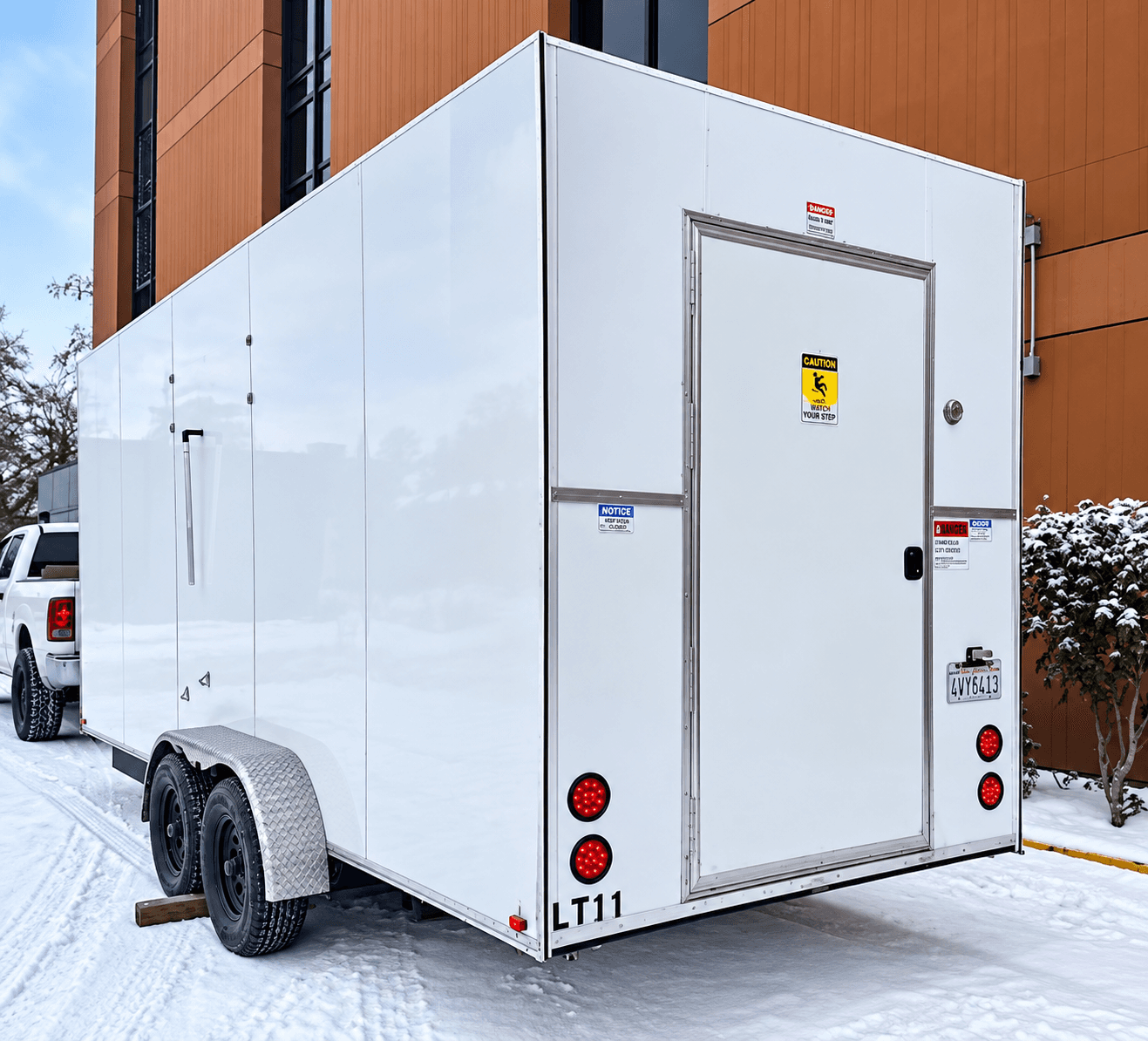
Compare the equipment
Specifications for your rental planning
These published examples describe named company units. The supplied equipment, configuration and availability are confirmed for your project address.
BXRT20–1Refrigerated trailer
- Nominal length
- 20ft
- Listed electrical supply
- 220V · single-phase · 40–60A
- Inventory temperature label
- 32°F
MT1Refrigerated trailer
- Nominal length
- 20ft
- Listed electrical supply
- 220V · single-phase · 40–60A
- Inventory temperature label
- 15°F
LT2Refrigerated trailer
- Nominal length
- 20ft
- Listed electrical supply
- 220V · single-phase · 40–60A
- Inventory temperature label
- -5°F
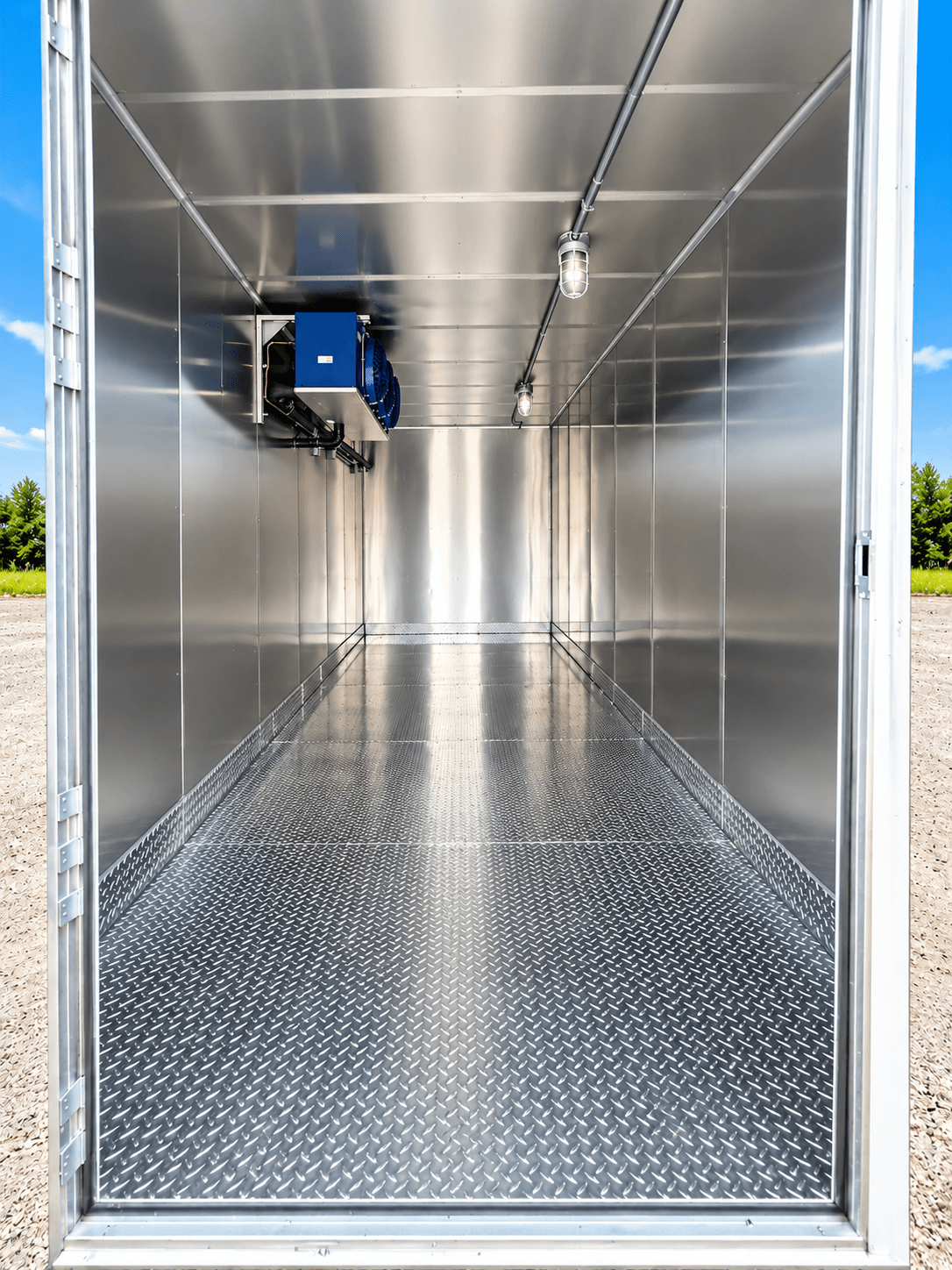
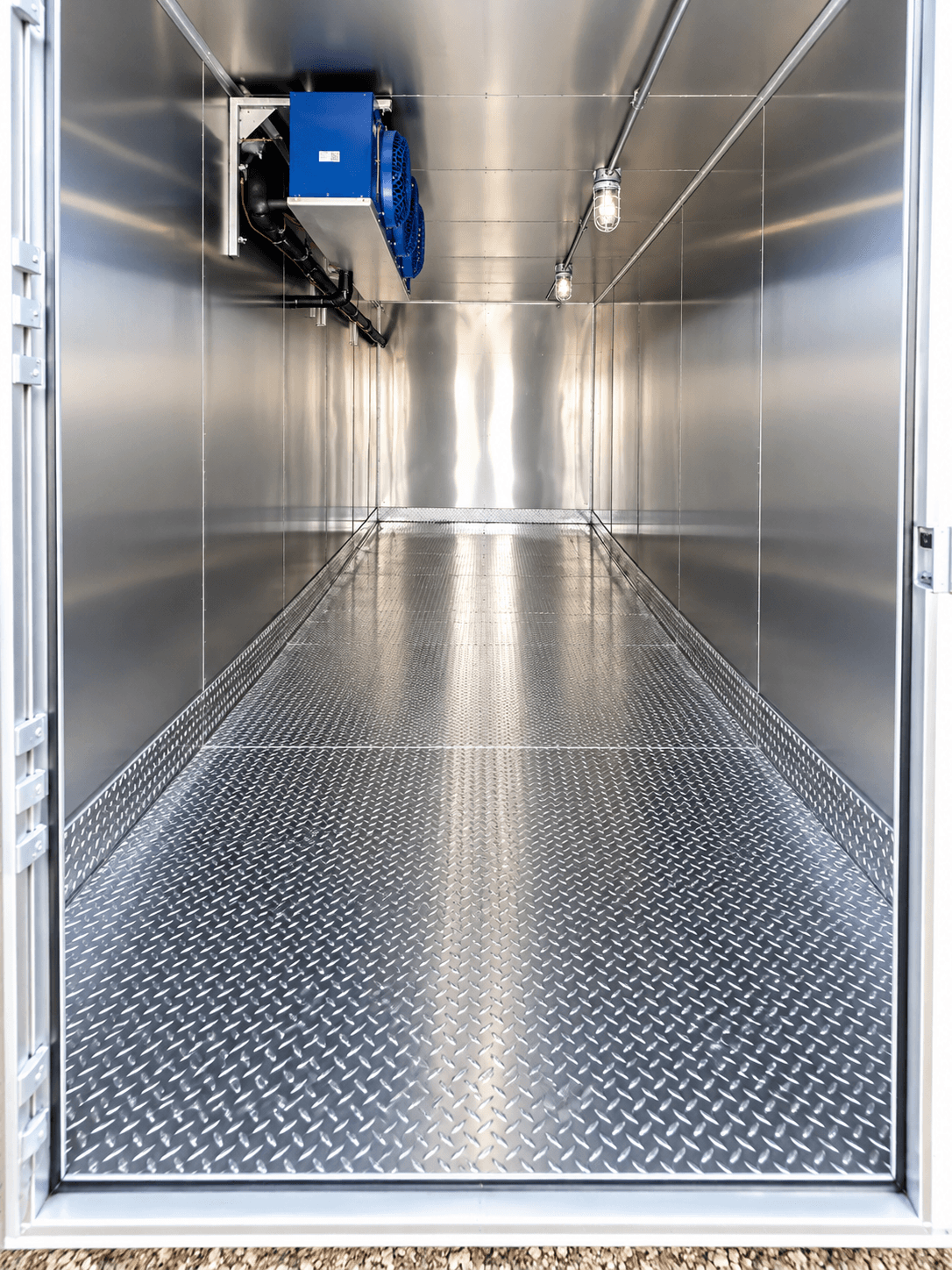
Listed refrigeration trailer equipment: condensing unit, amps panel, lighting.
Other cold-storage model details
- 12FT Refrigerated TrailerBXRT12–1 and BXRT12–2 list 220V · single-phase · 40–60A and a 32°F inventory label. Both are named as 12ft models, but their records also mention 20ft, so your quote confirms the length.
- 20FT Refrigerated ContainerYour quote confirms this container’s power, temperature and storage space for your project.
- 40FT Refrigerated ContainerYour quote confirms this container’s power, temperature and storage space for your project.
Equipment records reviewed October 19, 2026. Temperature labels are inventory labels, not verified operating ranges. Nominal length is a model label, not a measure of usable space or site footprint.
Keep departmental ownership after the lists are combined
The kitchen operations lead needs to distinguish shared ingredients from separate departmental allocations before combining the load. One stock reference can appear on several station lists without representing several sets of packages. Keep its owner, intended use and retrieval time identifiable after reconciliation. A common purchasing contact does not make the departments’ product requirements or working routes identical.
Compare separate holding labels with the departmental requirements
BXRT20–1 and LT2 in the 20FT Refrigerated Trailer guide carry 32°F and −5°F inventory labels respectively. Each lists a condensing unit, amps panel and lighting. They are separate named examples, not the endpoints of a verified operating range or evidence that one trailer meets every department’s product conditions.
A refrigerated container offers nominal 20ft and 40ft alternatives whose usable capacity, temperature capabilities and electrical requirements remain unconfirmed.
Compare the offered refrigeration trailer or container with the reconciled packages and the ingredients each department retrieves repeatedly. Keep the product owners’ conditions alongside the layout review; a combined case count does not establish how the temporary store will work for both teams.
Plan temporary equipment around education meal schedules
An unexpected dining closure at a Columbus school or a separate Oklahoma campus may require another ingredient destination before the next scheduled meal. Agree who updates ingredient orders when the project schedule changes, and include the dining supervisor in discussions about access.
Compare electrical loads before assigning a shared connection
BXRT20–1 and LT2 each list 220V single-phase at 40–60A; P1 lists 220V single-phase at 200A; DTC1 lists 220V single-phase at 300A. Shared voltage does not select a common connector or establish supply suitability. The responsible site professional needs the selected units’ requirements and exact connections, with preparation responsibilities and proposed alternative supplies distinguished from confirmed services.
Coordinate loading access with everyday activity
Temporary refrigeration can affect a receiving area that already serves staff, suppliers and other contractors. Explain that existing activity when discussing a location for the unit. Include the periods when deliveries arrive, where stock handling takes place and who can authorize temporary changes to the working area. Ask how the proposed loading arrangement should be assessed and whether additional site information is required. Use that review to align stock handling, daily activity and the proposed equipment position before the working arrangement is finalized. Keep the agreed access information with the rental inquiry and project schedule.
Build a practical load description
Prepare a short stock description that another person can understand without visiting the existing store. Include the main product groups, the largest package, the anticipated maximum load and the frequency of replenishment. Where stock must stay identifiable by order, batch or department, explain that requirement. A photograph or simple plan may help the discussion, but it should accompany measurements and a written brief. Ask what further information is needed to compare a refrigerated container or trailer with the work ahead. Use the written brief to compare the proposed unit with your packaging, stock movement and staff access needs.
Give preparation and returned ware distinct departmental handovers
If preparation also moves, P1 in the 26FT Mobile Kitchen Trailer guide lists a prep table, sinks, reach-in refrigerator/freezer and water heater. Its published equipment does not document a cooking line. Identify which department issues ingredients to preparation and where prepared work goes next rather than treating reserve holding as a complete replacement kitchen.
DTC1 in the 38FT Conveyor Dishwashing Trailer Rental guide lists a high-temperature conveyor dishwasher, soil tray, prep table, racks, sinks and water heater. Used items and clean-item collection need their own routes beside ingredient retrieval. Keep each selected unit’s controls, loading guidance, approval responsibilities and concern contacts available to the incoming department or shift.
Make concerns and changes easy to report
Explain how the people using temporary storage will record a concern and tell the designated person in charge. Ask which equipment information and contact route apply to the proposed rental, and keep them available to the operating team. Add any change in products, loading pattern or site arrangement to the working brief and discuss the revised requirement with the relevant contacts. Identify who can approve that review and communicate the outcome across shifts. The same approach is useful at the end of the rental, when the stock owner and site contact need a common understanding of the transfer plan and the request for collection.
Allow the inquiry to reflect changing project phases
Some projects need their greatest storage capacity at the beginning, while others build toward a busy service period or a later construction phase. Describe that pattern alongside the expected start and finish dates for the work. Note when inventory is transferred, when suppliers are expected and when the permanent storage is intended to return. Ask whether the proposed rental period and equipment arrangement can be reviewed against those needs. If the plan might change, discuss the extension and collection process in advance. Update the team when the dates become clearer and ask about current availability and terms for the period you need.
Quote the reconciled load and the work each team needs
Request current availability and a quote covering the offered equipment, rental period, delivery, collection and additional items. Compare that scope with the reconciled department lists and unresolved product decisions. If one department changes its allocation or timing, identify the effect on the shared requirement before treating the earlier proposal as unchanged.
Contact Worldwide Refrigerated Container Rental Facilities at +1 877-804-5153. Share your stock, site and dates, then ask about current equipment availability, rental or lease terms, delivery arrangements and a quote.
Resolve shared ingredients before merging department lists
For a multi-department kitchen, the operations lead can ask each department to identify its own ingredients and any supply it shares with another team. Match shared entries by the operation's stock reference rather than a loose description. Keep the person responsible for each product visible after the lists are combined so questions do not default to whichever department happens to answer first.
A useful reconciliation exercise follows one shared ingredient through both lists. Decide whether they describe the same packages, separate allocations or a planned future order, and record the answer. Give each department the resulting version to review. The combined refrigeration brief can then explain the actual load and the distinct working needs without flattening several department responsibilities into a total that nobody can verify.
Discuss your cold storage rental.
Confirm the equipment, delivery location, and rental period that fit your project.
Request availability