Compare the equipment
Specifications for your rental planning
These published examples describe named company units. The supplied equipment, configuration and availability are confirmed for your project address.
BXRT20–1Refrigerated trailer
- Nominal length
- 20ft
- Listed electrical supply
- 220V · single-phase · 40–60A
- Inventory temperature label
- 32°F
MT1Refrigerated trailer
- Nominal length
- 20ft
- Listed electrical supply
- 220V · single-phase · 40–60A
- Inventory temperature label
- 15°F
LT2Refrigerated trailer
- Nominal length
- 20ft
- Listed electrical supply
- 220V · single-phase · 40–60A
- Inventory temperature label
- -5°F
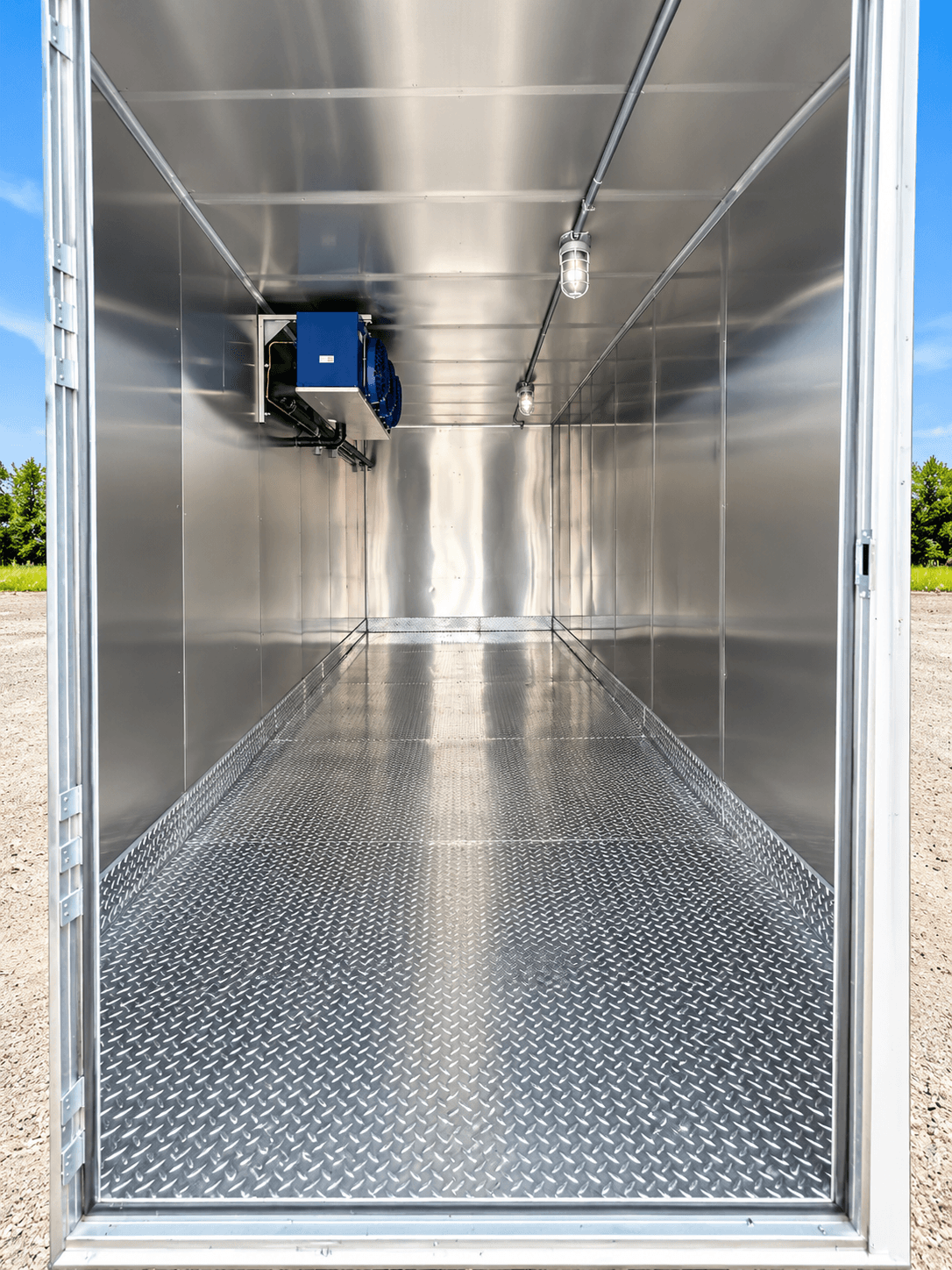
Listed refrigeration trailer equipment: condensing unit, amps panel, lighting.
Other cold-storage model details
- 12FT Refrigerated TrailerBXRT12–1 and BXRT12–2 list 220V · single-phase · 40–60A and a 32°F inventory label. Both are named as 12ft models, but their records also mention 20ft, so your quote confirms the length.
- 20FT Refrigerated ContainerYour quote confirms this container’s power, temperature and storage space for your project.
- 40FT Refrigerated ContainerYour quote confirms this container’s power, temperature and storage space for your project.
Equipment records reviewed October 19, 2026. Temperature labels are inventory labels, not verified operating ranges. Nominal length is a model label, not a measure of usable space or site footprint.
Introduce the selected arrangement to the incoming kitchen lead
The kitchen facilities coordinator needs the current stock list, confirmed equipment information and outstanding property questions in one orientation record. Staff accustomed to the permanent cooler should be able to identify what changes when using temporary refrigeration. Keep later revisions in that same record, with the person responsible for each answer visible to both outgoing and incoming teams.
Mobile emergency refrigerated trailer rental and container leasing
If a hotel banquet kitchen in Mobile loses refrigeration, a portable walk-in cooler for rent can keep products cold while the permanent system is fixed or replaced. Emergency rentals and planned leases are quoted from the same details: the product, the temperature it must hold, the address and the dates. Restaurants and institutional kitchens sometimes pair a rented mobile kitchen with refrigerated storage, adding a dishwashing trailer when dishes still need washing.
Commercial customers can ask about portable refrigerated trailers, refrigeration containers and walk-in coolers or freezers for emergency, modular or temporary onsite use. The quote lists the equipment, the delivery arrangements and the rental terms for the specific site. Restaurants, hospitals, schools, hotels, caterers and food producers can describe the problem to a person who answers rental inquiries 24/7.

Compare a holding example with the actual ingredient handover
BXRT20–1 in the 20FT Refrigerated Trailer guide lists a condensing unit, amps panel and lighting, with a 32°F inventory label. That label is not a complete operating range or approval for every ingredient transferred from a familiar cooler. Required conditions come from the responsible kitchen contact.
A refrigerated container offers nominal 20ft and 40ft alternatives whose usable capacity, temperature capabilities and electrical requirements remain unconfirmed.
Compare the offered refrigeration trailer or container with actual cases, supplier overlap and repeated collections for preparation. The old cooler’s area labels and usual loading route do not establish the interior arrangement of the proposed equipment.
Coordinate a rental for government food-service facilities
Government dining supervisors preparing an inquiry for Mobile and another for a Wyoming facility can describe the busiest overlap between incoming supplies, ingredient preparation and staff receiving goods. Identify the authorized purchasing contact and food-service representative, then give both the same proposed dates, equipment scope and receiving information for review.
Keep arrival restrictions with the proposed position
Record gates, turns, overhead restrictions, shared vehicles and the person controlling access. Review current measurements and unit-specific entry needs together. Keep later contractor or property changes in the same route record.

Compare packed stock with the proposed layout
Record actual cases, trays or pallets, their larger dimensions and which ingredients staff need first. Include replenishment and repeated retrievals. A familiar quantity still needs comparison with the selected unit’s entry and working arrangement.
Keep the named electrical requirements with the equipment identity
BXRT20–1 lists 220V single-phase at 40–60A; P1 lists 220V single-phase at 200A; DTC1 lists 220V single-phase at 300A. These are separate named entries, not interchangeable connections. The responsible site professional needs selected-unit requirements and exact connectors, including planned shutdowns, site works and any separate power arrangement that still needs review.
Identify the return-to-storage decision
Keep the stock owner’s approval to return goods separate from repair completion and equipment collection. Include incoming orders and stock remaining in the transition plan, with rental changes and notice reviewed against the offered terms.
Connect operating guidance with daily access
Record deliveries, repeated ingredient collections and any shared access periods with product requirements. Keep the selected unit’s loading guidance and reporting route available to all teams, including revisions introduced during the rental.
Give preparation and washing their own orientation details
P1 in the 26FT Mobile Kitchen Trailer guide lists a prep table, sinks, reach-in refrigerator/freezer and water heater. Its published equipment does not document a cooking line. If preparation also moves, identify the ingredient handoff and prepared-work destination rather than treating the reserve cold store as preparation or cooking equipment.
DTC1 in the 38FT Conveyor Dishwashing Trailer Rental guide lists a high-temperature conveyor dishwasher, soil tray, prep table, racks, sinks and water heater. Keep returned items and clean-item collection separate from ingredient retrieval. Give each incoming team the selected units’ controls, entry and loading information, product responsibilities and contact for equipment questions.
Quote the arrangement the incoming team has reviewed
Request current availability and a quote for the offered equipment, rental period, delivery, collection and additional items. Keep unresolved stock and property questions beside the proposal. A later unit or position change should update the orientation record as well as the equipment discussion before the revised arrangement is accepted.
Contact Worldwide Refrigerated Container Rental Facilities at +1 877-804-5153. Share your stock, site and dates, then ask about current equipment availability, rental or lease terms, delivery arrangements and a quote.
Introduce the temporary arrangement to the incoming kitchen team
The kitchen facilities coordinator can prepare an orientation record using the actual equipment information under discussion. Identify which operating details have been confirmed and which questions are still with the equipment or property contact. Staff familiar with the permanent cooler should be able to see where the proposed arrangement differs, without being asked to infer those differences from a model name or photograph.
For the handover, ask an incoming kitchen lead to explain the current stock list, reporting contact and unresolved equipment questions using that record. Correct misunderstandings before treating the briefing as complete. Keep later revisions in the same record and tell both outgoing and incoming teams when the requirement changes. That creates continuity across team changes without presenting unverified equipment features as instructions for use.
Discuss your cold storage rental.
Confirm the equipment, delivery location, and rental period that fit your project.
Request availability