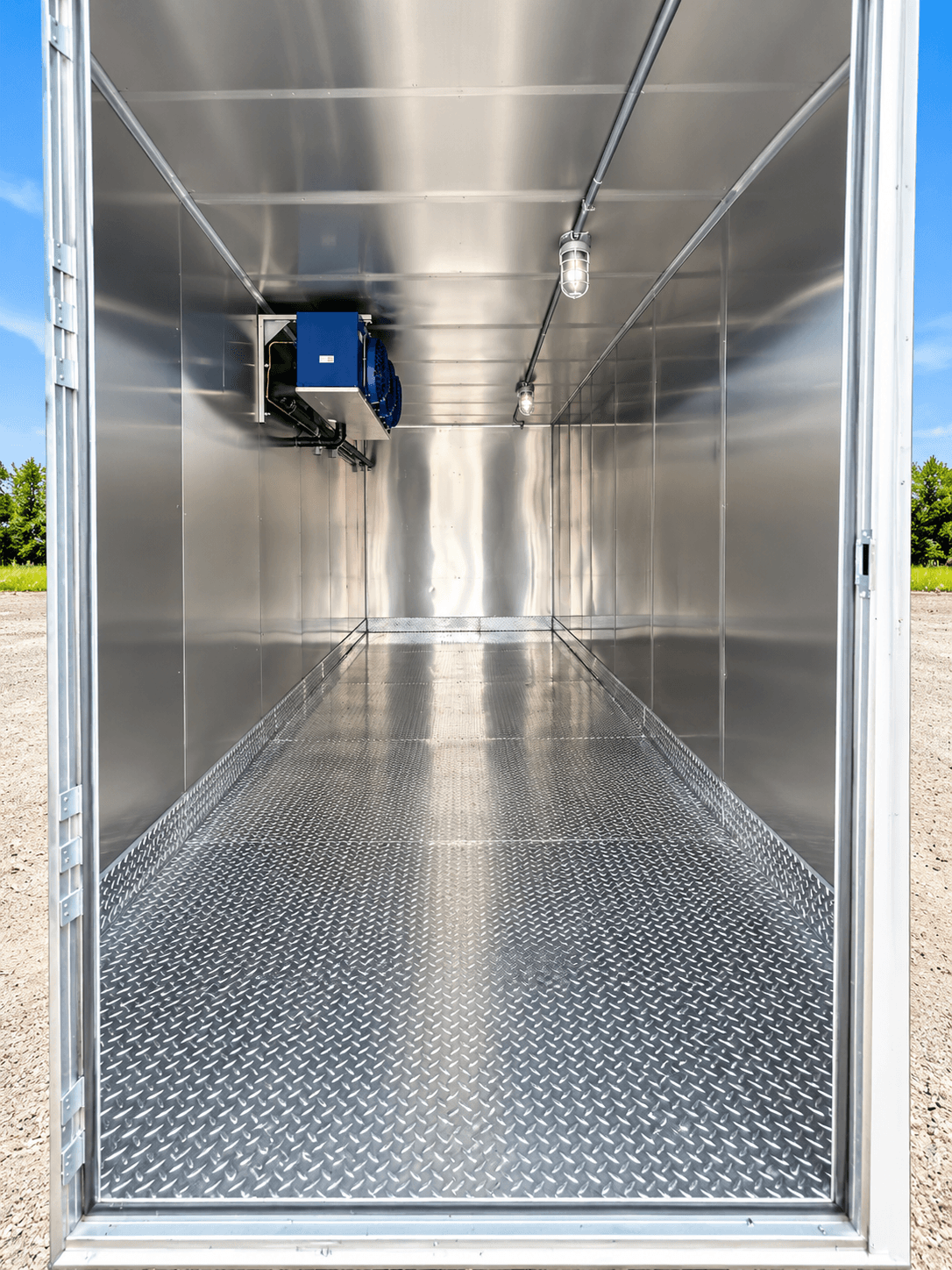
BXRT20–1Refrigerated trailer
- Nominal length
- 20ft
- Listed electrical supply
- 220V · single-phase · 40–60A
- Inventory temperature label
- 32°F
Temporary cold storage in Muncie, Indiana
Muncie refrigeration rentals help commercial and industrial teams organize replacement storage after a walk-in cooler or refrigeration unit fails. Mobile kitchen and dishwashing trailers may also be relevant when cooking and cleaning lose their working space. Short-term rentals can bridge emergency repairs; longer leasing can follow planned hospitality refurbishment or venue work. Restaurants, event caterers, institutions and industrial dining operators should describe the products displaced and the service periods retained. Provide the Muncie address, anticipated dates and site access so equipment needs and delivery coordination can be reviewed together. Request availability and a quotation from Worldwide Refrigerated Container Rental Facilities matched to the actual project.
Emergency cooler or freezer failure in Muncie? A person answers rental inquiries 24/7. Availability and delivery timing are confirmed in your quote.
Plan your rental budget
Compare the equipment
These published examples describe named company units. The supplied equipment, configuration and availability are confirmed for your project address.
Listed refrigeration trailer equipment: condensing unit, amps panel, lighting.
Equipment records reviewed October 19, 2026. Temperature labels are inventory labels, not verified operating ranges. Nominal length is a model label, not a measure of usable space or site footprint.
Emergency refrigeration rental in Muncie often starts with one decision: whether the stock belongs in a portable walk-in cooler for rent or in a different format, such as a rented walk-in freezer. Short-term rentals usually fit a repair measured in days, while a longer-term lease fits a remodel, a phased construction project or a seasonal peak. Refrigerated storage is the usual request, but a mobile kitchen trailer can be rented or leased alongside it when cooking is also affected.
Onsite temporary refrigeration facilities can be rented short term or leased long term, whether the need is an emergency breakdown, a mobile cold room for an event or commercial storage during construction. Food-service managers, facility teams and plant supervisors can report a refrigeration failure at any time, since rental inquiries are answered by a person 24/7. A walk-in failure in Carmel, a renovation in Indianapolis or an event in Fort Wayne can use the same inquiry as a Muncie project: the address, the stock, the dates and the choice between renting and leasing.
The Indiana State Fair in Indianapolis is the state’s largest annual event, and a WFYI report said it drew roughly 907,000 visitors to the fairgrounds in 2015. Distributors and processors in Beech Grove, Speedway and Crows Nest can compare a short-term refrigeration trailer rental with a long-term lease for outdoor walk-in refrigeration. Growers and packers in North Crows Nest and Lawrence can compare a refrigerated trailer rental with a container lease for the busy season. Refrigerated trailers for rent and portable walk-in coolers hold drinks, produce and prepared food at crowded events, and a refrigeration container suits a longer festival run. Onsite temporary facilities can include portable refrigeration, trailers for rent and, if dishes are affected, a dishwashing trailer. Dishwashing trailer rentals and warewashing capacity are quoted beside the kitchen and refrigeration when the whole food-service area is affected. Nothing here assumes available equipment or a delivery time; a person answers rental inquiries 24/7 and the quote confirms the details.
The National Weather Service rated the March 2, 2012 Henryville tornado EF4, with peak winds of 175 mph and a path of about 46 miles that hit New Pekin, Marysville and Henryville, and the NWS Louisville office issued a rare Tornado Emergency for the area. When a compressor fails at a grocery in McCordsville, a school in Zionsville or a care facility in Westfield, an emergency walk-in cooler or freezer rental can protect the food while repairs are arranged. Schools and care facilities in Cicero and Columbus can ask for an emergency walk-in cooler or freezer rental when a compressor fails. A failed commercial walk-in freezer after an outage is an emergency call, and walk-in coolers, walk-in freezers and refrigerated trailers are the first rentals discussed. Outdoor walk-in refrigeration needs level ground and power nearby, so a long-term lease starts with a site conversation. This is published public context, not company work; each request is quoted for its own address and dates.
Indianapolis’s Department of Public Works has a $279 million 2026 construction season budget for roads, sidewalks, trails, bridges and stormwater, and the 16th Street Bridge over the White River is set to close for up to two years starting after the Indianapolis 500. A phased renovation in Bloomington, a new kitchen build-out in Martinsville or a campus dining upgrade in Edinburgh can use a leased refrigeration trailer so food service continues while permanent cold rooms are rebuilt. Renovation projects in River Forest may use a rented refrigeration trailer, and a dishwashing trailer for rent if the dish room is affected. A long-term refrigeration trailer lease keeps supplies cold on site for the whole project, with power and access reviewed before delivery. Modular, mobile or portable, the equipment is chosen to fit the work that continues at the site. A mobile dishwashing trailer and a mobile kitchen trailer are often requested together, with a refrigerated trailer for the stock. Kitchen, dishwashing and refrigeration rentals are separate equipment, and each can be rented short-term or leased long-term. These are public facts about the area, not a record of company jobs; equipment, availability and delivery are confirmed in the quote.
Emergency refrigeration can be arranged as a refrigerated trailer, a refrigeration container or a portable walk-in cooler, depending on the stock and the site. For Muncie kitchens, plants and warehouses, trailer leasing and trailer rentals are two ways to get the same portable refrigerated storage. Short-term or long-term, the same refrigerated trailer rental starts from the address, the stock and the dates. Temporary facilities for a commercial site usually mean refrigeration first, then a mobile kitchen or dishwashing trailer if cooking or washing is also interrupted.
A dishwashing trailer lease can be added to the same quote when returned dishes also need washing. Trailer rentals for emergencies are usually short-term, while trailer leasing for construction or seasonal work can run for months. A commercial walk-in freezer failure in Muncie is an emergency call, and onsite temporary refrigeration is how most such calls begin. A commercial refrigeration rental is quoted for the actual address, so power, access and the rental period are confirmed before delivery.
Dishwashing trailer rentals and kitchen trailer rentals can be quoted alongside refrigerated trailers for rent when the whole kitchen is down. A mobile, modular or portable refrigeration setup in Muncie is chosen to match the walk-in cooler or freezer that failed. Trailer rentals, refrigerated trailers for rent and trailer leasing are all discussed with the address and the dates in hand. Dishwashing and kitchen outages often arrive together, so dishwashing trailer rentals and a mobile kitchen for rent are quoted beside emergency refrigeration.
A portable refrigerated trailer suits most emergency calls, while a refrigeration container fits a longer, more stationary need. Trailer leasing makes sense when a commercial kitchen will be closed for weeks, because one lease replaces repeated short-term rentals. Outdoor walk-in refrigeration can be set up beside the building as temporary facilities, so staff keep working while the permanent walk-in cooler or walk-in freezer is repaired. Refrigeration containers are often chosen for long-term storage, while refrigerated trailers are chosen for short-term emergencies; both can be rented.
Portable refrigerated trailers, refrigeration containers and outdoor walk-in refrigeration units can all be discussed for the same emergency. A dishwashing trailer, a mobile kitchen trailer and a refrigerated trailer for rent can each be short-term or long-term, depending on the repair. Emergency refrigeration, onsite and temporary, is meant to bridge the gap until the commercial walk-in freezer is repaired or replaced. Onsite temporary facilities can include portable refrigeration, a mobile kitchen trailer and, if dishes are affected, a dishwashing trailer.
NOAA’s Indiana summary records major winter storms and severe flooding in the state’s history. It provides regional context for continuity planning, not evidence of a weather loss at a Muncie venue. A refrigeration emergency should be described using the fault found, the premises currently usable and the operator’s decisions about affected products.
At a venue serving refreshments around performances, demand can concentrate into a short interval. Explain which chilled ingredients or packaged goods need immediate retrieval and which reserves can remain undisturbed. A cold-storage request should reflect that timing. If a supplier delivery overlaps the repair, nominate someone to revise the receiving instruction instead of allowing the load to arrive without an agreed place for approved stock.
Read the 20ft Refrigerated Trailer guide alongside this page when planning hospitality and venue work; it looks at a load estimate before choosing a length and at floor height for carts and hand trucks.
Ball State announced a November 14, 2024 groundbreaking for its Performing Arts Center and Cantio Hotel, part of the Village revitalization. The owner’s October announcement described the intended ceremony and forecast construction programme. This is dated local development evidence, not a claim that our company supplied those projects or that forecast dates prove current completion.
Two nearby cities approach their projects differently. Noblesville’s guide addresses food-service upgrades, while the guide for operators in Fishers addresses catering and food-service overflow. Use them to prepare questions, not to infer availability or terms for Muncie.
A comparable hospitality opening should identify when food operations begin receiving, rather than use a ceremonial milestone as the storage start. Permanent refrigeration acceptance may occur separately from guest-facing spaces. Ask the operator and contractor to agree the stock-transfer sequence, including the first service that depends on the new arrangement. Temporary dates can then be reviewed against functional readiness.
During a healthcare dining refurbishment in Muncie or Anderson, Indiana, the employee receiving entrance may change while meals continue following the facility's established service timetable. Ask the responsible food-service manager to identify any handling assumptions that need clarification before the facility compares proposed equipment and layouts.
A venue refurbishment can leave customer space available while removing reserve storage. List goods used during the service peak separately from products replenished between events. A refrigerated trailer inquiry should explain retrieval frequency and handling space. The proposal needs a working picture of that concentrated demand, not a capacity estimate based only on average daily attendance.
For another comparison, the guide for operators in Kokomo covers occupied facilities. Use it as a prompt for your own questions about timing, access and storage.
A regional hospitality operator covering Yorktown, Alexandria and Anderson may assign its kitchen staff to Muncie for a performance weekend. Explain what must be reachable during the short service peak and what can stay in reserve. After the performance, dishwashing returns may create a different loading pattern from the one suppliers used earlier. Walking through those two moments with the venue manager can reveal whether the proposed position supports both.
Provide photographs of the entrance, turns and intended refrigerated unit position, with gate measurements and overhead restrictions. Identify public circulation and contractor work that operate at the same time. Ask the owner to approve the placement area. A discreet position must still support staff retrieval and transport, rather than simply keep equipment outside the principal view.
Agree who receives delivery and who provides utility information for review. Protect a route from cold storage to the retained preparation area throughout the work. Collection needs an approach after the last stock transfer, including any later change to landscaping or fencing. Send revisions before the site team or carrier relies on an earlier version of the layout.
Supply the exact address, product conditions, maximum anticipated inventory and preferred rental period. Explain uncertain repairs or commissioning dates and the next service commitment. Ask the refrigeration proposal to state equipment rental, transport and other charge components clearly, with a process for reviewing changes. Confirm availability before coordinating dependent closures or supplier instructions.
If temporary kitchen or dishwashing facilities are needed, identify their actual tasks and expected operating periods. Clarify preparation and acceptance responsibilities for the site. A useful agreement connects stock, service and access from the first delivery to the final return inside, without assuming equipment inventory, guaranteed timing or a role in the public projects used here as local context.
Before you book
It affects retrieval and replenishment even when total inventory is modest. Explain the operating pattern so the cold-storage proposal can be reviewed against the busiest part of service.
No. The commercial operator needs its own permanent cooler acceptance and supplier schedule. Public construction milestones provide context but do not determine the readiness of your storage area.
Include it when it shares the approach. The last customer departure may precede stock transfer, cleanup and the point when the yard is available for equipment transport.
Refrigeration and a mobile kitchen trailer can be requested together, and a dishwashing trailer can be included when warewashing is also interrupted. Give the address, the stock to be stored and any access limits for a delivery truck. Equipment, availability and delivery timing are confirmed in the quote.
Portable refrigerated trailers, refrigeration containers, outdoor walk-in refrigeration, and portable walk-in coolers or walk-in freezers can be discussed for onsite, short-term or long-term use. Modular, mobile or portable, the equipment is chosen to fit the work that continues at the site. Onsite refrigeration keeps product close to the kitchen door, so a temporary unit can be used the way the permanent walk-in was. A commercial walk-in freezer or refrigeration breakdown is an emergency, so call at any hour; a person answers rental inquiries 24/7, and the quote confirms the equipment and delivery for your address.
These public references inform the planning examples; equipment availability and delivery arrangements are confirmed for your address.
Temporary refrigeration, kitchens and dishwashing can support many kinds of food-service operations. Each setting below starts with its own schedule, stock and site questions, and every project is reviewed individually.
Hotels, restaurants and resorts can plan temporary refrigeration around breakfast, banquet and dinner service when a walk-in cooler fails or a kitchen is refurbished.
Hospital, nursing home and care-facility kitchens can describe meal schedules, delivery times and displaced stock so temporary storage follows the food-service routine.
Municipal, county and public-building food-service teams can outline receiving arrangements, responsible contacts and project dates before a quote is prepared.
Dining facility managers can explain the products displaced, the receiving arrangements and the proposed period, then review availability and terms with our team.
Schools, colleges and universities can plan around term dates, serving windows and campus kitchen renovations so meal service can continue during repairs or construction.
Plant cafeterias and employee dining areas can describe shift patterns and staged building work so temporary cold storage can be reviewed against the working schedule.
Caterers and venues can plan preparation windows, event days and overflow ingredients, and describe how stock moves between storage, the kitchen and service.
Producers, wholesalers and distributors can describe loading, staging and storage needs when a cooler breaks down or demand temporarily exceeds capacity.
These examples describe planning situations. Equipment, availability and terms are confirmed in a project quote.
Cold storage is only one part of a project. These are the questions we work through with you before anything is booked.
Start with refrigerated containers and refrigeration trailers, then add a temporary kitchen or dishwashing trailer when the project needs one, all in a single conversation.
Access, utilities and the intended position are reviewed before delivery is arranged, so the equipment is matched to your site rather than the other way around.
Whether a walk-in cooler failed this morning or a renovation is months away, describe the real situation and plan around the stock, dates and people involved.
Planning guides cover all 50 states and more than 700 cities. Your address is then confirmed for equipment and delivery.
Use the rental calculator for a rate-range estimate and setup amount, then request a project quote that confirms availability, transport and the rental period.