BXRT20–1Refrigerated trailer
- Nominal length
- 20ft
- Listed electrical supply
- 220V · single-phase · 40–60A
- Inventory temperature label
- 32°F
Temporary cold storage in Lake Charles, Louisiana
Lake Charles refrigeration rentals can provide extra ingredient space or restore a lost storage function after a commercial walk-in breakdown. Refrigerated containers, trailers, coolers and freezers offer different arrangements, with kitchen and dishwashing facilities considered during planned renovations affecting more of the operation. Short-term rentals and longer leases can support restaurants, hospitality businesses, schools, healthcare facilities and industrial food-service teams. Worldwide Refrigerated Container Rental Facilities serves Lake Charles and coordinates delivery discussions for the actual property and equipment. Describe your stock, working routine and expected period to request availability and a quote for the storage you need.
Emergency cooler or freezer failure in Lake Charles? A person answers rental inquiries 24/7. Availability and delivery timing are confirmed in your quote.
Plan your rental budget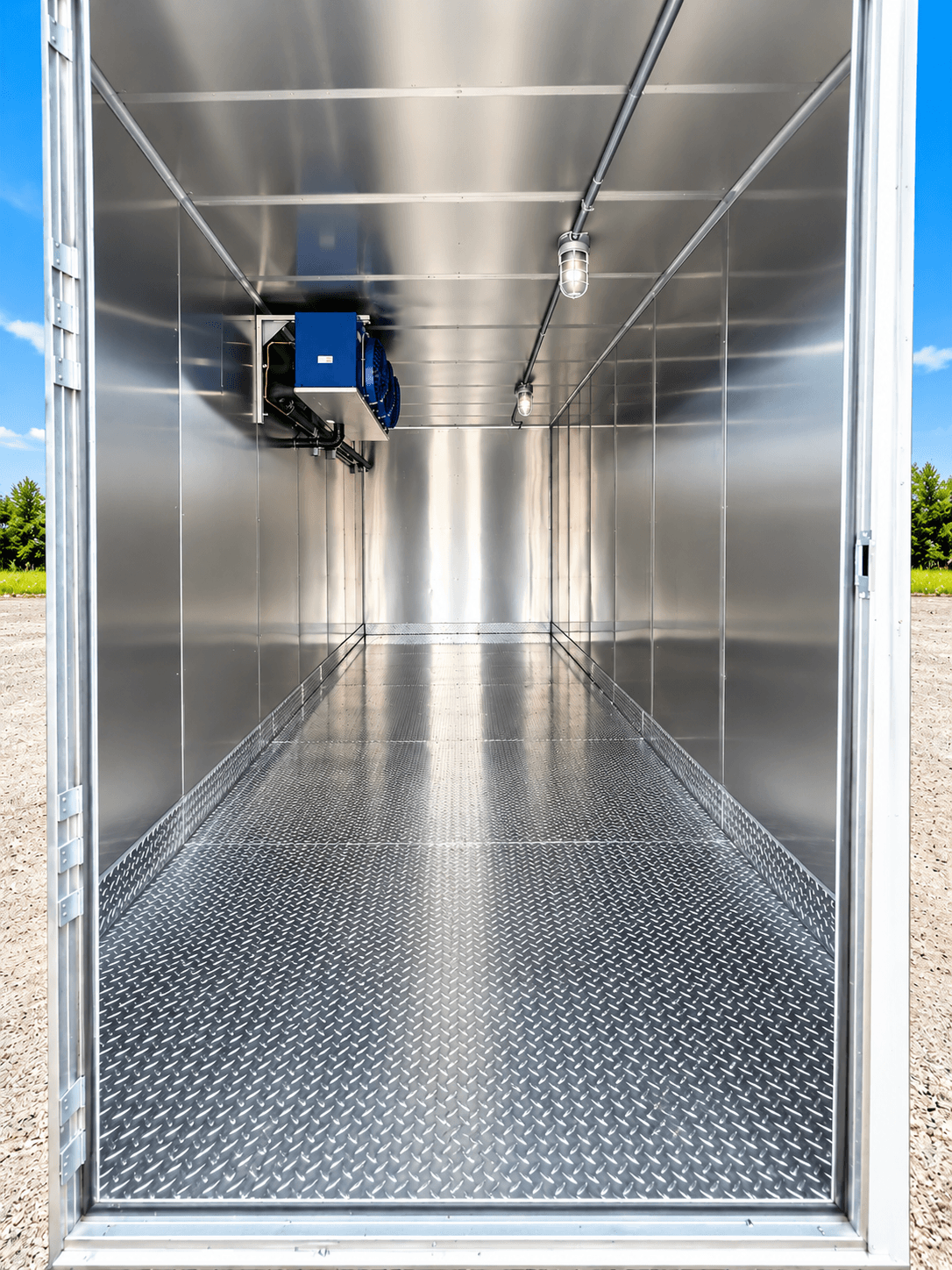
Compare the equipment
These published examples describe named company units. The supplied equipment, configuration and availability are confirmed for your project address.
Listed refrigeration trailer equipment: condensing unit, amps panel, lighting.
Equipment records reviewed October 19, 2026. Temperature labels are inventory labels, not verified operating ranges. Nominal length is a model label, not a measure of usable space or site footprint.
If a food-processing plant in Lake Charles loses refrigeration, a portable refrigerated trailer for rent can keep products cold while the permanent system is fixed or replaced. Emergency rentals and planned leases are quoted from the same details: the product, the temperature it must hold, the address and the dates. If cooking is also interrupted, a mobile kitchen trailer rental can sit beside the refrigeration, and a dishwashing trailer for rent can handle returned dishes.
Every call about a failed commercial walk-in freezer or refrigeration system is an emergency call, and a person answers rental inquiries 24/7 so the problem can be described at any hour. Food-service managers, facility teams and plant supervisors can report a refrigeration failure at any time, since rental inquiries are answered by a person 24/7. If your project is closer to Scott, Carencro, Broussard and Palmetto, say so when you reach out. Emergency refrigeration rental, trailer leasing and mobile kitchen options are discussed for the actual address rather than the nearest large city. Commercial refrigeration trailers and cooler or freezer rentals are the core of the service.
Festival International de Louisiane, a free April music festival in Lafayette, is described by 64 Parishes as drawing about 300,000 visitors a year and as the largest international music festival in the United States. Caterers and concession operators in Baton Rouge, St. George and Addis often need onsite refrigeration for a few days, then release the trailer as soon as the event ends. Growers and packers in Port Allen and Houma can compare a refrigerated trailer rental with a container lease for the busy season. Refrigerated trailers for rent and portable walk-in coolers hold drinks, produce and prepared food at crowded events, and a refrigeration container suits a longer festival run. Refrigeration is an emergency need: every call about a failed commercial walk-in freezer or refrigeration unit is an emergency call. Mobile kitchens, dishwashing trailers and refrigerated trailers for rent can be quoted together as temporary facilities. These are public facts about the area, not a record of company jobs; equipment, availability and delivery are confirmed in the quote.

Hurricane Ida made landfall near Port Fourchon on August 29, 2021 as a Category 4 storm and caused more than one million customer outages across Louisiana, Mississippi and Alabama, and the U.S. Department of Energy still counted about 299,000 outages in Louisiana on September 9. A produce packer in Thibodaux, a meat processor in Kenner or a convenience-store chain in Morgan City may need cold storage the same week a compressor fails, so the inquiry starts with product and temperature. Hotels in New Orleans and Harahan often rent a refrigerated trailer for the days a walk-in cooler is down. A failed commercial walk-in freezer after an outage is an emergency call, and walk-in coolers, walk-in freezers and refrigerated trailers are the first rentals discussed. Portable refrigerated trailers, refrigeration containers and outdoor walk-in refrigeration units can all be discussed for the same job. Dishwashing trailer rentals and warewashing capacity are quoted beside the kitchen and refrigeration when the whole food-service area is affected. This is published public context, not company work; each request is quoted for its own address and dates.
A 2025 analysis of six concurrent Louisiana megaprojects, including Meta’s AI data center in Richland Parish and the Woodside and Venture Global CP2 LNG plants near Lake Charles, expects industrial construction labor demand to peak at about 20,500 workers in late 2026 and early 2027. Renovation projects in Pineville, Marksville and Shreveport can use a rented refrigeration trailer while permanent coolers are rebuilt, with a mobile kitchen trailer added if the cooking line is closed too. A kitchen refit in Ball can be covered by a trailer lease that runs from the first demolition day to the final stock transfer. On long projects, contractors compare a refrigerated trailer lease with a refrigeration container for bulk crew supplies. Trailer rentals, trailers for rent and trailer leasing are all discussed with the address and the dates in hand. Kitchen, dishwashing and refrigeration rentals are separate equipment, and each can be rented short-term or leased long-term. A dishwashing trailer lease can be added to the same quote when returned dishes also need washing. Nothing here assumes available equipment or a delivery time; a person answers rental inquiries 24/7 and the quote confirms the details.
Refrigeration containers are often chosen for long-term storage, while refrigerated trailers are chosen for short-term emergencies; both can be rented. A mobile dishwashing trailer and a mobile kitchen trailer are often requested together, with a refrigerated trailer for the stock. Kitchen, dishwashing and refrigeration rentals are separate equipment, and each can be rented short-term or leased long-term. Short-term or long-term, the same refrigerated trailer rental starts from the address, the stock and the dates.
Mobile kitchens, dishwashing trailers and refrigerated trailers for rent can be quoted together as temporary facilities. Modular and portable cold storage can be discussed in stages when a site needs more space than one refrigerated trailer provides. A dishwashing trailer, a mobile kitchen trailer and a refrigerated trailer for rent can each be short-term or long-term, depending on the repair. A portable refrigerated trailer suits most emergency calls, while a refrigeration container fits a longer, more stationary need.
Emergency refrigeration can be arranged as a refrigerated trailer, a refrigeration container or a portable walk-in cooler, depending on the stock and the site. Emergency refrigeration rental covers walk-in coolers, walk-in freezers and refrigerated trailers for commercial kitchens, warehouses and plants. Outdoor walk-in refrigeration can be set up beside the building as temporary facilities, so staff keep working while the permanent walk-in cooler or walk-in freezer is repaired. Temporary facilities for a commercial site usually mean refrigeration first, then a mobile kitchen or dishwashing trailer if cooking or washing is also interrupted.
Rent, lease and leasing describe contract shapes: a rental is short, a lease is longer, and trailer leasing can be discussed for more than one unit. Onsite temporary facilities can include portable refrigeration, a mobile kitchen trailer and, if dishes are affected, a dishwashing trailer. In Lake Charles, emergency refrigeration usually means a refrigerated trailer, a refrigeration container or a portable walk-in cooler matched to the stock. Outdoor walk-in refrigeration needs level ground and power nearby, so a long-term lease starts with a site conversation.
For Lake Charles kitchens, plants and warehouses, trailer leasing and trailer rentals are two ways to get the same portable refrigerated storage. Dishwashing and kitchen outages often arrive together, so dishwashing trailer rentals and a mobile kitchen for rent are quoted beside emergency refrigeration. A commercial walk-in freezer that fails overnight is an emergency, and so is a commercial refrigeration system that stops holding temperature. A commercial walk-in freezer failure in Lake Charles is an emergency call, and onsite temporary refrigeration is how most such calls begin.
A mobile kitchen trailer for rent can sit beside onsite refrigeration, so cooking and cold storage are planned together. A dishwashing trailer lease can be added to the same quote when returned dishes also need washing.
A food-service business in Lake Charles may need additional refrigeration before a busy period, even when its permanent equipment is still working. The goal is to accommodate extra deliveries without turning the main kitchen store into an obstacle. Compare the usual stock level with the expected peak and decide which products would move to temporary storage. This can make the rental requirement more precise than asking for extra space in general.
Where the additional capacity is needed for several weeks or a longer lease, think about daily use after the first delivery. Staff should be able to find products, move them to preparation and keep the loading area available for other suppliers. Identify who will receive the equipment and who controls the proposed position. The final quote should bring the rental period, equipment, transport and site responsibilities together, so the extra storage supports the operation from arrival through collection. If permanent refrigeration remains available, use it and the rental for defined roles. Keeping everyday ingredients in one store and reserve deliveries in another may help staff maintain a predictable routine. The right division depends on the products, access and layout; discuss the working plan rather than assuming the extra unit must simply hold everything that no longer fits.
If the inquiry concerns extra working storage, compare the plan with the 12ft Refrigerated Trailer guide, which explains the power connection to confirm before delivery and which stock must move first.
An operator coordinating kitchens in Lake Charles and Westlake may hold reserve ingredients at one property while repairs interrupt the other. Describe which address needs the unit and where staff will use the products. Adding capacity at the working kitchen can be a different task from replacing the failed store on site.
For comparison, read what nearby cities emphasize. In Lafayette, the guide covers catering and busy food-service; in Alexandria, it covers planned food-service transitions. Bring the same practical questions about access, timing and storage to your Lake Charles inquiry.
A facility in Sulphur should have its own stock quantities and connection requirements considered, even when the same team approves purchasing. For a catered function in Iowa, Louisiana, explain whether supplies remain at a central kitchen or need refrigeration at the venue. This local context helps define the storage role without assuming a shared dispatch point, route price or identical equipment arrangement.
A hospitality operator reopening a dining area in Lake Charles or Iowa, Louisiana, can separate the contractor's completion date from the first planned delivery of fresh supplies. Confirm who can release the equipment after supplies move back indoors, and include that transition when requesting the complete rental proposal.
Overflow is more useful when it has a defined role. The rental might hold sealed reserves, accommodate an initial stock delivery or become a frequently accessed ingredient store. Each role changes how employees use the entrance and which products need the easiest access. Describe the largest quantity expected at once, not only an average service day.
Keep chilled and frozen requirements separate when comparing equipment. Discuss the actual layout and any intended shelving or handling method rather than choosing by an exterior photograph. A unit that receives the first delivery still needs to work after it is full. Clear product allocation can help employees use temporary and permanent storage consistently through a busy period.
A temporary store in Lake Charles should fit receiving and preparation without occupying access another part of the operation needs. Consider suppliers, staff and any construction activity during the busiest working period. Review the entrance, available connections and proposed surface for the actual equipment, with the property contact involved in the decision.
Louisiana’s hot summers, comparatively mild winters and year-round precipitation are described by NOAA. The source also documents coastal hurricane and flooding concerns at state level. Use the property’s existing access arrangements when discussing the rental months; those broad facts do not determine a forecast, suitable position or confirmed transport contingency for the individual site.
For an extended requirement, consider whether the role changes after the first busy days. Initial reserves may give way to regular receiving, or a renovation may return part of the permanent store before the full project ends. Explain those stages so the rental supports the working operation rather than an unchanged theoretical quantity.
Include moving stock back and making the unit available for collection when discussing the finish. Review equipment, period, extensions, delivery, collection and other charges in the complete quote. The starting calculator does not price a full lease duration. A clearly defined proposal helps the business compare practical options using the same stock need and expected operating window.
Before you book
Additional storage can be discussed for a busy period, incoming reserves or planned work. Explain what the rental adds and how it will work with the existing store. Product quantities, required conditions and access frequency help define that role more clearly than a general request for extra capacity.
Describe the receiving and preparation routine it will support, including products retrieved repeatedly and the highest quantity held. Review usable layout, entrance and staff route for the actual unit. A main store can have different handling needs from a reserve opened occasionally, even when the footprint is similar.
The calculator estimates a range from published rates and adds a setup and delivery starting amount, while collection, taxes and site charges stay separate. Setup and delivery is shown as a starting amount only; transport for the actual address, collection and other trips are confirmed in the quote. Compare complete proposals for the period and storage function your operation expects to use.
Rent a portable refrigerated trailer for a breakdown that will be fixed in days; lease it when the permanent cooler or freezer will be out of service for months. Share the location, the products to be held and how long you expect to need the equipment, including whether dates may change. Equipment, availability and delivery timing are confirmed in the quote.
Emergency refrigeration can include portable refrigerated trailers, a refrigeration container, outdoor walk-in refrigeration or a walk-in cooler or walk-in freezer rental. Modular, mobile or portable, the equipment is chosen to fit the work that continues at the site. A commercial walk-in freezer or refrigeration breakdown is an emergency, so call at any hour; a person answers rental inquiries 24/7, and the quote confirms the equipment and delivery for your address.
These public references inform the planning examples; equipment availability and delivery arrangements are confirmed for your address.
Temporary refrigeration, kitchens and dishwashing can support many kinds of food-service operations. Each setting below starts with its own schedule, stock and site questions, and every project is reviewed individually.
Hotels, restaurants and resorts can plan temporary refrigeration around breakfast, banquet and dinner service when a walk-in cooler fails or a kitchen is refurbished.
Hospital, nursing home and care-facility kitchens can describe meal schedules, delivery times and displaced stock so temporary storage follows the food-service routine.
Municipal, county and public-building food-service teams can outline receiving arrangements, responsible contacts and project dates before a quote is prepared.
Dining facility managers can explain the products displaced, the receiving arrangements and the proposed period, then review availability and terms with our team.
Schools, colleges and universities can plan around term dates, serving windows and campus kitchen renovations so meal service can continue during repairs or construction.
Plant cafeterias and employee dining areas can describe shift patterns and staged building work so temporary cold storage can be reviewed against the working schedule.
Caterers and venues can plan preparation windows, event days and overflow ingredients, and describe how stock moves between storage, the kitchen and service.
Producers, wholesalers and distributors can describe loading, staging and storage needs when a cooler breaks down or demand temporarily exceeds capacity.
These examples describe planning situations. Equipment, availability and terms are confirmed in a project quote.
Cold storage is only one part of a project. These are the questions we work through with you before anything is booked.
Start with refrigerated containers and refrigeration trailers, then add a temporary kitchen or dishwashing trailer when the project needs one, all in a single conversation.
Access, utilities and the intended position are reviewed before delivery is arranged, so the equipment is matched to your site rather than the other way around.
Whether a walk-in cooler failed this morning or a renovation is months away, describe the real situation and plan around the stock, dates and people involved.
Planning guides cover all 50 states and more than 700 cities. Your address is then confirmed for equipment and delivery.
Use the rental calculator for a rate-range estimate and setup amount, then request a project quote that confirms availability, transport and the rental period.